
Home / Reptiles / Snakes / Boidae / Calabar burrowing boa
Some federal rules applyCalabar burrowing boa
Calabaria reinhardtii
Reptiles › Snakes (Serpentes) › Boidae (Boas)
The Calabar python is a species of non-venomous snake in the family Boidae.

Care at a glance
Setup
One answer per setting. Where sources differ, the smaller figure is the minimum and the larger is what we recommend.
| Adult enclosure | 20–30 gallons, floor space over height Adults thrive in 20-30 gallon enclosures, with deep substrate for burrowing. | furrycritter.com |
| Substrate depth | 4–6+ inches, loose They require deep substrate (4-6+ inches) for proper burrowing. | furrycritter.com |
| Hot spot | 86–88°F Basking areas of only 86-88°F—lower than most tropical snakes. | furrycritter.com |
| Ambient temperature | 76–84°F Ambient warmth of 76-84°F. | furrycritter.com |
| Humidity | 70–85 % High humidity of 70-85%, reflecting the African rainforest floor. | furrycritter.com |
| Food | small mice and rats Readily accepts small rodents in captivity, fulfilling the instinct to raid rodent nests. | Wikipedia |
Care guide
- Respiratory issues and shedding problems: Develops these conditions due to inadequate humidity and sensitive response to dry environments. furrycritter.com
- Coiling into a tight ball: Defensive behavior indicating the snake is seriously annoyed or threatened. reptile-database.reptarium.cz
Understanding the animal
About this animal
About this animal
The species is endemic to West and Central Africa. It is the only species in its genus.
From Wikipedia: Calabar python, CC BY-SA 4.0 (excerpt)
In the wild
In the wild
Researched for this exact species, not its family. Wild conditions are context, not enclosure settings.12
| Active | The species is fossorial, spending most of its life underground or buried in substrate, with minimal surface activity. |
| Wild diet | Preys on small rodents and shrews, often invading burrows to eat whole litters of young after adults leave. |
| Behavior to plan for | When threatened, it coils into a tight ball with its head tucked in and may thump its tail defensively. |
Profile
Profile
Researched for this exact species. Sources are listed under In the wild above.
Remarkable facts
- Can live 20 to 30+ years in captivity when specialized environmental requirements are consistently met.
- Typically 2.5 to 3.5 feet in total length, with exceptional specimens occasionally reaching 4 feet.
Data and studies
Veterinary & husbandry research
Veterinary & husbandry research
- The rhinoceros among Serpents: Comparative anatomy and experimental biophysics of Calabar burrowing python (Calabaria reinhardtii) skin. et al., Journal of morphology 2018
Peer-reviewed papers that mention this species alongside captivity, zoos, veterinary care or aquaculture. Some cover several species or mention it only in passing, so check the abstract. PubMed
Sources for this sheet
- Species+ (UNEP-WCMC and the CITES Secretariat) Zoo, university or veterinaryThe official database of species listed under CITES. UNEP (2026). The Species+ Website. Nairobi, Kenya. Compiled by UNEP-WCMC, Cambridge, UK. Available at: www.speciesplus.net. [Accessed 04/10/2026].
- USFWS International Affairs: CITES Zoo, university or veterinaryFederal agency that issues CITES permits.
- Calabar python (furrycritter.com) Experienced keeper or breederKeeper care guide.
- Wikipedia: Calabaria reinhardtii (CC BY-SA 4.0) Community referenceEncyclopedia article.
- The Reptile Database: Calabaria reinhardtii Zoo, university or veterinaryTaxonomy, distribution and literature for every reptile species.
- Calabar python housing (furrycritter.com) Experienced keeper or breederKeeper care guide.
- The Reptile Database Peer-reviewed researchScientist-curated catalog of every reptile species, with taxonomy and literature.
- GBIF Backbone Taxonomy (Global Biodiversity Information Facility) (CC BY 4.0) Peer-reviewed researchInternational scientific taxonomy used here for classification. GBIF Secretariat (2023). GBIF Backbone Taxonomy. Checklist dataset https://doi.org/10.15468/39omei, accessed via GBIF.org.
- Wikipedia (species article) (CC BY-SA 4.0) Community referenceFree encyclopedia; useful overviews with their own citations. Short excerpts are quoted under CC BY-SA 4.0, each credited with a link to its article.
- PubMed (U.S. National Library of Medicine) Peer-reviewed researchIndex of peer-reviewed veterinary, zoo and husbandry research.
More boas
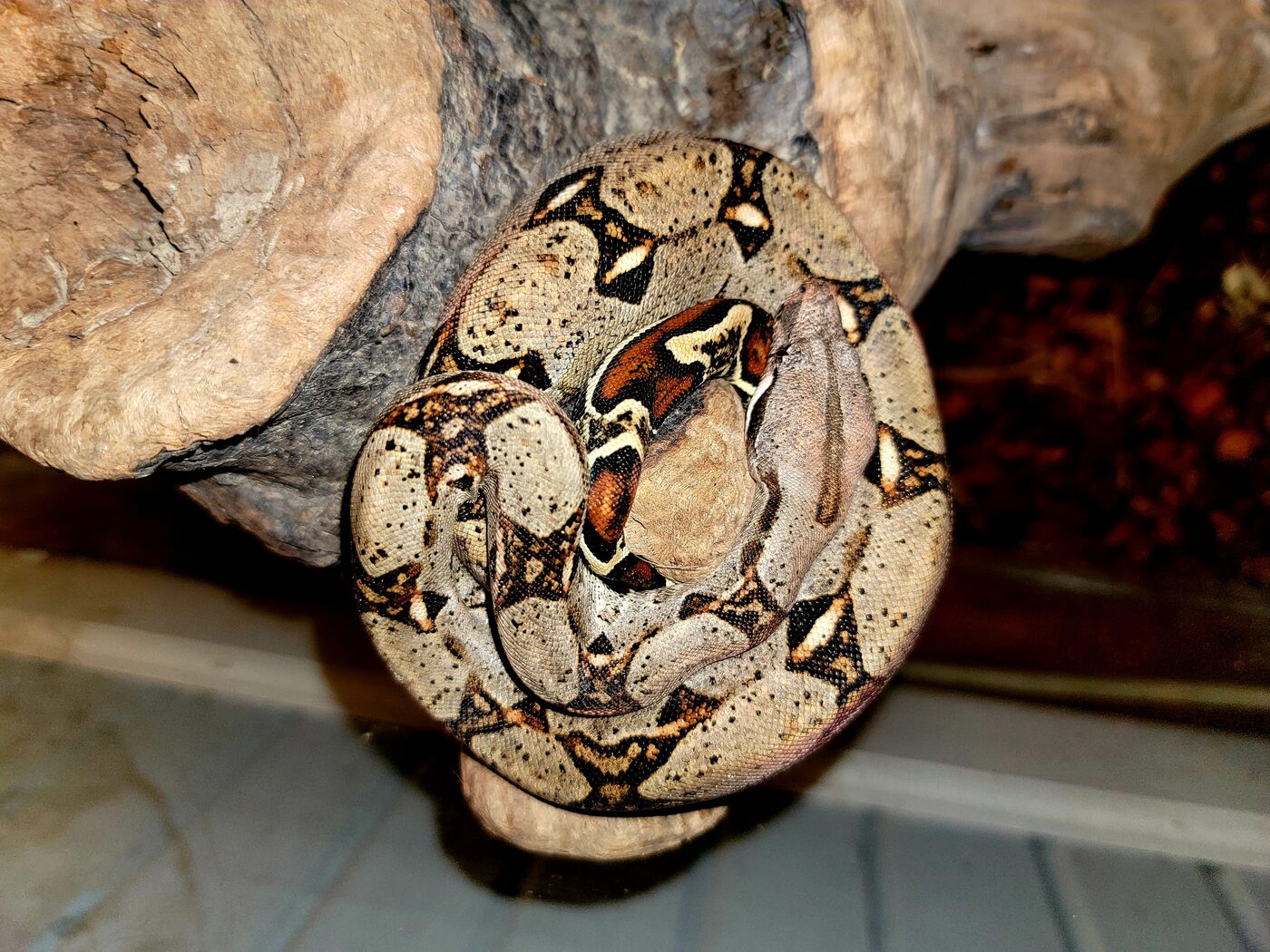
Common boa constrictor (red-tailed boa)
Boa constrictor
A powerful but famously steady big snake.
Pet trade
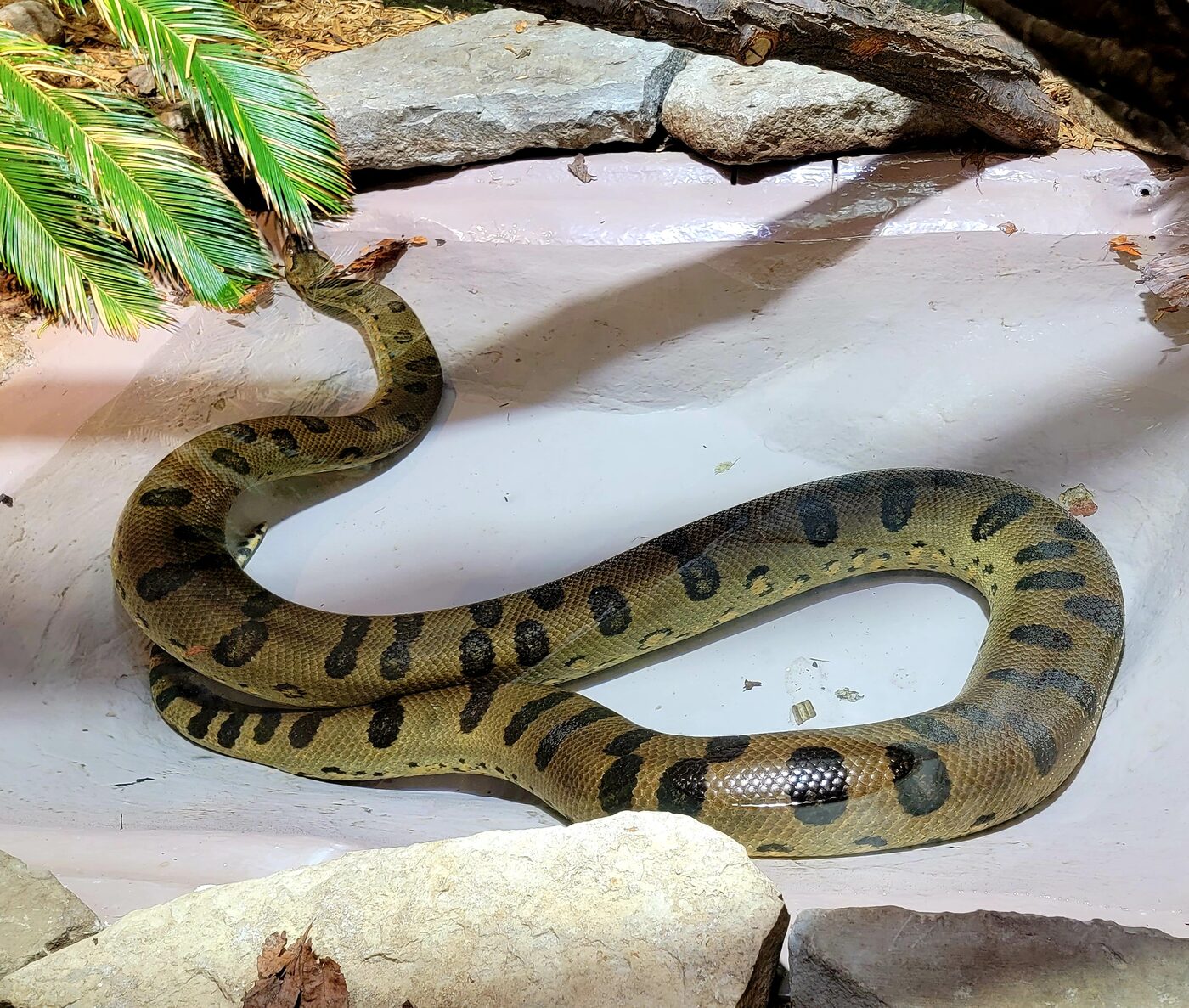
Green anaconda
Eunectes murinus
The heaviest snake on Earth, at home in the water.
Pet trade

Amazon basin emerald tree boa
Corallus batesii
Pet trade
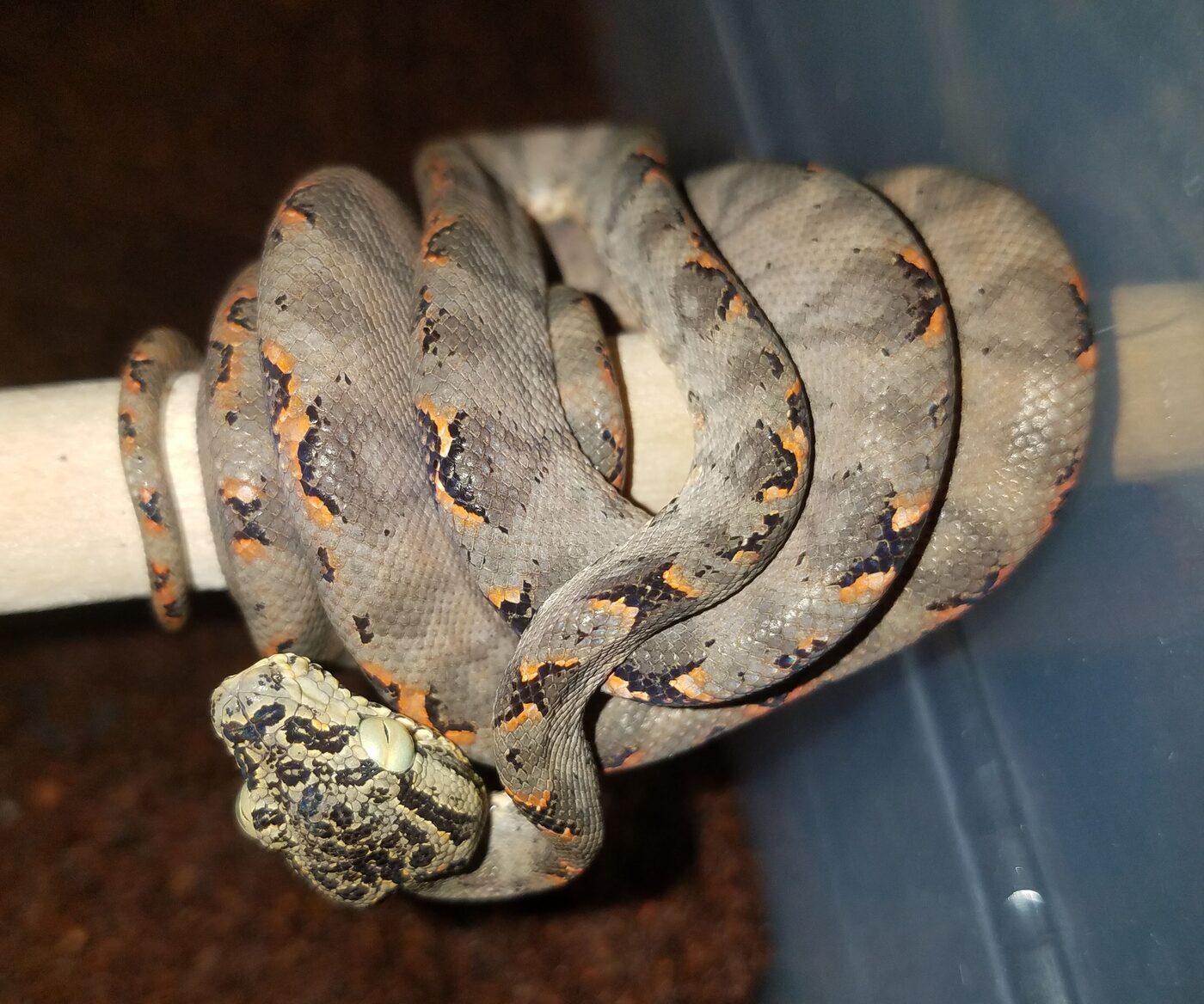
Amazon tree boa
Corallus hortulana
Pet trade

Annulated tree boa
Corallus annulatus
Pet trade

Arabian sand boa
Eryx jayakari
Pet trade