Home / Reptiles / Lizards / Centralian blue-tongued skink
Some federal rules applyCentralian blue-tongued skink
Tiliqua multifasciata
Reptiles › Lizards (Lacertilia) › Scincidae (Skinks)
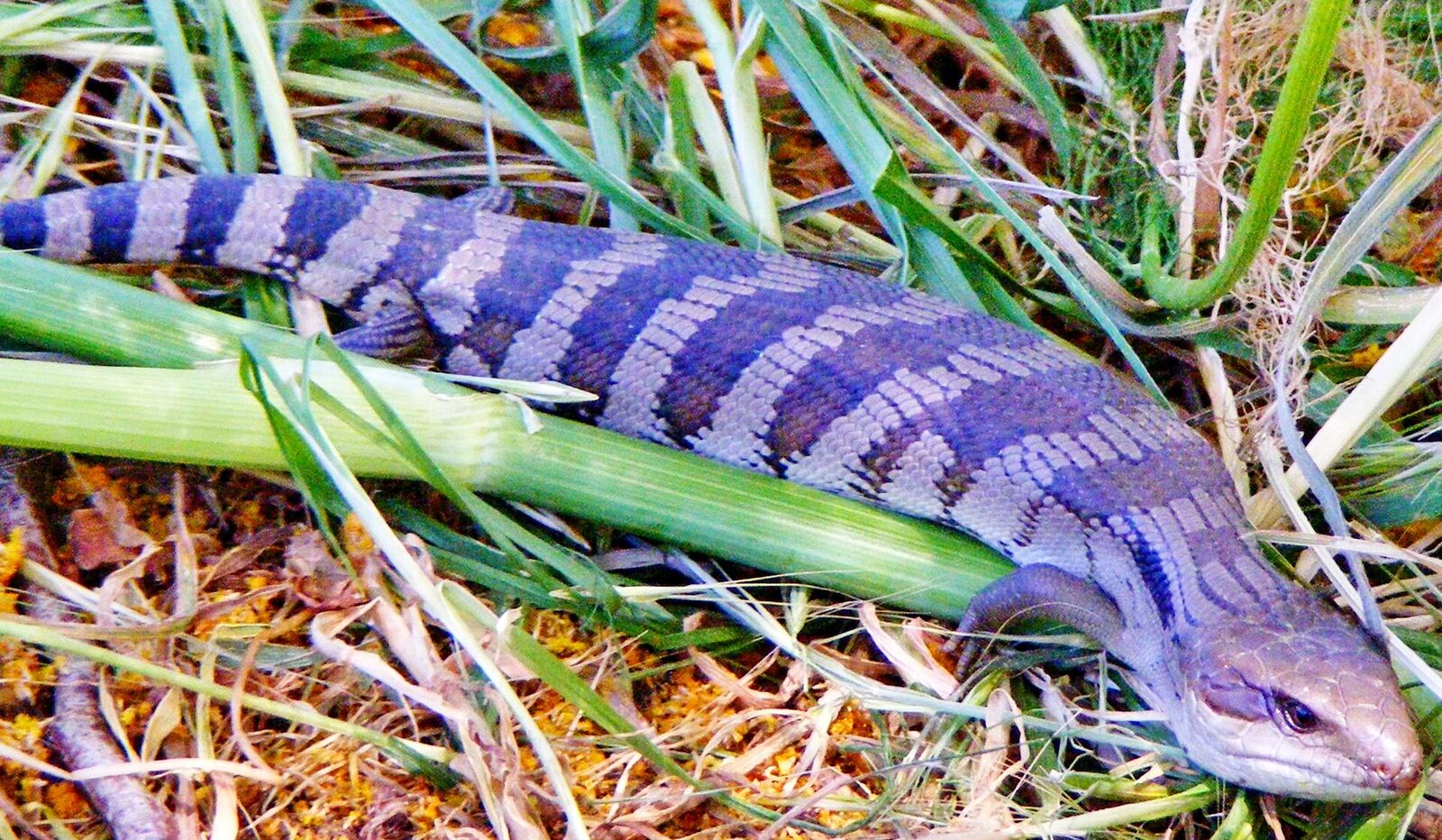
The Centralian blue-tongued skink or Centralian blue-tongue (Tiliqua multifasciata) is a species of skink, occurring predominantly in the far north-west corner of New South Wales, Australia.

Care at a glance
Species-specific values
Values researched for this exact species. Where they differ from the group guide below, follow these. Air, surface and water temperatures are listed separately, and each source is kept as published rather than averaged.
| Humidity | 20–40 % RH Species recommendation | 206 |
| Cool zone temperature | 70–85 °F Source cool-zone wording; measurement surface versus air not explicit | 206 |
| Air temperature night | 65–75 °F | 206 |
| Basking surface temperature | 100–105 °F | 206 |
Care guide
Blue-tongued skinks and Australian/Pacific skinks
Applies to most species in this group. Habitat: Woodland, grassland and rainforest. Individual species can differ, so compare with the species numbers above and the linked sources.
Housing & setup
- For Tiliqua, current ReptiFiles guidance calls for at least 12 ft² of floor area; this does not specify arboreal Corucia housing.
- Deep substrate, a basking spot and UVB.
Climate & lighting
Starting point only: Tiliqua moisture requirements differ by species and subspecies; the 40–60% default excludes Indonesian and arid forms. Check the species-specific values for this animal where shown.
| Basking spot | 95–105°F |
| Warm side / daytime | 82–88°F |
| Cool side | 72–78°F |
| Humidity | 40–60% |
- UVB: Recommended.
Diet
- Blue-tongues: omnivorous mix of lean protein, greens and vegetables. Solomon Islands skinks: strictly leafy greens and vegetables.
Social life
- Tiliqua should be housed individually; do not extrapolate that recommendation to every genus in this guide.
Health watch
- Obesity and retained shed; Indonesian species need more humidity than Australian ones.
Understanding the animal
About this animal
About this animal
It is one of six species belonging to the genus Tiliqua; the blue-tongued skinks and the shinglebacks. This species of reptile classifies as a lizard.
Quoted from the Wikipedia article “Centralian blue-tongued skink” (CC BY-SA 4.0) 174
In the wild
In the wild
Quoted from the matching sections of reputable sources for this exact species. Specialist databases are used first; Wikipedia (community-edited, CC BY-SA 4.0) only fills gaps. Other sources are short credited quotes.
| Overview | The Centralian blue-tongued skink or Centralian blue-tongue (Tiliqua multifasciata) is a species of skink, occurring predominantly in the far north-west corner of New South Wales, Australia. It is one of six species belonging to the genus Tiliqua; the blue-tongued skinks and the shinglebacks. This species of reptile classifies as a lizard. — Wikipedia (community-edited) |
| Where it lives | The geographical distribution of the blue-tongued skink lies throughout the far north-west corner of New South Wales and South Australia, and centrally throughout Western Australia, the Northern Territory and Queensland. In general, habitats include a variety of arid and semi-arid stony and red sandy spinifex vegetated areas. — Wikipedia (community-edited) |
| Wild diet | Analyses of stomach contents have shown that the blue-tongue feeds on a combination of seeds, insects, livestock dung and some vertebrate and invertebrate material such as that of bird or other reptilian remains (i.e. fragments of bone, loose feathers). — Wikipedia (community-edited) |
| Behavior | Like many other reptilian species, the blue-tongued is a fairly sedentary terrestrial creature. It is a ground-dwelling, diurnal species and displacements are relatively short (less than 20 metres) and on average the total distance travelled each day can fall between 122 and 245 metres. — Wikipedia (community-edited) |
| Reproduction | Along with the other five species of the same genus, the Centralian blue-tongued skink is a viviparous species – it bears between two and 10 live young in a single litter. — Wikipedia (community-edited) |
| Appearance and size | The Centralian blue-tongue is of a very robust build, short body and slender tail, and is among the largest 1% of species in the family Scincidae. Both the forelimb and hindlimb have five digits. — Wikipedia (community-edited) |
| Conservation | The geographical location of the skink sees one of its major threats to be ingestion of the invasive and toxic cane toad, but it is also under pressures from other anthropogenic processes such as fire and habitat fragmentation. However, the species is still currently listed as least concern. — Wikipedia (community-edited) |
Native climate (measured)
Native climate (measured)
| Warm-season highs | about 101°F (up to 104°F in the hottest sampled areas) |
| Cool-season lows | about 48°F (down to 40°F in the coldest sampled areas) |
| Average temperature | 70–81°F across sampled records |
| Relative humidity | 35–43% on average (driest month about 27%) |
| Rainfall | about 352 mm a year, with strong wet and dry seasons |
Measured at 118 wild occurrence records sampled against WorldClim 2.1 climate data (1970–2000 averages). Air conditions in the range are ecological context, not enclosure settings: microhabitats such as burrows, leaf litter or basking rocks can be cooler, warmer or more humid.
Data and studies
Researched care notes
Researched care notes
Findings checked against veterinary, zoo, welfare, keeper and peer-reviewed sources. Air, basking-surface and water temperatures are kept separate, and where sources disagree both are shown. “Study” notes report what a paper measured, not a universal rule.
Blue-Tongued Skink
Researched for this genus; applies to its species unless a species note says otherwise.
- Surface: ReptiFiles distinguishes a general basking surface of 37–40°C from 40–46°C for Tiliqua scincoides; these are localized surface recommendations, not whole-enclosure air settings.1
- Air / night: the guide gives Australian species approximately 18–24°C and Indonesian species 21–24°C; apply the identified species' requirements rather than merging them.1
- Humidity / taxon difference: Northern and Eastern T. scincoides receive 40–60% RH guidance, versus 60–80% for Indonesian T. gigas; uncertain identification prevents choosing a single genus-wide value.1
- Study: eleven adult T. scincoides showed increased plasma 25-hydroxyvitamin D after four weeks of either two or twelve hours of daily UVB exposure.2
- Study limit: this UVB experiment measured a biochemical response under one diet; it does not establish a universal safe lamp distance, UV Index, or supplementation dose for every Tiliqua species.2
- House individually; ReptiFiles warns that territorial disputes can seriously injure co-housed skinks of either sex.3
- Provide substantial horizontal movement space plus sufficient height for furnishings and safely installed lighting; cage footprint alone does not describe the usable setup.3
- Feed a varied omnivorous ration containing suitable plant and animal foods; younger skinks need a different balance from adults.4
- Prepare firm vegetables in finely chopped, shredded or mashable form so they are easier to consume.4
- ReptiFiles — Blue Tongue Skink Temperatures, UVB and Humidity
- Godke et al. (2025) — Measuring the Rise and Fall of Plasma 25-Hydroxyvitamin D Concentrations with Ultraviolet B Exposure and Withdrawal in Blue-Tongued Skinks (Tiliqua scincoides)
- ReptiFiles — Blue Tongue Skink Enclosure Size Requirements
- ReptiFiles — Blue Tongue Skink Food
The numbers
The numbers
Each bar is what one source reports. Where several sources weigh in, the dashed gold band marks their average.
Typical adult weight
Average adult body mass in each database (FishBase gives the maximum recorded weight).
Sources for this sheet
- Myhrvold et al. (2015). An amniote life-history database. Ecology 96: 3109 Peer-reviewed researchPeer-reviewed compilation of life-history data for over 21,000 birds, mammals and reptiles.
- Species+ (UNEP-WCMC and the CITES Secretariat) Zoo, university or veterinaryThe official database of species listed under CITES.
- USFWS International Affairs: CITES Zoo, university or veterinaryFederal agency that issues CITES permits.
- Merck Veterinary Manual: Management and husbandry of reptiles Zoo, university or veterinaryThe Merck Veterinary Manual: a standard veterinary reference written and reviewed by veterinary specialists.
- Merck Veterinary Manual: Nutritional, metabolic and endocrine diseases of reptiles Zoo, university or veterinaryThe Merck Veterinary Manual: a standard veterinary reference written and reviewed by veterinary specialists.
- ReptiFiles: Blue-tongued skink care Experienced keeper or breederWell-researched care guide.
- ReptiFiles: Blue-tongued skink temperatures, lighting and humidity Experienced keeper or breederAdded in the 2026 source-checked care-guide review.
- ReptiFiles: Blue-tongued skink enclosure size Experienced keeper or breederAdded in the 2026 source-checked care-guide review.
- The Reptile Database Peer-reviewed researchScientist-curated catalog of every reptile species, with taxonomy and literature.
- GBIF Backbone Taxonomy (Global Biodiversity Information Facility) Peer-reviewed researchInternational scientific taxonomy used here for classification.
- Wikipedia (species article) Community referenceFree encyclopedia; useful overviews with their own citations. Intro text is quoted under CC BY-SA 4.0.
- iNaturalist (captive observations) Community referenceCommunity observation platform run by the California Academy of Sciences and National Geographic; observations marked captive show animals living in homes, zoos and aquariums.
More skinks
 In-depth
Common blue-tongued skink
Tiliqua scincoides
Docile, chunky and flashes a blue tongue.
Pet trade

Blotched blue-tongued skink
Tiliqua nigrolutea
Pet trade
Fire skink
Lepidothyris fernandi
Pet trade

Indonesian blue-tongued skink
Tiliqua gigas
Pet trade

Sandfish skink
Scincus scincus
Pet trade

Shingleback skink
Tiliqua rugosa
Pet trade