
Home / Reptiles / Lizards / Scincidae / Eastern Pilbara spiny-tailed skink
Some federal rules applyEastern Pilbara spiny-tailed skink
Egernia epsisolus
Reptiles › Lizards (Lacertilia) › Scincidae (Skinks)
The Eastern Pilbara spiny-tailed skink (Egernia epsisolus) is a species of large skink, a lizard in the family Scincidae.

Care at a glance
Species-specific values
Values researched for this exact species. Air, surface and water temperatures are listed separately, and each source is kept as published rather than averaged.
| Minimum enclosure | Pairs or small groups require 90 × 45 × 45 cm as the smallest size. Source: design-reptiles.com | |
| Basking surface temperature | 113 °F (45 °C) Source: design-reptiles.com | |
| Cool side air temperature | 79–82 °F (26–28 °C) Source: design-reptiles.com | |
| Humidity | 50–60 % Source: design-reptiles.com | |
| Uvb lighting | Strong UVB required, 12-hour day/night cycle. Source: design-reptiles.com | |
| Diet | Omnivorous diet of insects and plant matter. Source: design-reptiles.com | |
| Social housing | Suitable for a pair or small group. Source: design-reptiles.com |
Understanding the animal
About this animal
About this animal
The species is native to the Pilbara in northwestern Australia. Prior to 2011, it was considered to be the pygmy spiny-tailed skink.
From Wikipedia: Eastern Pilbara spiny-tailed skink, CC BY-SA 4.0 (excerpt)
In the wild
In the wild
Read about this species in the wild at The Reptile Database.
Native climate (measured)
Native climate (measured)
| Warm-season highs | about 104°F (up to 105°F in the hottest sampled areas) |
| Cool-season lows | about 53°F (down to 49°F in the coldest sampled areas) |
| Average temperature | 78–81°F across sampled records |
| Relative humidity | 34–40% on average (driest month about 26%) |
| Rainfall | about 344 mm a year, with strong wet and dry seasons |
Measured at 17 wild occurrence records sampled against WorldClim 2.1 climate data (1970–2000 averages). Air conditions in the range are ecological context, not enclosure settings: microhabitats such as burrows, leaf litter or basking rocks can be cooler, warmer or more humid.
Profile
Profile
Researched for this exact species. Sources are listed under In the wild above.
Sources for this sheet
- Species+ (UNEP-WCMC and the CITES Secretariat) Zoo, university or veterinaryThe official database of species listed under CITES. UNEP (2026). The Species+ Website. Nairobi, Kenya. Compiled by UNEP-WCMC, Cambridge, UK. Available at: www.speciesplus.net. [Accessed 04/10/2026].
- USFWS International Affairs: CITES Zoo, university or veterinaryFederal agency that issues CITES permits.
- The Reptile Database Peer-reviewed researchScientist-curated catalog of every reptile species, with taxonomy and literature.
- GBIF Backbone Taxonomy (Global Biodiversity Information Facility) (CC BY 4.0) Peer-reviewed researchInternational scientific taxonomy used here for classification. GBIF Secretariat (2023). GBIF Backbone Taxonomy. Checklist dataset https://doi.org/10.15468/39omei, accessed via GBIF.org.
- Wikipedia (species article) (CC BY-SA 4.0) Community referenceFree encyclopedia; useful overviews with their own citations. Short excerpts are quoted under CC BY-SA 4.0, each credited with a link to its article.
- iNaturalist (captive observations) Community referenceCommunity observation platform run by the California Academy of Sciences and National Geographic; observations marked captive show animals living in homes, zoos and aquariums.
More skinks
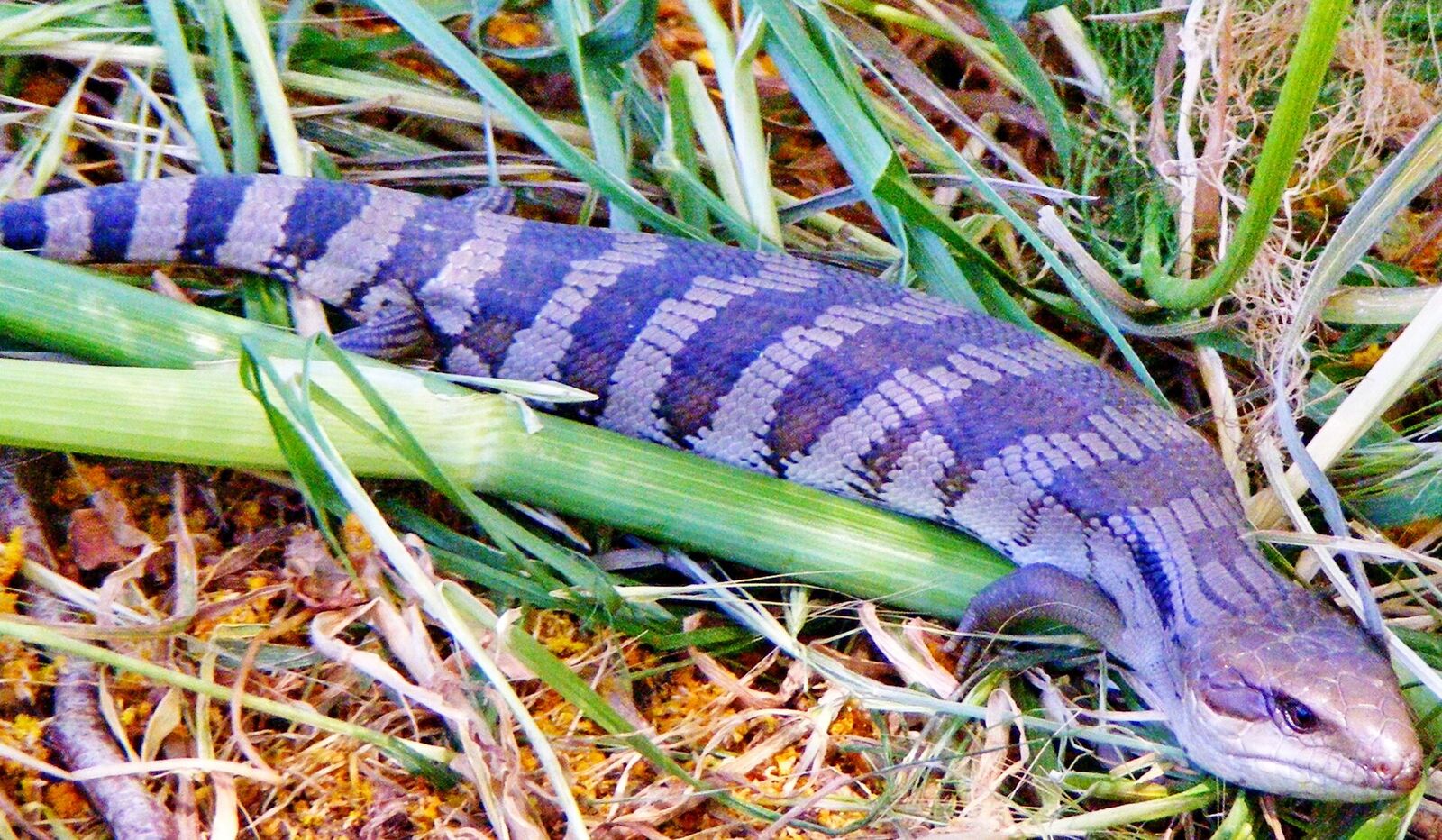
Common blue-tongued skink
Tiliqua scincoides
Docile, chunky and flashes a blue tongue.
Pet trade

Blotched blue-tongued skink
Tiliqua nigrolutea
Pet trade

Centralian blue-tongued skink
Tiliqua multifasciata
Pet trade

Cunningham's skink
Egernia cunninghami
Pet trade

East Indian brown mabuya
Eutropis multifasciata
Pet trade

Eastern blue-tongued skink
Tiliqua scincoides
Pet trade