
Home / Fishes / Killifish and livebearers / Ceylon killifish
No federal permit to keepCeylon killifish
Aplocheilus dayi
Fishes › Killifish and livebearers (Cyprinodontiformes) › Aplocheilidae (Panchax killifish)
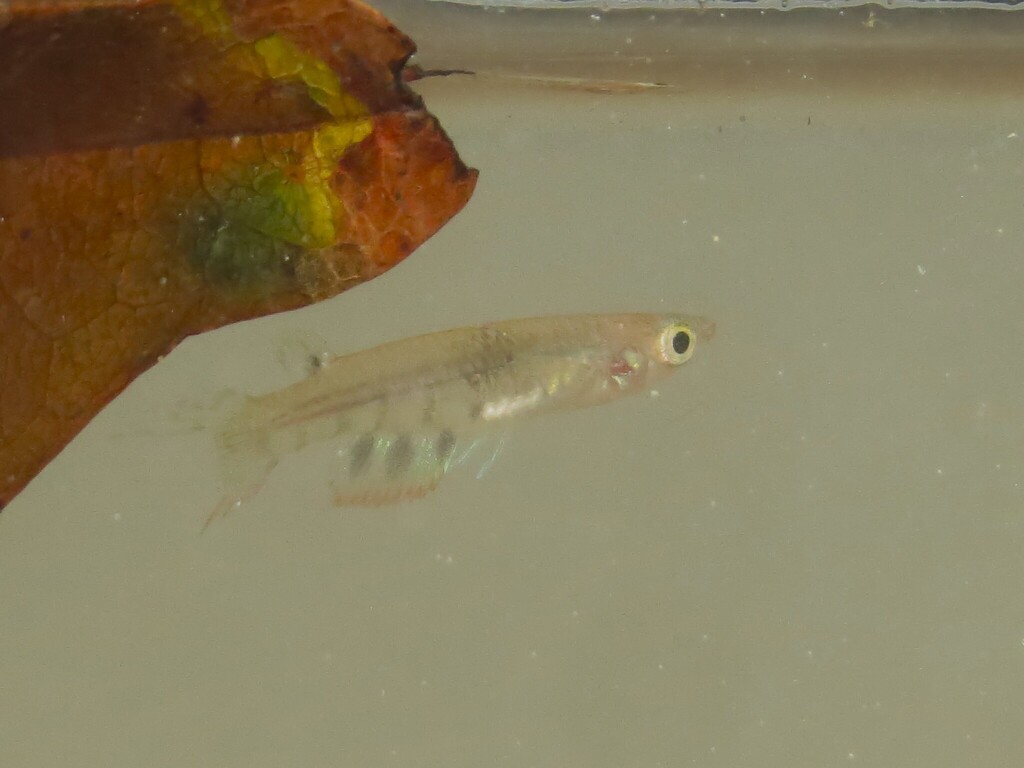
The Ceylon killifish (Sinhala: උඩ හඳයා, romanized: uda handaya; Aplocheilus dayi) is a species of killifish endemic to Sri Lanka.
Care at a glance
Species-specific values
Values researched for this exact species. Air, surface and water temperatures are listed separately, and each source is kept as published rather than averaged.
| Water temperature | 72–77 °F Source: killis.org.uk | |
| Spawning trigger (raise water to) | 74–78 °F Source: killis.org.uk | |
| Water temperature | 74 °F Source: killis.org.uk | |
| Diet | Fry can eat microworm and baby brine shrimp, then sifted daphnia; introduce prepared food early. Mosquito larvae promote breeding and growth. Source: killis.org.uk | |
| Substrate | Keep in a well-planted tank with a good covering of floating plants; use willow root, coconut fibre, and surface Myriophyllum for spawning. Source: killis.org.uk | |
| Feeding frequency | Feed fry microworm and baby brine shrimp from the start, followed soon by sifted daphnia. Source: killis.org.uk |
Species-specific aquarium care
- Tank: At least 24 in long and 12 in front to back for one adult (adults commonly reach about 2.8 in / 7 cm; the largest recorded was 3.5 in).
- Water: Freshwater (tolerates brackish).
- Temperature: 68–77°F (range recorded for this species).
- Layout: Uses both the bottom and open water: give open swimming space plus cover near the substrate.
- Diet: A predator: feed meaty foods sized to its mouth (frozen fish, shrimp, worms); it will eat tankmates that fit in its mouth. FishBase classes it as a carnivore.
Calculated from this species' own FishBase record: tank size from its typical adult length and swimming zone, water values from its recorded ranges. The group guide below fills in general care.
Understanding the animal
About this animal
About this animal
It grows to a length of 9 cm (3.5 in). Males and females have a black dot at the rear end of the base of the dorsal fin.
From Wikipedia: Ceylon killifish, CC BY-SA 4.0 (excerpt)
In the wild
In the wild
From this species’ own FishBase record (habitat, bottom type, water and breeding data), not its family. Wild conditions are context, not enclosure settings.1
| Where it lives | Lives in freshwater and brackish water, in rivers and streams. Uses both the bottom and open water. |
| Climate | Tropical climate. |
| Wild diet | Hunting macrofauna (predator). |
| Behavior to plan for | Breeding: open water/substratum egg scatterers. |
Data and studies
The numbers
The numbers
Each bar is what one source reports. Where several sources weigh in, the dashed gold band marks their average.
Adult length
Common length to maximum recorded length. Measured as total length. Fish in home aquariums often stay smaller than wild records.
Sources for this sheet
- FishBase (Froese & Pauly, eds.), version 24.07 (CC BY-NC 4.0) Peer-reviewed researchThe global scientific database on fishes, maintained by a consortium of research institutions; every value is referenced.
- Wikipedia (species article) (CC BY-SA 4.0) Community referenceFree encyclopedia; useful overviews with their own citations. Short excerpts are quoted under CC BY-SA 4.0, each credited with a link to its article.
More panchax killifish

Dwarf panchax
Aplocheilus parvus
Aquarium hobby
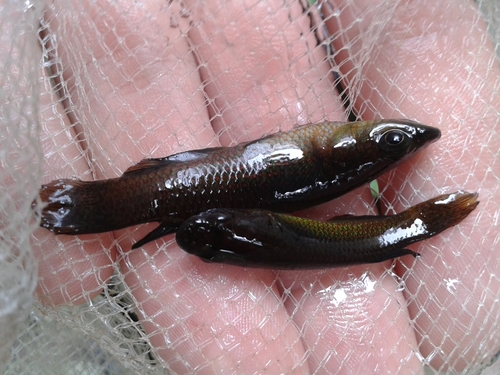
Golden panchax
Pachypanchax playfairii
Aquarium hobby
Green panchax
Aplocheilus blockii
Aquarium hobby

Powder-blue panchax
Pachypanchax omalonotus
Aquarium hobby

Sakaramy Killifish
Pachypanchax sakaramyi
Aquarium hobby

Striped panchax
Aplocheilus lineatus
Aquarium hobby