
Home / Reptiles / Lizards / Phrynosomatidae / Crevice spiny lizard
No federal permit to keepCrevice spiny lizard
Sceloporus poinsettii
Reptiles › Lizards (Lacertilia) › Phrynosomatidae (Spiny and horned lizards)
Sceloporus poinsettii, the crevice spiny lizard, is a species of small, phrynosomatid lizard.
From Wikipedia: Sceloporus poinsettii, CC BY-SA 4.0 (excerpt)

Care at a glance
Species-specific values
Values researched for this exact species. Air, surface and water temperatures are listed separately, and each source is kept as published rather than averaged.
| Minimum enclosure | Use glass sliding doors, big vents, and dimensions near 3 x 2 x 2ft. Source: reptilecentre.com | |
| Basking surface temperature | 95 °F Source: reptilecentre.com | |
| Night temperature | 70 °F Source: reptilecentre.com | |
| Uvb lighting | Use a strong 10–12% UV tube running at least two-thirds the enclosure length. Source: reptilecentre.com | |
| Diet | Brown crickets are recommended as the main diet; black crickets and locusts are alternatives. Source: reptilecentre.com | |
| Feeding frequency | Offer fatty grubs and worms at most once or twice a week. Source: reptilecentre.com | |
| Social housing | A male and female may be kept together and may breed. Source: reptilecentre.com | |
| Substrate | Use coarse beech woodchip or a natural sand, soil and clay mix. Source: reptilecentre.com |
Warnings
Understanding the animal
In the wild
In the wild
| Overview | Sceloporus poinsettii, the crevice spiny lizard, is a species of small, phrynosomatid lizard. — From Wikipedia: Sceloporus poinsettii, CC BY-SA 4.0 (excerpt) |
| Where it lives | In the United States, Sceloporus poinsettii occurs in the Chihuahua Desert and Edwards Plateau regions of Texas and New Mexico. In Mexico it occurs in the border states from the Sierra Madre Occidental of Sonora, eastward through Chihuahua, Coahuila, and Nuevo Leon. — From Wikipedia: Sceloporus poinsettii, CC BY-SA 4.0 (excerpt) |
| Wild diet | Crevice spiny lizards are insectivorous, consuming a wide variety of spiders, beetles, and other insects, but they will sometimes also consume tender vegetation. — From Wikipedia: Sceloporus poinsettii, CC BY-SA 4.0 (excerpt) |
| Behavior | Crevice spiny lizards are typically shy and nervous, fleeing up a rock face or into a crevice if approached. They prefer semi-arid habitats, often of limestone rock, where there are numerous holes and easily accessible cracks. — From Wikipedia: Sceloporus poinsettii, CC BY-SA 4.0 (excerpt) |
| Reproduction | Sceloporus poinsettii is one of the several species of Sceloporus that are ovoviviparous. Breeding occurs in the spring, and a litter of up to 11 young are born in midsummer. — From Wikipedia: Sceloporus poinsettii, CC BY-SA 4.0 (excerpt) |
Read about this species in the wild at The Reptile Database.
Native climate (measured)
Native climate (measured)
| Warm-season highs | about 92°F (up to 95°F in the hottest sampled areas) |
| Cool-season lows | about 34°F (down to 25°F in the coldest sampled areas) |
| Average temperature | 56–66°F across sampled records |
| Relative humidity | 42–60% on average (driest month about 46%) |
| Rainfall | about 435 mm a year |
| Winters | Cool to cold winters (lows around 34°F) in much of its native range. Seasonal slowdown may be relevant, but species-specific biology determines whether brumation or hibernation occurs. |
Measured at 108 wild occurrence records sampled against WorldClim 2.1 climate data (1970–2000 averages). Air conditions in the range are ecological context, not enclosure settings: microhabitats such as burrows, leaf litter or basking rocks can be cooler, warmer or more humid.
Profile
Profile
Researched for this exact species. Sources are listed under In the wild above.
Data and studies
The numbers
The numbers
Each bar is what one source reports. Where several sources weigh in, the dashed gold band marks their average.
Maximum recorded lifespan
Longest recorded lifespan reported by each database; typical lifespans are usually shorter. The AnAge record comes from an animal in human care.
Typical adult weight
Average adult body mass in each database (FishBase gives the maximum recorded weight).
Adult snout-to-vent length
Body length without the tail.
Sources for this sheet
- AnAge: The Animal Ageing and Longevity Database (Human Ageing Genomic Resources) (CC BY 3.0) Peer-reviewed researchCurated, referenced longevity and life-history records for thousands of species; maximum lifespans are often from zoo animals.
- Myhrvold et al. (2015). An amniote life-history database. Ecology 96: 3109 Peer-reviewed researchPeer-reviewed compilation of life-history data for over 21,000 birds, mammals and reptiles.
- The Reptile Database Peer-reviewed researchScientist-curated catalog of every reptile species, with taxonomy and literature.
- Wikipedia (species article) (CC BY-SA 4.0) Community referenceFree encyclopedia; useful overviews with their own citations. Short excerpts are quoted under CC BY-SA 4.0, each credited with a link to its article.
- iNaturalist (captive observations) Community referenceCommunity observation platform run by the California Academy of Sciences and National Geographic; observations marked captive show animals living in homes, zoos and aquariums.
More spiny and horned lizards

Baja blue rock lizard
Petrosaurus thalassinus
Pet trade

Blue spiny lizard
Sceloporus cyanogenys
Pet trade

Coast horned lizard
Phrynosoma coronatum
Pet trade

Desert spiny lizard
Sceloporus magister
Pet trade
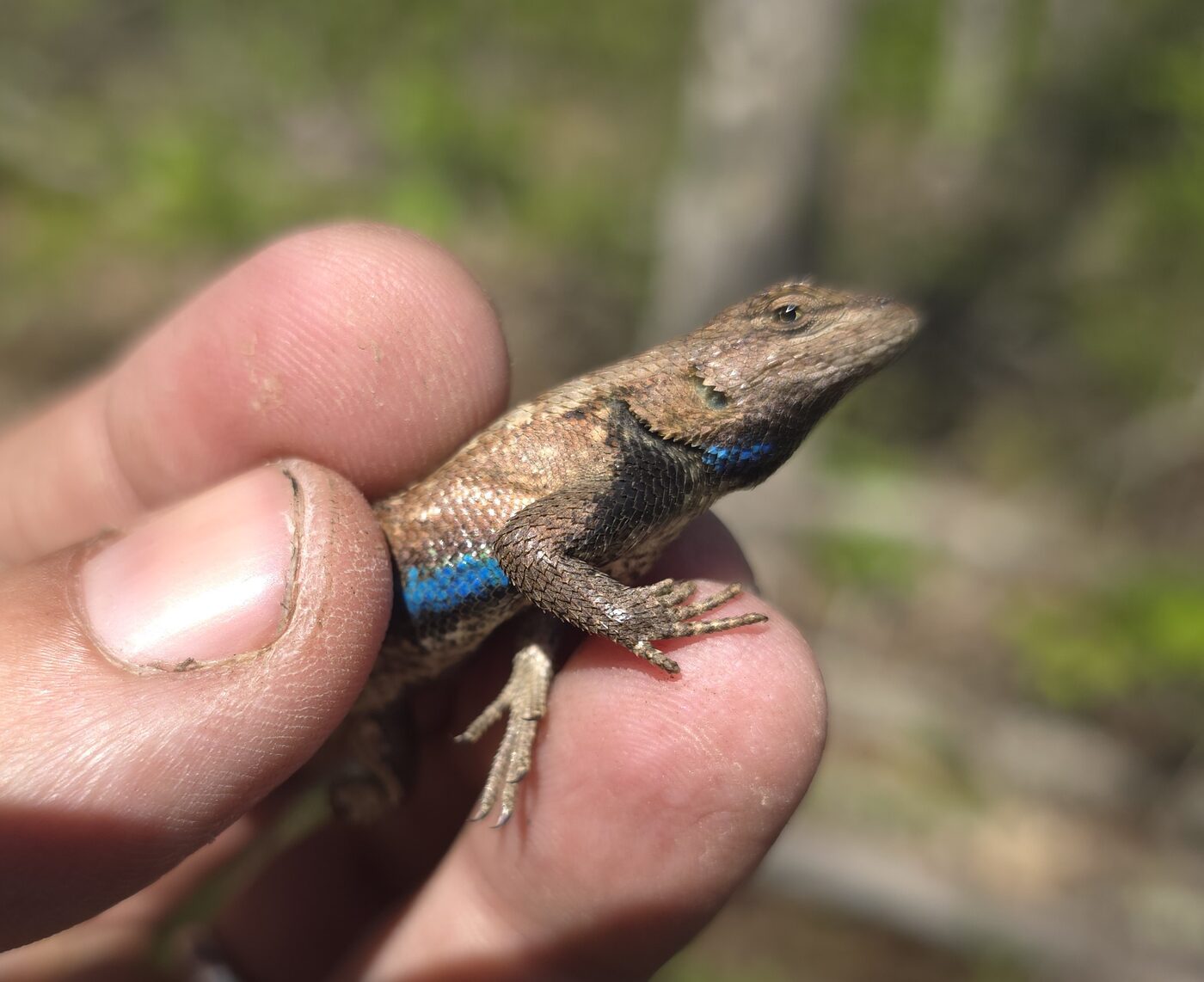
Eastern fence lizard
Sceloporus undulatus
Pet trade

Emerald swift
Sceloporus malachiticus
Pet trade