
Home / Amphibians / Frogs and toads / Cuban toad
No federal permit to keepCuban toad
Peltophryne peltocephala
Amphibians › Frogs and toads (Anura) › Bufonidae (Toads)
Peltophryne peltocephala is a species of toad in the family Bufonidae.
From Wikipedia: Peltophryne peltocephala, CC BY-SA 4.0 (excerpt)

Care at a glance
Species-specific values
Values researched for this exact species. Air, surface and water temperatures are listed separately, and each source is kept as published rather than averaged.
| Minimum enclosure | >= 45 L Source: atlarium.bio | |
| Minimum enclosure | An adult needs at least 80x45x45 cm. Source: atlarium.bio | |
| Warm side air temperature | 75–79 °F (24–26 °C) Source: atlarium.bio | |
| Basking surface temperature | 84 °F (up to 29 °C) Source: atlarium.bio | |
| Humidity | 60–80 % Source: atlarium.bio | |
| Uvb lighting | 2–5 % Source: atlarium.bio | |
| Diet | Feed large crickets, Dubia roaches, locusts, and earthworms. Source: atlarium.bio | |
| Feeding frequency | Dust prey with calcium and multivitamin supplements containing D3 twice a week. Source: atlarium.bio | |
| Social housing | Can be housed in groups in large terrariums; avoid mixing different sizes. Source: atlarium.bio | |
| Substrate | Use damp soil and coco fiber with leaf litter. Source: atlarium.bio | |
| Seasonal cooling | Winter brumation is not required; a slight temperature drop may stimulate breeding. Source: atlarium.bio |
Warnings
Understanding the animal
About this animal
About this animal
It is endemic to Cuba and found in central and eastern Cuba as well as on some outlying islands. It occurs in a range of habitats including broadleaf forest, grassland, savanna, and agricultural areas.
From Wikipedia: Peltophryne peltocephala, CC BY-SA 4.0 (excerpt)
In the wild
In the wild
| Overview | Peltophryne peltocephala is a species of toad in the family Bufonidae. It is endemic to Cuba and found in central and eastern Cuba as well as on some outlying islands. It occurs in a range of habitats including broadleaf forest, grassland, savanna, and agricultural areas. It is a common species but locally threatened by habitat loss. — From Wikipedia: Peltophryne peltocephala, CC BY-SA 4.0 (excerpt) |
Native climate (measured)
Native climate (measured)
| Warm-season highs | about 90°F (up to 91°F in the hottest sampled areas) |
| Cool-season lows | about 67°F (down to 63°F in the coldest sampled areas) |
| Average temperature | 76–79°F across sampled records |
| Relative humidity | 78–79% on average (driest month about 75%) |
| Rainfall | about 971 mm a year |
Measured at 77 wild occurrence records sampled against WorldClim 2.1 climate data (1970–2000 averages). Air conditions in the range are ecological context, not enclosure settings: microhabitats such as burrows, leaf litter or basking rocks can be cooler, warmer or more humid.
Data and studies
The numbers
The numbers
Each bar is what one source reports. Where several sources weigh in, the dashed gold band marks their average.
Maximum recorded lifespan
Longest recorded lifespan reported by each database; typical lifespans are usually shorter. The AnAge record comes from an animal in human care.
Sources for this sheet
- AnAge: The Animal Ageing and Longevity Database (Human Ageing Genomic Resources) (CC BY 3.0) Peer-reviewed researchCurated, referenced longevity and life-history records for thousands of species; maximum lifespans are often from zoo animals.
- AmphibiaWeb (University of California, Berkeley) (CC BY-NC) Peer-reviewed researchUniversity-hosted database of amphibian biology and conservation.
- Wikipedia (species article) (CC BY-SA 4.0) Community referenceFree encyclopedia; useful overviews with their own citations. Short excerpts are quoted under CC BY-SA 4.0, each credited with a link to its article.
- iNaturalist (captive observations) Community referenceCommunity observation platform run by the California Academy of Sciences and National Geographic; observations marked captive show animals living in homes, zoos and aquariums.
More toads
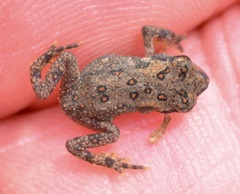
American toad
Anaxyrus americanus
Pet trade

Asian common toad
Duttaphrynus melanostictus
Pet trade
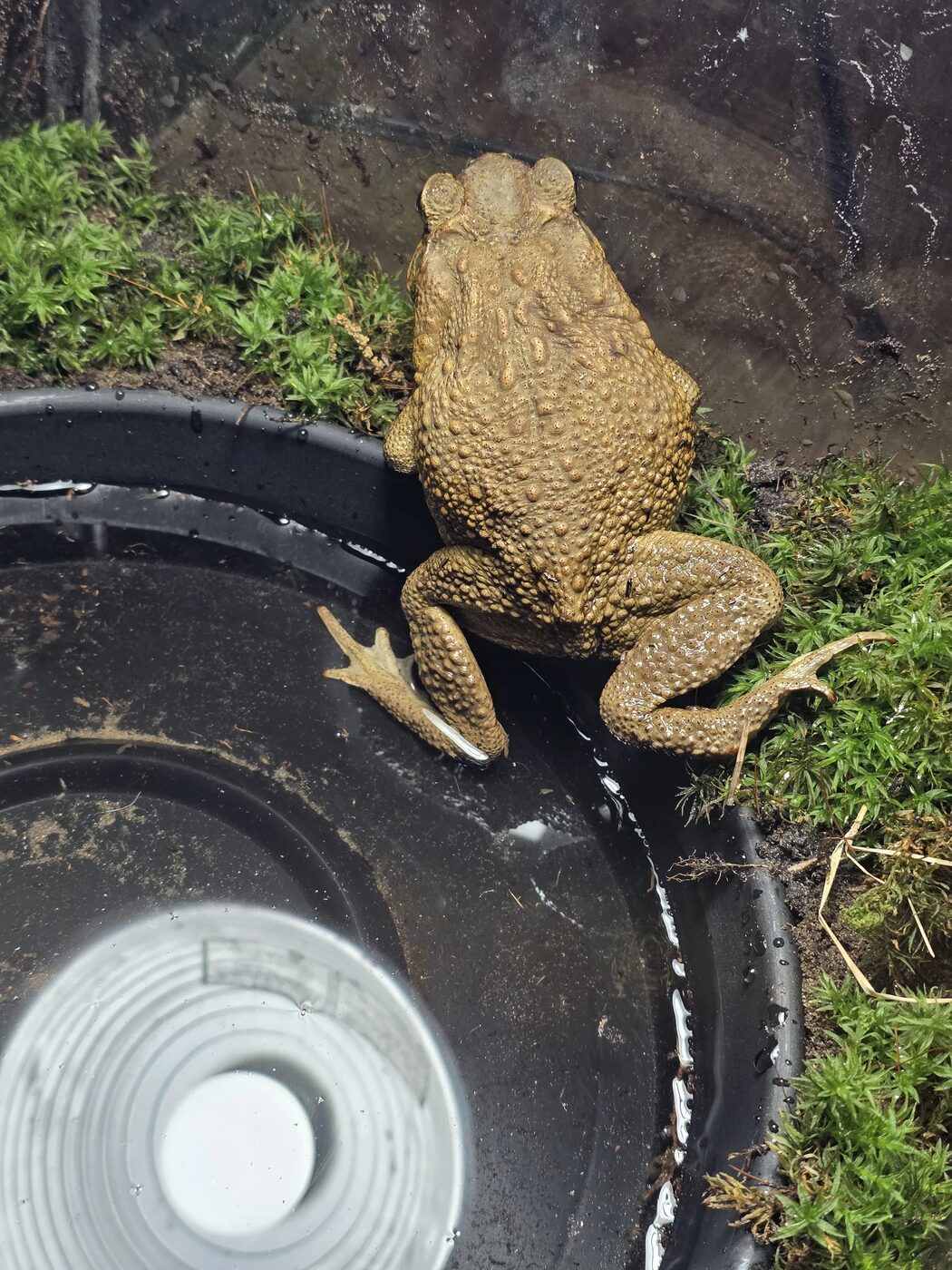
Cane toad
Rhinella marina
Pet trade

Colorado river toad
Incilius alvarius
Pet trade

Common European toad
Bufo bufo
Pet trade

Great Plains toad
Anaxyrus cognatus
Zoos & aquariums