
Home / Mammals / Rodents / Deer mouse
State permit usually requiredDeer mouse
Peromyscus maniculatus
Mammals › Rodents (Rodentia) › Cricetidae (Hamsters, voles, American mice)
The eastern deer mouse is a rodent native to eastern North America.

Care at a glance
Setup
One answer per setting. Where sources differ, the smaller figure is the minimum and the larger is what we recommend.
| Floor space | 64.5 cm2 per adult (lab minimum) the Guide's floor space for each adult mouse in lab cages | charleston.edu |
| Temperature | At least 64°F Preferably 73°F | pmc.ncbi.nlm.nih.gov |
| Nest box and hides | nesting material: rolled paper towels or fluffy shavings | charleston.edu |
| Food | A standard commercial rodent diet, with filtered water ad libitum | pmc.ncbi.nlm.nih.gov |
| Lighting | 12 hours on, 12 hours off | charleston.edu |
Warnings
Care guide
By age
| Baby | Feeding: Weaned at about 18 to 24 days; adult size at about 6 weeks | Wikipedia |
Understanding the animal
About this animal
About this animal
It is a species of the genus Peromyscus, a closely related group of New World mice often called "deermice". When formerly grouped with the western deermouse, it was once referred to as the North American deermouse, a species that is no longer recognized. It is fairly widespread across most of North America east of the Mississippi River, with the major exception being the lowland Southeastern United States.
From Wikipedia: Eastern deer mouse, CC BY-SA 4.0 (excerpt)
In the wild
In the wild
Researched for this exact species, not its family. Wild conditions are context, not enclosure settings.1
| Active | Nocturnal; spends the day in nests of plant material in trees or burrows. |
| Wild diet | Omnivore: seeds, fruit, insects and other arthropods, leaves and some fungi. |
Profile
Profile
Researched for this exact species. Sources are listed under In the wild above.
Remarkable facts
- 3 to 4 inches (8 to 10 cm) long, not counting the tail.
Data and studies
Veterinary & husbandry research
Veterinary & husbandry research
- Peromyscus maniculatus bairdii as a naturalistic mammalian model of obsessive-compulsive disorder: current status and future challenges. et al., Metabolic brain disease 2018
- The deer mouse (Peromyscus maniculatus bairdii) as a model organism to explore the naturalistic psychobiological mechanisms contributing to compulsive-like rigidity: A narrative overview of advances and opportunities. et al., Comprehensive psychiatry 2025
- A systematic review of the distribution and prevalence of viruses detected in the Peromyscus maniculatus species complex (Rodentia: Cricetidae). et al., PLoS pathogens 2025
- Hantavirus. et al., Clinical laboratory science: journal of the American Society for Medical Technology 2003
Peer-reviewed papers that mention this species alongside captivity, zoos, veterinary care or aquaculture. Some cover several species or mention it only in passing, so check the abstract. PubMed
Sources for this sheet
- Iacuc rodent husbandry (charleston.edu) Peer-reviewed researchPublished research.
- Official websites use.gov (pmc.ncbi.nlm.nih.gov) Peer-reviewed researchPublished research.
- Wikipedia: Peromyscus maniculatus (CC BY-SA 4.0) Community referenceEncyclopedia article.
- Iacuc sop rodent husbandry (research.cofc.edu) Peer-reviewed researchPublished research.
- GBIF Backbone Taxonomy (Global Biodiversity Information Facility) (CC BY 4.0) Peer-reviewed researchInternational scientific taxonomy used here for classification. GBIF Secretariat (2023). GBIF Backbone Taxonomy. Checklist dataset https://doi.org/10.15468/39omei, accessed via GBIF.org.
- Wikipedia (species article) (CC BY-SA 4.0) Community referenceFree encyclopedia; useful overviews with their own citations. Short excerpts are quoted under CC BY-SA 4.0, each credited with a link to its article.
- PubMed (U.S. National Library of Medicine) Peer-reviewed researchIndex of peer-reviewed veterinary, zoo and husbandry research.
More hamsters, voles, american mice
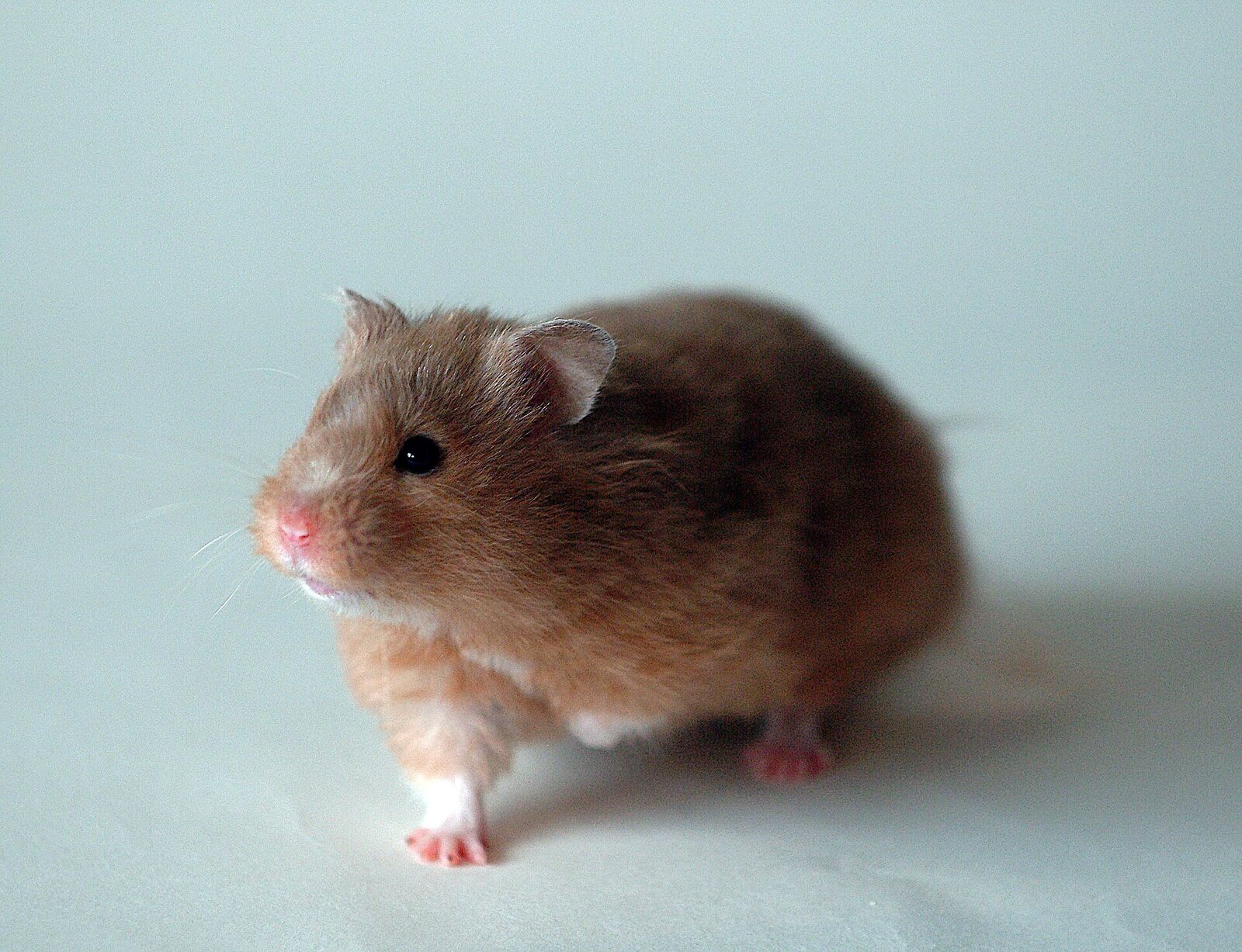
Golden (Syrian) hamster
Mesocricetus auratus
Small, nocturnal and fiercely independent.
Pet trade

California deermouse
Peromyscus californicus
Zoos & aquariums

Campbell's dwarf hamster
Phodopus campbelli
Pet trade

Chinese hamster
Cricetulus griseus
Pet trade

European hamster
Cricetus cricetus
Zoos & aquariums

Günther's vole
Microtus guentheri
Pet trade