Home / Invertebrates / Praying mantises / Deroplatys gorochovi
No federal permit to keepDeroplatys gorochovi
Deroplatys gorochovi
Invertebrates › Praying mantises (Mantodea) › Deroplatyidae (Dead leaf mantises)
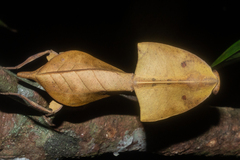
Deroplatys gorochovi is a species of praying mantis in the subfamily Deroplatyinae and the new (2019) family Deroplatyidae. This "dead leaf mantis" species is native to the tropical forests of southern Vietnam.
From Wikipedia: Deroplatys gorochovi, CC BY-SA 4.0 (excerpt)
Experience: Intermediate

FamilyDead leaf mantises
Kept byPet trade
Care at a glance
Species-specific values
Values researched for this exact species. Air, surface and water temperatures are listed separately, and each source is kept as published rather than averaged.
| Minimum enclosure | 77–86 °F (25–30 °C) Source: lobomantis.com | |
| Basking surface temperature | A thermostat-controlled ceramic heat emitter can create a basking gradient. Source: lobomantis.com | |
| Night temperature | 72–76 °F Source: lobomantis.com | |
| Humidity | 60–80 % Source: lobomantis.com | |
| Diet | Accepts flying and crawling prey at larger sizes, including flies and small-to-medium dubia roaches. Source: lobomantis.com | |
| Feeding frequency | Feeding schedule varies by instar; adults are fed every 3–4 days, or gravid females every 2–3 days. Source: lobomantis.com | |
| Social housing | House individually throughout life, including very young instars. Source: lobomantis.com | |
| Substrate | Use 2 inches of moistened coco fiber or sphagnum. Source: lobomantis.com | |
| Basking surface temperature | 68–86 °F Source: appalachiantarantulas.com | |
| Humidity | 60–80 % Source: appalachiantarantulas.com | |
| Minimum enclosure | Adult enclosure at least three times body length tall and twice as wide; well ventilated. Source: appalachiantarantulas.com | |
| Feeding frequency | Adults are fed every 2–3 days. Source: appalachiantarantulas.com | |
| Diet | Flies are ideal; crickets and small roaches are accepted. Source: appalachiantarantulas.com | |
| Social housing | Keep individuals separately; this species is not communal and cannibalizes. Source: appalachiantarantulas.com | |
| Substrate | Use coco fiber or paper towel; substrate depth is 1–2 inches. Source: appalachiantarantulas.com | |
| Night temperature | Keep cooler at night; this is said to lengthen adult life. Source: appalachiantarantulas.com |
Sources for this sheet
- GBIF Backbone Taxonomy (Global Biodiversity Information Facility) (CC BY 4.0) Peer-reviewed researchInternational scientific taxonomy used here for classification. GBIF Secretariat (2023). GBIF Backbone Taxonomy. Checklist dataset https://doi.org/10.15468/39omei, accessed via GBIF.org.
- Wikipedia (species article) (CC BY-SA 4.0) Community referenceFree encyclopedia; useful overviews with their own citations. Short excerpts are quoted under CC BY-SA 4.0, each credited with a link to its article.
- iNaturalist (captive observations) Community referenceCommunity observation platform run by the California Academy of Sciences and National Geographic; observations marked captive show animals living in homes, zoos and aquariums.