
Home / Reptiles / Snakes / Colubridae / Eastern indigo snake
Federal restrictions applyEastern indigo snake
Drymarchon couperi
Reptiles › Snakes (Serpentes) › Colubridae (Colubrid snakes)
The eastern indigo snake (Drymarchon couperi) is a species of large, nonvenomous snake in the subfamily Colubrinae of the family Colubridae.

Care at a glance
Species-specific values
Values researched for this exact species. Air, surface and water temperatures are listed separately, and each source is kept as published rather than averaged.
| Minimum enclosure | Use 8’ x 2’ x 2’ PVC cages for adult Eastern indigos. Source: reptilesmagazine.com | |
| Humidity | 60–70 % Source: reptilesmagazine.com | |
| Uvb lighting | Full spectrum UVA + UVB can be provided during early afternoon hours for enrichment. Source: reptilesmagazine.com | |
| Diet | Rodents can make up the diet; variety may include chicks, quail, certain fish, Reptilinks, or plain chicken cuts. Include whole prey. Source: reptilesmagazine.com | |
| Feeding frequency | Juveniles are fed every four to five days; adults every five to six days. Source: reptilesmagazine.com | |
| Substrate | A potting soil and sphagnum moss blend suits yearlings and older; use paper towels for hatchlings initially. Source: reptilesmagazine.com |
Warnings
Understanding the animal
About this animal
About this animal
Native to the Southeastern United States, it is the longest native snake species in the country.
From Wikipedia: Eastern indigo snake, CC BY-SA 4.0 (excerpt)
In the wild
In the wild
Researched for this exact species, not its family. Wild conditions are context, not enclosure settings.1234
| Where it lives | Florida and southern Georgia pine sandhills, flatwoods, scrub, hammocks and wetland margins. Shelters in gopher-tortoise burrows in sandy uplands and root channels or mammal burrows elsewhere. |
| Ground it lives on | sandy soil, pine litter and forest litter with deep burrow shelters |
| Climate | Warm temperate to subtropical, with summer warmth and winter cooling; burrows buffer cold. Species-level wild temperature and humidity ranges were not established by the consulted account. |
| Active | Diurnal; winter retreat use and reduced activity, with duration varying geographically. |
| Social life | Usually solitary; males engage in ritual combat during breeding. |
| Wild diet | Frogs, mammals, lizards, fish, birds, eggs, other snakes and occasionally young turtles. |
| Behavior to plan for | Travels extensively between seasonal habitats and uses deep shelters. Overpowers prey without constricting, and may hiss or flatten its head when cornered. |
Native climate (measured)
Native climate (measured)
| Warm-season highs | about 91°F (up to 92°F in the hottest sampled areas) |
| Cool-season lows | about 52°F (down to 40°F in the coldest sampled areas) |
| Average temperature | 67–77°F across sampled records |
| Relative humidity | 72–74% on average (driest month about 68%) |
| Rainfall | about 1298 mm a year |
Measured at 46 wild occurrence records sampled against WorldClim 2.1 climate data (1970–2000 averages). Air conditions in the range are ecological context, not enclosure settings: microhabitats such as burrows, leaf litter or basking rocks can be cooler, warmer or more humid.
Profile
Profile
Researched for this exact species. Sources are listed under In the wild above.
History
John Edwards Holbrook first described the eastern indigo snake in 1842. It was long treated as a subspecies of Drymarchon corais before being elevated to full species status in the early 1990s; later proposed Gulf Coast separation as D. kolpobasileus was subsequently synonymized back into D. couperi.
Data and studies
Researched care notes
Researched care notes
Findings checked against veterinary, zoo, welfare, keeper and peer-reviewed sources. Air, basking-surface and water temperatures are kept separate, and where sources disagree both are shown. “Study” notes report what a paper measured, not a universal rule.
Eastern Indigo Snake (species)
The numbers
The numbers
Each bar is what one source reports. Where several sources weigh in, the dashed gold band marks their average.
Maximum recorded lifespan
Longest recorded lifespan reported by each database; typical lifespans are usually shorter.
Incubation
Daytime air temperature
Species-specific values from keeper care sheets. Basking figures are often surface readings taken with an infrared thermometer, which run hotter than air.
Humidity
Species-specific values from keeper care sheets. Basking figures are often surface readings taken with an infrared thermometer, which run hotter than air.
Care articles for this species
Care articles for this species
- Eastern Indigo Snake Care Sheet (Reptiles Magazine)
- Eastern Indigo Snakes Breeding On Their Own In Alabama (Reptiles Magazine)
- Breeding the Eastern Indigo Snake (Reptiles Magazine)
Written by keepers, breeders and vets Reptiles MagazineReptiFiles
Veterinary & husbandry research
Veterinary & husbandry research
- A RETROSPECTIVE STUDY OF DYSTOCIA IN EASTERN INDIGO SNAKES (DRYMARCHON COUPERI) Bogan JE et al., Journal of zoo and wildlife medicine: official publication of the American Association of Zoo Veterinarians 2021
- Optimal husbandry of hatchling Eastern Indigo Snakes (Drymarchon couperi) during a captive head-start program Wines MP et al., Zoo biology 2015
- Comparison of sampling techniques and diagnostic tests for Cryptosporidium serpentis in eastern indigo snakes (Drymarchon couperi) Bogan JE et al., American journal of veterinary research 2024
- Evaluation of a probe hybridization quantitative polymerase chain reaction assay for Cryptosporidium serpentis in eastern indigo snakes (Drymarchon couperi) Bogan JE Jr et al., Parasitology research 2022
Peer-reviewed papers that mention this species alongside captivity, zoos, veterinary care or aquaculture. Some cover several species or mention it only in passing, so check the abstract. See all 9 on PubMed → PubMed
Sources for this sheet
- Myhrvold et al. (2015). An amniote life-history database. Ecology 96: 3109 Peer-reviewed researchPeer-reviewed compilation of life-history data for over 21,000 birds, mammals and reptiles.
- Reptiles Magazine (care articles) Experienced keeper or breederEstablished reptile and amphibian hobby magazine; care articles are written by breeders, keepers and veterinarians.
- 50 CFR 17.11: Endangered and threatened wildlife Zoo, university or veterinaryCurrent federal Endangered Species Act list.
- Clint's Reptiles (YouTube): Eastern Indigo, The Best Pet Snake? Expert educator & keeperClint Laidlaw, PhD in Biology Education and MS in Evolutionary Ecology; owner of Clint's Reptile Room and a longtime keeper. His "Best Pet?" series reviews each species' care in depth.
- The Reptile Database Peer-reviewed researchScientist-curated catalog of every reptile species, with taxonomy and literature.
- GBIF Backbone Taxonomy (Global Biodiversity Information Facility) (CC BY 4.0) Peer-reviewed researchInternational scientific taxonomy used here for classification. GBIF Secretariat (2023). GBIF Backbone Taxonomy. Checklist dataset https://doi.org/10.15468/39omei, accessed via GBIF.org.
- Wikipedia (species article) (CC BY-SA 4.0) Community referenceFree encyclopedia; useful overviews with their own citations. Short excerpts are quoted under CC BY-SA 4.0, each credited with a link to its article.
- PubMed (U.S. National Library of Medicine) Peer-reviewed researchIndex of peer-reviewed veterinary, zoo and husbandry research.
- iNaturalist (captive observations) Community referenceCommunity observation platform run by the California Academy of Sciences and National Geographic; observations marked captive show animals living in homes, zoos and aquariums.
More colubrid snakes
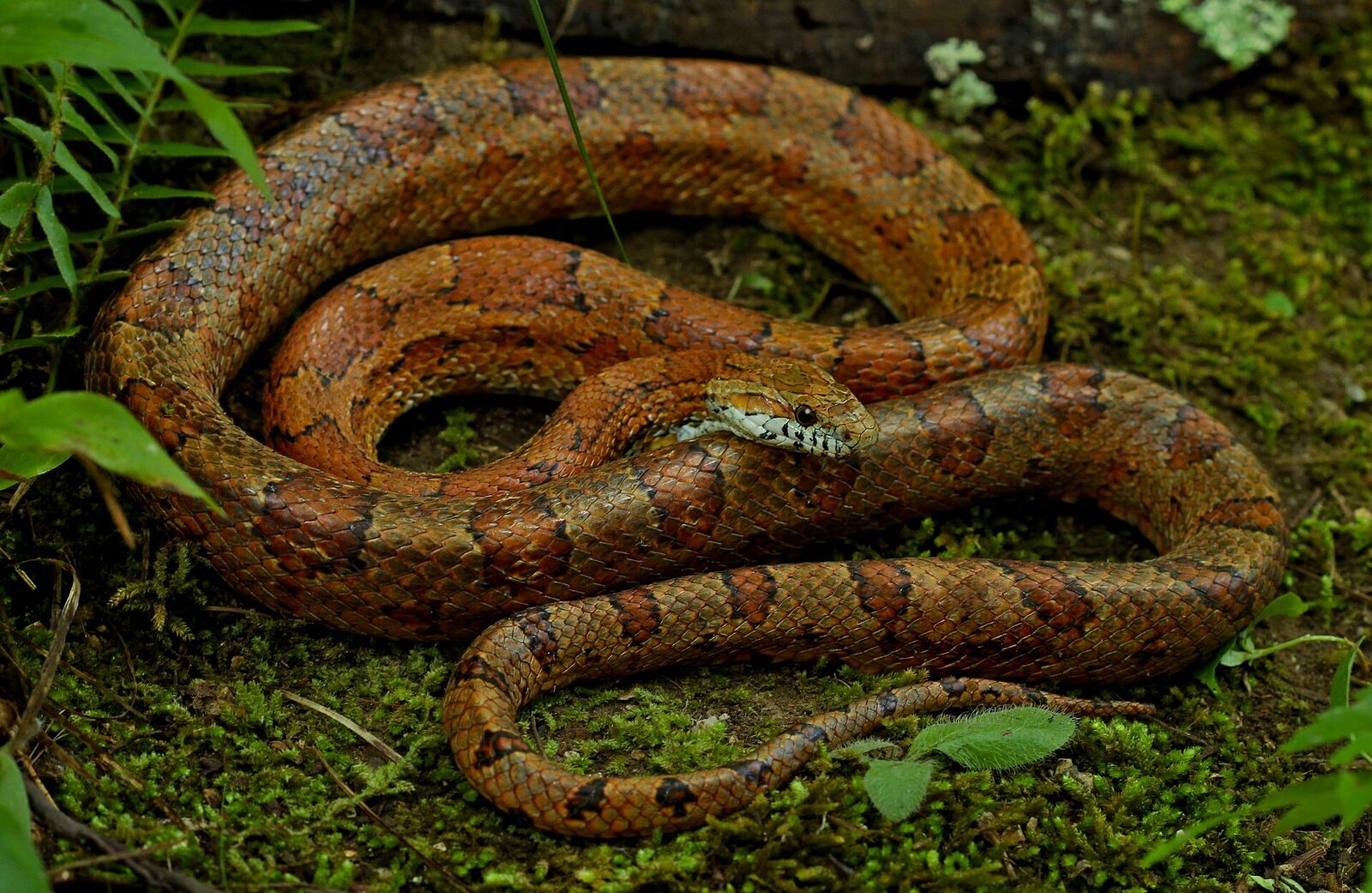
Corn snake
Pantherophis guttatus
Hardy, easy-going and colorful.
Pet trade
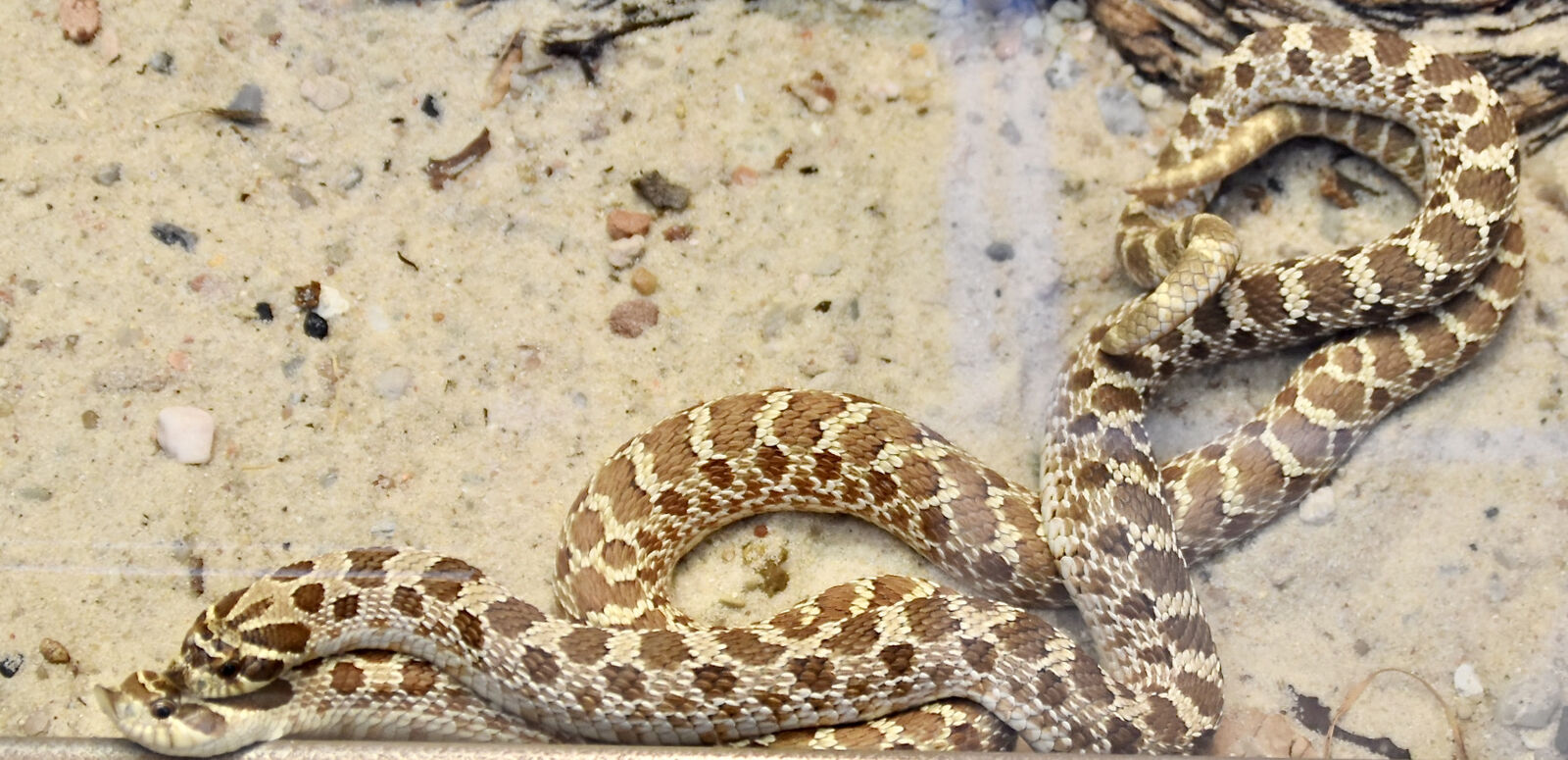
Western hognose snake
Heterodon nasicus
Dramatic bluffs from a tiny, upturned-nose snake.
Pet trade

Amur (Russian) rat snake
Elaphe schrenckii
Pet trade

Andean milk snake
Lampropeltis micropholis
Pet trade

Arizona mountain kingsnake
Lampropeltis pyromelana
Pet trade

Baird's rat snake
Pantherophis bairdi
Pet trade