Home / Reptiles / Turtles and tortoises / Egyptian tortoise
Federal restrictions applyEgyptian tortoise
Testudo kleinmanni
Reptiles › Turtles and tortoises (Testudines) › Testudinidae (Tortoises)
Kleinmann's tortoise (Testudo kleinmanni), also called commonly the Egyptian tortoise, Leith's tortoise, and the Negev tortoise, is a critically endangered species of cryptodire turtle in the family Testudinidae.

Care at a glance
Species-specific values
Values researched for this exact species. Where they differ from the group guide below, follow these. Air, surface and water temperatures are listed separately, and each source is kept as published rather than averaged.
| Basking surface temperature | 95 °F (35 °C) EAZA seasonal husbandry. | 232 |
| Summer day air temperature | 82–86 °F (28–30 °C) | 232 |
| Summer night air temperature | 68–77 °F (20–25 °C) | 232 |
| Winter day air temperature | 68–77 °F (20–25 °C) | 232 |
| Winter night air temperature | 50–59 °F (10–15 °C) | 232 |
| Relative humidity | 29–89 % Reported husbandry span with humid sleeping refuges; not uniform humidity. | 232 |
Warnings
Care guide
Mediterranean, desert and small tortoises
Applies to most species in this group. Habitat: Dry scrub and desert. Individual species can differ, so compare with the species numbers above and the linked sources.
Housing & setup
- Tortoise tables indoors or secure outdoor pens; deep substrate for burrowers like Russian tortoises.
- Winter management must follow the identified species and veterinary advice. Egyptian tortoise guidelines prescribe seasonal air changes while retaining a warm basking surface; do not extrapolate temperate Testudo hibernation to every tortoise here.
Climate & lighting
Starting point only: Juvenile Russian and seasonally maintained Egyptian tortoises are not described by a constant dry regime. Check the species-specific values for this animal where shown.
| Basking spot | 95–100°F |
| Warm side / daytime | 80–85°F |
| Cool side | 68–75°F |
| Humidity | 30–50% |
- UVB: Required (strong).
Diet
- High-fiber weeds and greens; avoid fruit.
Health watch
- Respiratory infections in damp cold; overgrown beaks without abrasive food.
Understanding the animal
About this animal
About this animal
The species is native to Libya and possibly extinct in Egypt. The species was once more widespread, but its numbers are now dwindling, and complete extinction in the wild is a looming threat unless more actions are taken to protect this species.
Quoted from the Wikipedia article “Kleinmann's tortoise” (CC BY-SA 4.0) 174
In the wild
In the wild
Quoted from the matching sections of reputable sources for this exact species. Specialist databases are used first; Wikipedia (community-edited, CC BY-SA 4.0) only fills gaps. Other sources are short credited quotes.
| Overview | Kleinmann's tortoise (Testudo kleinmanni), also called commonly the Egyptian tortoise, Leith's tortoise, and the Negev tortoise, is a critically endangered species of cryptodire turtle in the family Testudinidae. The species is native to Libya and possibly extinct in Egypt. The species was once more widespread, but its numbers are now dwindling, and complete extinction in the wild is a looming threat unless more actions are taken to protect this species. — Wikipedia (community-edited) |
| Where it lives | Kleinmann's tortoise lives in deserts and semiarid habitats, usually with compact sand and gravel plains, scattered rocks, shallow, sandy wadis, dry woodlands, shrubby areas, and coastal salt marsh habitats. In captivity, it eats grasses, fruits, and vegetables, but the diet of T. kleinmanni in the wild is unknown. Kleinmann's tortoise tend to live in habitats that receive less than 50 mm of rain every year. — Wikipedia (community-edited) |
| Reproduction | Kleinmann's tortoise becomes sexually mature when about 5 years old. In the wild, mating has only been observed in March, but in captivity, it mates in April and August to November. During courtship, the male will ram the female, sometimes chasing after her. — Wikipedia (community-edited) |
| Appearance and size | Kleinmann's tortoise is the smallest tortoise in the Northern Hemisphere. Females are larger than males; males are more slender and have a longer tail. The carapace has a high dome, and ranges in color from ivory to pale gold to dark brown to pink or dull yellow. — Wikipedia (community-edited) |
| History and naming | Named after the collector of the types, E. Kleinmann. T. werneri has been named after Yehuda L. Werner of the Hebrew University in Jerusalem. — The Reptile Database |
| Conservation | Kleinmann's tortoise confronts a range of anthropogenic challenges affecting its conservation. These threats include agricultural practices, overgrazing, industrial development, and, notably, the illegal pet trade. — Wikipedia (community-edited) |
Native climate (measured)
Native climate (measured)
| Warm-season highs | about 92°F (up to 93°F in the hottest sampled areas) |
| Cool-season lows | about 43°F (down to 42°F in the coldest sampled areas) |
| Average temperature | 66–68°F across sampled records |
| Relative humidity | 52–56% on average (driest month about 45%) |
| Rainfall | about 169 mm a year, with strong wet and dry seasons |
Measured at 83 wild occurrence records sampled against WorldClim 2.1 climate data (1970–2000 averages). Air conditions in the range are ecological context, not enclosure settings: microhabitats such as burrows, leaf litter or basking rocks can be cooler, warmer or more humid.
Profile
Profile
Researched for this exact species. Sources are listed under In the wild above.
History
Named after the collector of the types, E. Kleinmann. T. werneri has been named after Yehuda L. Werner of the Hebrew University in Jerusalem.
Data and studies
The numbers
The numbers
Each bar is what one source reports. Where several sources weigh in, the dashed gold band marks their average.
Maximum recorded lifespan
Longest recorded lifespan reported by each database; typical lifespans are usually shorter. The AnAge record comes from an animal in human care.
Typical adult weight
Average adult body mass in each database (FishBase gives the maximum recorded weight).
Incubation
Care articles for this species
Care articles for this species
- The Egyptian Tortoise, Testudo kleinmanni in Captivity (Reptiles Magazine)
- Egyptian Tortoise Care Tips (Reptiles Magazine)
- Egyptian Tortoise Breeding (Reptiles Magazine)
- Egyptian Tortoise Breeding Observations (Reptiles Magazine)
Veterinary & husbandry research
Veterinary & husbandry research
- Egyptian tortoise conservation: A community-based, field research program developed from a study on a captive population Attum O et al., Zoo biology 2007
Peer-reviewed papers that mention this species alongside captivity, zoos, veterinary care or aquaculture. Some cover several species or mention it only in passing, so check the abstract. 170
Sources for this sheet
- AnAge: The Animal Ageing and Longevity Database (Human Ageing Genomic Resources) Peer-reviewed researchCurated, referenced longevity and life-history records for thousands of species; maximum lifespans are often from zoo animals.
- Myhrvold et al. (2015). An amniote life-history database. Ecology 96: 3109 Peer-reviewed researchPeer-reviewed compilation of life-history data for over 21,000 birds, mammals and reptiles.
- 50 CFR 17.11: Endangered and threatened wildlife Zoo, university or veterinaryCurrent federal Endangered Species Act list.
- Species+ (UNEP-WCMC and the CITES Secretariat) Zoo, university or veterinaryThe official database of species listed under CITES.
- USFWS International Affairs: CITES Zoo, university or veterinaryFederal agency that issues CITES permits.
- 21 CFR 1240.62: Turtles under 4 inches (FDA) Zoo, university or veterinaryFederal ban on selling small turtles.
- Merck Veterinary Manual: Management and husbandry of reptiles Zoo, university or veterinaryThe Merck Veterinary Manual: a standard veterinary reference written and reviewed by veterinary specialists.
- Merck Veterinary Manual: Nutritional, metabolic and endocrine diseases of reptiles Zoo, university or veterinaryThe Merck Veterinary Manual: a standard veterinary reference written and reviewed by veterinary specialists.
- Royal Veterinary College Exotics Service: Mediterranean tortoise care Zoo, university or veterinaryVet-school exotics hospital factsheet, reviewed 2021–2024.
- Clint's Reptiles (YouTube): Russian Tortoise, The Best Pet Turtle? Expert educator & keeperClint Laidlaw, PhD in Biology Education and MS in Evolutionary Ecology; owner of Clint's Reptile Room and a longtime keeper. Rates each species on handleability, care, hardiness, availability and upfront cost.
- ReptiFiles: Russian tortoise care sheet Zoo, university or veterinaryAdded in the 2026 source-checked care-guide review.
- EAZA: Egyptian tortoise Best Practice Guidelines (2019) Zoo, university or veterinaryAdded in the 2026 source-checked care-guide review.
- Merck Veterinary Manual: Important Husbandry Requirements for Selected Reptiles Zoo, university or veterinaryAdded in the 2026 source-checked care-guide review.
- The Reptile Database Peer-reviewed researchScientist-curated catalog of every reptile species, with taxonomy and literature.
- GBIF Backbone Taxonomy (Global Biodiversity Information Facility) Peer-reviewed researchInternational scientific taxonomy used here for classification.
- Wikipedia (species article) Community referenceFree encyclopedia; useful overviews with their own citations. Intro text is quoted under CC BY-SA 4.0.
- PubMed (U.S. National Library of Medicine) Peer-reviewed researchIndex of peer-reviewed veterinary, zoo and husbandry research.
- iNaturalist (captive observations) Community referenceCommunity observation platform run by the California Academy of Sciences and National Geographic; observations marked captive show animals living in homes, zoos and aquariums.
- Reptiles Magazine (care articles) Experienced keeper or breederEstablished reptile and amphibian hobby magazine; care articles are written by breeders, keepers and veterinarians.
More tortoises
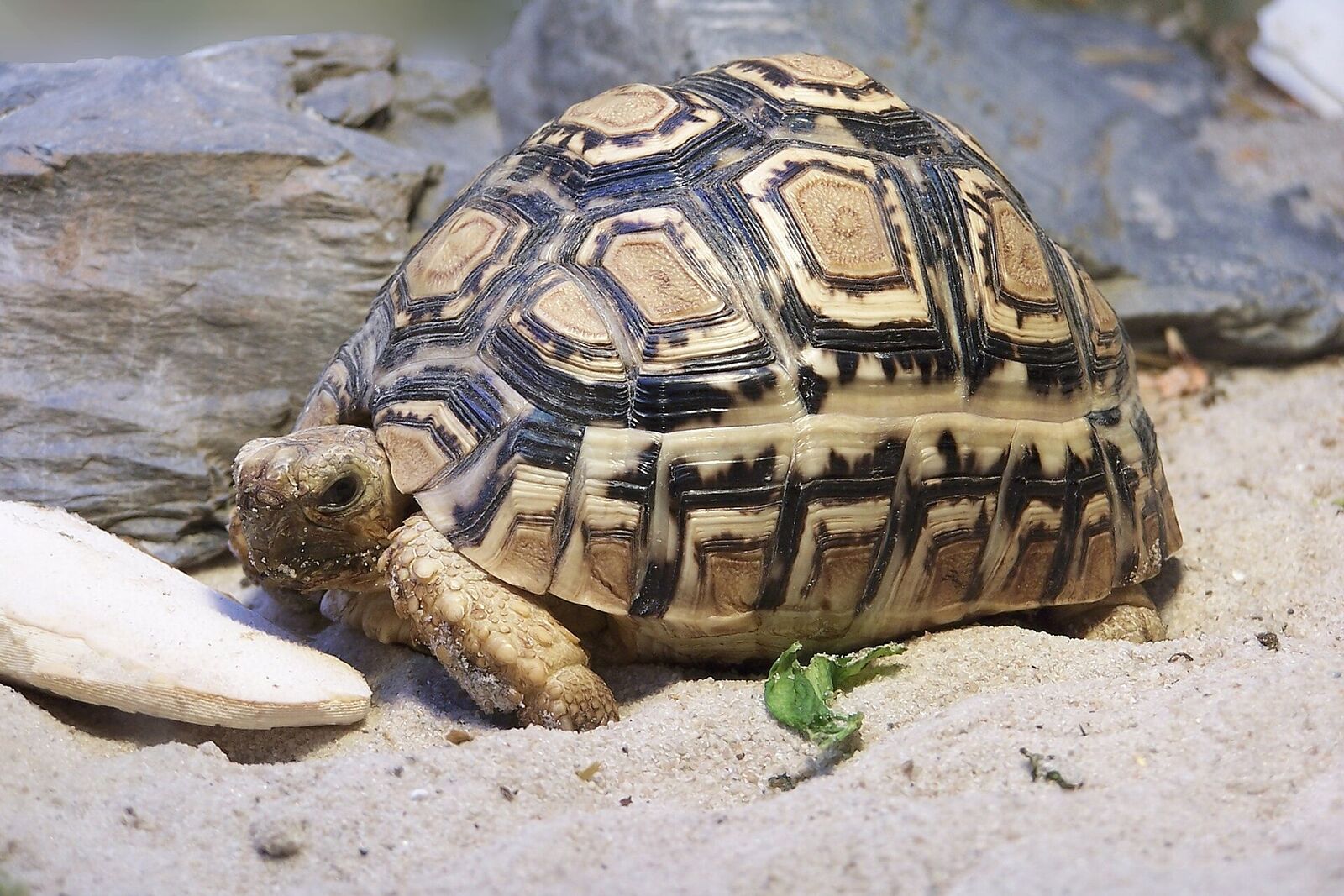 In-depth
Leopard tortoise
Stigmochelys pardalis
A spotted savanna grazer.
Pet trade
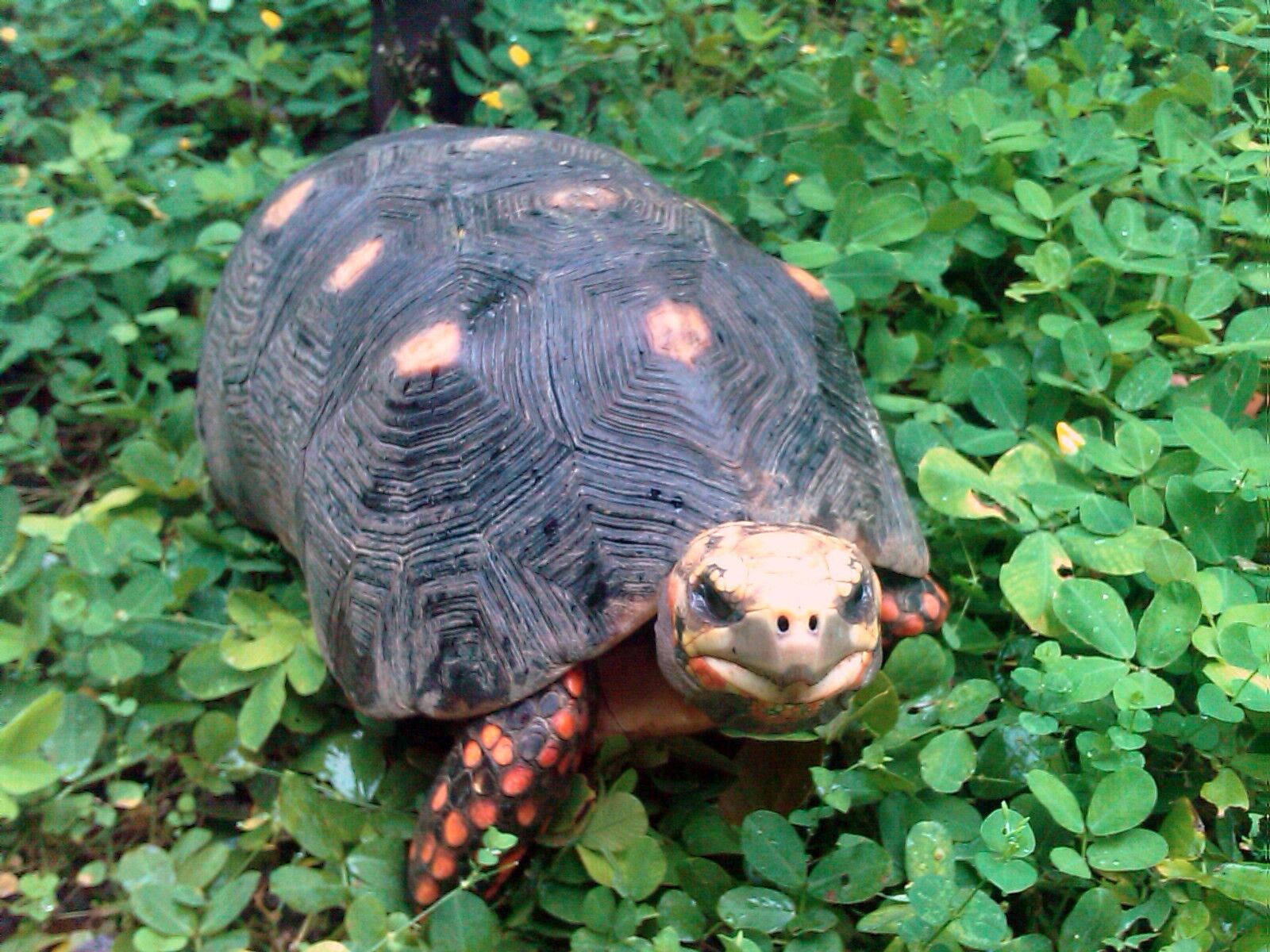 In-depth
Red-footed tortoise
Chelonoidis carbonarius
A humid-forest tortoise that eats fruit.
Pet trade
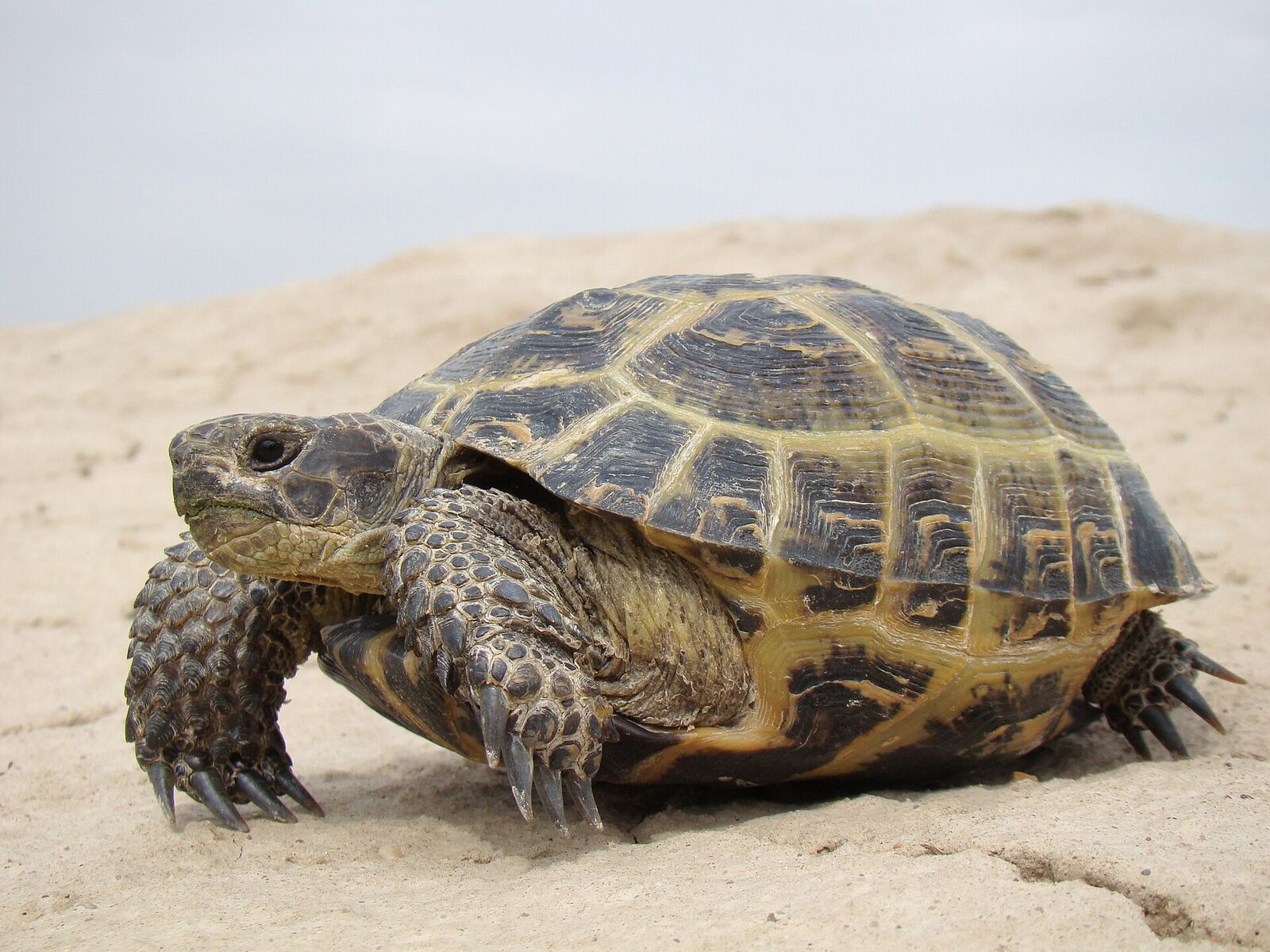 In-depth
Russian tortoise
Testudo horsfieldii
Small, tough and a great first tortoise.
Pet trade
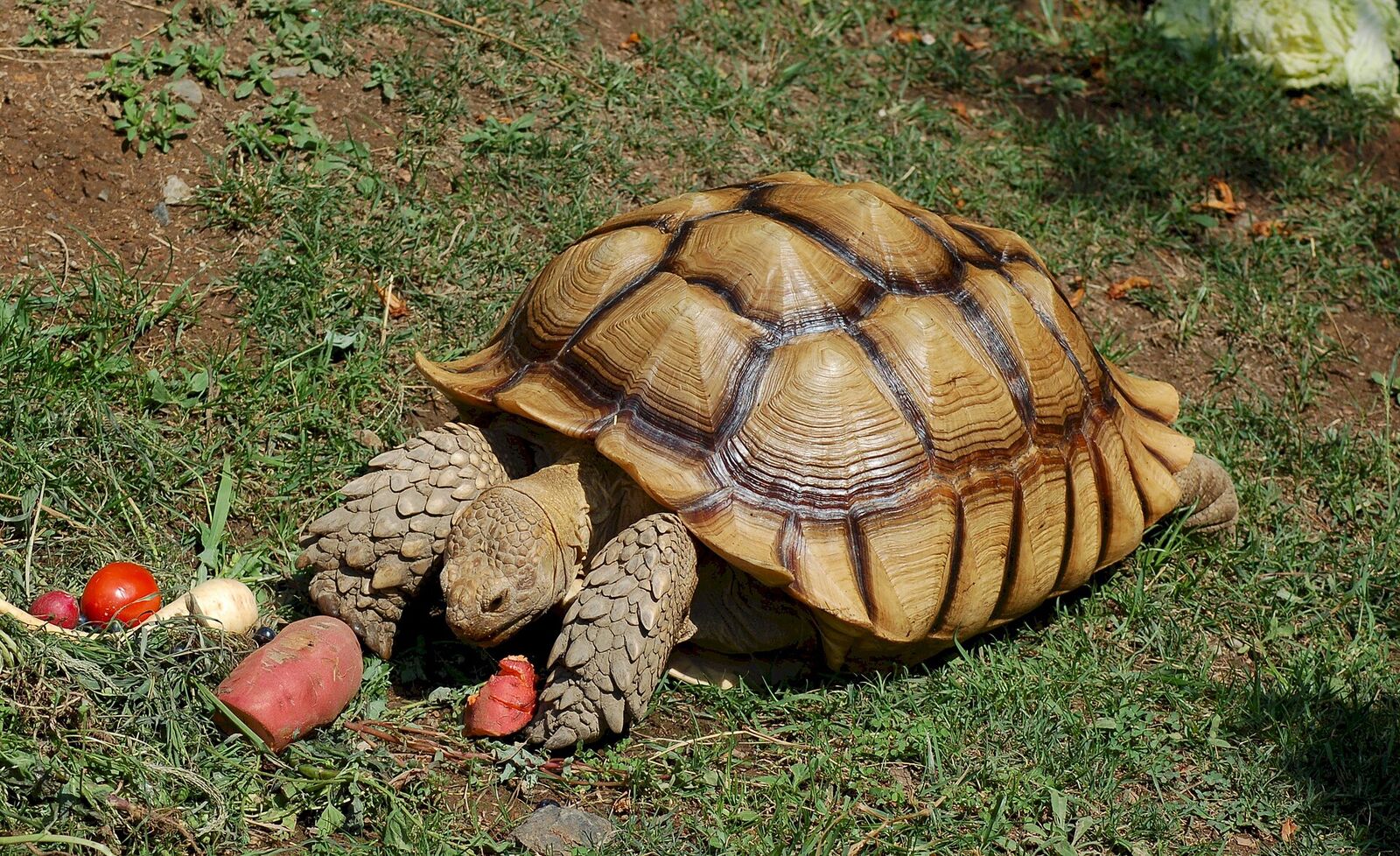 In-depth
Sulcata (African spurred) tortoise
Centrochelys sulcata
The giant backyard tortoise, best adopted.
Pet trade