
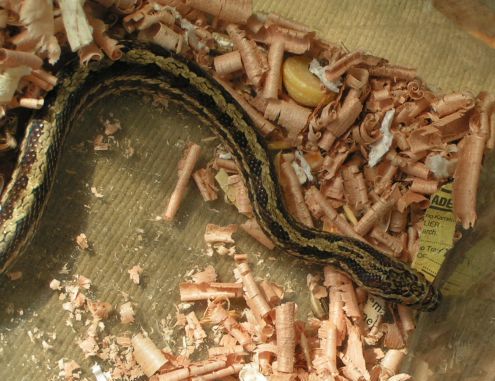
FamilyColubrid snakes
Kept byPet trade
Care at a glance
Setup
One answer per setting. Where sources differ, the smaller figure is the minimum and the larger is what we recommend.
| Adult enclosure | 80x50x60 cm WDH Cage at least this size; rack husbandry possible. | reptile-care.de |
| Hot spot | 86°F Local spot. | reptile-care.de |
| Warm side | At least 72°F Preferably 82°F Daytime temperatures about 22-28 °C. | reptile-care.de |
| Night temperature | At least 64°F Preferably 68°F Night 18-20 °C. | reptile-care.de |
| Humidity | At least 60% Preferably 70% Humidity 60-70%. | reptile-care.de |
| Food | Hopper mice, baby rats, rarely small bird eggs. | reptile-care.de |
| Brumation | 3 months at 11–13°C Hibernation. | reptile-care.de |
Understanding the animal
In the wild
In the wild
Researched for this exact species, not its family. Wild conditions are context, not enclosure settings.1
Profile
Profile
Researched for this exact species. Sources are listed under In the wild above.
Keeper tips
- Very good species for captive care, relatively easy to breed.
Remarkable facts
- 70 cm, maximum 120 cm; females bigger than males.
Data and studies
Veterinary & husbandry research
Veterinary & husbandry research
- Thermoregulatory behavior is widespread in the embryos of reptiles and birds. et al., The American naturalist 2014
- Triploid Colubrid Snake Provides Insight into the Mechanism of Sex Determination in Advanced Snakes. et al., Sexual development: genetics, molecular biology, evolution, endocrinology, embryology, and pathology of sex determination and differentiation 2018
- The complete mitochondrial genome of Elaphe bimaculata (Reptilia, Serpentes, Colubridae). et al., Mitochondrial DNA. Part A, DNA mapping, sequencing, and analysis 2016
- Lack of the blocking effect of cobrotoxin from Naja naja atra venom on neuromuscular transmission in isolated nerve muscle preparations from poisonous and non-poisonous snakes. et al., Toxicon: official journal of the International Society on Toxinology 1990
Peer-reviewed papers that mention this species alongside captivity, zoos, veterinary care or aquaculture. Some cover several species or mention it only in passing, so check the abstract. PubMed
Sources for this sheet
- Elaphe bimaculata (reptile-care.de) Community referenceWeb page.
- Wikipedia: Elaphe bimaculata (CC BY-SA 4.0) Community referenceEncyclopedia article.
- The Reptile Database: Elaphe bimaculata Zoo, university or veterinaryTaxonomy, distribution and literature for every reptile species.
- The Reptile Database Peer-reviewed researchScientist-curated catalog of every reptile species, with taxonomy and literature.
- GBIF Backbone Taxonomy (Global Biodiversity Information Facility) (CC BY 4.0) Peer-reviewed researchInternational scientific taxonomy used here for classification. GBIF Secretariat (2023). GBIF Backbone Taxonomy. Checklist dataset https://doi.org/10.15468/39omei, accessed via GBIF.org.
- PubMed (U.S. National Library of Medicine) Peer-reviewed researchIndex of peer-reviewed veterinary, zoo and husbandry research.
More colubrid snakes
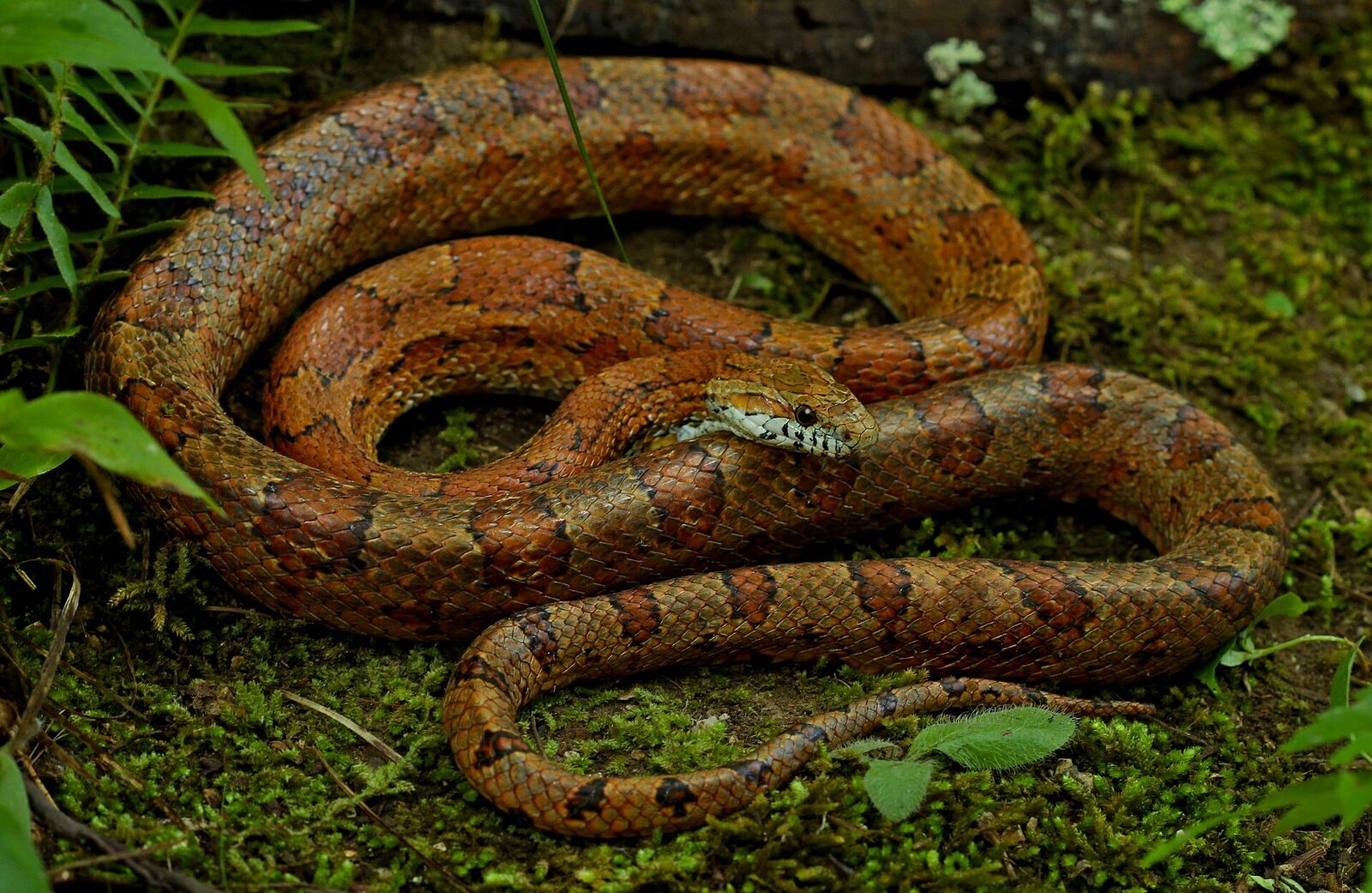
No federal permit
Corn snake
Pantherophis guttatus
Hardy, easy-going and colorful.
Pet trade
Beginner
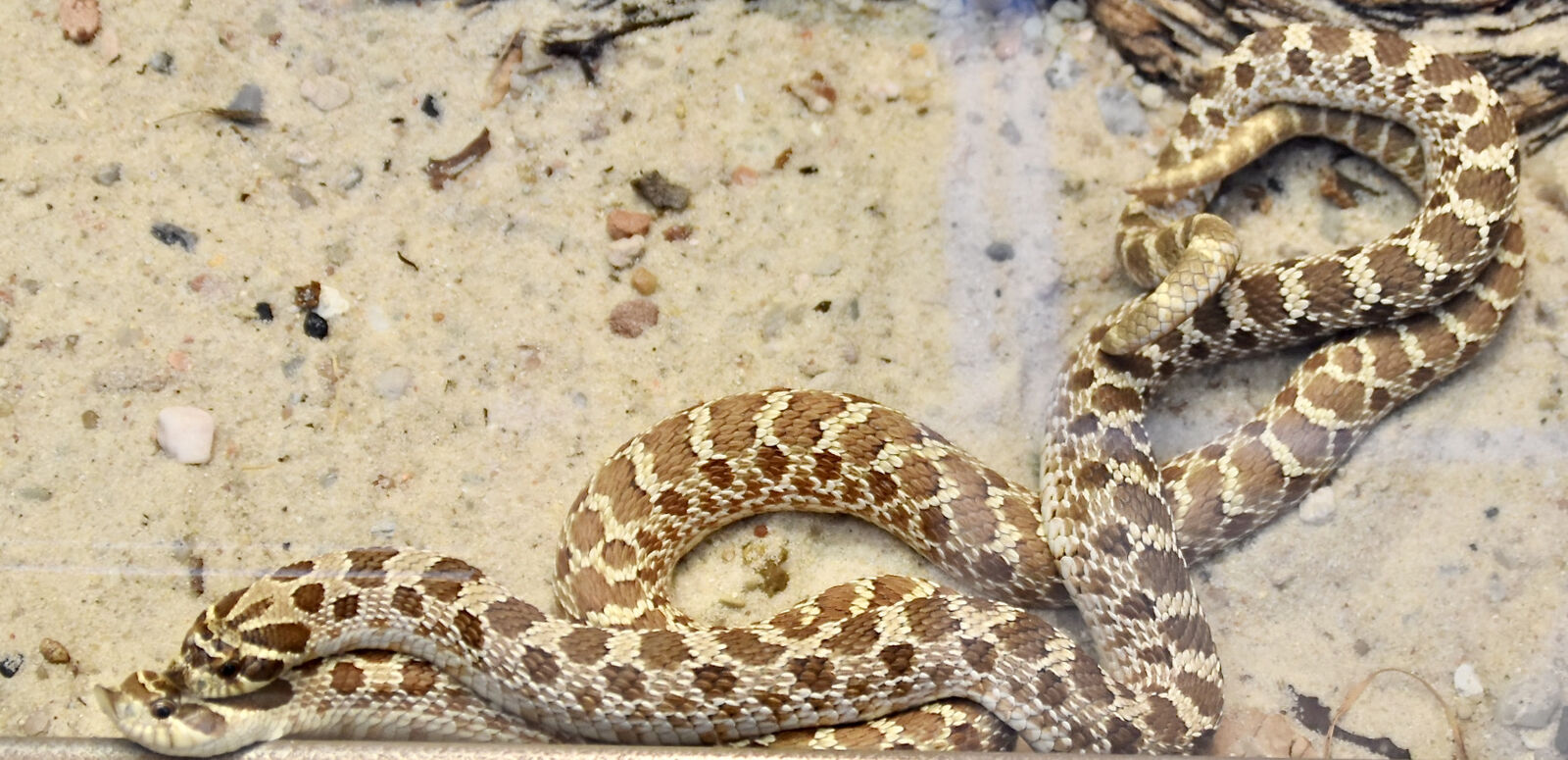
No federal permit
Western hognose snake
Heterodon nasicus
Dramatic bluffs from a tiny, upturned-nose snake.
Pet trade
Easy

No federal permit
Amur (Russian) rat snake
Elaphe schrenckii
Pet trade
Easy

No federal permit
Andean milk snake
Lampropeltis micropholis
Pet trade
Easy

No federal permit
Arizona mountain kingsnake
Lampropeltis pyromelana
Pet trade
Easy

No federal permit
Baird's rat snake
Pantherophis bairdi
Pet trade
Easy