
Home / Reptiles / Snakes / Colubridae / Steppe rat snake
No federal permit to keepSteppe rat snake
Elaphe dione
Reptiles › Snakes (Serpentes) › Colubridae (Colubrid snakes)
Elaphe dione, commonly known as Dione's rat snake, the steppe rat snake, or the steppes rat snake, is a species of snake in the family Colubridae.
From Wikipedia: Steppe rat snake, CC BY-SA 4.0 (excerpt)

Care at a glance
Species-specific values
Values researched for this exact species. Air, surface and water temperatures are listed separately, and each source is kept as published rather than averaged.
| Minimum enclosure | Adult individual: about 120 × 60 × 60 cm or larger. Source: interaquaristik.de | |
| Basking surface temperature | 84–90 °F (29–32 °C) Source: interaquaristik.de | |
| Warm side air temperature | 72–81 °F (22–27 °C) Source: interaquaristik.de | |
| Cool side air temperature | A cool area should remain accessible at all times. Source: interaquaristik.de | |
| Night temperature | 61–70 °F (16–21 °C) Source: interaquaristik.de | |
| Humidity | 50–70 % Source: interaquaristik.de | |
| Uvb lighting | Weak UVB lighting may be offered if safe distances and shaded retreats are available. Source: interaquaristik.de | |
| Diet | Offer appropriately sized, fully thawed prey, mainly mice. Source: interaquaristik.de | |
| Feeding frequency | As a guide, feed juveniles every five to seven days and adults every ten to fourteen days. Source: interaquaristik.de | |
| Social housing | Keep singly; group housing is only for controlled, time-limited breeding. Source: interaquaristik.de | |
| Substrate | Use a loose, diggable, low-dust natural substrate such as an earth-sand mix. Source: interaquaristik.de | |
| Seasonal cooling | 46–59 °F (8–15 °C) Source: interaquaristik.de |
Understanding the animal
About this animal
About this animal
The species is native to Asia and Eastern Europe. There are no subspecies that are recognized as being valid.
From Wikipedia: Steppe rat snake, CC BY-SA 4.0 (excerpt)
In the wild
In the wild
| Overview | Elaphe dione, commonly known as Dione's rat snake, the steppe rat snake, or the steppes rat snake, is a species of snake in the family Colubridae. The species is native to Asia and Eastern Europe. There are no subspecies that are recognized as being valid. A large specimen from Putyatin Island measured up to 90 cm in length. — From Wikipedia: Steppe rat snake, CC BY-SA 4.0 (excerpt) |
| Behavior | An adult female mates with two or more males, sometimes copulating with two males at the same time. E. dione is oviparous, and adult females lay a clutch of 3–15 eggs in July or August, though some can lay a clutch of up to 24 eggs. — From Wikipedia: Steppe rat snake, CC BY-SA 4.0 (excerpt) |
Read about this species in the wild at The Reptile Database.
Native climate (measured)
Native climate (measured)
| Warm-season highs | about 81°F (up to 87°F in the hottest sampled areas) |
| Cool-season lows | about 4°F (down to -17°F in the coldest sampled areas) |
| Average temperature | 31–56°F across sampled records |
| Relative humidity | 59–68% on average (driest month about 52%) |
| Rainfall | about 600 mm a year, with strong wet and dry seasons |
| Winters | Cool to cold winters (lows around 4°F) in much of its native range. Seasonal slowdown may be relevant, but species-specific biology determines whether brumation or hibernation occurs. |
Measured at 446 wild occurrence records sampled against WorldClim 2.1 climate data (1970–2000 averages). Air conditions in the range are ecological context, not enclosure settings: microhabitats such as burrows, leaf litter or basking rocks can be cooler, warmer or more humid.
Profile
Profile
Researched for this exact species. Sources are listed under In the wild above.
Data and studies
The numbers
The numbers
Each bar is what one source reports. Where several sources weigh in, the dashed gold band marks their average.
Incubation
Sources for this sheet
- Myhrvold et al. (2015). An amniote life-history database. Ecology 96: 3109 Peer-reviewed researchPeer-reviewed compilation of life-history data for over 21,000 birds, mammals and reptiles.
- The Reptile Database Peer-reviewed researchScientist-curated catalog of every reptile species, with taxonomy and literature.
- GBIF Backbone Taxonomy (Global Biodiversity Information Facility) (CC BY 4.0) Peer-reviewed researchInternational scientific taxonomy used here for classification. GBIF Secretariat (2023). GBIF Backbone Taxonomy. Checklist dataset https://doi.org/10.15468/39omei, accessed via GBIF.org.
- Wikipedia (species article) (CC BY-SA 4.0) Community referenceFree encyclopedia; useful overviews with their own citations. Short excerpts are quoted under CC BY-SA 4.0, each credited with a link to its article.
- iNaturalist (captive observations) Community referenceCommunity observation platform run by the California Academy of Sciences and National Geographic; observations marked captive show animals living in homes, zoos and aquariums.
More colubrid snakes
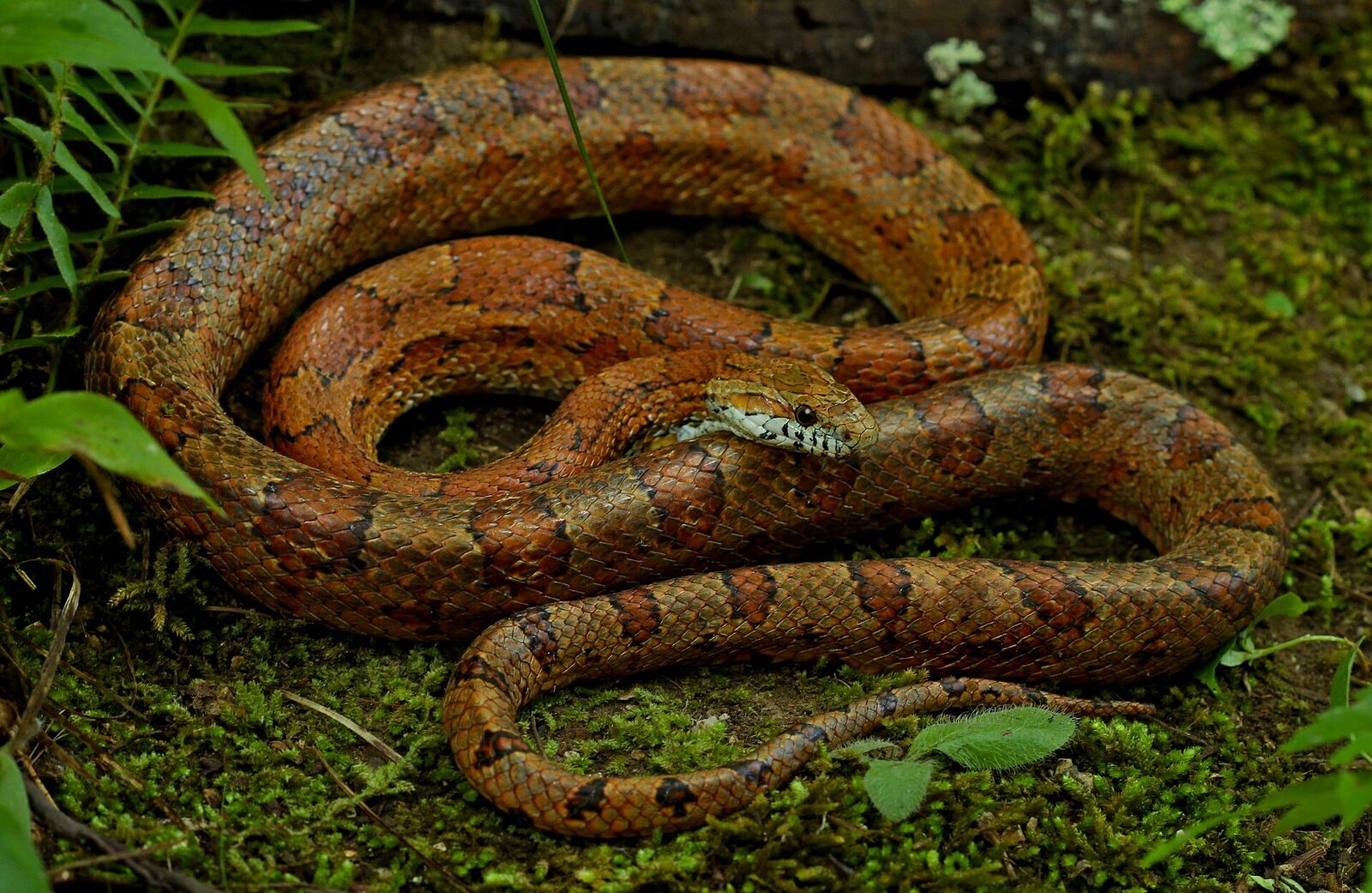
Corn snake
Pantherophis guttatus
Hardy, easy-going and colorful.
Pet trade
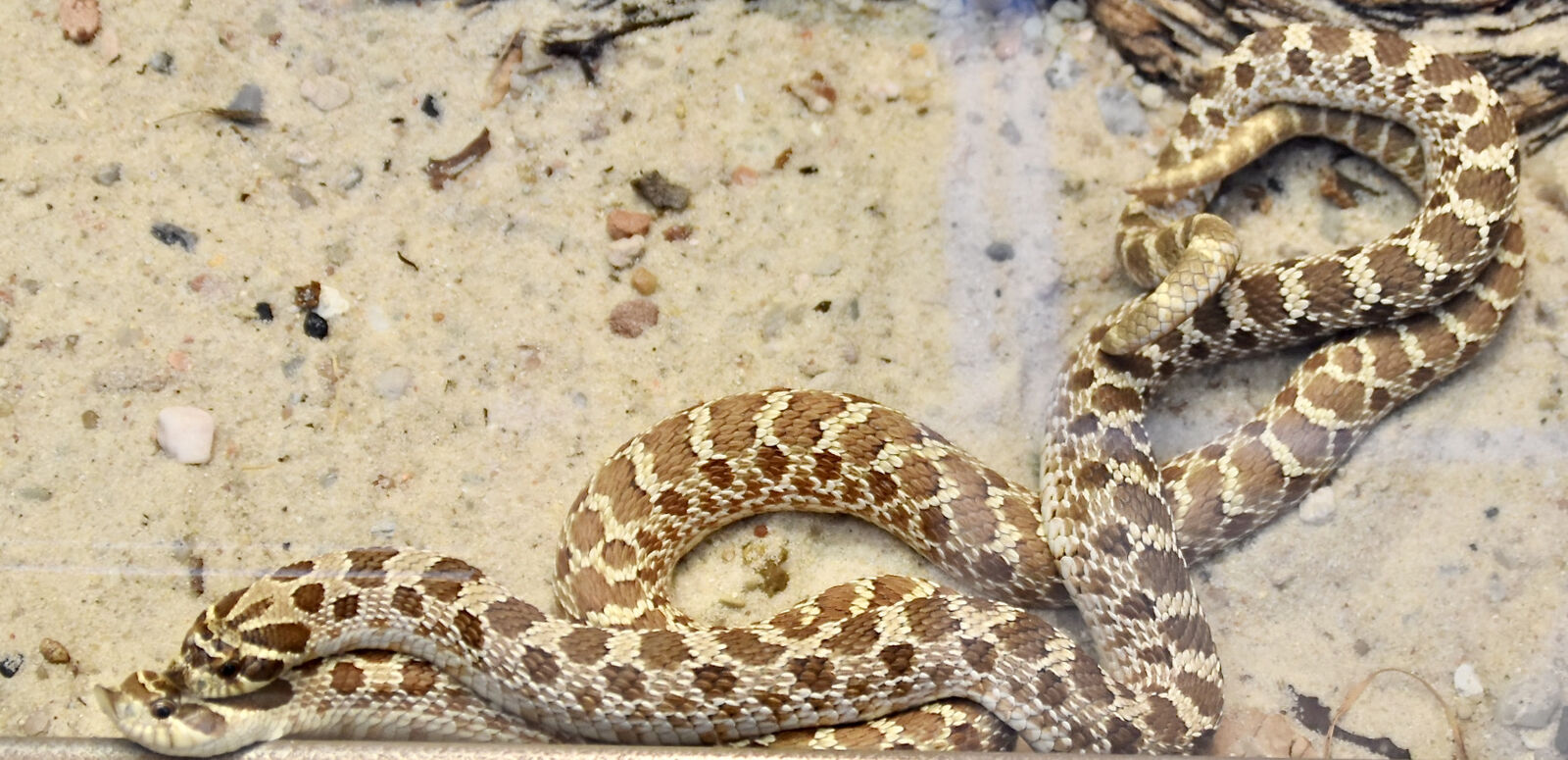
Western hognose snake
Heterodon nasicus
Dramatic bluffs from a tiny, upturned-nose snake.
Pet trade

Amur (Russian) rat snake
Elaphe schrenckii
Pet trade

Andean milk snake
Lampropeltis micropholis
Pet trade

Arizona mountain kingsnake
Lampropeltis pyromelana
Pet trade

Baird's rat snake
Pantherophis bairdi
Pet trade