
Home / Invertebrates / Spiders / Feather leg baboon
No federal permit to keepFeather leg baboon
Stromatopelma calceatum
Invertebrates › Spiders (Araneae) › Theraphosidae (Tarantulas)
Stromatopelma calceatum also known as the featherleg baboon tarantula, was first described by Johan Christian Fabricius in 1793.
From Wikipedia: Stromatopelma calceatum, CC BY-SA 4.0 (excerpt)

Care at a glance
Species-specific values
Values researched for this exact species. Air, surface and water temperatures are listed separately, and each source is kept as published rather than averaged.
| Minimum enclosure | Adult vertical enclosure around 30 x 30 x 45 cm or larger. Source: academy.herpeton.net | |
| Uvb lighting | UVB is not required. Source: academy.herpeton.net | |
| Diet | Feed appropriately sized crickets, roaches, locusts, and other safe feeder insects. Source: academy.herpeton.net | |
| Feeding frequency | Adults often do well with one suitable feeder every 7-14 days, adjusted by body condition. Source: academy.herpeton.net | |
| Social housing | Keep one animal per enclosure. Source: academy.herpeton.net | |
| Warm side air temperature | 72–79 °F (22–26 °C) Source: spoodoire.uk | |
| Humidity | 65–80 % Source: spoodoire.uk | |
| Feeding frequency | Slings twice weekly, juveniles every 5–7 days, and adults weekly. Source: spoodoire.uk | |
| Minimum enclosure | 86 °F (at least 30 °C) Source: spoodoire.uk | |
| Substrate | Use 5–7 cm of coco fibre and topsoil substrate. Source: spoodoire.uk |
Understanding the animal
About this animal
About this animal
It is found in West Africa and has gone through a variety of scientific names during its existence.
From Wikipedia: Stromatopelma calceatum, CC BY-SA 4.0 (excerpt)
In the wild
In the wild
| Overview | Stromatopelma calceatum also known as the featherleg baboon tarantula, was first described by Johan Christian Fabricius in 1793. It is found in West Africa and has gone through a variety of scientific names during its existence. — From Wikipedia: Stromatopelma calceatum, CC BY-SA 4.0 (excerpt) |
| Behavior | They are an arboreal old world tarantula, creating a tube-like web, in the lower forest regions. They are quite a defensive tarantula, and will usually stay inside their webs until night. Though adults are arboreal, younger specimens have been observed burrowing. — From Wikipedia: Stromatopelma calceatum, CC BY-SA 4.0 (excerpt) |
| Appearance and size | Females live up to 15 years, while males only live to 4 years. The carapace is a tan creamy color, with some black striping, the opisthosoma is a tan creamy color with a black fishbone pattern. The legs are the same color covered in orangish hairs. — From Wikipedia: Stromatopelma calceatum, CC BY-SA 4.0 (excerpt) |
Native climate (measured)
Native climate (measured)
| Warm-season highs | about 89°F (up to 95°F in the hottest sampled areas) |
| Cool-season lows | about 68°F (down to 64°F in the coldest sampled areas) |
| Average temperature | 76–80°F across sampled records |
| Relative humidity | 75–83% on average (driest month about 67%) |
| Rainfall | about 1632 mm a year |
Measured at 25 wild occurrence records sampled against WorldClim 2.1 climate data (1970–2000 averages). Air conditions in the range are ecological context, not enclosure settings: microhabitats such as burrows, leaf litter or basking rocks can be cooler, warmer or more humid.
Sources for this sheet
- GBIF Backbone Taxonomy (Global Biodiversity Information Facility) (CC BY 4.0) Peer-reviewed researchInternational scientific taxonomy used here for classification. GBIF Secretariat (2023). GBIF Backbone Taxonomy. Checklist dataset https://doi.org/10.15468/39omei, accessed via GBIF.org.
- Wikipedia (species article) (CC BY-SA 4.0) Community referenceFree encyclopedia; useful overviews with their own citations. Short excerpts are quoted under CC BY-SA 4.0, each credited with a link to its article.
More tarantulas
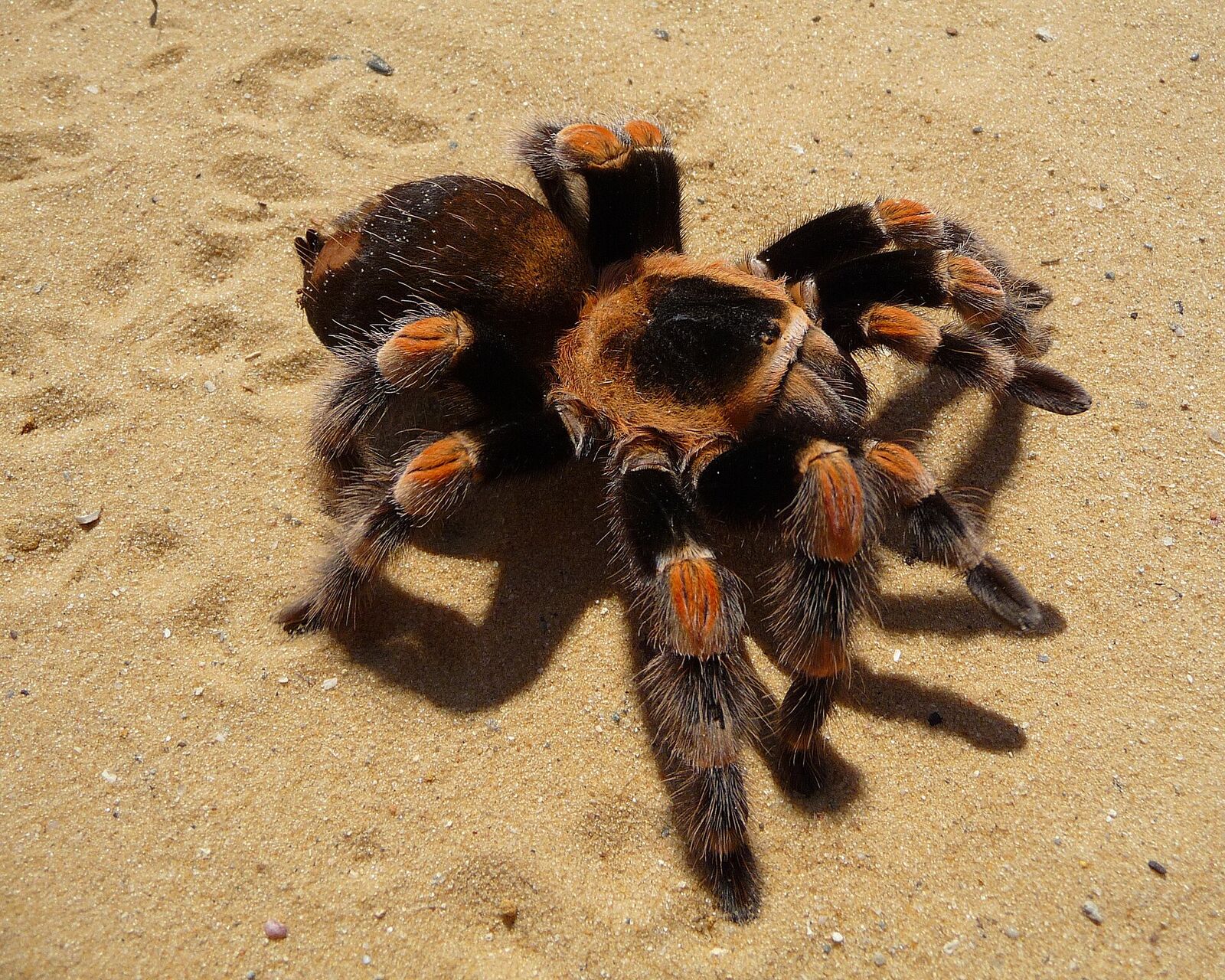
Mexican redknee tarantula
Brachypelma hamorii
A docile spider where females live 25–30 years.
Pet trade

African Horned Baboon Tarantula
Ceratogyrus darlingi
Pet trade
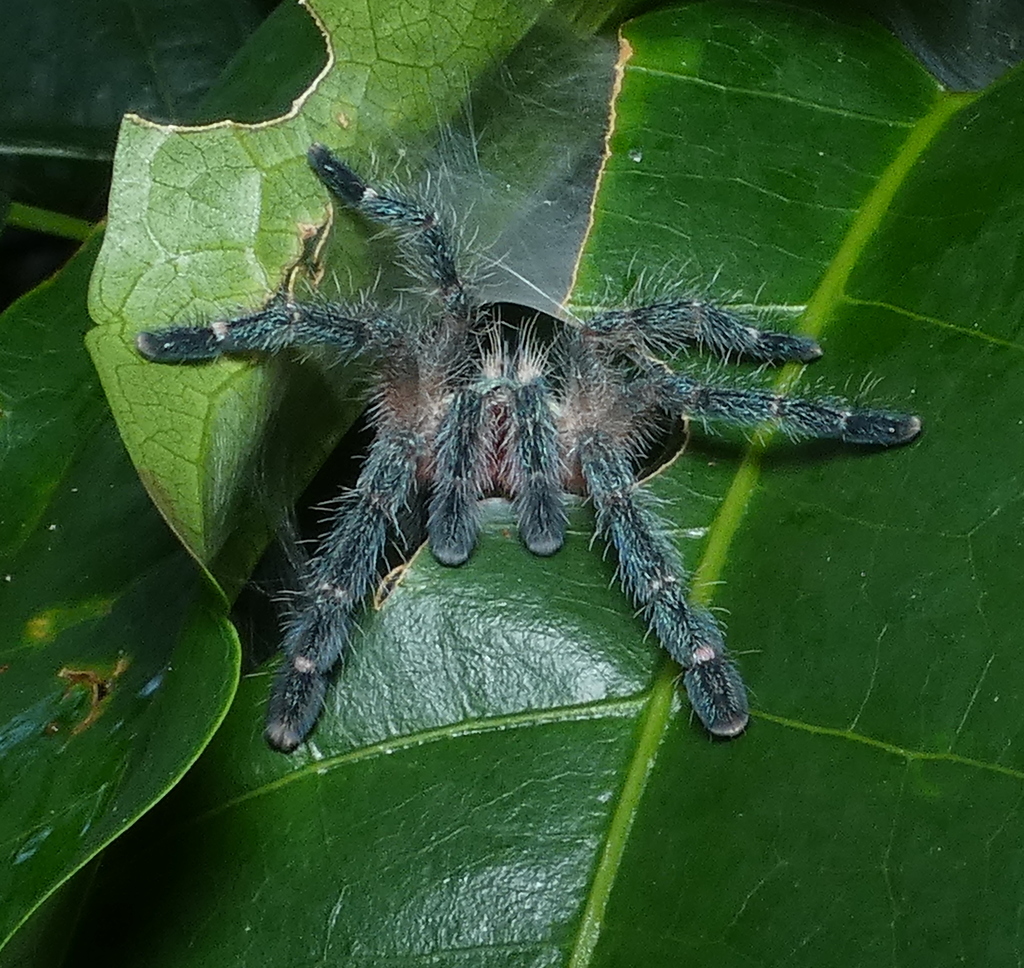
Amazon Ribbed Tarantula
Iridopelma hirsutum
Pet trade

Amula Redrump Tarantula
Brachypelma albiceps
Pet trade

Anantagiri’s Parachute Spider
Poecilotheria tigrinawesseli
Pet trade

Antilles pinktoe tarantula
Caribena versicolor
Pet trade