
Home / Reptiles / Turtles and tortoises / Galápagos tortoise
Some federal rules applyGalápagos tortoise
Chelonoidis niger
Reptiles › Turtles and tortoises (Testudines) › Testudinidae (Tortoises)
The Galápagos tortoise, also called the Galápagos giant tortoise, is a very large species of tortoise in the genus Chelonoidis.
Care at a glance
Setup
One answer per setting. Where sources differ, the smaller figure is the minimum and the larger is what we recommend.
| Hot spot | 95°F Basking temperature for hatchlings. | aucklandzoo.co.nz |
| Cool side | 72°F Nighttime temperature for hatchlings. | aucklandzoo.co.nz |
Warnings
Care guide
By age
| Baby | Enclosure: Miniature habitat Feeding: Chopped hay, leaves, flowers, and twice-weekly tepid water baths. | aucklandzoo.co.nz |
Understanding the animal
About this animal
About this animal
The species comprises 15 subspecies. It is the largest living species of tortoise, and can weigh up to 417 kg (919 lb). They are also the largest extant terrestrial cold-blooded animals (ectotherms).
From Wikipedia: Galápagos tortoise, CC BY-SA 4.0 (excerpt)
Localities
Localities
Keepers buy these by where the bloodline comes from. Care is basically the same; size, color and temperament can differ. “Breeder-reported” details still need a published source.
In the wild
In the wild
Researched for this exact species, not its family. Wild conditions are context, not enclosure settings.123
| Where it lives | They inhabit rocky hillsides in higher, lush elevations or lower, drier grasslands depending on the specific island and species. |
| Active | Tortoises are diurnal and active, utilizing gigantothermy to regulate their body temperature within the island environments. |
| Social life | Females journey to sandy nesting areas and dig flask-shaped nests, leaving eggs to be incubated by the sun. |
| Wild diet | They are opportunistic feeders consuming a wide range of vegetation including grasses, broad leafy greens, vegetables, browse, and carrion. |
| Behavior to plan for | Females dig nest holes blindly with their hind legs, seal them with urine and soil, and leave them unattended. |
Profile
Profile
Researched for this exact species. Sources are listed under In the wild above.
Keeper tips
- They are generally docile, described as reptilian cows, though keepers utilize training for health checks.
Data and studies
Veterinary & husbandry research
Veterinary & husbandry research
- Galápagos tortoise stable isotope ecology and the 1850s Floreana Island Chelonoidis niger extinction. et al., Scientific reports 2022
- Infection with a novel pentastome (Raillietiella sp.) in a juvenile endangered Galápagos tortoise (Chelonoidis niger). et al., Veterinary parasitology, regional studies and reports 2022
- Temporal Monitoring of the Floreana Island Galapagos Giant Tortoise Captive Breeding Program. et al., Integrative and comparative biology 2022
- Genetically informed captive breeding of hybrids of an extinct species of Galapagos tortoise. et al., Conservation biology: the journal of the Society for Conservation Biology 2019
Peer-reviewed papers that mention this species alongside captivity, zoos, veterinary care or aquaculture. Some cover several species or mention it only in passing, so check the abstract. PubMed
Sources for this sheet
- Species+ (UNEP-WCMC and the CITES Secretariat) Zoo, university or veterinaryThe official database of species listed under CITES. UNEP (2026). The Species+ Website. Nairobi, Kenya. Compiled by UNEP-WCMC, Cambridge, UK. Available at: www.speciesplus.net. [Accessed 04/10/2026].
- USFWS International Affairs: CITES Zoo, university or veterinaryFederal agency that issues CITES permits.
- Good things take time like breeding galapagos tortoises (aucklandzoo.co.nz) Expert educator & keeperZoo, government or conservation body.
- Wikipedia: Chelonoidis niger (CC BY-SA 4.0) Community referenceEncyclopedia article.
- The Reptile Database: Chelonoidis niger Zoo, university or veterinaryTaxonomy, distribution and literature for every reptile species.
- Managedcare (ielc.libguides.com) Community referenceWeb page.
- Galapagos tortoise (reptilesmagazine.com) Experienced keeper or breederKeeper care guide.
- The Reptile Database Peer-reviewed researchScientist-curated catalog of every reptile species, with taxonomy and literature.
- GBIF Backbone Taxonomy (Global Biodiversity Information Facility) (CC BY 4.0) Peer-reviewed researchInternational scientific taxonomy used here for classification. GBIF Secretariat (2023). GBIF Backbone Taxonomy. Checklist dataset https://doi.org/10.15468/39omei, accessed via GBIF.org.
- Wikipedia (species article) (CC BY-SA 4.0) Community referenceFree encyclopedia; useful overviews with their own citations. Short excerpts are quoted under CC BY-SA 4.0, each credited with a link to its article.
- PubMed (U.S. National Library of Medicine) Peer-reviewed researchIndex of peer-reviewed veterinary, zoo and husbandry research.
More tortoises
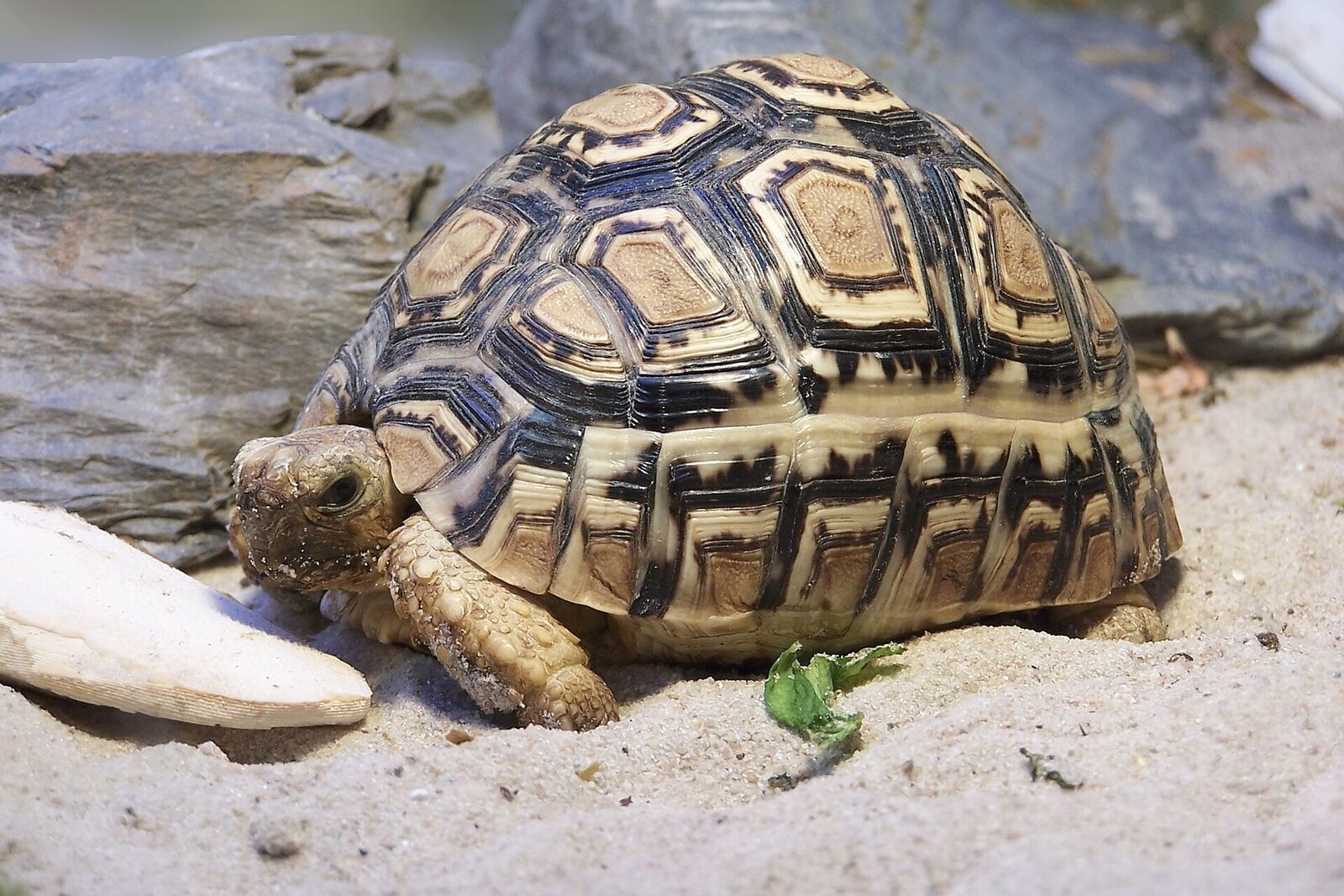
Leopard tortoise
Stigmochelys pardalis
A spotted savanna grazer.
Pet trade
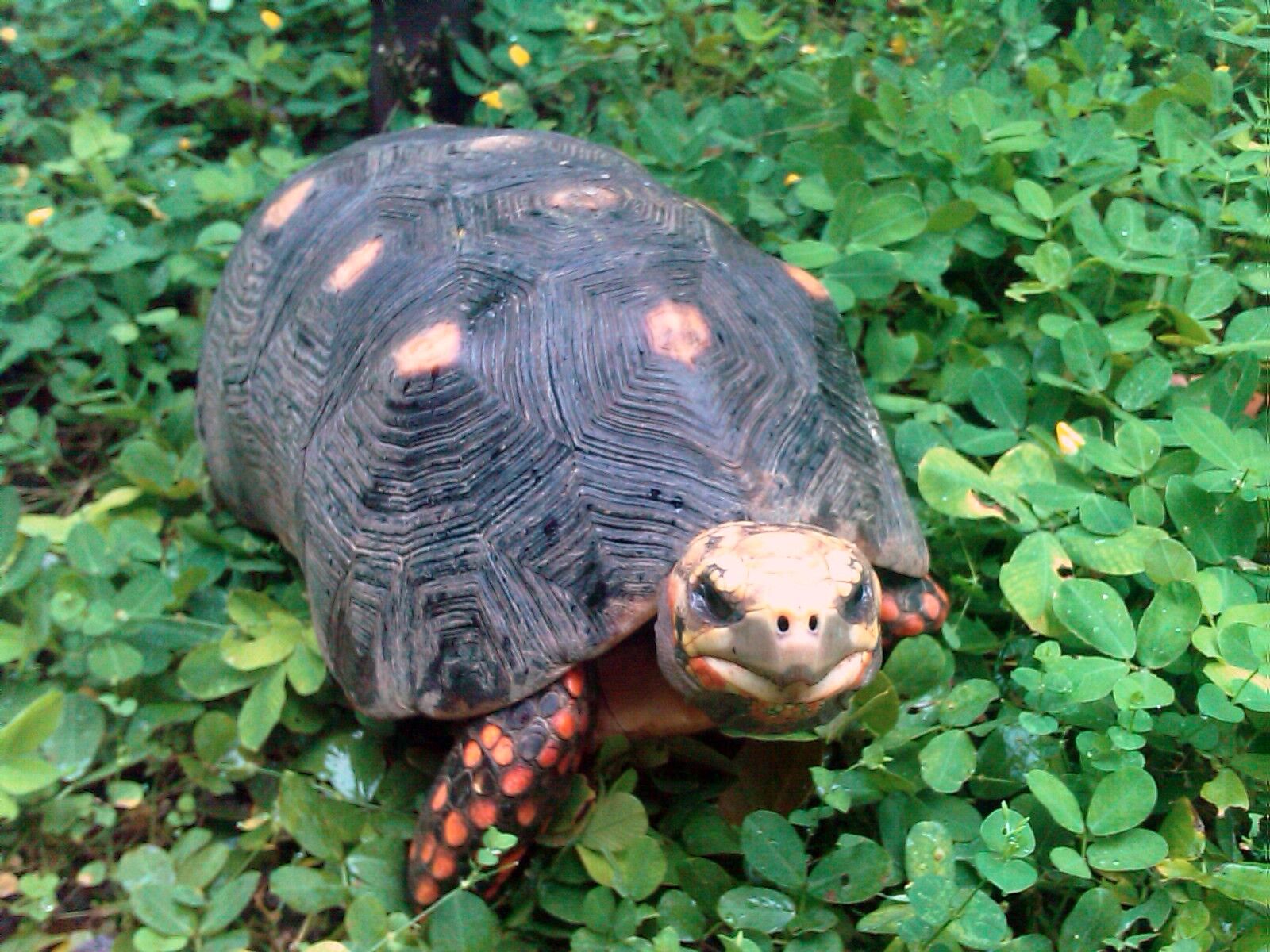
Red-footed tortoise
Chelonoidis carbonarius
A humid-forest tortoise that eats fruit.
Pet trade
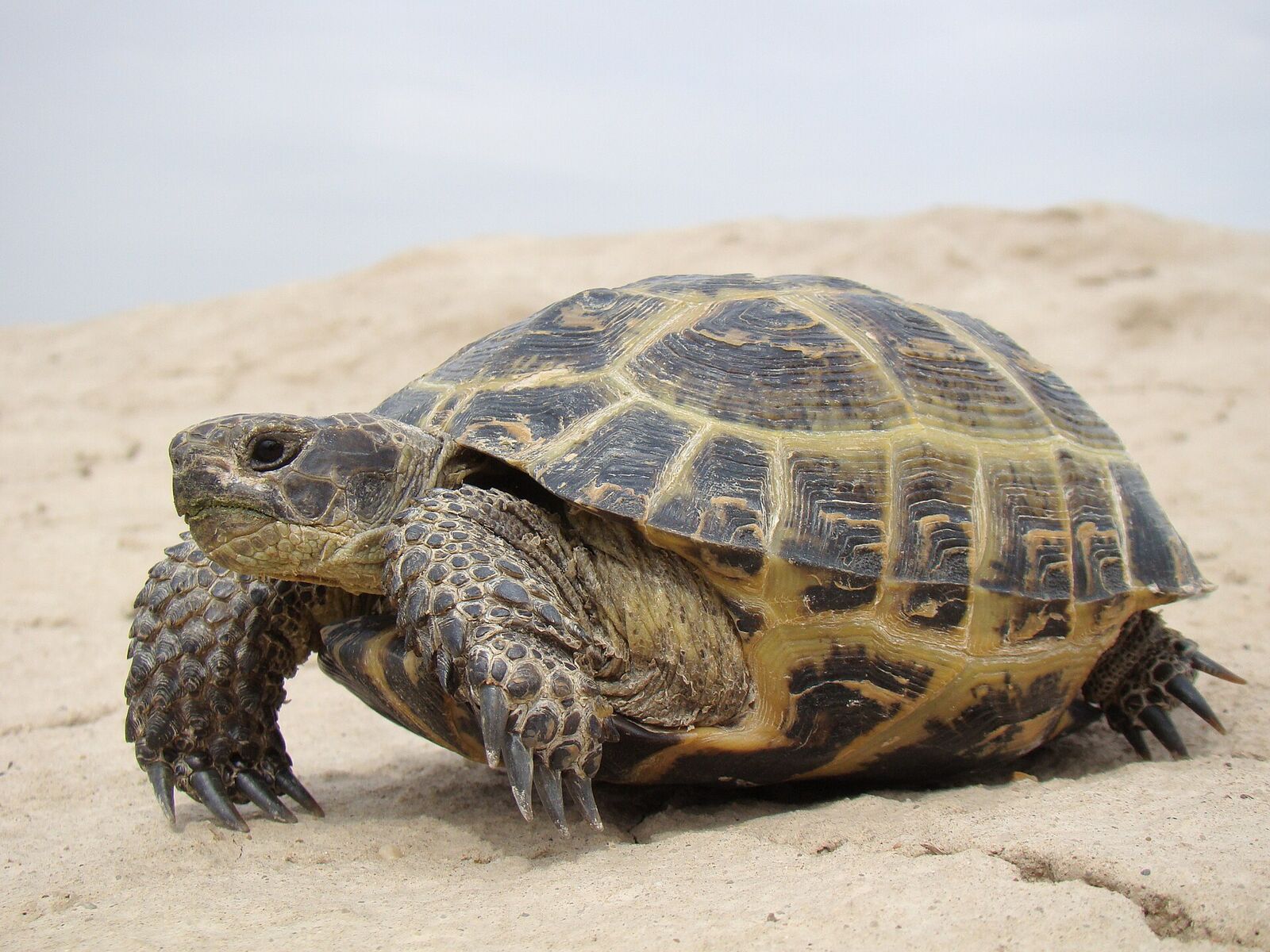
Russian tortoise
Testudo horsfieldii
Small, tough and a great first tortoise.
Pet trade
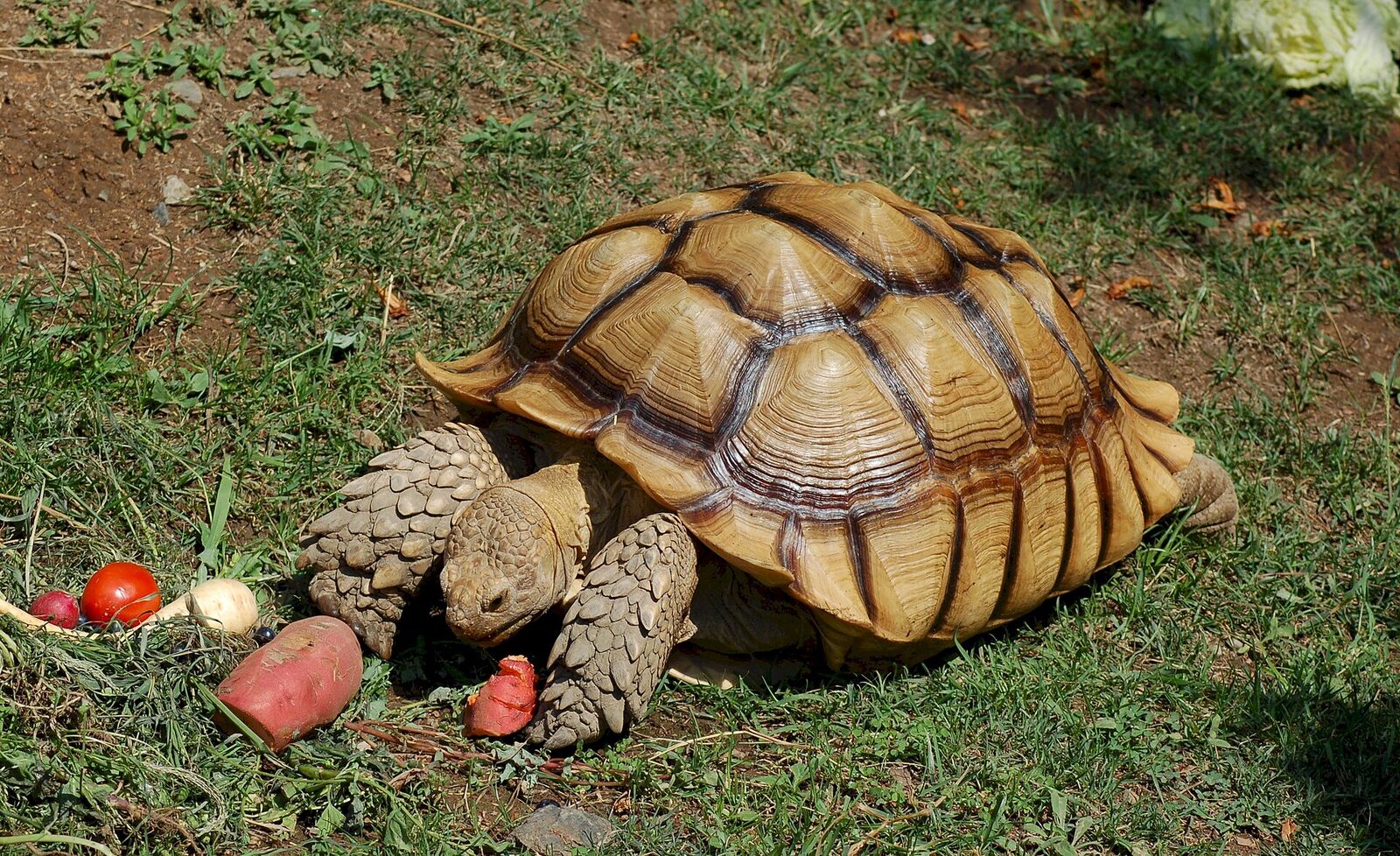
Sulcata (African spurred) tortoise
Centrochelys sulcata
The giant backyard tortoise, best adopted.
Pet trade

Aldabra giant tortoise
Aldabrachelys gigantea
Pet trade

Angulate tortoise
Chersina angulata
Pet trade