
Home / Reptiles / Snakes / Colubridae / Green Trinket Snake
No federal permit to keepGreen Trinket Snake
Gonyosoma prasinum
Reptiles › Snakes (Serpentes) › Colubridae (Colubrid snakes)
Gonyosoma prasinum (green trinket snake, green bush rat snake or green ratsnake) is a species of colubrid snake found in Asia.
From Wikipedia: Gonyosoma prasinum, CC BY-SA 4.0 (excerpt)
Care at a glance
Species-specific values
Values researched for this exact species. Air, surface and water temperatures are listed separately, and each source is kept as published rather than averaged.
| Minimum enclosure | About 36x18x36 WDH or more. Source: thriveecosystems.com | |
| Night temperature | 62–72 °F Source: thriveecosystems.com | |
| Humidity | 60–80 % Source: thriveecosystems.com | |
| Diet | Small rodents; live food is preferred over dead. Source: thriveecosystems.com | |
| Social housing | Only one male can be kept in a cage. Source: thriveecosystems.com | |
| Substrate | Peat or coconut humus. Source: thriveecosystems.com | |
| Seasonal cooling | 55–60 °F Source: thriveecosystems.com |
Understanding the animal
In the wild
In the wild
| Overview | Gonyosoma prasinum (green trinket snake, green bush rat snake or green ratsnake) is a species of colubrid snake found in Asia. — From Wikipedia: Gonyosoma prasinum, CC BY-SA 4.0 (excerpt) |
| Appearance and size | Rostral a little broader than deep, just visible from above; suture between the internasals a little shorter than that between the prefrontals; frontal as long as its distance from the end of the snout, shorter than the parietals; loreal square or longer than deep; one or two preoculars; temporals 1+2 or 2+2; upper labials 9, fourth, fifth, and sixth entering the eye; 5 lower labials in contact with the anterior chin-shields, which are as long as the posterior or a little longer. — From Wikipedia: Gonyosoma prasinum, CC BY-SA 4.0 (excerpt) |
Read about this species in the wild at The Reptile Database.
Native climate (measured)
Native climate (measured)
| Warm-season highs | about 85°F (up to 94°F in the hottest sampled areas) |
| Cool-season lows | about 49°F (down to 40°F in the coldest sampled areas) |
| Average temperature | 64–79°F across sampled records |
| Relative humidity | 72–79% on average (driest month about 61%) |
| Rainfall | about 1757 mm a year, with strong wet and dry seasons |
Measured at 18 wild occurrence records sampled against WorldClim 2.1 climate data (1970–2000 averages). Air conditions in the range are ecological context, not enclosure settings: microhabitats such as burrows, leaf litter or basking rocks can be cooler, warmer or more humid.
Profile
Profile
Researched for this exact species. Sources are listed under In the wild above.
History
Named after Greek “prasinos” = green.
Sources for this sheet
- The Reptile Database Peer-reviewed researchScientist-curated catalog of every reptile species, with taxonomy and literature.
- GBIF Backbone Taxonomy (Global Biodiversity Information Facility) (CC BY 4.0) Peer-reviewed researchInternational scientific taxonomy used here for classification. GBIF Secretariat (2023). GBIF Backbone Taxonomy. Checklist dataset https://doi.org/10.15468/39omei, accessed via GBIF.org.
- Wikipedia (species article) (CC BY-SA 4.0) Community referenceFree encyclopedia; useful overviews with their own citations. Short excerpts are quoted under CC BY-SA 4.0, each credited with a link to its article.
More colubrid snakes
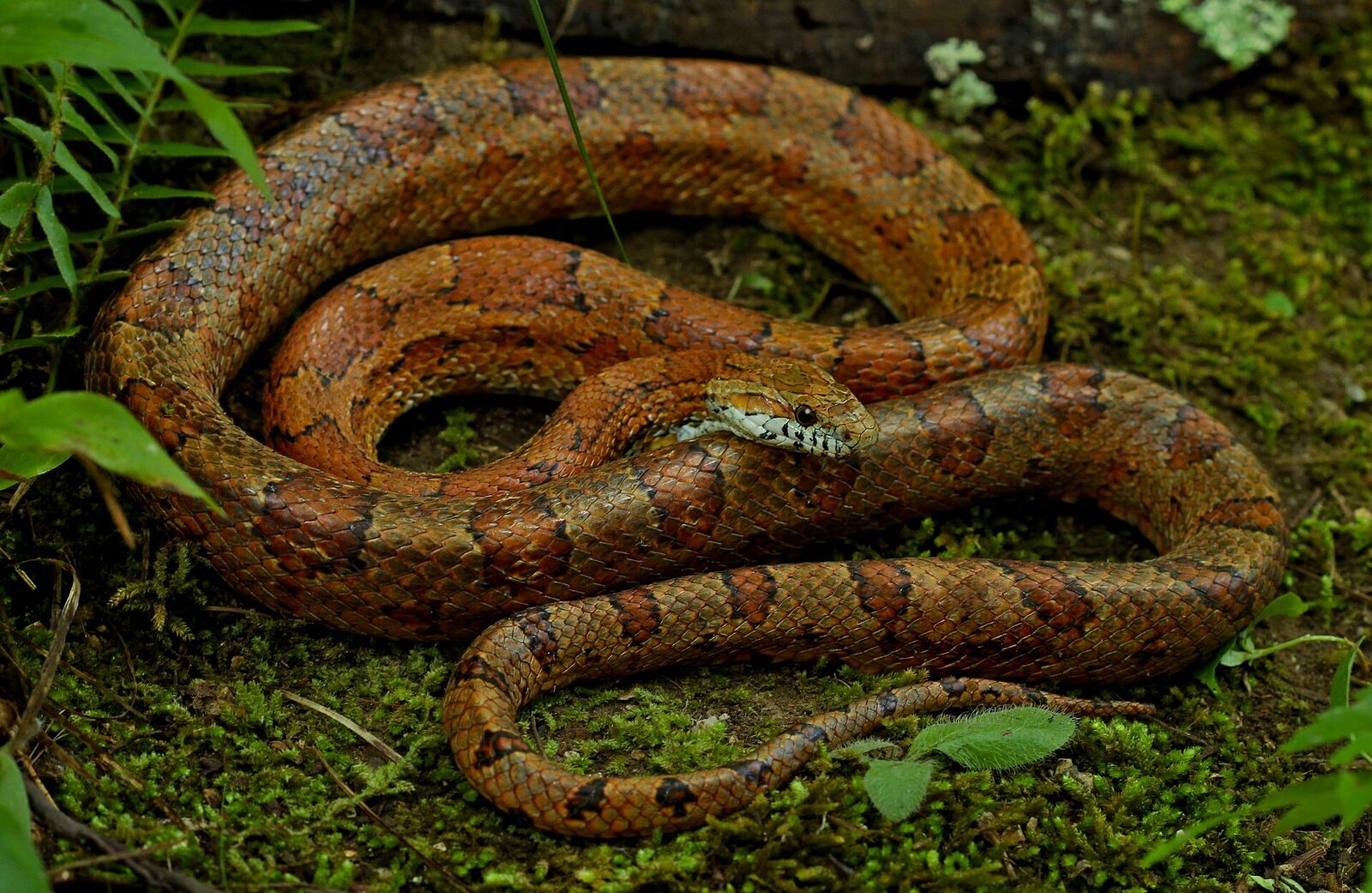
Corn snake
Pantherophis guttatus
Hardy, easy-going and colorful.
Pet trade
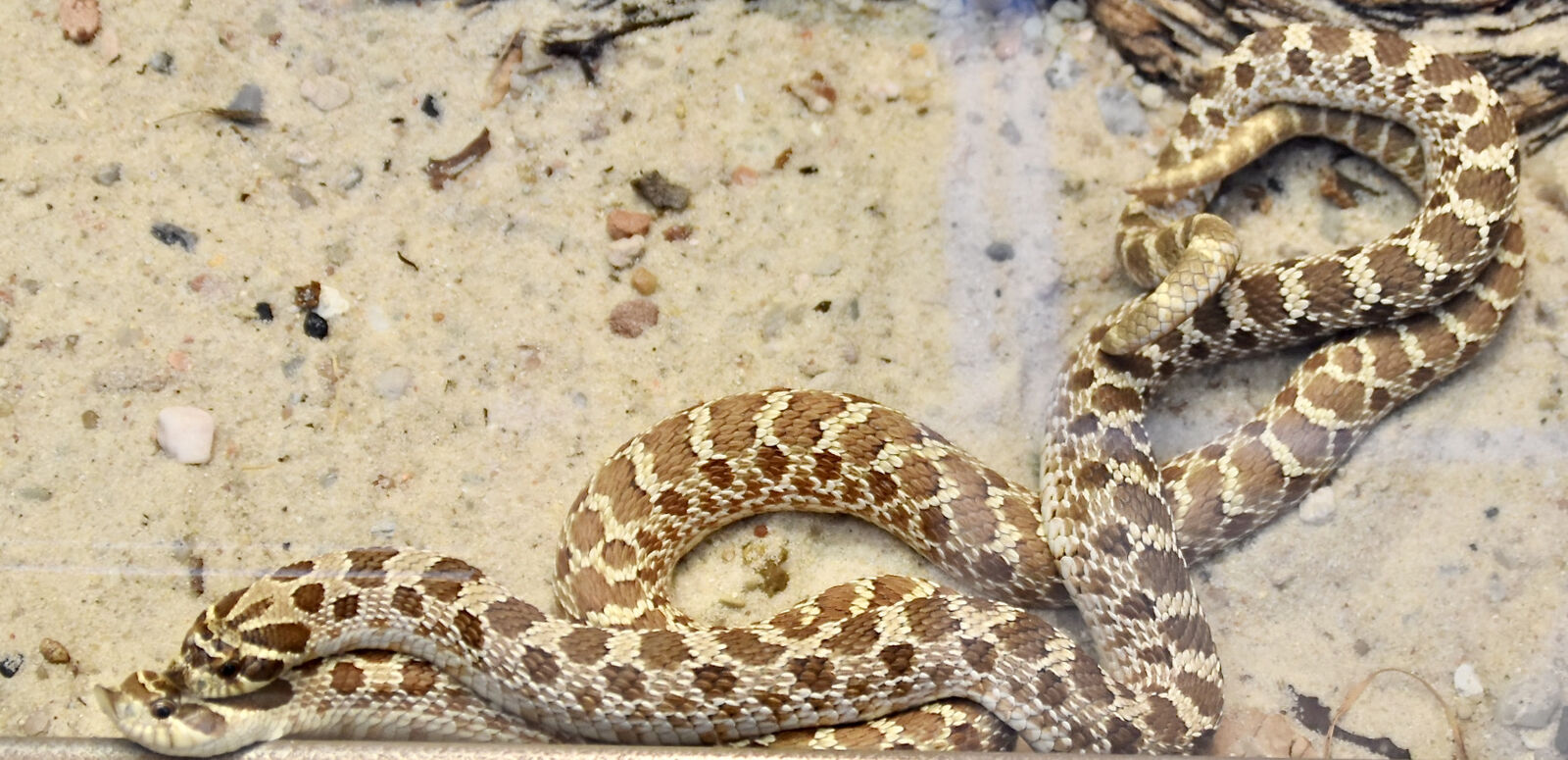
Western hognose snake
Heterodon nasicus
Dramatic bluffs from a tiny, upturned-nose snake.
Pet trade

Amur (Russian) rat snake
Elaphe schrenckii
Pet trade

Andean milk snake
Lampropeltis micropholis
Pet trade

Arizona mountain kingsnake
Lampropeltis pyromelana
Pet trade

Baird's rat snake
Pantherophis bairdi
Pet trade