
Home / Invertebrates / Spiders / Gooty sapphire ornamental tarantula
Some federal rules applyGooty sapphire ornamental tarantula
Poecilotheria metallica
Invertebrates › Spiders (Araneae) › Theraphosidae (Tarantulas)
Poecilotheria metallica, also known as the peacock tarantula, or the Gooty sapphire tarantula, is an Old World species of tarantula.

Care at a glance
Species-specific values
Values researched for this exact species. Air, surface and water temperatures are listed separately, and each source is kept as published rather than averaged.
| Humidity | 65–75 % Source: thetarantulacollective.com | |
| Diet | Spiderlings eat small prey; juveniles eat small to medium crickets or a medium Dubia roach; adults eat large crickets or a large Dubia roach. Source: thetarantulacollective.com | |
| Feeding frequency | Spiderlings feed twice a week; juveniles every 7–10 days; adults every 2–3 weeks or as needed. Source: thetarantulacollective.com | |
| Substrate | Fill the enclosure bottom one-third with Terra Aranea substrate. Source: thetarantulacollective.com |
Understanding the animal
About this animal
About this animal
It is the only blue species of the genus Poecilotheria. Like others in its genus it exhibits an intricate fractal-like pattern on the abdomen.
From Wikipedia: Poecilotheria metallica, CC BY-SA 4.0 (excerpt)
In the wild
In the wild
Researched for this exact species, not its family. Wild conditions are context, not enclosure settings.1234
| Where it lives | Recorded in dry deciduous forest of Andhra Pradesh, India, with a published range extension to Pakkam Malai near Gingee, Tamil Nadu. Uses tree cavities, and the Tamil Nadu field report also documents individuals in rocky caves. |
| Climate | At the Tamil Nadu field locality, reported regional temperatures are 86–97°F (30–36°C) outside the monsoon and about 75°F (24°C) during the monsoon, with roughly 28 inches (700 mm) annual rain. These are locality climate figures, not cavity temperatures; wild relative humidity ranges were not established. |
| Behavior to plan for | Shelters in cavities rather than occupying an exposed ground burrow. Its venomous bite is relevant to safe containment and transfer. |
Profile
Profile
Researched for this exact species. Sources are listed under In the wild above.
History
The first specimen known to science was obtained in 1898 after being discovered by H.C. West near Gooty, India. Reginald Innes Pocock studied it the following year and described it as the previously unknown species Poecilotheria metallica.
Sources for this sheet
- Species+ (UNEP-WCMC and the CITES Secretariat) Zoo, university or veterinaryThe official database of species listed under CITES. UNEP (2026). The Species+ Website. Nairobi, Kenya. Compiled by UNEP-WCMC, Cambridge, UK. Available at: www.speciesplus.net. [Accessed 04/10/2026].
- USFWS International Affairs: CITES Zoo, university or veterinaryFederal agency that issues CITES permits.
- Clint's Reptiles (YouTube): Gooty Sapphire Ornamental Tarantula, The Best Pet Spider? Expert educator & keeperClint Laidlaw, PhD in Biology Education and MS in Evolutionary Ecology; owner of Clint's Reptile Room and a longtime keeper. His "Best Pet?" series reviews each species' care in depth.
- GBIF Backbone Taxonomy (Global Biodiversity Information Facility) (CC BY 4.0) Peer-reviewed researchInternational scientific taxonomy used here for classification. GBIF Secretariat (2023). GBIF Backbone Taxonomy. Checklist dataset https://doi.org/10.15468/39omei, accessed via GBIF.org.
- Wikipedia (species article) (CC BY-SA 4.0) Community referenceFree encyclopedia; useful overviews with their own citations. Short excerpts are quoted under CC BY-SA 4.0, each credited with a link to its article.
- iNaturalist (captive observations) Community referenceCommunity observation platform run by the California Academy of Sciences and National Geographic; observations marked captive show animals living in homes, zoos and aquariums.
More tarantulas
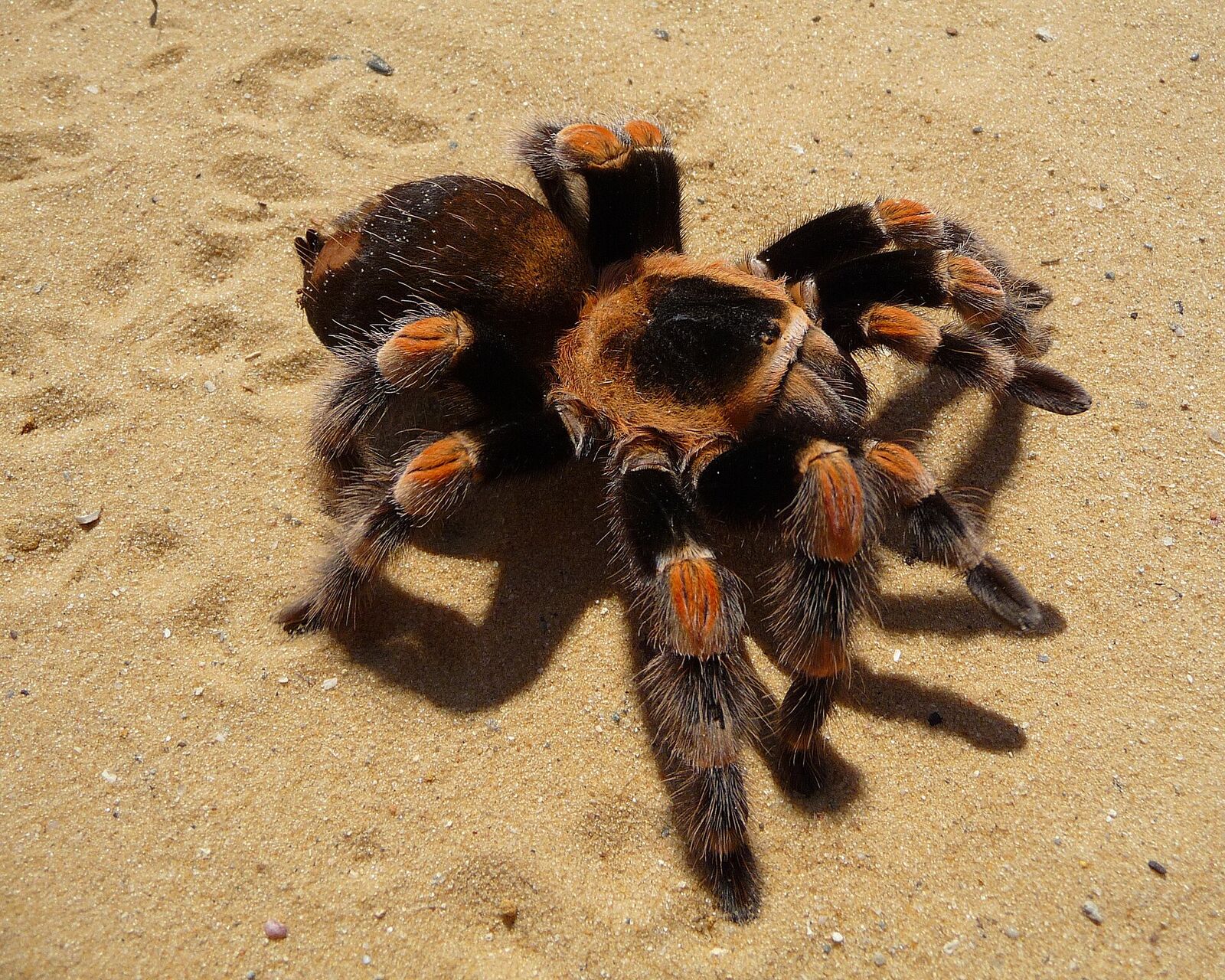
Mexican redknee tarantula
Brachypelma hamorii
A docile spider where females live 25–30 years.
Pet trade

African Horned Baboon Tarantula
Ceratogyrus darlingi
Pet trade
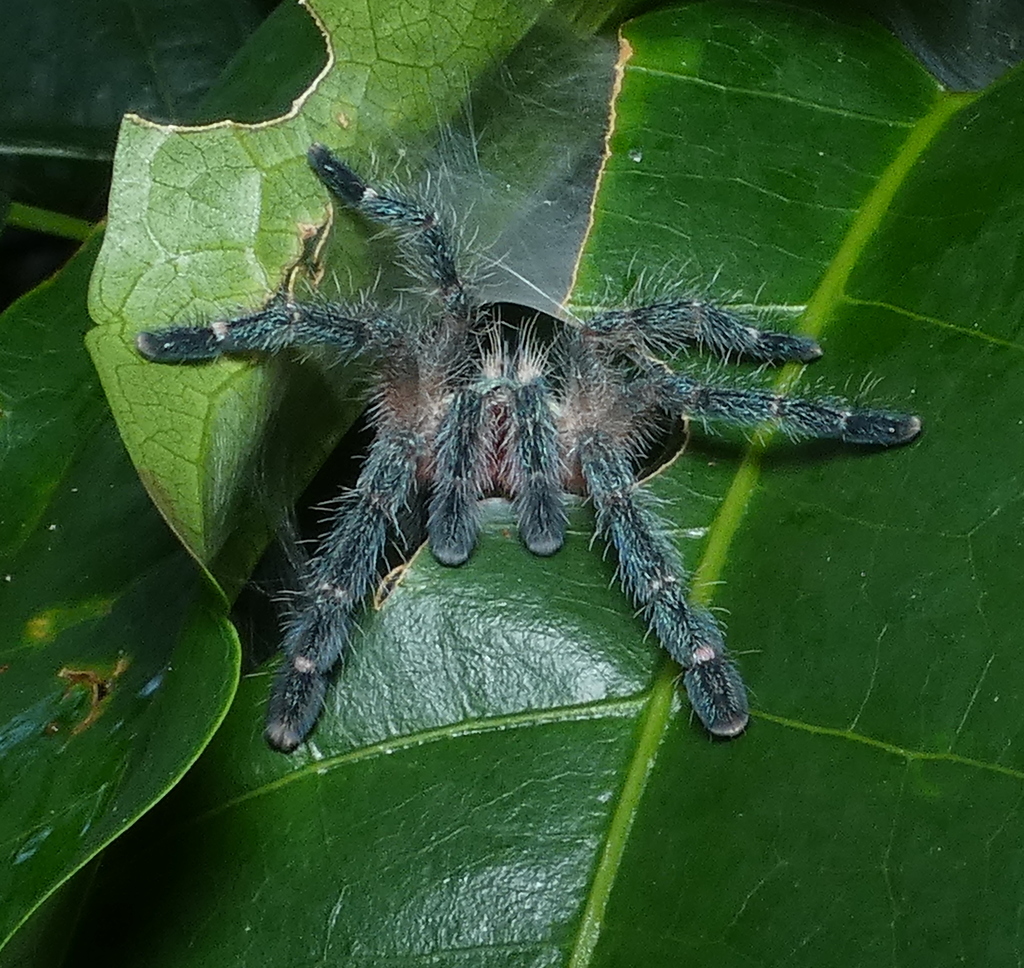
Amazon Ribbed Tarantula
Iridopelma hirsutum
Pet trade

Amula Redrump Tarantula
Brachypelma albiceps
Pet trade

Anantagiri’s Parachute Spider
Poecilotheria tigrinawesseli
Pet trade

Antilles pinktoe tarantula
Caribena versicolor
Pet trade