
Home / Reptiles / Snakes / Colubridae / Gopher snake (bullsnake)
No federal permit to keepGopher snake (bullsnake)
Pituophis catenifer
Reptiles › Snakes (Serpentes) › Colubridae (Colubrid snakes)
Pituophis catenifer, the gopher snake, is a species of nonvenomous colubrid snake endemic to North America.

Care at a glance
Species-specific values
Values researched for this exact species. Air, surface and water temperatures are listed separately, and each source is kept as published rather than averaged.
| Minimum enclosure | Hatchlings can start in six-quart tubs or five-gallon tanks; larger snakes do best in enclosures four feet long. Source: reptilesmagazine.com | |
| Uvb lighting | Special UVB or UVA lighting is not required. Source: reptilesmagazine.com | |
| Diet | Feed appropriately sized mice to hatchlings and rats to adults; frozen prey is recommended. Source: reptilesmagazine.com | |
| Feeding frequency | Offer prey once a week. Source: reptilesmagazine.com | |
| Substrate | Aspen bedding works best; loose particle bedding supports burrowing. Source: reptilesmagazine.com |
Understanding the animal
About this animal
About this animal
Nine subspecies are currently recognized.
From Wikipedia: Pituophis catenifer, CC BY-SA 4.0 (excerpt)
In the wild
In the wild
Researched for this exact species, not its family. Wild conditions are context, not enclosure settings.12345
| Where it lives | Western and central North American grasslands, deserts, shrublands, woodland edges and farmland. Often selects open areas and uses mammal burrows extensively. |
| Ground it lives on | Soil in rodent burrows, grassy ground and woodland-edge litter. |
| Climate | Temperate to arid conditions vary geographically and seasonally; seasonal dormancy and hot-season sheltering occur. Numerical wild temperature and humidity ranges were not established. |
| Active | Mainly diurnal, occasionally nocturnal; dormancy and aestivation reported. |
| Social life | Solitary except mating; some communal egg nests. |
| Wild diet | Gophers, voles, mice, kangaroo rats, ground squirrels and young rabbits; birds, eggs, bats and reptiles also taken. |
| Behavior to plan for | Searches prey burrows and can climb and swim. Defensive hissing, coiling and tail vibration mimic rattlesnakes despite being nonvenomous. |
Native climate (measured)
Native climate (measured)
| Warm-season highs | about 87°F (up to 97°F in the hottest sampled areas) |
| Cool-season lows | about 41°F (down to 36°F in the coldest sampled areas) |
| Average temperature | 57–66°F across sampled records |
| Relative humidity | 50–64% on average (driest month about 51%) |
| Rainfall | about 408 mm a year, with strong wet and dry seasons |
| Winters | Cool to cold winters (lows around 41°F) in much of its native range. Seasonal slowdown may be relevant, but species-specific biology determines whether brumation or hibernation occurs. |
Measured at 117 wild occurrence records sampled against WorldClim 2.1 climate data (1970–2000 averages). Air conditions in the range are ecological context, not enclosure settings: microhabitats such as burrows, leaf litter or basking rocks can be cooler, warmer or more humid.
Profile
Profile
Researched for this exact species. Sources are listed under In the wild above.
History
The sources describe differing taxonomic treatments of several subspecies, with some authors recognizing forms that others reject or elevate to full species. The bullsnake is often incorrectly treated as a separate species in popular usage.
Data and studies
The numbers
The numbers
Each bar is what one source reports. Where several sources weigh in, the dashed gold band marks their average.
Maximum recorded lifespan
Longest recorded lifespan reported by each database; typical lifespans are usually shorter. The AnAge record comes from an animal in human care.
Incubation
Care articles for this species
Care articles for this species
- Gopher Snake Care Sheet (Reptiles Magazine)
- Gopher Snake Care And Breeding Information (Reptiles Magazine)
- Bullsnake Care and Breeding Information (Reptiles Magazine)
- Bullsnake Care Information (Reptiles Magazine)
- Bullsnake Breeding (Reptiles Magazine)
Written by keepers, breeders and vets Reptiles MagazineReptiFiles
Sources for this sheet
- AnAge: The Animal Ageing and Longevity Database (Human Ageing Genomic Resources) (CC BY 3.0) Peer-reviewed researchCurated, referenced longevity and life-history records for thousands of species; maximum lifespans are often from zoo animals.
- Myhrvold et al. (2015). An amniote life-history database. Ecology 96: 3109 Peer-reviewed researchPeer-reviewed compilation of life-history data for over 21,000 birds, mammals and reptiles.
- Clint's Reptiles (YouTube): Bullsnake, The Best Pet Snake? Expert educator & keeperClint Laidlaw, PhD in Biology Education and MS in Evolutionary Ecology; owner of Clint's Reptile Room and a longtime keeper. His "Best Pet?" series reviews each species' care in depth.
- The Reptile Database Peer-reviewed researchScientist-curated catalog of every reptile species, with taxonomy and literature.
- GBIF Backbone Taxonomy (Global Biodiversity Information Facility) (CC BY 4.0) Peer-reviewed researchInternational scientific taxonomy used here for classification. GBIF Secretariat (2023). GBIF Backbone Taxonomy. Checklist dataset https://doi.org/10.15468/39omei, accessed via GBIF.org.
- Wikipedia (species article) (CC BY-SA 4.0) Community referenceFree encyclopedia; useful overviews with their own citations. Short excerpts are quoted under CC BY-SA 4.0, each credited with a link to its article.
- iNaturalist (captive observations) Community referenceCommunity observation platform run by the California Academy of Sciences and National Geographic; observations marked captive show animals living in homes, zoos and aquariums.
- Reptiles Magazine (care articles) Experienced keeper or breederEstablished reptile and amphibian hobby magazine; care articles are written by breeders, keepers and veterinarians.
More colubrid snakes
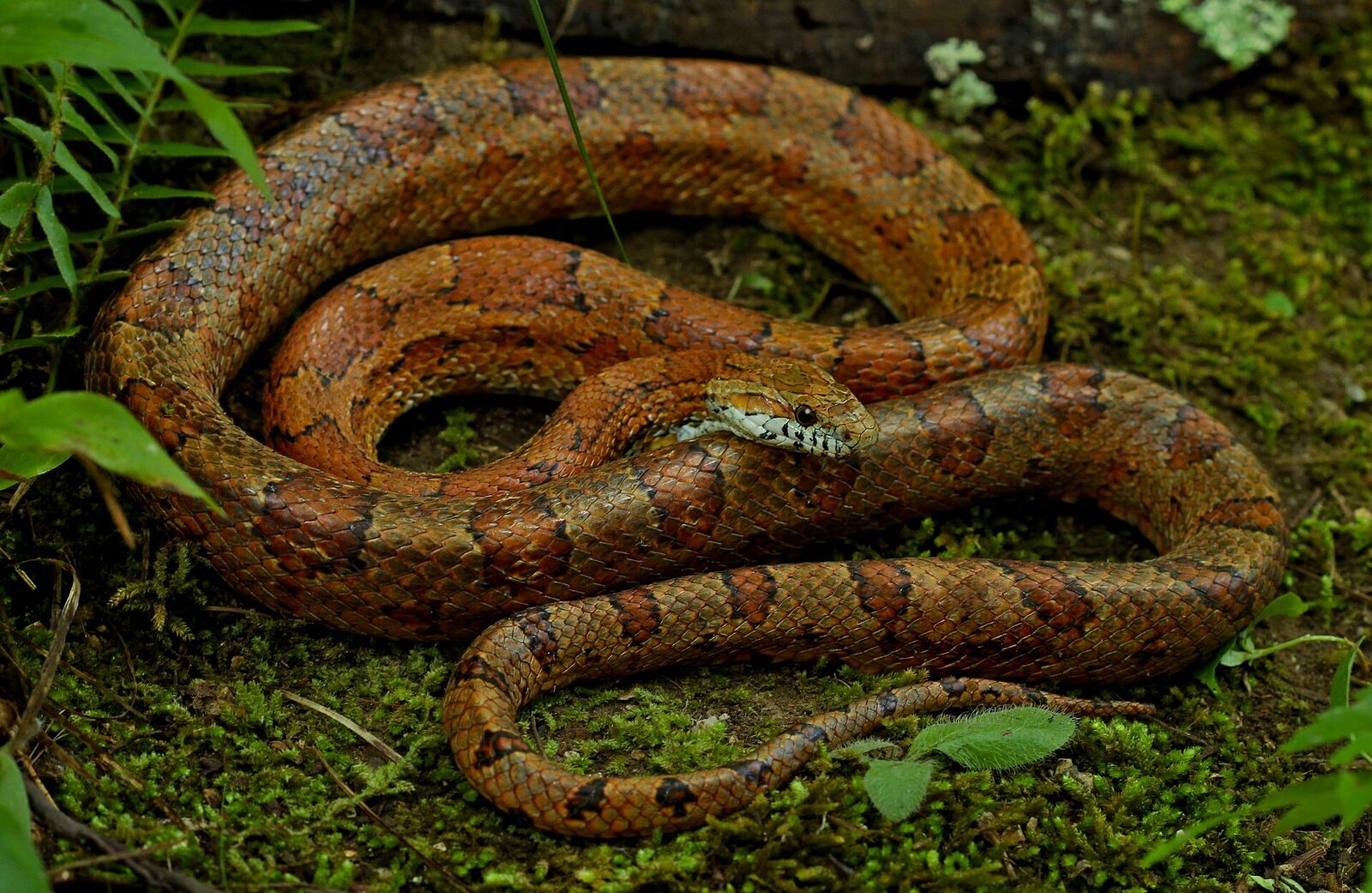
Corn snake
Pantherophis guttatus
Hardy, easy-going and colorful.
Pet trade
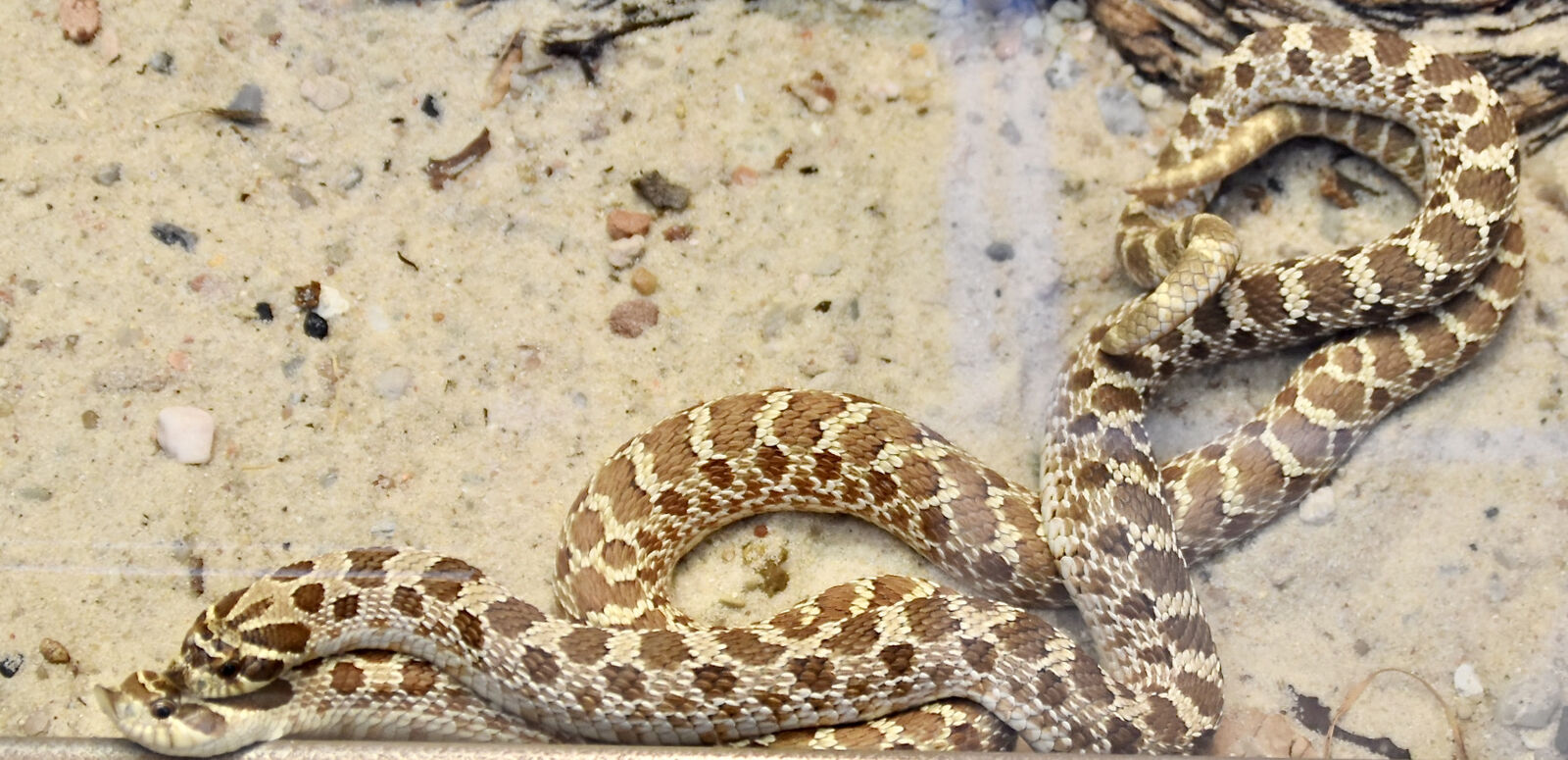
Western hognose snake
Heterodon nasicus
Dramatic bluffs from a tiny, upturned-nose snake.
Pet trade

Amur (Russian) rat snake
Elaphe schrenckii
Pet trade

Andean milk snake
Lampropeltis micropholis
Pet trade

Arizona mountain kingsnake
Lampropeltis pyromelana
Pet trade

Baird's rat snake
Pantherophis bairdi
Pet trade