
Home / Reptiles / Snakes / Colubridae / Gray-banded kingsnake
No federal permit to keepGray-banded kingsnake
Lampropeltis alterna
Reptiles › Snakes (Serpentes) › Colubridae (Colubrid snakes)
The gray-banded kingsnake (Lampropeltis alterna), sometimes referred to as the alterna or the Davis Mountain king snake, is a species of nonvenomous snake in the family Colubridae.
From Wikipedia: Gray-banded kingsnake, CC BY-SA 4.0 (excerpt)

Care at a glance
Species-specific values
Values researched for this exact species. Air, surface and water temperatures are listed separately, and each source is kept as published rather than averaged.
| Minimum enclosure | A 10- or 15-gallon terrarium suits gray-banded kingsnakes ranging from 24 to 36 inches. Source: reptilesmagazine.com | |
| Warm side air temperature | 88 °F Source: reptilesmagazine.com | |
| Cool side air temperature | 65 °F Source: reptilesmagazine.com | |
| Night temperature | 55 °F Source: reptilesmagazine.com | |
| Diet | They eat appropriately sized mice; hatchlings may need lizards initially. Source: reptilesmagazine.com | |
| Substrate | Suitable substrates include newspaper, paper towels, low-dust shavings (never cedar), and CareFresh bedding. Source: reptilesmagazine.com | |
| Seasonal cooling | In winter, turn off heat and let the cage cool to about 55 degrees after 14 days at usual warmer temperatures without feeding. Source: reptilesmagazine.com |
Understanding the animal
About this animal
About this animal
The species is endemic to the southwestern United States and adjacent Mexico. Some sources list two distinct subspecies of Lampropeltis alterna, as L. a.
From Wikipedia: Gray-banded kingsnake, CC BY-SA 4.0 (excerpt)
In the wild
In the wild
| Overview | The gray-banded kingsnake (Lampropeltis alterna), sometimes referred to as the alterna or the Davis Mountain king snake, is a species of nonvenomous snake in the family Colubridae. The species is endemic to the southwestern United States and adjacent Mexico. Some sources list two distinct subspecies of Lampropeltis alterna, as L. a. alterna and L. a. blairi differentiated by patterning and locale, but research has shown them to be color morphs of the same species. — From Wikipedia: Gray-banded kingsnake, CC BY-SA 4.0 (excerpt) |
| Where it lives | Lampropeltis alterna is found in the Trans-Pecos/Chihuahuan Desert region of southwestern Texas, southern New Mexico, and northern Mexico. The species is closely associated with limestone and volcanic substrates, with steep slopes and standard desert scrub. — From Wikipedia: Gray-banded kingsnake, CC BY-SA 4.0 (excerpt) |
| Wild diet | The gray-banded kingsnake feeds primarily on lizards. It will occasionally feed on small rodents, frogs, and the eggs of ground nesting birds, lizards, and other snakes. — From Wikipedia: Gray-banded kingsnake, CC BY-SA 4.0 (excerpt) |
| Behavior | In the wild, the gray-banded kingsnake, is not often encountered. It is a common species, but nocturnal and quite secretive. Its natural range is sparsely populated with humans, and many regions are virtually impassable due to the mountainous terrain. — From Wikipedia: Gray-banded kingsnake, CC BY-SA 4.0 (excerpt) |
| Reproduction | L. alterna is oviparous, laying clutches of 3–13 eggs in early summer, which hatch in approximately 9 weeks. Each hatchling is around 10 in in total length. — From Wikipedia: Gray-banded kingsnake, CC BY-SA 4.0 (excerpt) |
| Conservation | L. alterna is regionally protected in New Mexico and Mexico. Texas does not have any regional protections, due to the number of reports in the area. Some believe that the number of reports in Texas is due to the accessibility of the region for amateur American herpetologists. — From Wikipedia: Gray-banded kingsnake, CC BY-SA 4.0 (excerpt) |
Read about this species in the wild at The Reptile Database.
Native climate (measured)
Native climate (measured)
| Warm-season highs | about 92°F (up to 96°F in the hottest sampled areas) |
| Cool-season lows | about 34°F (down to 29°F in the coldest sampled areas) |
| Average temperature | 60–69°F across sampled records |
| Relative humidity | 43–55% on average (driest month about 39%) |
| Rainfall | about 393 mm a year |
| Winters | Cool to cold winters (lows around 34°F) in much of its native range. Seasonal slowdown may be relevant, but species-specific biology determines whether brumation or hibernation occurs. |
Measured at 44 wild occurrence records sampled against WorldClim 2.1 climate data (1970–2000 averages). Air conditions in the range are ecological context, not enclosure settings: microhabitats such as burrows, leaf litter or basking rocks can be cooler, warmer or more humid.
Profile
Profile
Researched for this exact species. Sources are listed under In the wild above.
Data and studies
Researched care notes
Researched care notes
Findings checked against veterinary, zoo, welfare, keeper and peer-reviewed sources. Air, basking-surface and water temperatures are kept separate, and where sources disagree both are shown. “Study” notes report what a paper measured, not a universal rule.
Kingsnakes And Milk Snakes
Researched for this genus; applies to its species unless a species note says otherwise.
- House individually: Lampropeltis snakes can eat other snakes, including cage mates.1
- Provide enclosure length that permits full-body extension, with secure hides on both warm and cool sides and cover for exploration.1
- Surface: the veterinary guide recommends a basking spot of 85–88°F (29.4–31.1°C), measured with an infrared thermometer.1
- Air / warm: the guide separately recommends 80–85°F (26.7–29.4°C) for warm-side ambient air.1
- Air / cool: the guide separately recommends 75–80°F (23.9–26.7°C) for cool-side ambient air.1
- The veterinary guide gives 40–60% RH as broad Lampropeltis guidance; the requirements of the identified species remain relevant.1
- Use appropriately sized animal prey; the guide includes rodents and other suitable whole prey rather than a plain-meat ration.1
- Disagreement: ReptiFiles' kingsnake cool-zone recommendation is 21–26°C, while the veterinary guide's cool AIR range is 23.9–26.7°C; zone labels and species coverage differ, so retain both with their scope.2,1
The numbers
The numbers
Each bar is what one source reports. Where several sources weigh in, the dashed gold band marks their average.
Maximum recorded lifespan
Longest recorded lifespan reported by each database; typical lifespans are usually shorter. The AnAge record comes from an animal in human care.
Typical adult weight
Average adult body mass in each database (FishBase gives the maximum recorded weight).
Incubation
Care articles for this species
Care articles for this species
- Gray-Banded Kingsnake Care Sheet (Reptiles Magazine)
- Captive Breeding Of Gray-Banded Kingsnakes (Reptiles Magazine)
Written by keepers, breeders and vets Reptiles MagazineReptiFiles
Sources for this sheet
- AnAge: The Animal Ageing and Longevity Database (Human Ageing Genomic Resources) (CC BY 3.0) Peer-reviewed researchCurated, referenced longevity and life-history records for thousands of species; maximum lifespans are often from zoo animals.
- Myhrvold et al. (2015). An amniote life-history database. Ecology 96: 3109 Peer-reviewed researchPeer-reviewed compilation of life-history data for over 21,000 birds, mammals and reptiles.
- The Reptile Database Peer-reviewed researchScientist-curated catalog of every reptile species, with taxonomy and literature.
- GBIF Backbone Taxonomy (Global Biodiversity Information Facility) (CC BY 4.0) Peer-reviewed researchInternational scientific taxonomy used here for classification. GBIF Secretariat (2023). GBIF Backbone Taxonomy. Checklist dataset https://doi.org/10.15468/39omei, accessed via GBIF.org.
- Wikipedia (species article) (CC BY-SA 4.0) Community referenceFree encyclopedia; useful overviews with their own citations. Short excerpts are quoted under CC BY-SA 4.0, each credited with a link to its article.
- iNaturalist (captive observations) Community referenceCommunity observation platform run by the California Academy of Sciences and National Geographic; observations marked captive show animals living in homes, zoos and aquariums.
- Reptiles Magazine (care articles) Experienced keeper or breederEstablished reptile and amphibian hobby magazine; care articles are written by breeders, keepers and veterinarians.
More colubrid snakes
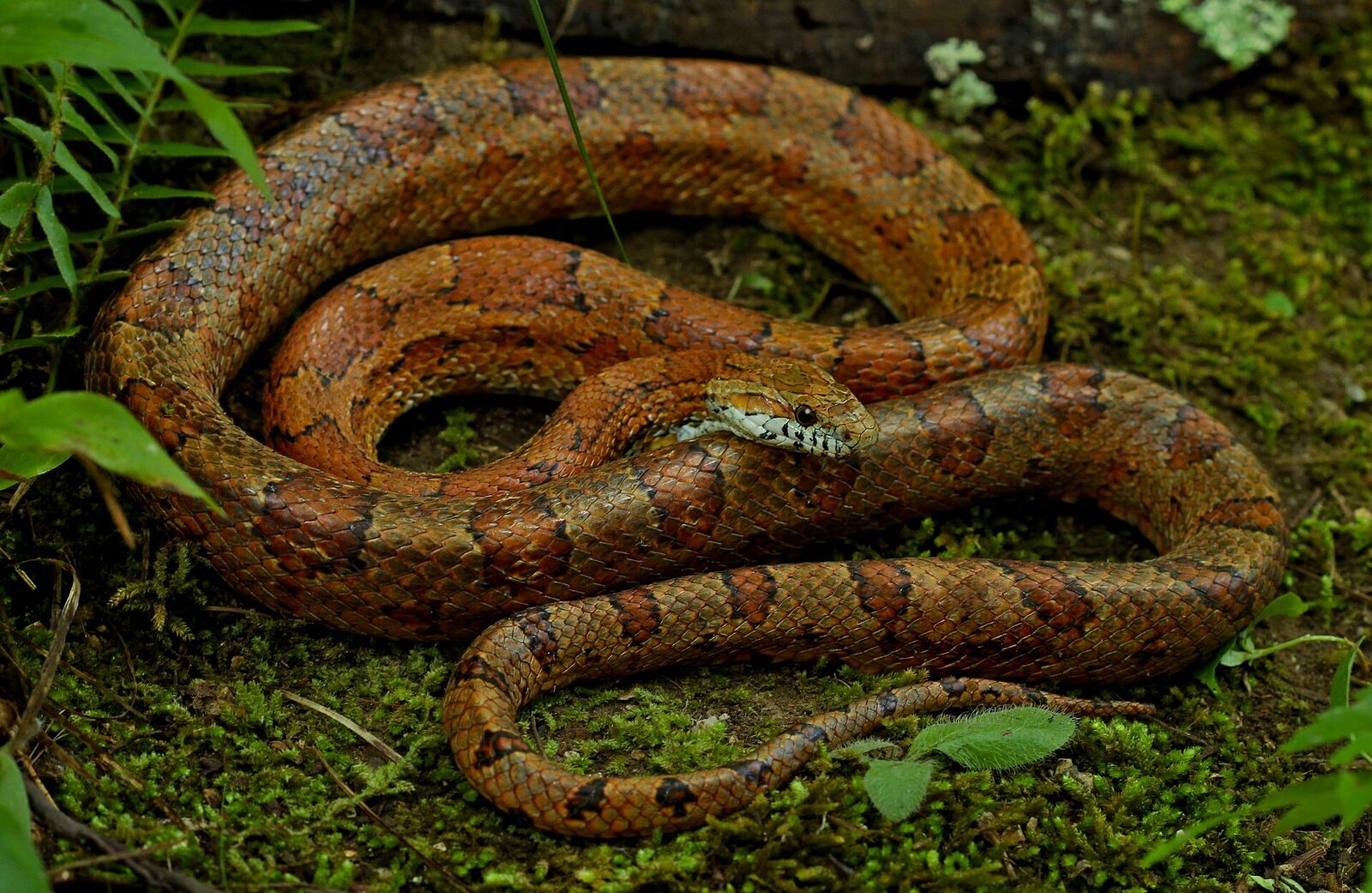
Corn snake
Pantherophis guttatus
Hardy, easy-going and colorful.
Pet trade
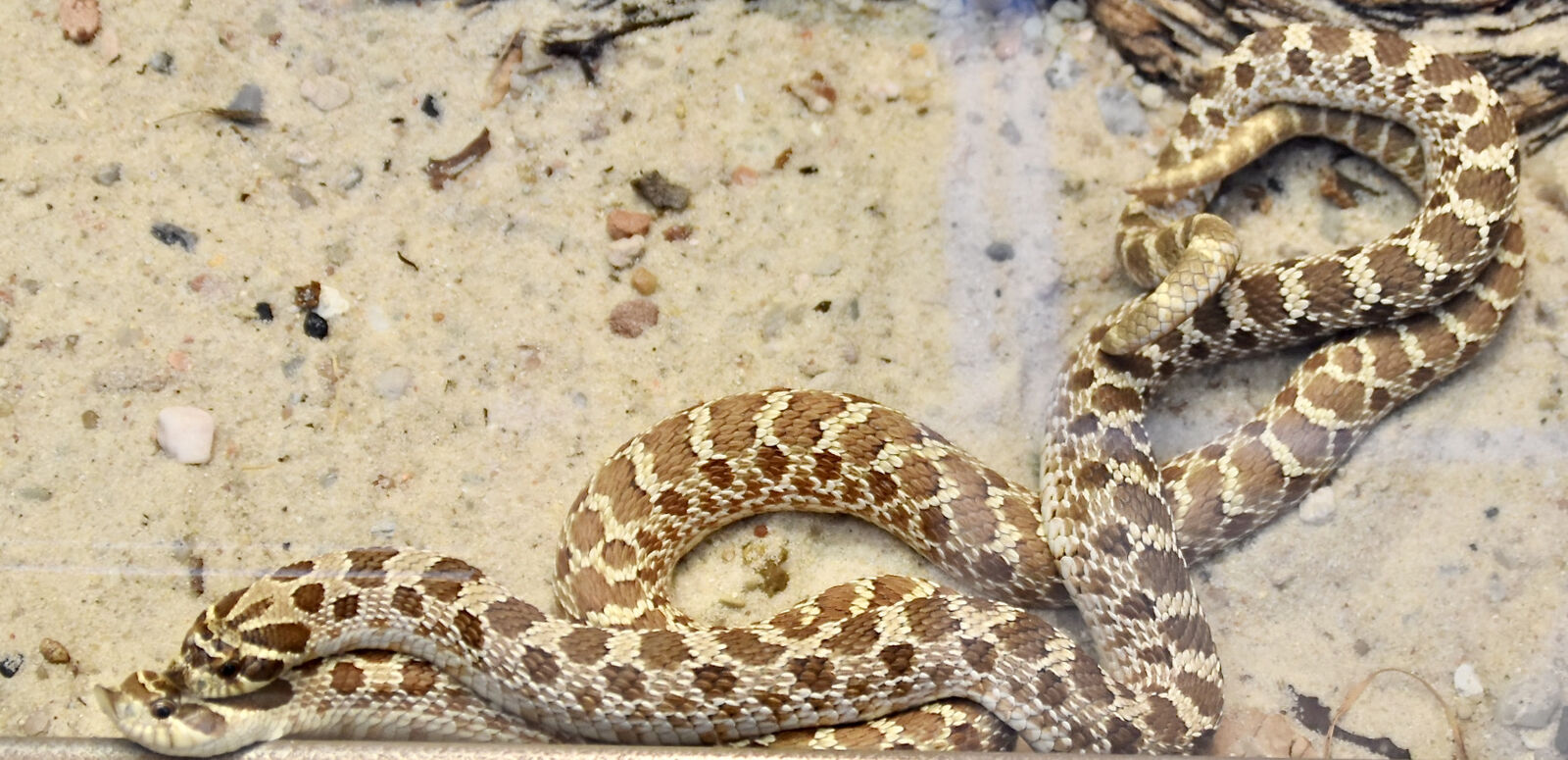
Western hognose snake
Heterodon nasicus
Dramatic bluffs from a tiny, upturned-nose snake.
Pet trade

Amur (Russian) rat snake
Elaphe schrenckii
Pet trade

Andean milk snake
Lampropeltis micropholis
Pet trade

Arizona mountain kingsnake
Lampropeltis pyromelana
Pet trade

Baird's rat snake
Pantherophis bairdi
Pet trade