
Home / Fishes / Catfish / Loricariidae / Hemiancistrus subviridis
No federal permit to keepHemiancistrus subviridis
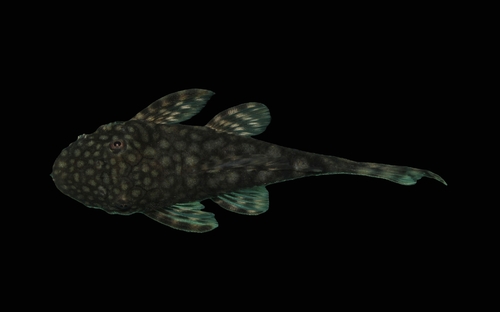
Hemiancistrus subviridis
Fishes › Catfish (Siluriformes) › Loricariidae (Plecos)
Hemiancistrus subviridis, is a species of freshwater ray-finned fish belonging to the family Loricariidae, the suckermouth armoured catfishes, and the subfamily Hypostominae, the suckermouth catfishes.

Care at a glance
Species-specific values
Values researched for this exact species. Air, surface and water temperatures are listed separately, and each source is kept as published rather than averaged.
| Water temperature | 81–86 °F (27–30 °C) Source: practicalfishkeeping.co.uk | |
| Diet | Provide varied frozen and prepared foods, with blanched vegetables always available to graze on. Source: practicalfishkeeping.co.uk | |
| Social housing | Single specimens can live in a community, but a breeding group is the most rewarding option. Source: practicalfishkeeping.co.uk | |
| Substrate | Use inert rock structures with a thin layer of sand/gravel mix. Source: practicalfishkeeping.co.uk | |
| Water temperature | 75–82 °F (24–28 °C) Source: en.aqua-fish.net | |
| Diet | Offer sinking wafers and algae pellets, frozen foods, algae-covered rocks, and blanched vegetables. Source: en.aqua-fish.net | |
| Social housing | Keep singly, or provide multiple caves and sightline breaks when keeping more than one. Source: en.aqua-fish.net |
Species-specific aquarium care
- Tank: At least 24 in long and 12 in front to back for one adult (adults commonly reach about 5.9 in / 14.95 cm).
- Water: Freshwater.
- Layout: Lives on or near the bottom: floor space and hiding places matter more than height.
- Availability: Rarely or never seen in the aquarium trade; expect to source it from specialists or not at all.
Calculated from this species' own FishBase record: tank size from its typical adult length and swimming zone, water values from its recorded ranges. The group guide below fills in general care.
Understanding the animal
About this animal
About this animal
This catfish is found in eastern Colombia and western Venezuela where it occurs in the upper Orinoco river system upstream of the Atures rapids to the Iguapo, Ventuari and Casiquiare Rivers. In these rivers it is found in the spaces between granite rocks, feeding on insects, algae, bryophytes and other types of plant matter.
From Wikipedia: Hemiancistrus subviridis, CC BY-SA 4.0 (excerpt)
In the wild
In the wild
From this species’ own FishBase record (habitat, bottom type, water and breeding data), not its family. Wild conditions are context, not enclosure settings.1
| Where it lives | Lives in freshwater. Stays near the bottom. |
| Climate | Tropical climate. |
Data and studies
The numbers
The numbers
Each bar is what one source reports. Where several sources weigh in, the dashed gold band marks their average.
Adult length
Maximum recorded length. Measured as standard length (snout to the base of the tail, not counting the tail fin). Fish in home aquariums often stay smaller than wild records.
Sources for this sheet
- FishBase (Froese & Pauly, eds.), version 24.07 (CC BY-NC 4.0) Peer-reviewed researchThe global scientific database on fishes, maintained by a consortium of research institutions; every value is referenced.
- Wikipedia (species article) (CC BY-SA 4.0) Community referenceFree encyclopedia; useful overviews with their own citations. Short excerpts are quoted under CC BY-SA 4.0, each credited with a link to its article.
- iNaturalist (captive observations) Community referenceCommunity observation platform run by the California Academy of Sciences and National Geographic; observations marked captive show animals living in homes, zoos and aquariums.
More plecos
Ancistrus claro
Ancistrus claro
Aquarium hobby

Ancistrus multispinis
Ancistrus multispinis
Aquarium hobby

Aphanotorulus unicolor
Aphanotorulus unicolor
Aquarium hobby

Armbruster's Pleco
Panaque armbrusteri
Aquarium hobby

Baryancistrus chrysolomus
Baryancistrus chrysolomus
Aquarium hobby

Baryancistrus demantoides
Baryancistrus demantoides
Aquarium hobby