
Home / Mammals / Rodents / Hispid cotton rat
State permit usually requiredHispid cotton rat
Sigmodon hispidus
Mammals › Rodents (Rodentia) › Cricetidae (Hamsters, voles, American mice)
The hispid cotton rat is a rat long thought to occur in parts of South America, Central America, and southern North America.

Care at a glance
Setup
One answer per setting. Where sources differ, the smaller figure is the minimum and the larger is what we recommend.
| Adult enclosure | shoe-box style rat cages with contact bedding | pmc.ncbi.nlm.nih.gov |
| Floor space | At least 24 in2 per young adult (lab minimum) Preferably 120 in2 for a breeding pair and litter (lab) one commercial source's figures for good reproductive success | pmc.ncbi.nlm.nih.gov |
| Chewing | enrichment: hazelwood sticks, Nylabones, nest boxes, PVC or cardboard tubes | pmc.ncbi.nlm.nih.gov |
| Food | a 19% protein, 9% fat balanced extruded diet in breeding colonies | pmc.ncbi.nlm.nih.gov |
| Water | About 24 ml a day for adults drinks more than lab rats | pmc.ncbi.nlm.nih.gov |
| Social housing | No more than two males or four females per cage littermates only; give each male its own nesting tube | pmc.ncbi.nlm.nih.gov |
Warnings
Care guide
By age
| Baby | Feeding: Weaned at 2–3 weeks of age. | pmc.ncbi.nlm.nih.gov |
Understanding the animal
About this animal
About this animal
However, recent taxonomic revisions, based on mitochondrial DNA sequence data, have split this widely distributed species into three separate species. The distribution of S. hispidus ranges from Arizona in the west to Virginia to the east and from the Platte River in Nebraska in the north to, likely, the Rio Grande in the south, where it meets the northern edge of the distribution of S. toltecus. Adult size is total length 202–340 mm (8.0–13.4 in); tail 87–122 mm (3.4–4.
From Wikipedia: Hispid cotton rat, CC BY-SA 4.0 (excerpt)
In the wild
In the wild
Researched for this exact species, not its family. Wild conditions are context, not enclosure settings.12
| Where it lives | Grassy areas or early-successional habitat within open woods. |
| Behavior to plan for | In Colorado, found in semimoist areas with abundant grasses and weeds, restricted to relatively warm areas. |
Profile
Profile
Researched for this exact species. Sources are listed under In the wild above.
Keeper tips
- Not docile: protective gloves are recommended, and they readily jump out of an open cage.
Remarkable facts
- 2 to 3 years in the laboratory.
- Total length 8.0–13.4 in (202–340 mm); tail 3.4–4.8 in (87–122 mm), often broken or stubbed.
Data and studies
Veterinary & husbandry research
Veterinary & husbandry research
- A complete Sigmodon hispidus genome and dynamic single-cell transcriptomics reveal evolutionarily conserved responses to RSV infection. et al., Science translational medicine 2025
- Respiratory Syncytial Virus Infection Modeled in Aging Cotton Rats (Sigmodon hispidus) and Mice (Mus musculus). et al., Advances in virology 2022
- Cotton rats (Sigmodon hispidus): an animal model to study the pathogenesis of measles virus infection. et al., Immunology letters 1999
- Diversifying animal models: the use of hispid cotton rats (Sigmodon hispidus) in infectious diseases. et al., Laboratory animals 2002
Peer-reviewed papers that mention this species alongside captivity, zoos, veterinary care or aquaculture. Some cover several species or mention it only in passing, so check the abstract. PubMed
Sources for this sheet
- Official websites use.gov (pmc.ncbi.nlm.nih.gov) Peer-reviewed researchPublished research.
- Wikipedia: Sigmodon hispidus (CC BY-SA 4.0) Community referenceEncyclopedia article.
- GBIF Backbone Taxonomy (Global Biodiversity Information Facility) (CC BY 4.0) Peer-reviewed researchInternational scientific taxonomy used here for classification. GBIF Secretariat (2023). GBIF Backbone Taxonomy. Checklist dataset https://doi.org/10.15468/39omei, accessed via GBIF.org.
- Wikipedia (species article) (CC BY-SA 4.0) Community referenceFree encyclopedia; useful overviews with their own citations. Short excerpts are quoted under CC BY-SA 4.0, each credited with a link to its article.
- PubMed (U.S. National Library of Medicine) Peer-reviewed researchIndex of peer-reviewed veterinary, zoo and husbandry research.
More hamsters, voles, american mice
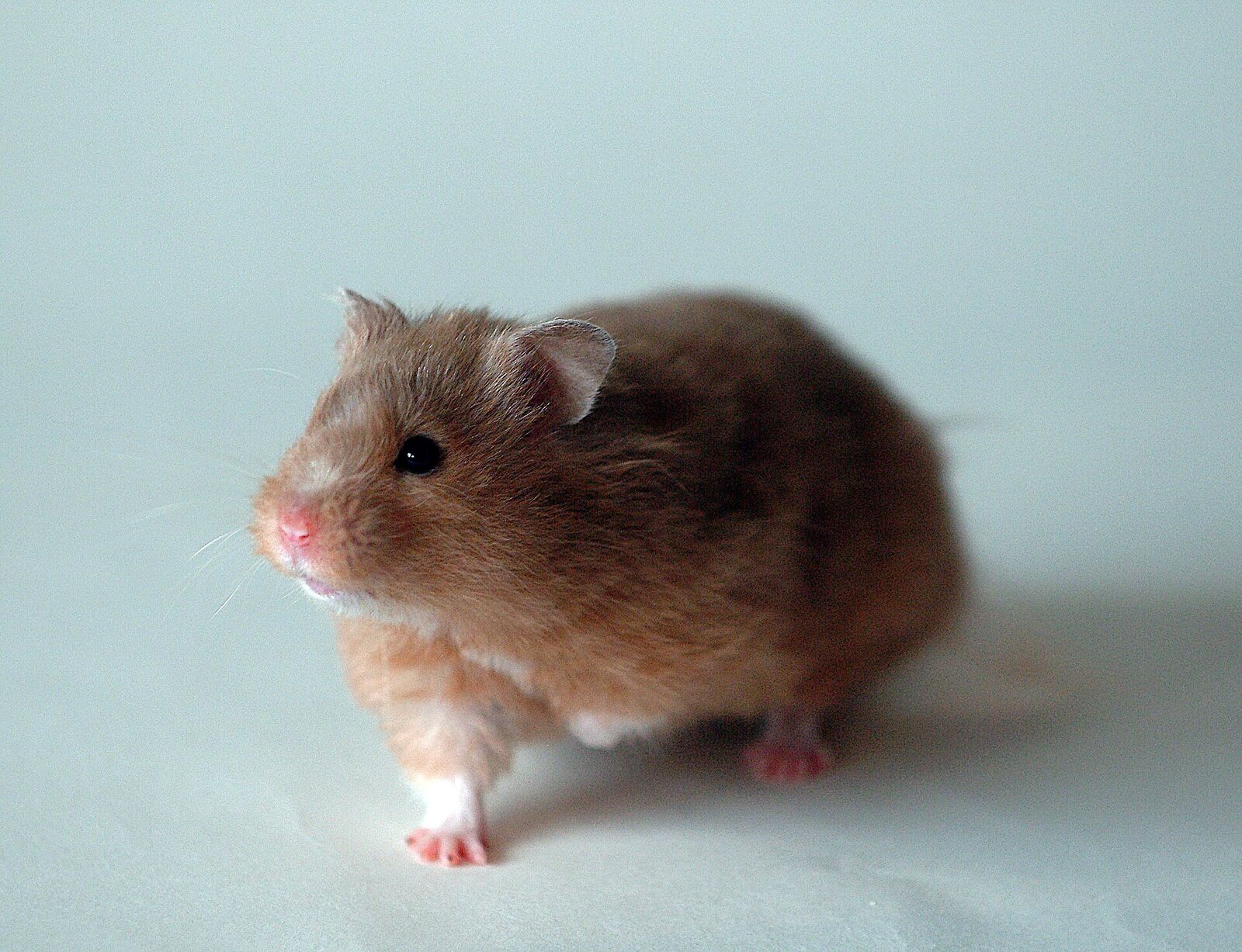
Golden (Syrian) hamster
Mesocricetus auratus
Small, nocturnal and fiercely independent.
Pet trade

California deermouse
Peromyscus californicus
Zoos & aquariums

Campbell's dwarf hamster
Phodopus campbelli
Pet trade

Chinese hamster
Cricetulus griseus
Pet trade

Deer mouse
Peromyscus maniculatus
Zoos & aquariums

European hamster
Cricetus cricetus
Zoos & aquariums