
Home / Reptiles / Turtles and tortoises / Indian star tortoise
Federal restrictions applyIndian star tortoise
Geochelone elegans
Reptiles › Turtles and tortoises (Testudines) › Testudinidae (Tortoises)
The Indian star tortoise (Geochelone elegans) is a threatened tortoise species native to India, Pakistan and Sri Lanka where it inhabits dry areas and scrub forest.
From Wikipedia: Indian star tortoise, CC BY-SA 4.0 (excerpt)

Care at a glance
Species-specific values
Values researched for this exact species. Air, surface and water temperatures are listed separately, and each source is kept as published rather than averaged.
| Minimum enclosure | An adult group of two males and three females can be kept in an enclosure approximately 8 by 8 feet outdoors. Source: reptilesmagazine.com | |
| Basking surface temperature | 90–95 °F Source: reptilesmagazine.com | |
| Warm side air temperature | 90–95 °F Source: reptilesmagazine.com | |
| Uvb lighting | Indoor enclosures should have adequate heat and UVB lights. Source: reptilesmagazine.com | |
| Social housing | Group housing with several of each sex is possible. Source: reptilesmagazine.com | |
| Substrate | Indoor substrate may be slightly moist dirt or peat moss covered with grass clippings; it should be moist but not wet. Source: reptilesmagazine.com | |
| Feeding frequency | Indoor tortoises may be soaked in slightly warm water about once a week, where they drink and often defecate. Source: reptilesmagazine.com |
Warnings
Understanding the animal
About this animal
About this animal
It has been listed as Vulnerable on the IUCN Red List since 2016, as the population is thought to comprise more than 10,000 individuals, but with a declining trend. It is threatened by habitat loss and poaching for the illegal wildlife trade.
From Wikipedia: Indian star tortoise, CC BY-SA 4.0 (excerpt)
In the wild
In the wild
| Overview | The Indian star tortoise (Geochelone elegans) is a threatened tortoise species native to India, Pakistan and Sri Lanka where it inhabits dry areas and scrub forest. It has been listed as Vulnerable on the IUCN Red List since 2016, as the population is thought to comprise more than 10,000 individuals, but with a declining trend. It is threatened by habitat loss and poaching for the illegal wildlife trade. It was upgraded to CITES Appendix I in 2019 by full consensus among all member states, giving it the highest level of international protection from commercial trade. — From Wikipedia: Indian star tortoise, CC BY-SA 4.0 (excerpt) |
Read about this species in the wild at Animal Diversity Web · The Reptile Database.
Profile
Profile
Researched for this exact species. Sources are listed under In the wild above.
Data and studies
The numbers
The numbers
Each bar is what one source reports. Where several sources weigh in, the dashed gold band marks their average.
Maximum recorded lifespan
Longest recorded lifespan reported by each database; typical lifespans are usually shorter. The AnAge record comes from an animal in human care.
Typical adult weight
Average adult body mass in each database (FishBase gives the maximum recorded weight).
Incubation
Female maturity
Care articles for this species
Care articles for this species
- Indian Star Tortoise Care And Breeding Tips (Reptiles Magazine)
Written by keepers, breeders and vets Reptiles MagazineReptiFiles
Veterinary & husbandry research
Veterinary & husbandry research
- Influence of environmental humidity and dietary protein on pyramidal growth of carapaces in African spurred tortoises (Geochelone sulcata) Wiesner CS et al., Journal of animal physiology and animal nutrition 2003
Peer-reviewed papers that mention this species alongside captivity, zoos, veterinary care or aquaculture. Some cover several species or mention it only in passing, so check the abstract. See all 12 on PubMed → PubMed
Sources for this sheet
- AnAge: The Animal Ageing and Longevity Database (Human Ageing Genomic Resources) (CC BY 3.0) Peer-reviewed researchCurated, referenced longevity and life-history records for thousands of species; maximum lifespans are often from zoo animals.
- Myhrvold et al. (2015). An amniote life-history database. Ecology 96: 3109 Peer-reviewed researchPeer-reviewed compilation of life-history data for over 21,000 birds, mammals and reptiles.
- Species+ (UNEP-WCMC and the CITES Secretariat) Zoo, university or veterinaryThe official database of species listed under CITES. UNEP (2026). The Species+ Website. Nairobi, Kenya. Compiled by UNEP-WCMC, Cambridge, UK. Available at: www.speciesplus.net. [Accessed 04/10/2026].
- USFWS International Affairs: CITES Zoo, university or veterinaryFederal agency that issues CITES permits.
- 21 CFR 1240.62: Turtles under 4 inches (FDA) Zoo, university or veterinaryFederal ban on selling small turtles.
- The Reptile Database Peer-reviewed researchScientist-curated catalog of every reptile species, with taxonomy and literature.
- GBIF Backbone Taxonomy (Global Biodiversity Information Facility) (CC BY 4.0) Peer-reviewed researchInternational scientific taxonomy used here for classification. GBIF Secretariat (2023). GBIF Backbone Taxonomy. Checklist dataset https://doi.org/10.15468/39omei, accessed via GBIF.org.
- Wikipedia (species article) (CC BY-SA 4.0) Community referenceFree encyclopedia; useful overviews with their own citations. Short excerpts are quoted under CC BY-SA 4.0, each credited with a link to its article.
- PubMed (U.S. National Library of Medicine) Peer-reviewed researchIndex of peer-reviewed veterinary, zoo and husbandry research.
- iNaturalist (captive observations) Community referenceCommunity observation platform run by the California Academy of Sciences and National Geographic; observations marked captive show animals living in homes, zoos and aquariums.
- Reptiles Magazine (care articles) Experienced keeper or breederEstablished reptile and amphibian hobby magazine; care articles are written by breeders, keepers and veterinarians.
More tortoises
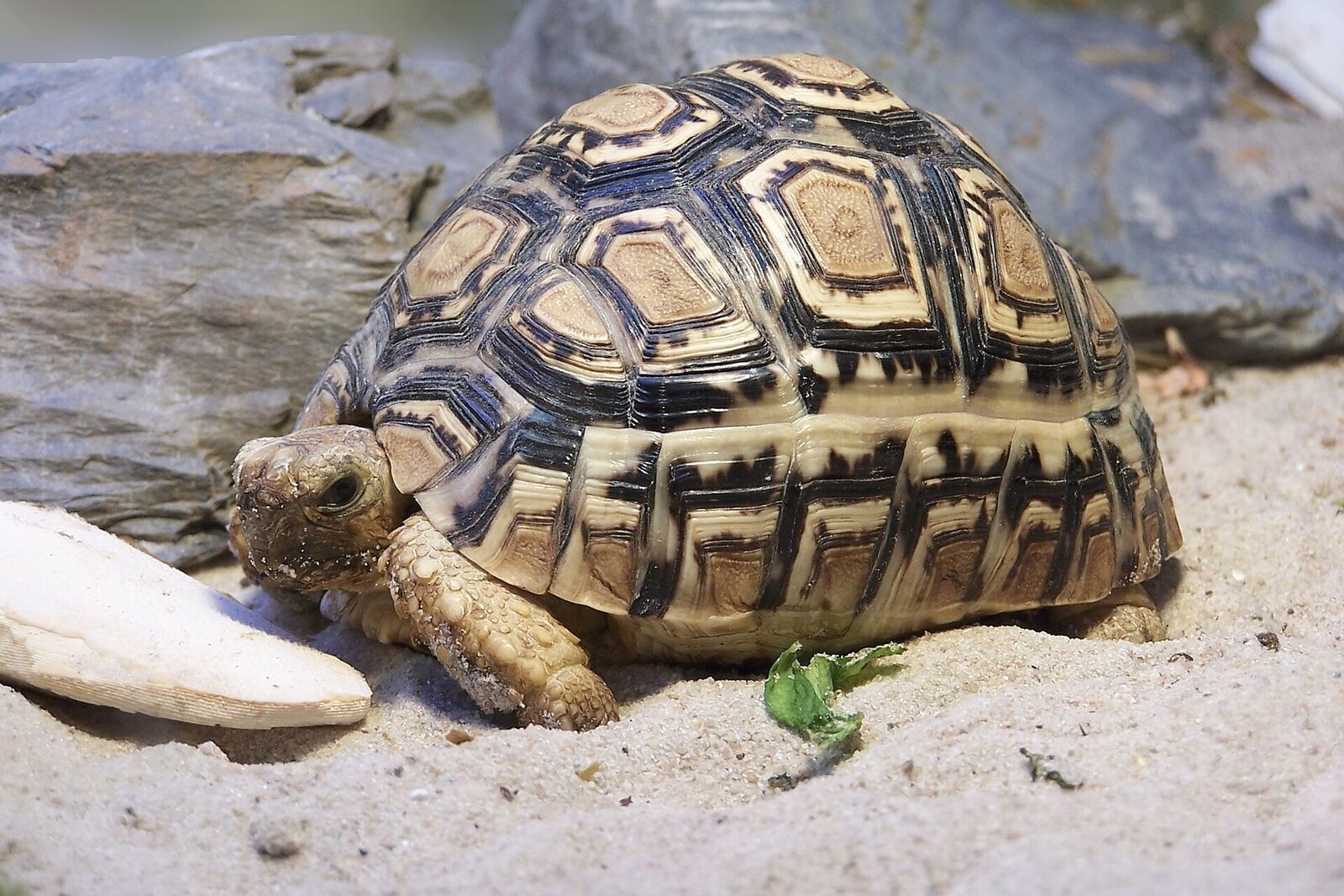
Leopard tortoise
Stigmochelys pardalis
A spotted savanna grazer.
Pet trade
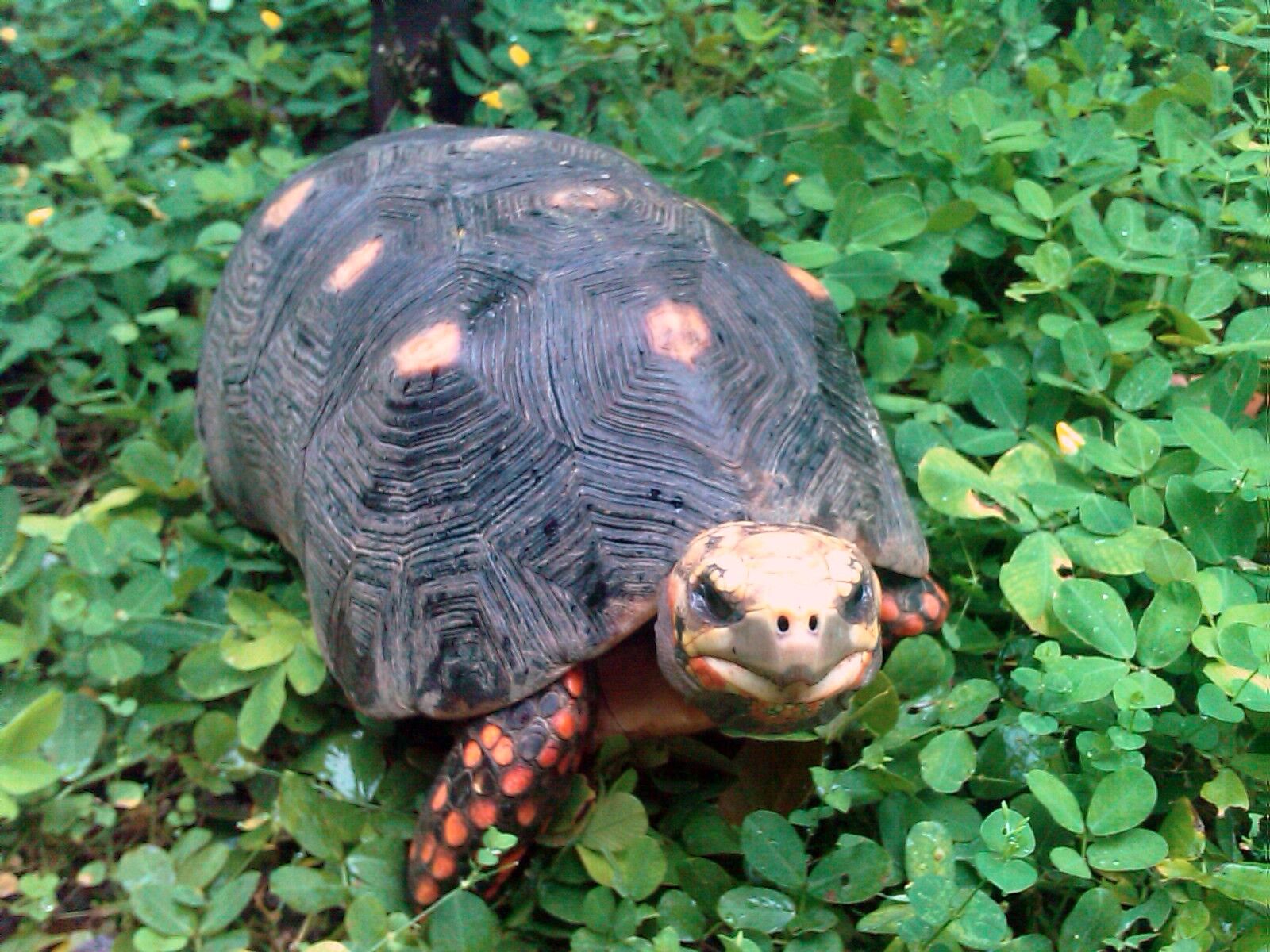
Red-footed tortoise
Chelonoidis carbonarius
A humid-forest tortoise that eats fruit.
Pet trade
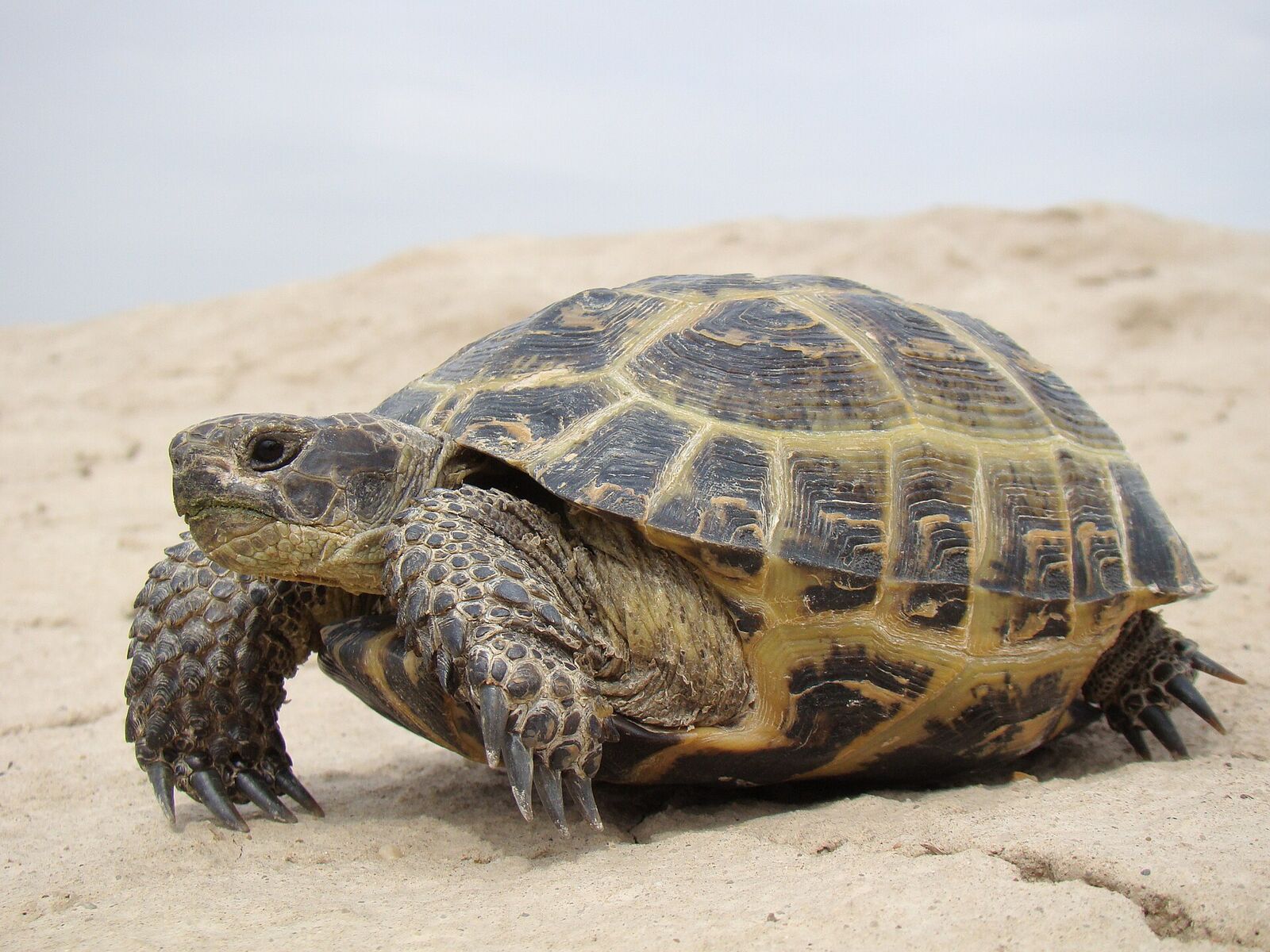
Russian tortoise
Testudo horsfieldii
Small, tough and a great first tortoise.
Pet trade
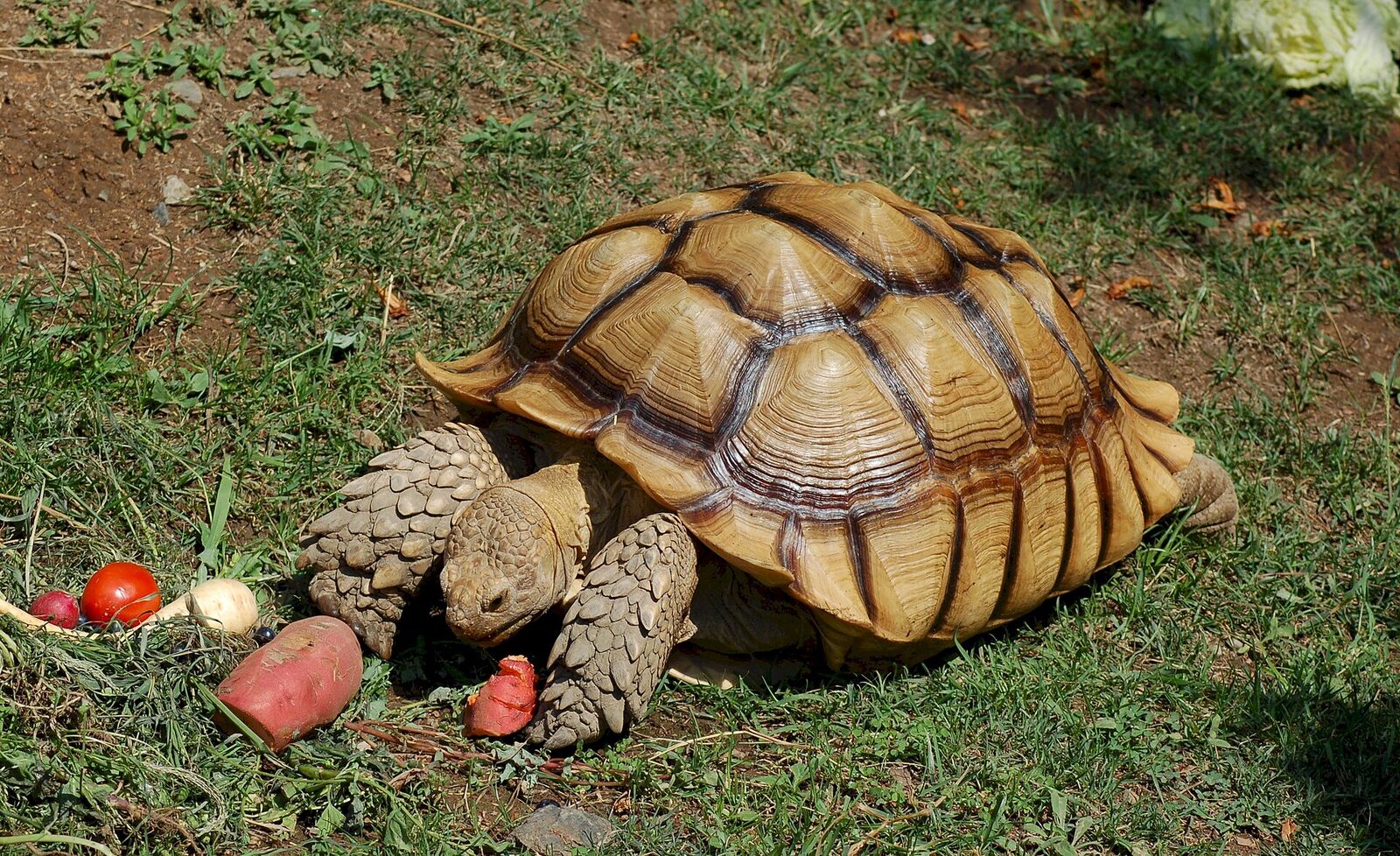
Sulcata (African spurred) tortoise
Centrochelys sulcata
The giant backyard tortoise, best adopted.
Pet trade

Aldabra giant tortoise
Aldabrachelys gigantea
Pet trade

Angulate tortoise
Chersina angulata
Pet trade