
Home / Reptiles / Snakes / Colubridae / Japanese rat snake
No federal permit to keepJapanese rat snake
Elaphe climacophora
Reptiles › Snakes (Serpentes) › Colubridae (Colubrid snakes)

Care at a glance
Setup
One answer per setting. Where sources differ, the smaller figure is the minimum and the larger is what we recommend.
| Adult enclosure | 120 x 60 x 60 cm for one adult Taller and longer is better for active females. | academy.herpeton.net |
| Hot spot | At least 82°F Preferably 86°F Basking 28-30 °C. | academy.herpeton.net |
| Warm side | At least 75°F Preferably 81°F Warm side 24-27 °C. | academy.herpeton.net |
| Cool side | At least 68°F Preferably 73°F Cool side 20-23 °C. | academy.herpeton.net |
| Night temperature | At least 64°F Preferably 72°F Night 18-22 °C. | academy.herpeton.net |
| Humidity | At least 50% Preferably 70% With good ventilation and a lightly moist shed hide. | academy.herpeton.net |
| Lighting | 10-12 h Photoperiod; no bright night light. | academy.herpeton.net |
| UVB | UVB is optional, but shade and cooler retreats are required if it is used. | academy.herpeton.net |
| Food | Frozen-thawed mice or small rats; chicks only as occasional variety for large adults. | academy.herpeton.net |
| Housing | One animal per enclosure. | academy.herpeton.net |
| Brumation | May reproduce after a real winter rest; only healthy adults with stable weight should be cooled. | academy.herpeton.net |
Care guide
By age
| Hatchling | Enclosure: 30 x 20 x 20 cm, upgraded gradually | academy.herpeton.net |
- Wheezing, bubbles at the nostrils, open-mouth breathing: Warning signs academy.herpeton.net
Understanding the animal
In the wild
In the wild
Researched for this exact species, not its family. Wild conditions are context, not enclosure settings.12
| Where it lives | Japan's main and nearby islands: temperate forests, forest edge, farms, stone walls and river margins. |
| Wild diet | Eats rodents, frogs, lizards, shrews and flies; can also eat raw eggs. |
Profile
Profile
Researched for this exact species. Sources are listed under In the wild above.
Remarkable facts
- Adults reach one to two meters in length.
Data and studies
Veterinary & husbandry research
Veterinary & husbandry research
- Embryonic development and cranial ossification of the Japanese Aodaishō, Elaphe climacophora (Serpentes: Colubridae): with special reference to the prootic bone and auditory evolution in snakes. et al., Anatomical record (Hoboken, N.J.: 2007) 2025
- An albino mutant of the Japanese rat snake (Elaphe climacophora) carries a nonsense mutation in the tyrosinase gene. et al., Genes & genetic systems 2018
- Spleen of the snake (Elaphe climacophora) and intrasplenic vascular architecture. et al., Journal of morphology 1995
- Three-dimensional ultrastructure of the surface of the tongue of the rat snake, Elaphe climacophora. et al., The Anatomical record 1996
Peer-reviewed papers that mention this species alongside captivity, zoos, veterinary care or aquaculture. Some cover several species or mention it only in passing, so check the abstract. PubMed
Sources for this sheet
- Elaphe climacophora (academy.herpeton.net) Community referenceWeb page.
- Elaphe climacophora (academy.herpeton.net) Community referenceWeb page.
- Wikipedia: Elaphe climacophora (CC BY-SA 4.0) Community referenceEncyclopedia article.
- The Reptile Database: Elaphe climacophora Zoo, university or veterinaryTaxonomy, distribution and literature for every reptile species.
- The Reptile Database Peer-reviewed researchScientist-curated catalog of every reptile species, with taxonomy and literature.
- GBIF Backbone Taxonomy (Global Biodiversity Information Facility) (CC BY 4.0) Peer-reviewed researchInternational scientific taxonomy used here for classification. GBIF Secretariat (2023). GBIF Backbone Taxonomy. Checklist dataset https://doi.org/10.15468/39omei, accessed via GBIF.org.
- PubMed (U.S. National Library of Medicine) Peer-reviewed researchIndex of peer-reviewed veterinary, zoo and husbandry research.
More colubrid snakes
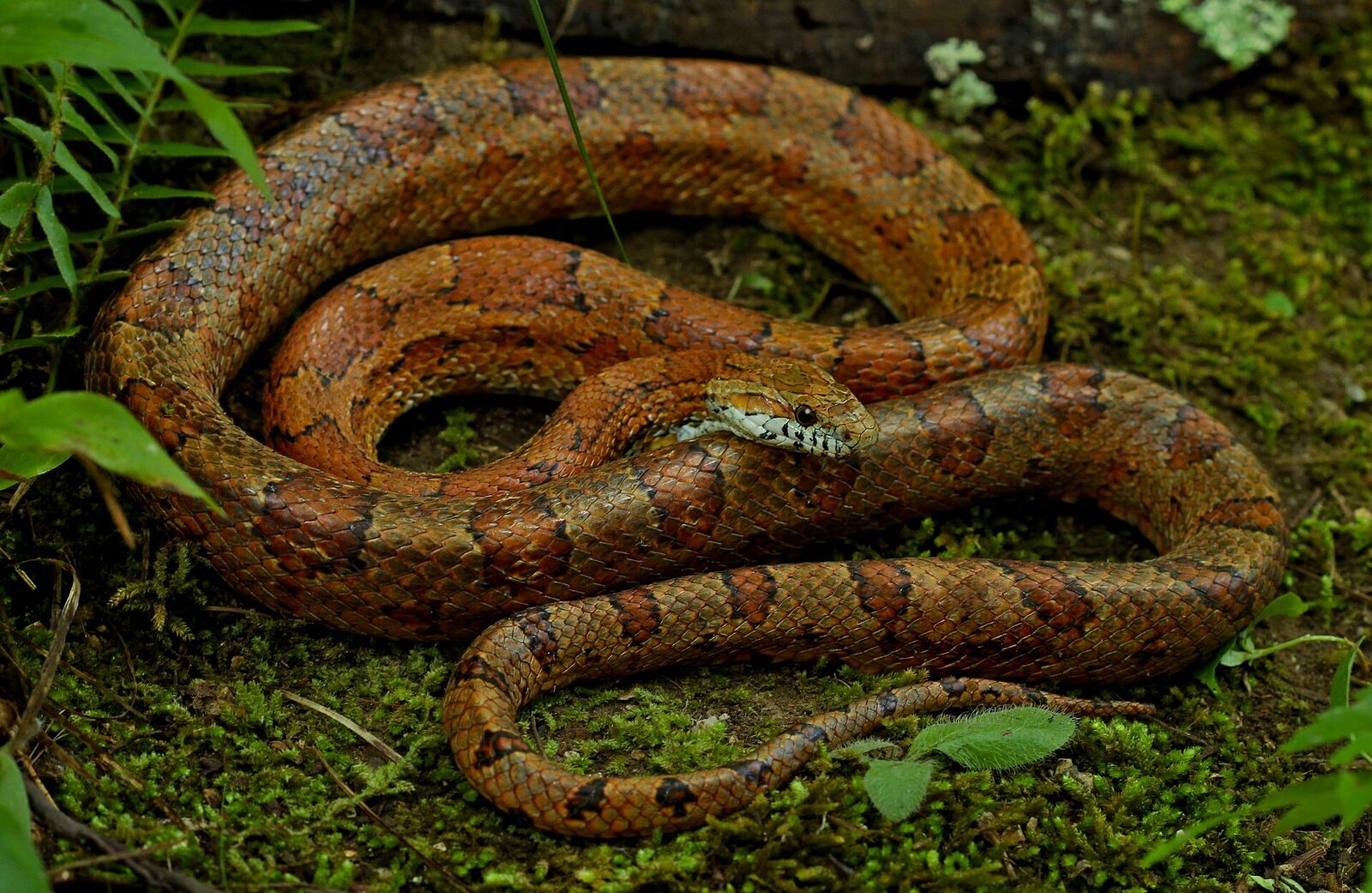
Corn snake
Pantherophis guttatus
Hardy, easy-going and colorful.
Pet trade
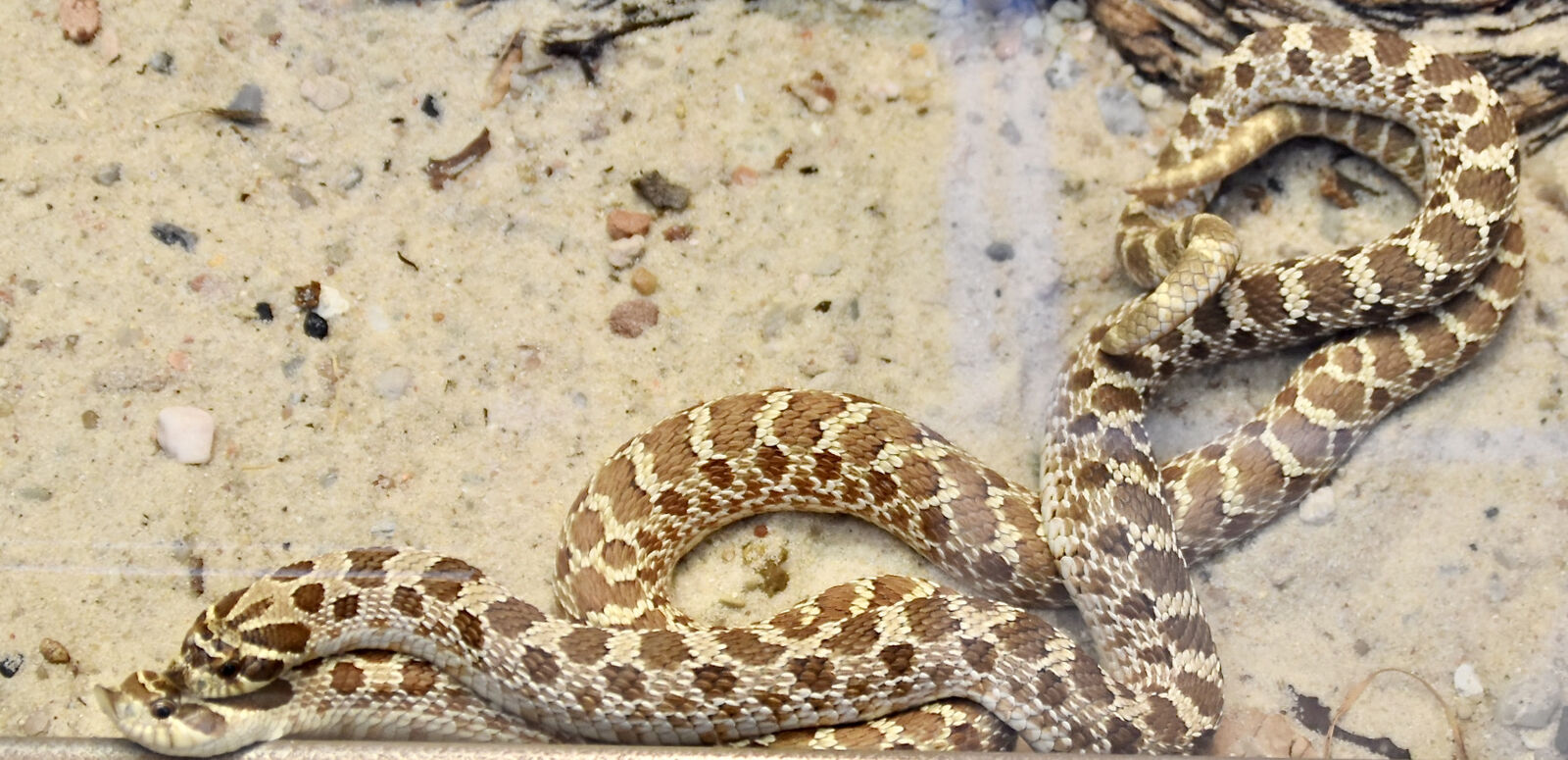
Western hognose snake
Heterodon nasicus
Dramatic bluffs from a tiny, upturned-nose snake.
Pet trade

Amur (Russian) rat snake
Elaphe schrenckii
Pet trade

Andean milk snake
Lampropeltis micropholis
Pet trade

Arizona mountain kingsnake
Lampropeltis pyromelana
Pet trade

Baird's rat snake
Pantherophis bairdi
Pet trade