
Home / Reptiles / Turtles and tortoises / Western hinge-back tortoise
Some federal rules applyWestern hinge-back tortoise
Kinixys nogueyi
Reptiles › Turtles and tortoises (Testudines) › Testudinidae (Tortoises)

Care at a glance
Species-specific values
Values researched for this exact species. Air, surface and water temperatures are listed separately, and each source is kept as published rather than averaged.
| Minimum enclosure | The keeper’s pens measure 1.2 x 1.2 meters (4 x 4 feet). Source: reptiletalk.net | |
| Basking surface temperature | 82 °F (up to 28 °C) Source: reptiletalk.net | |
| Humidity | at least 70 % Source: reptiletalk.net | |
| Uvb lighting | Keeper uses T5 tube lights at 5.0 intensity. Source: reptiletalk.net | |
| Diet | Offer greens, fruit, insects, occasional pinkie mice, weekly Mazuri, and calcium and vitamin supplements twice weekly. Source: reptiletalk.net | |
| Feeding frequency | Offer Mazuri weekly and sprinkle calcium and vitamin supplement twice weekly. Source: reptiletalk.net | |
| Social housing | Keep males alone because of aggression among males. Source: reptiletalk.net | |
| Substrate | Peat moss or coconut coir are recommended; keep substrate moist, with leaf litter optional. Source: reptiletalk.net | |
| Seasonal cooling | Do not hibernate; activity may naturally decline over winter. Source: reptiletalk.net |
Understanding the animal
Native climate (measured)
Native climate (measured)
| Warm-season highs | about 99°F (up to 101°F in the hottest sampled areas) |
| Cool-season lows | about 63°F (down to 56°F in the coldest sampled areas) |
| Average temperature | 76–82°F across sampled records |
| Relative humidity | 57–67% on average (driest month about 35%) |
| Rainfall | about 1168 mm a year, with strong wet and dry seasons |
Measured at 28 wild occurrence records sampled against WorldClim 2.1 climate data (1970–2000 averages). Air conditions in the range are ecological context, not enclosure settings: microhabitats such as burrows, leaf litter or basking rocks can be cooler, warmer or more humid.
Data and studies
The numbers
The numbers
Each bar is what one source reports. Where several sources weigh in, the dashed gold band marks their average.
Maximum recorded lifespan
Longest recorded lifespan reported by each database; typical lifespans are usually shorter.
Typical adult weight
Average adult body mass in each database (FishBase gives the maximum recorded weight).
Incubation
Sources for this sheet
- Myhrvold et al. (2015). An amniote life-history database. Ecology 96: 3109 Peer-reviewed researchPeer-reviewed compilation of life-history data for over 21,000 birds, mammals and reptiles.
- Species+ (UNEP-WCMC and the CITES Secretariat) Zoo, university or veterinaryThe official database of species listed under CITES. UNEP (2026). The Species+ Website. Nairobi, Kenya. Compiled by UNEP-WCMC, Cambridge, UK. Available at: www.speciesplus.net. [Accessed 04/10/2026].
- USFWS International Affairs: CITES Zoo, university or veterinaryFederal agency that issues CITES permits.
- 21 CFR 1240.62: Turtles under 4 inches (FDA) Zoo, university or veterinaryFederal ban on selling small turtles.
- The Reptile Database Peer-reviewed researchScientist-curated catalog of every reptile species, with taxonomy and literature.
- GBIF Backbone Taxonomy (Global Biodiversity Information Facility) (CC BY 4.0) Peer-reviewed researchInternational scientific taxonomy used here for classification. GBIF Secretariat (2023). GBIF Backbone Taxonomy. Checklist dataset https://doi.org/10.15468/39omei, accessed via GBIF.org.
- iNaturalist (captive observations) Community referenceCommunity observation platform run by the California Academy of Sciences and National Geographic; observations marked captive show animals living in homes, zoos and aquariums.
More tortoises
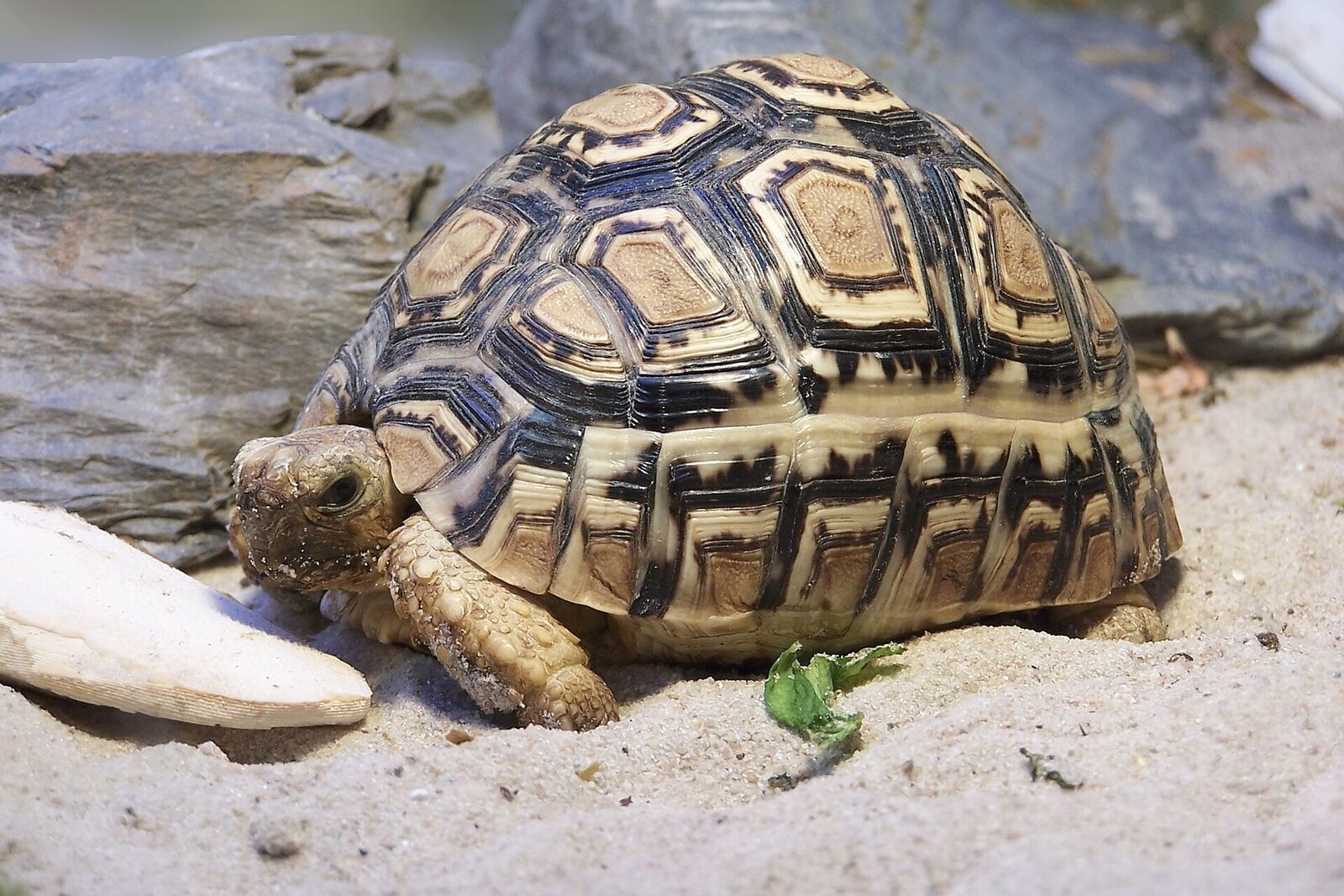
Leopard tortoise
Stigmochelys pardalis
A spotted savanna grazer.
Pet trade
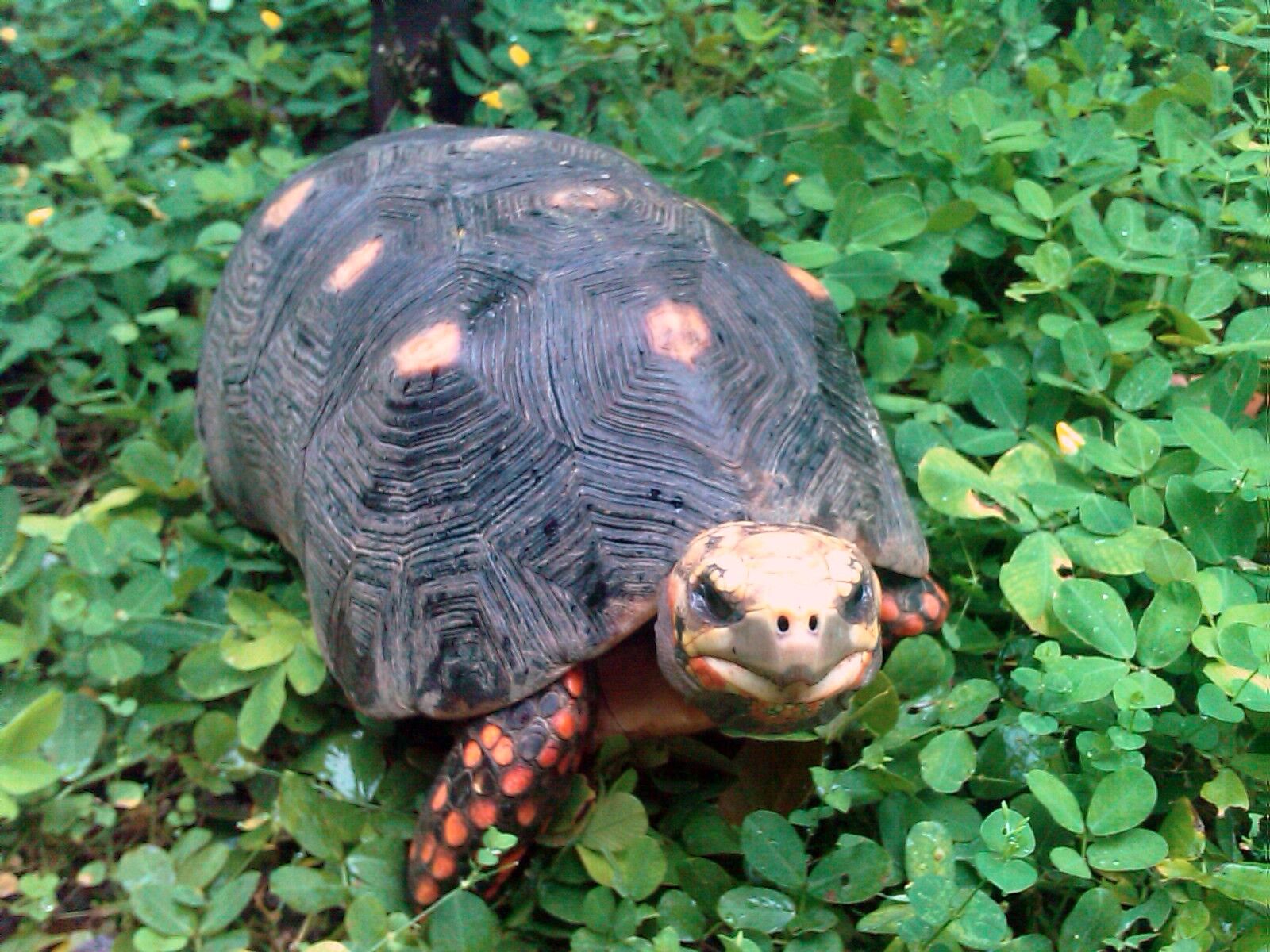
Red-footed tortoise
Chelonoidis carbonarius
A humid-forest tortoise that eats fruit.
Pet trade
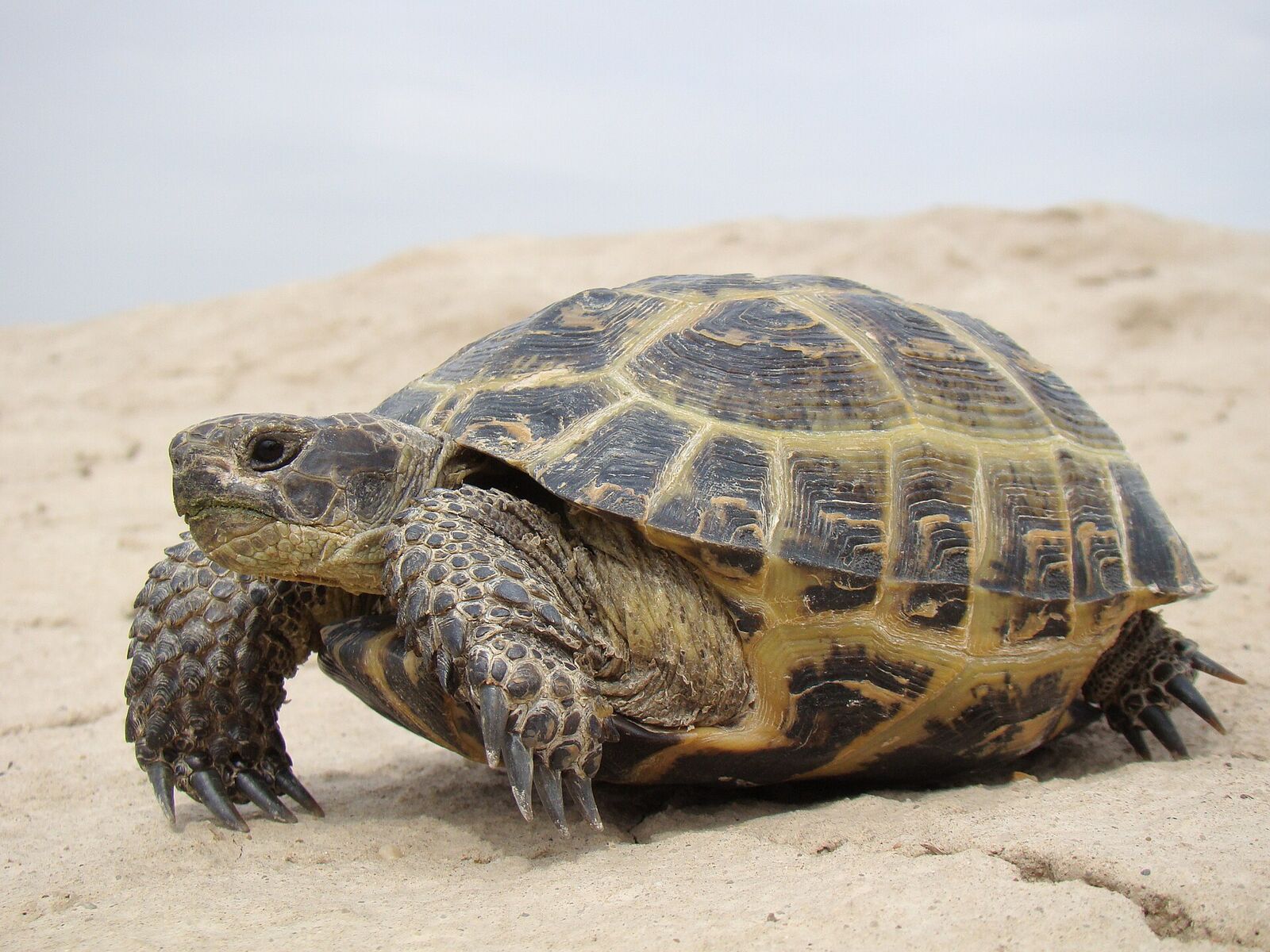
Russian tortoise
Testudo horsfieldii
Small, tough and a great first tortoise.
Pet trade
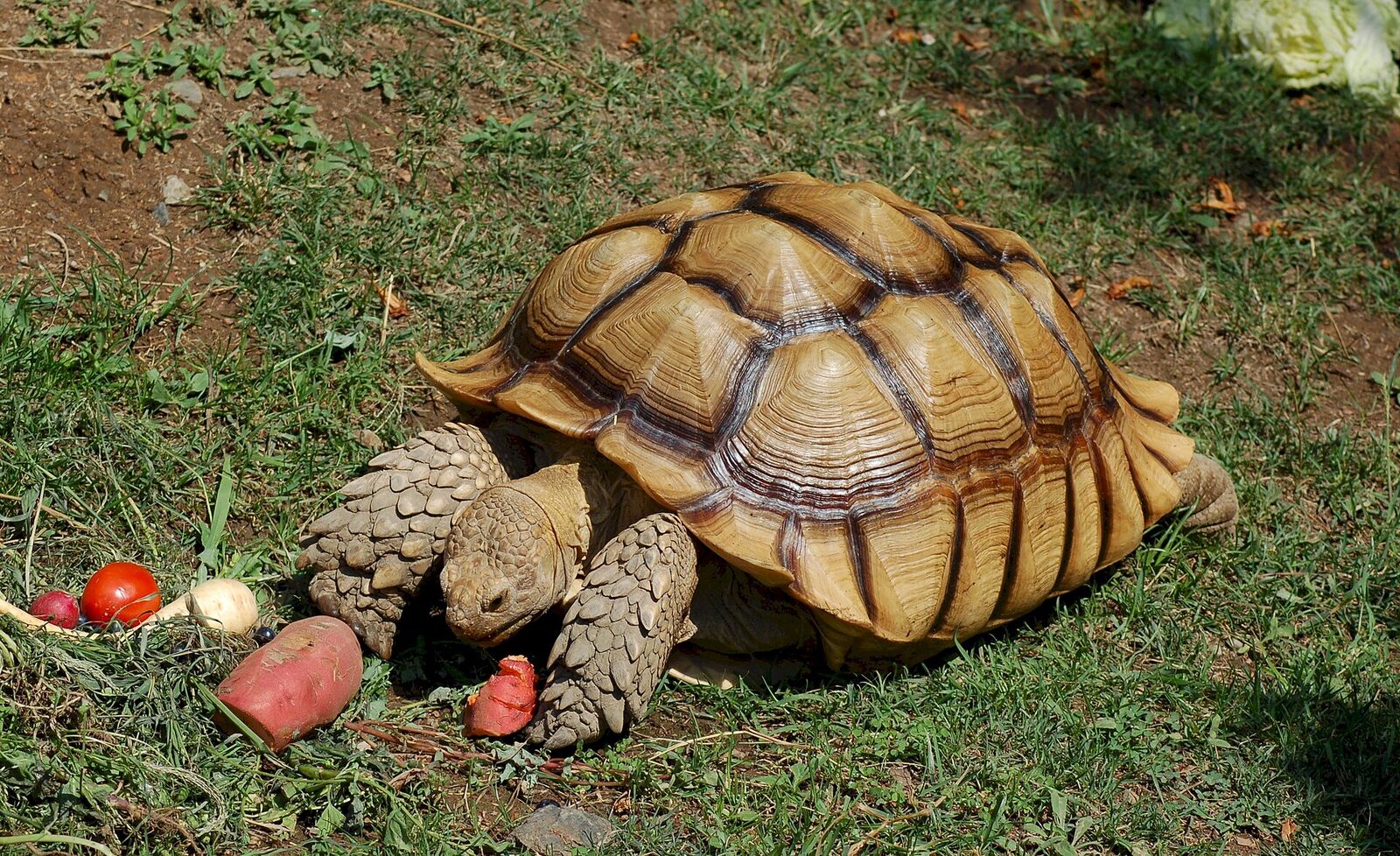
Sulcata (African spurred) tortoise
Centrochelys sulcata
The giant backyard tortoise, best adopted.
Pet trade

Aldabra giant tortoise
Aldabrachelys gigantea
Pet trade

Angulate tortoise
Chersina angulata
Pet trade