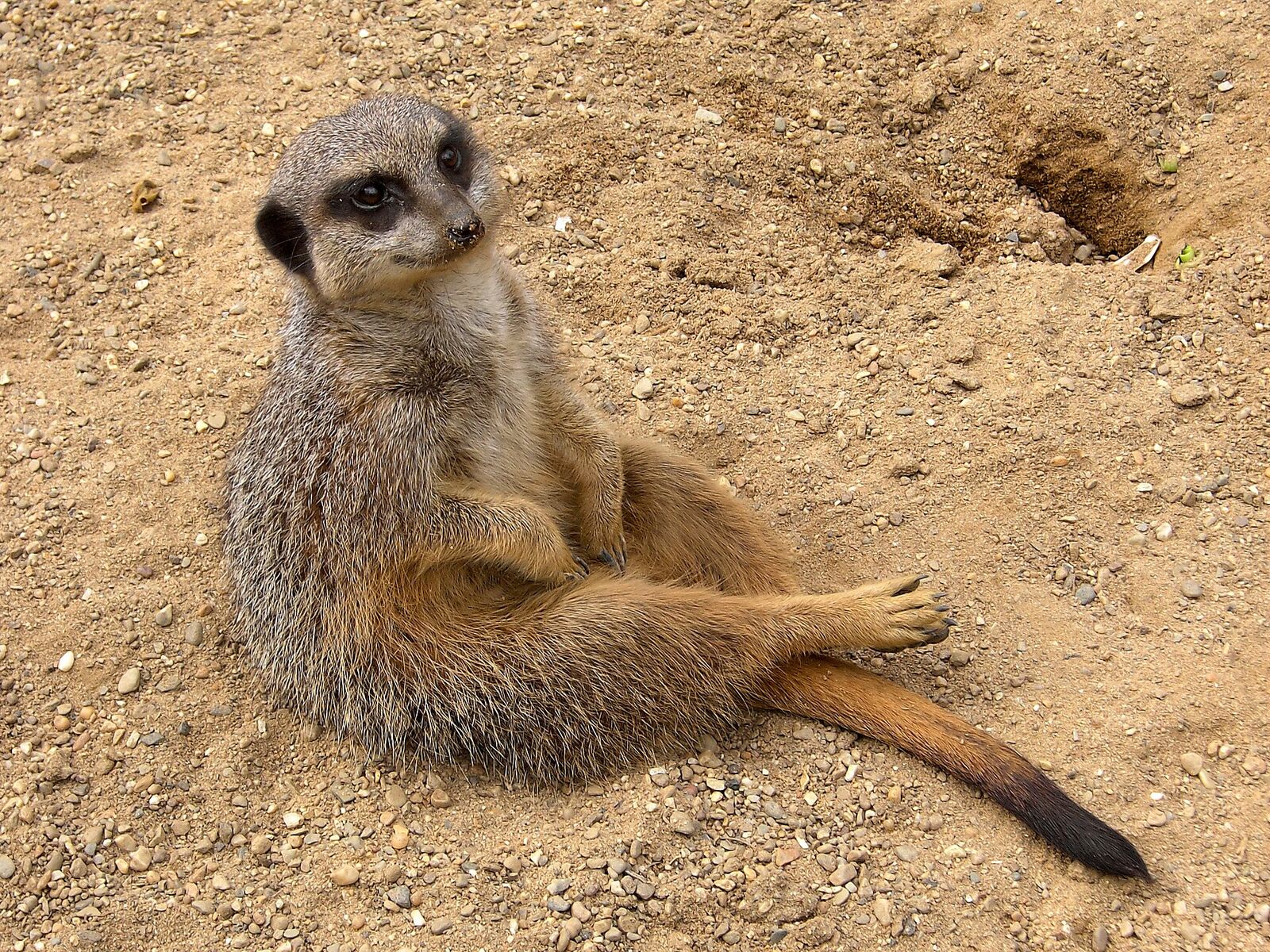
Home / Mammals / Cats, dogs and other carnivores / Common kusimanse
No federal permit to keepCommon kusimanse
Crossarchus obscurus
Mammals › Cats, dogs and other carnivores (Carnivora) › Herpestidae (Mongooses and meerkats)
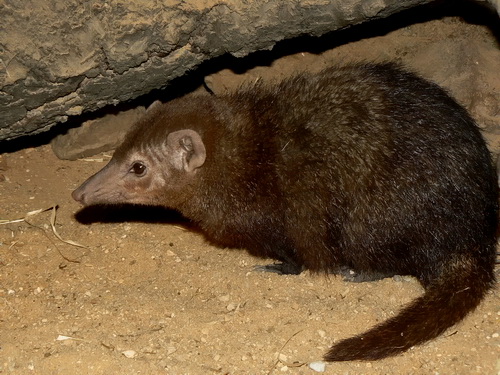
Kusimanses are small, highly social mongooses from West African forests. They live in groups, dig constantly and forage through leaf litter for insects and other small prey.
Care guide
Housing
- Deep, diggable substrate, logs, hollow branches and dense hiding cover, like their forest-floor home.
- They're social; many keepers house them in pairs or groups.
Sources animaldiversity.org
Diet
- Omnivores: insects, larvae, small reptiles, crabs, soft fruits and berries.
- Scatter-feed in substrate so they can forage naturally.
Sources animaldiversity.org
Behavior & enrichment
- Constant diggers and foragers. Leaf litter, dig boxes and puzzle feeders are essential.
- Wild kusimanses often forage along streams, where they hunt crabs and other prey.
Sources animaldiversity.org
Understanding the animal
In the wild
In the wild
Researched for this exact species, not its family. Wild conditions are context, not enclosure settings.12
| Where it lives | West African high forest and riparian forest in Ghana, Côte d’Ivoire, Liberia and Sierra Leone. Forages in dense ground vegetation and around water edges. |
| Ground it lives on | Forest soil and leaf litter beneath logs, stones and dense cover. |
| Water it lives in | Occasionally forages at freshwater edges for crabs; not primarily aquatic. Chemistry and temperature ranges were not found. |
| Active | Primarily diurnal; the consulted ADW account also reports nighttime foraging, so activity is not exclusively daytime. |
| Social life | Gregarious groups, sometimes 20 or more; moves around a shared territory. |
| Wild diet | Insects and larvae, small reptiles, freshwater crabs, tender fruit and berries. |
| Behavior to plan for | Scratches through litter, turns debris and probes with its snout. Shelters in logs, burrows or excavated termite mounds and can climb sloping trees. |
Native climate (measured)
Native climate (measured)
| Warm-season highs | about 89°F (up to 91°F in the hottest sampled areas) |
| Cool-season lows | about 70°F (down to 69°F in the coldest sampled areas) |
| Average temperature | 78–80°F across sampled records |
| Relative humidity | 83% on average (driest month about 77%) |
| Rainfall | about 1449 mm a year |
Measured at 125 wild occurrence records sampled against WorldClim 2.1 climate data (1970–2000 averages). Air conditions in the range are ecological context, not enclosure settings: microhabitats such as burrows, leaf litter or basking rocks can be cooler, warmer or more humid.
Profile
Profile
Researched for this exact species. Sources are listed under In the wild above.
History
The common kusimanse is native to the high forests of West Africa. The supplied source also states that it has been exported to other countries for the pet trade.
Data and studies
The numbers
The numbers
Each bar is what one source reports. Where several sources weigh in, the dashed gold band marks their average.
Lifespan in care (average to maximum)
Average recorded 4.5 years; known to reach 9.
Maximum recorded lifespan
Longest recorded lifespan reported by each database; typical lifespans are usually shorter. The AnAge record comes from an animal in human care.
Typical adult weight
Average adult body mass in each database (FishBase gives the maximum recorded weight).
Litter size
Average per litter or clutch.
Gestation
Female maturity
Sources for this sheet
- Animal Diversity Web: Crossarchus obscurus (CC BY-NC-SA 3.0) Zoo, university or veterinaryUniversity-hosted species account.
- AnAge: The Animal Ageing and Longevity Database (Human Ageing Genomic Resources) (CC BY 3.0) Peer-reviewed researchCurated, referenced longevity and life-history records for thousands of species; maximum lifespans are often from zoo animals.
- Myhrvold et al. (2015). An amniote life-history database. Ecology 96: 3109 Peer-reviewed researchPeer-reviewed compilation of life-history data for over 21,000 birds, mammals and reptiles.
- 9 CFR 2.1: Animal Welfare Act licensing (USDA) Zoo, university or veterinaryWho needs a USDA license to breed, sell or exhibit animals.
- GBIF Backbone Taxonomy (Global Biodiversity Information Facility) (CC BY 4.0) Peer-reviewed researchInternational scientific taxonomy used here for classification. GBIF Secretariat (2023). GBIF Backbone Taxonomy. Checklist dataset https://doi.org/10.15468/39omei, accessed via GBIF.org.
- Wikipedia (species article) (CC BY-SA 4.0) Community referenceFree encyclopedia; useful overviews with their own citations. Short excerpts are quoted under CC BY-SA 4.0, each credited with a link to its article.
- iNaturalist (captive observations) Community referenceCommunity observation platform run by the California Academy of Sciences and National Geographic; observations marked captive show animals living in homes, zoos and aquariums.