
Home / Birds / Parrots / Lear's macaw
Federal restrictions applyLear's macaw
Anodorhynchus leari
Birds › Parrots (Psittaciformes) › Psittacidae (New World and African parrots)
Lear's macaw (Anodorhynchus leari), also known as the indigo macaw, is a large all-blue Brazilian parrot, a member of a large group of neotropical parrots known as macaws.
From Wikipedia: Lear's macaw, CC BY-SA 4.0 (excerpt)

Care at a glance
Species-specific values
Values researched for this exact species. Air, surface and water temperatures are listed separately, and each source is kept as published rather than averaged.
| Minimum enclosure | Successful pair’s aviary measured 5 m wide, 16 m long, and 8 m high. Source: bluemacaws.org | |
| Egg incubation humidity | 35–40 % Source: bluemacaws.org | |
| Diet | Feed fruit salad and soft-food mix in the morning, then a dry mixture of seeds, pellets, and nuts in the afternoon. Source: bluemacaws.org | |
| Feeding frequency | Feed twice daily: morning food around 6 AM, removed around 10 AM; dry food offered around 2–3 PM. Source: bluemacaws.org | |
| Social housing | A pair was forcefully re-paired with females and kept separate after a same-sex bond formed. Source: bluemacaws.org | |
| Substrate | The nesting chamber had a 5 cm layer of fine sand and wood shavings. Source: bluemacaws.org |
Warnings
Understanding the animal
About this animal
About this animal
It was first described by Charles Lucien Bonaparte in 1856. Lear's macaw is 70–75 cm (27+1⁄2–29+1⁄2 in) long and weighs around 950 g (2 lb 2 oz).
From Wikipedia: Lear's macaw, CC BY-SA 4.0 (excerpt)
In the wild
In the wild
| Overview | Lear's macaw (Anodorhynchus leari), also known as the indigo macaw, is a large all-blue Brazilian parrot, a member of a large group of neotropical parrots known as macaws. It was first described by Charles Lucien Bonaparte in 1856. Lear's macaw is 70–75 cm long and weighs around 950 g. It is coloured almost completely blue, with a yellow patch of skin at the base of the heavy, black bill. — From Wikipedia: Lear's macaw, CC BY-SA 4.0 (excerpt) |
| Where it lives | For a century and a half after it had been described, the species was only known from sporadic occurrences in the bird trade, and the whereabouts of the wild population was unknown. A wild population was eventually discovered in 1978 by ornithologist Helmut Sick in Bahia in the interior northeast of Brazil. Until this discovery the birds were thought to be simply a variant form of the closely related hyacinth macaw. — From Wikipedia: Lear's macaw, CC BY-SA 4.0 (excerpt) |
| Wild diet | The primary diet of Lear's macaw are the nuts (as many as 350 per day) of the palm Syagrus coronata, locally known as licuri, but the seeds of Melanoxylon, Jatropha mollissima, Dioclea, Spondias tuberosa, Schinopsis brasiliensis and Zea mays are also eaten, as well as the flowers of Agave. The macaw usually forages in groups. — From Wikipedia: Lear's macaw, CC BY-SA 4.0 (excerpt) |
| Reproduction | The mating season starts at the beginning of the summer rains, at the start of the year, and extends up to May, when the young begin to fledge and leave the nest. A pair of Lear's macaw lay two or three eggs per year. The eggs are incubated for approximately 29 days. — From Wikipedia: Lear's macaw, CC BY-SA 4.0 (excerpt) |
| Appearance and size | Lear's macaw is 70–75 cm long and weighs around 950 g. The body, tail, and wings are dark metallic blue with a faint, often barely visible, tinge of green, and the head is a slightly paler shade. It has an area of pale-yellow skin adjacent to the base of its beak, and orange-yellow eye rings. — From Wikipedia: Lear's macaw, CC BY-SA 4.0 (excerpt) |
| History and naming | Lear's macaw was named after the famous poet, Edward Lear, who was also an accomplished artist. In his teens in the early 1830s, Lear published a book of drawings and paintings of live parrots in zoos and collections, Illustrations of the Family of Psittacidae, or Parrots. — From Wikipedia: Lear's macaw, CC BY-SA 4.0 (excerpt) |
Native climate (measured)
Native climate (measured)
| Warm-season highs | about 88°F (up to 90°F in the hottest sampled areas) |
| Cool-season lows | about 59°F (down to 57°F in the coldest sampled areas) |
| Average temperature | 72–75°F across sampled records |
| Relative humidity | 72–75% on average (driest month about 67%) |
| Rainfall | about 551 mm a year |
Measured at 15 wild occurrence records sampled against WorldClim 2.1 climate data (1970–2000 averages). Air conditions in the range are ecological context, not enclosure settings: microhabitats such as burrows, leaf litter or basking rocks can be cooler, warmer or more humid.
Profile
Profile
Researched for this exact species. Sources are listed under In the wild above.
History
Lear's macaw was named after the famous poet, Edward Lear, who was also an accomplished artist. In his teens in the early 1830s, Lear published a book of drawings and paintings of live parrots in zoos and collections, Illustrations of the Family of Psittacidae, or Parrots.
From Wikipedia: Lear's macaw, CC BY-SA 4.0 (excerpt)
Data and studies
The numbers
The numbers
Each bar is what one source reports. Where several sources weigh in, the dashed gold band marks their average.
Maximum recorded lifespan
Longest recorded lifespan reported by each database; typical lifespans are usually shorter. The AnAge record comes from an animal in human care.
Typical adult weight
Average adult body mass in each database (FishBase gives the maximum recorded weight).
Veterinary & husbandry research
Veterinary & husbandry research
- Isolation and characterization of 15 new microsatellite markers for the globally endangered Lear's macaw Anodorhynchus leari Pacífico EC et al., Molecular biology reports 2020
- Establishing hematologic and biochemical reference intervals for the endangered Lear's macaw (Anodorhynchus leari) da Costa Machado P et al., Veterinary clinical pathology 2023
- First photographic records of aberrant white feathers in the threatened Lear's macaw Anodorhynchus leari, with further notes on its breeding behavior Marcuk V et al., Brazilian journal of biology = Revista brasleira de biologia 2025
Peer-reviewed papers that mention this species alongside captivity, zoos, veterinary care or aquaculture. Some cover several species or mention it only in passing, so check the abstract. See all 4 on PubMed → PubMed
Sources for this sheet
- AnAge: The Animal Ageing and Longevity Database (Human Ageing Genomic Resources) (CC BY 3.0) Peer-reviewed researchCurated, referenced longevity and life-history records for thousands of species; maximum lifespans are often from zoo animals.
- Myhrvold et al. (2015). An amniote life-history database. Ecology 96: 3109 Peer-reviewed researchPeer-reviewed compilation of life-history data for over 21,000 birds, mammals and reptiles.
- 50 CFR 17.11: Endangered and threatened wildlife Zoo, university or veterinaryCurrent federal Endangered Species Act list.
- Species+ (UNEP-WCMC and the CITES Secretariat) Zoo, university or veterinaryThe official database of species listed under CITES. UNEP (2026). The Species+ Website. Nairobi, Kenya. Compiled by UNEP-WCMC, Cambridge, UK. Available at: www.speciesplus.net. [Accessed 04/10/2026].
- USFWS International Affairs: CITES Zoo, university or veterinaryFederal agency that issues CITES permits.
- 9 CFR 2.1: Animal Welfare Act licensing (USDA) Zoo, university or veterinaryWho needs a USDA license to breed, sell or exhibit animals.
- Wikipedia (species article) (CC BY-SA 4.0) Community referenceFree encyclopedia; useful overviews with their own citations. Short excerpts are quoted under CC BY-SA 4.0, each credited with a link to its article.
- PubMed (U.S. National Library of Medicine) Peer-reviewed researchIndex of peer-reviewed veterinary, zoo and husbandry research.
- iNaturalist (captive observations) Community referenceCommunity observation platform run by the California Academy of Sciences and National Geographic; observations marked captive show animals living in homes, zoos and aquariums.
More new world and african parrots
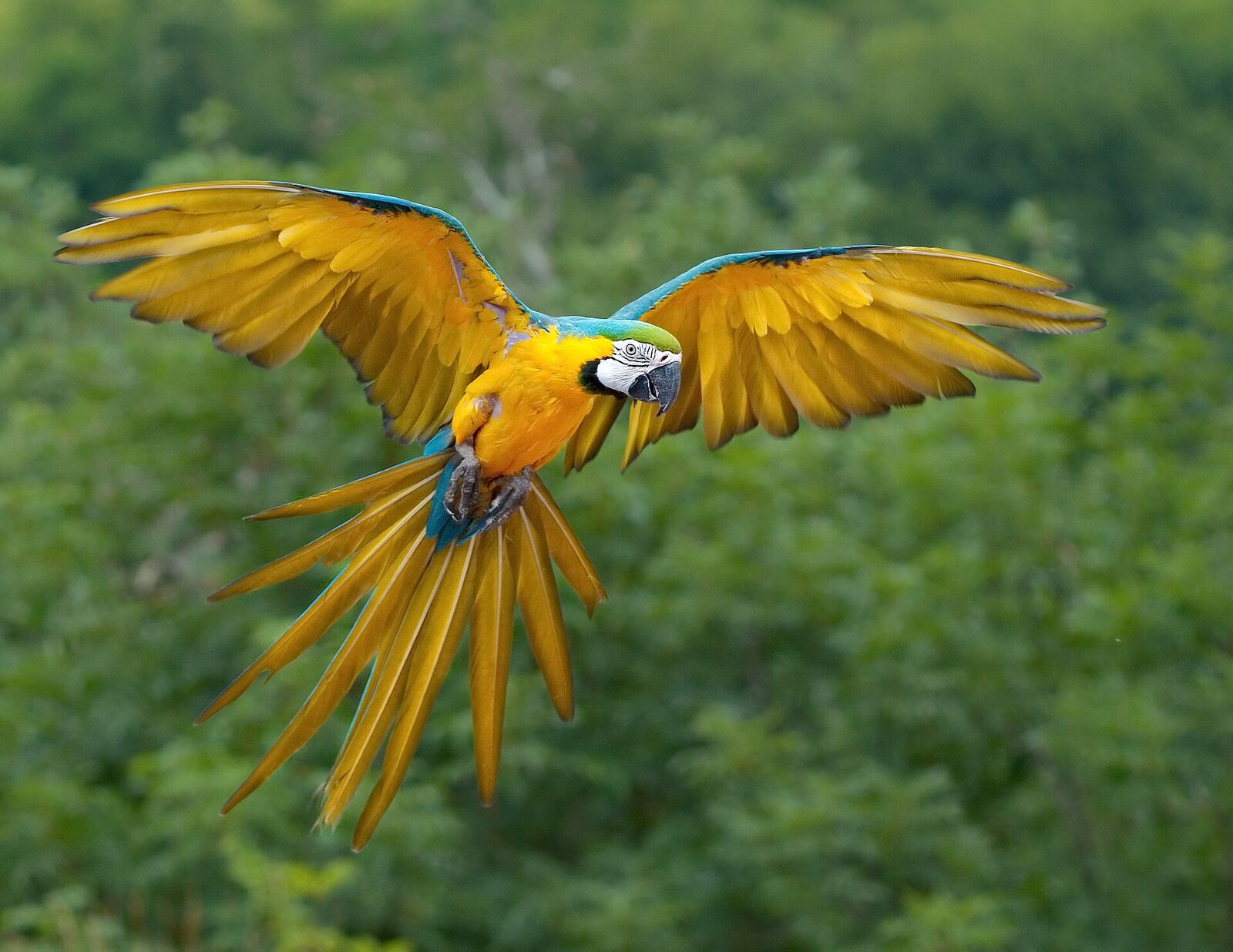
Blue-and-yellow macaw
Ara ararauna
A loud, brilliant, lifelong commitment.
Pet trade
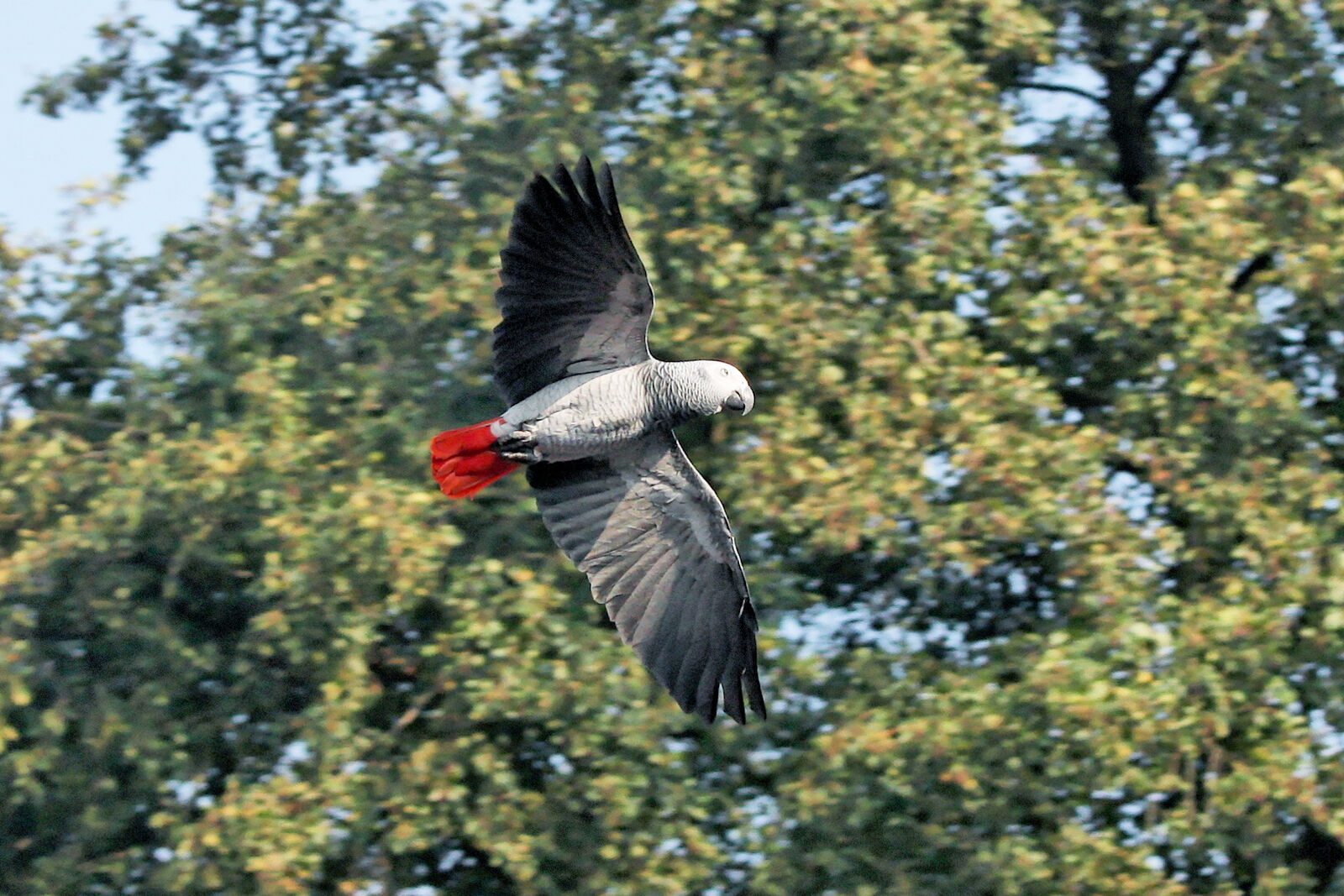
Gray parrot (Congo African grey)
Psittacus erithacus
One of the most intelligent birds on Earth.
Pet trade

Black-headed caique
Pionites melanocephalus
Pet trade

Blue-headed macaw
Primolius couloni
Aviary

Blue-throated macaw
Ara glaucogularis
Pet trade

Blue-winged (Illiger's) macaw
Primolius maracana
Pet trade