
Home / Reptiles / Snakes / Boidae / Madagascar ground boa
Federal restrictions applyMadagascar ground boa
Acrantophis madagascariensis
Reptiles › Snakes (Serpentes) › Boidae (Boas)
Acrantophis madagascariensis is a species of boid snake in the subfamily Sanziniinae that is endemic to the island of Madagascar.
From Wikipedia: Acrantophis madagascariensis, CC BY-SA 4.0 (excerpt)

Care at a glance
Species-specific values
Values researched for this exact species. Air, surface and water temperatures are listed separately, and each source is kept as published rather than averaged.
| Minimum enclosure | Many adults benefit from an enclosure around 6 feet long or larger; particularly large animals may need more floor space. Source: bigappleherp.com | |
| Basking surface temperature | 86–90 °F Source: bigappleherp.com | |
| Warm side air temperature | 82–86 °F Source: bigappleherp.com | |
| Cool side air temperature | 74–80 °F Source: bigappleherp.com | |
| Humidity | 55–70 % Source: bigappleherp.com | |
| Uvb lighting | Can be kept without UVB; low-level UVB may be used if shade and secure hides are available. Source: bigappleherp.com | |
| Diet | Frozen-thawed rodents are a practical staple; appropriately sized whole prey may be offered. Source: bigappleherp.com | |
| Feeding frequency | Juveniles can generally be fed about every seven days; adults about every 10 to 21 days, depending on factors including prey size and body condition. Source: bigappleherp.com | |
| Social housing | Individual housing is recommended for routine long-term care. Source: bigappleherp.com | |
| Substrate | Suitable options include cypress-based bedding, coconut husk, coconut fiber blends, and naturalistic soil mixes. Source: bigappleherp.com |
Warnings
Understanding the animal
About this animal
About this animal
Its common names include the Madagascar ground boa and Malagasy ground boa.
From Wikipedia: Acrantophis madagascariensis, CC BY-SA 4.0 (excerpt)
In the wild
In the wild
| Overview | Acrantophis madagascariensis is a species of boid snake in the subfamily Sanziniinae that is endemic to the island of Madagascar. Its common names include the Madagascar ground boa and Malagasy ground boa. — From Wikipedia: Acrantophis madagascariensis, CC BY-SA 4.0 (excerpt) |
| Where it lives | A. madagascariensis is endemic to Madagascar, occurring in the central, northern and western parts of the island. The species usually occurs in sparse, open woodland, such as the Madagascar dry deciduous forests. — From Wikipedia: Acrantophis madagascariensis, CC BY-SA 4.0 (excerpt) |
| Wild diet | The diet consists of small mammals and birds, including rodents, bats, tenrecs, lemurs, and ducks. — From Wikipedia: Acrantophis madagascariensis, CC BY-SA 4.0 (excerpt) |
| Behavior | The species shelters in mammal burrows, fallen trees, debris piles and similar sites that offer some protection. Brumation takes place during the cool and dry winter months, usually May though July. — From Wikipedia: Acrantophis madagascariensis, CC BY-SA 4.0 (excerpt) |
| Reproduction | Mating takes place after emerging from brumation. Females may be courted by and copulate with more than one male. Ovoviviparous, females give birth to 2–4 large young after a long gestation period of 4–6 months. — From Wikipedia: Acrantophis madagascariensis, CC BY-SA 4.0 (excerpt) |
| Appearance and size | This species is included in the Boidae family of snakes, subfamily Sanziniinae. No subspecies are currently recognized. Adult females can be up to 10 ft, males are typically smaller, the average size of the population is 8 ft in length. — From Wikipedia: Acrantophis madagascariensis, CC BY-SA 4.0 (excerpt) |
| Conservation | Acrantophis madagascariensis is classified as Least Concern on the IUCN Red List of Threatened Species since 2011. Previously it was classified as Vulnerable (VU) with the following criteria: A1cd (v2.3, 1994). — From Wikipedia: Acrantophis madagascariensis, CC BY-SA 4.0 (excerpt) |
Read about this species in the wild at The Reptile Database.
Native climate (measured)
Native climate (measured)
| Warm-season highs | about 89°F (up to 95°F in the hottest sampled areas) |
| Cool-season lows | about 65°F (down to 62°F in the coldest sampled areas) |
| Average temperature | 78–80°F across sampled records |
| Relative humidity | 70–74% on average (driest month about 67%) |
| Rainfall | about 2020 mm a year, with strong wet and dry seasons |
Measured at 121 wild occurrence records sampled against WorldClim 2.1 climate data (1970–2000 averages). Air conditions in the range are ecological context, not enclosure settings: microhabitats such as burrows, leaf litter or basking rocks can be cooler, warmer or more humid.
Profile
Profile
Researched for this exact species. Sources are listed under In the wild above.
History
Named after the distribution of this species in Madagascar.
Data and studies
The numbers
The numbers
Each bar is what one source reports. Where several sources weigh in, the dashed gold band marks their average.
Maximum recorded lifespan
Longest recorded lifespan reported by each database; typical lifespans are usually shorter. The AnAge record comes from an animal in human care.
Sources for this sheet
- AnAge: The Animal Ageing and Longevity Database (Human Ageing Genomic Resources) (CC BY 3.0) Peer-reviewed researchCurated, referenced longevity and life-history records for thousands of species; maximum lifespans are often from zoo animals.
- Myhrvold et al. (2015). An amniote life-history database. Ecology 96: 3109 Peer-reviewed researchPeer-reviewed compilation of life-history data for over 21,000 birds, mammals and reptiles.
- Species+ (UNEP-WCMC and the CITES Secretariat) Zoo, university or veterinaryThe official database of species listed under CITES. UNEP (2026). The Species+ Website. Nairobi, Kenya. Compiled by UNEP-WCMC, Cambridge, UK. Available at: www.speciesplus.net. [Accessed 04/10/2026].
- USFWS International Affairs: CITES Zoo, university or veterinaryFederal agency that issues CITES permits.
- The Reptile Database Peer-reviewed researchScientist-curated catalog of every reptile species, with taxonomy and literature.
- GBIF Backbone Taxonomy (Global Biodiversity Information Facility) (CC BY 4.0) Peer-reviewed researchInternational scientific taxonomy used here for classification. GBIF Secretariat (2023). GBIF Backbone Taxonomy. Checklist dataset https://doi.org/10.15468/39omei, accessed via GBIF.org.
- Wikipedia (species article) (CC BY-SA 4.0) Community referenceFree encyclopedia; useful overviews with their own citations. Short excerpts are quoted under CC BY-SA 4.0, each credited with a link to its article.
- iNaturalist (captive observations) Community referenceCommunity observation platform run by the California Academy of Sciences and National Geographic; observations marked captive show animals living in homes, zoos and aquariums.
More boas
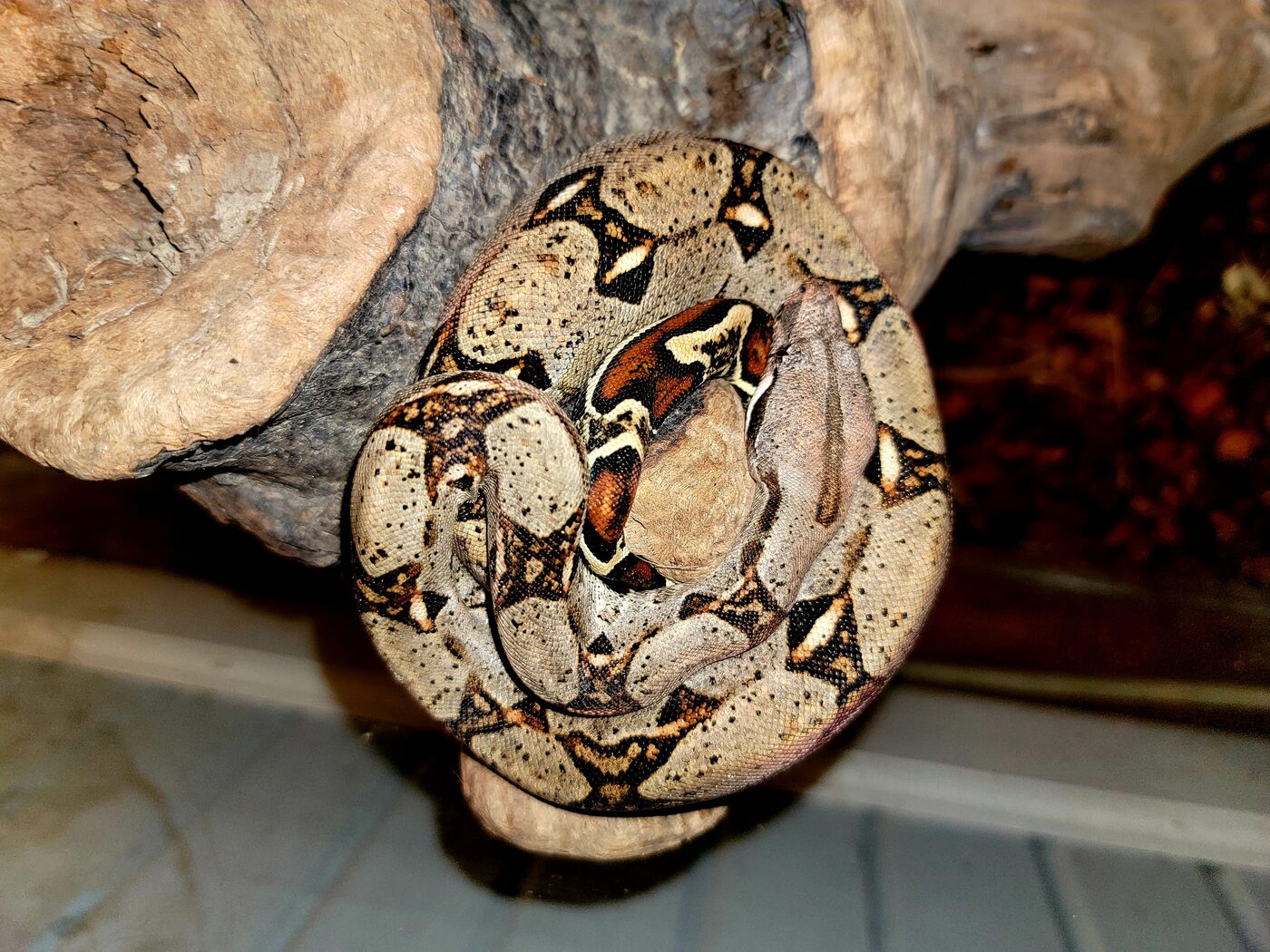
Common boa constrictor (red-tailed boa)
Boa constrictor
A powerful but famously steady big snake.
Pet trade
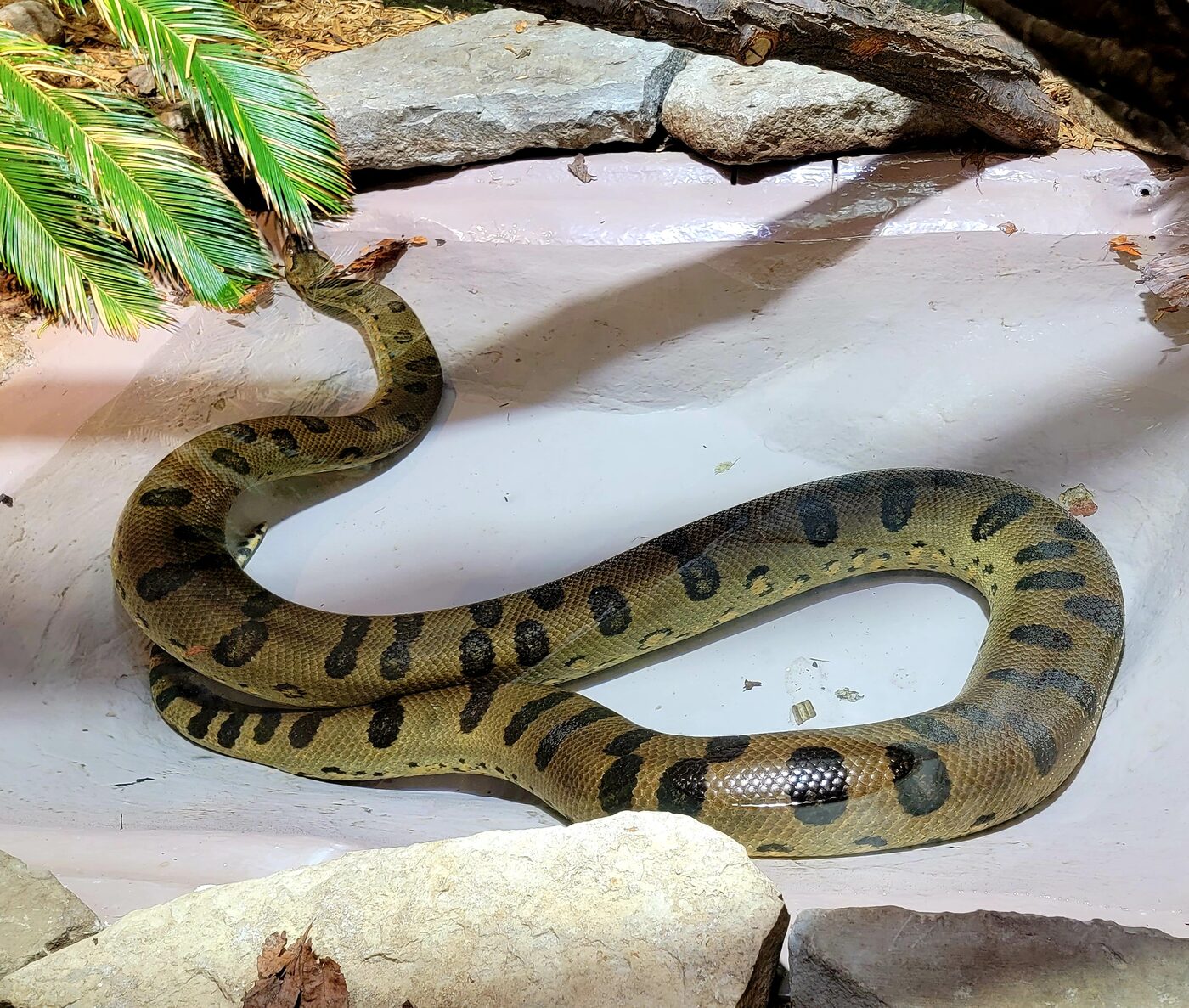
Green anaconda
Eunectes murinus
The heaviest snake on Earth, at home in the water.
Pet trade

Amazon basin emerald tree boa
Corallus batesii
Pet trade
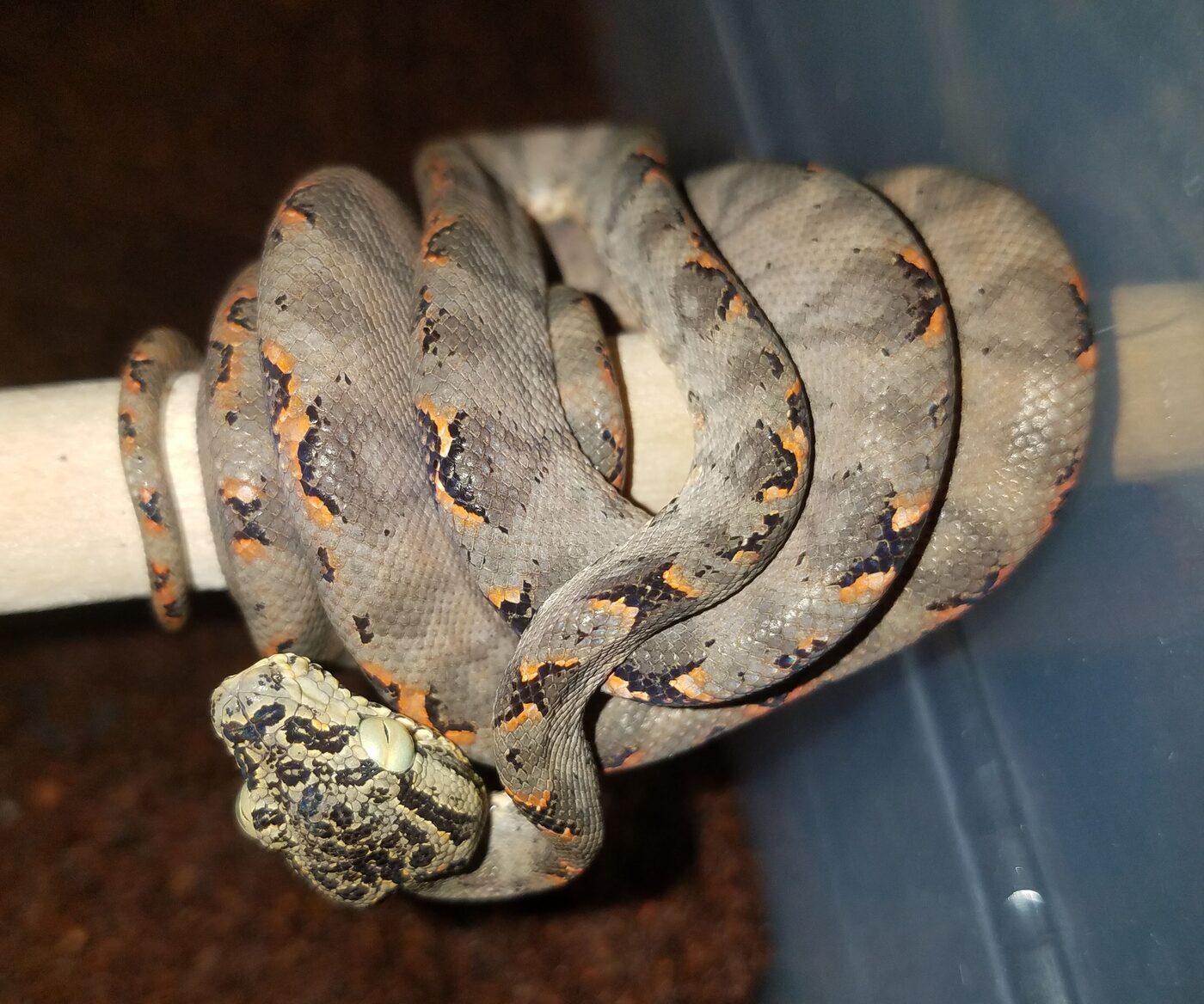
Amazon tree boa
Corallus hortulana
Pet trade

Annulated tree boa
Corallus annulatus
Pet trade

Arabian sand boa
Eryx jayakari
Pet trade