
Home / Reptiles / Snakes / Colubridae / Mexican black kingsnake
No federal permit to keepMexican black kingsnake
Lampropeltis nigrita
Reptiles › Snakes (Serpentes) › Colubridae (Colubrid snakes)
The Mexican black kingsnake (Lampropeltis nigrita) is part of the larger colubrid family of snakes, and a subspecies of the common kingsnake, which is debated by herpetologists to contain as many as 10 unique varieties.

Care at a glance
Species-specific values
Values researched for this exact species. Air, surface and water temperatures are listed separately, and each source is kept as published rather than averaged.
| Feeding frequency | Hatchlings every 5–7 days, juveniles every 7–10 days, adults every 10–14 days. Source: exoticpetvet.com | |
| Minimum enclosure | Adults are easily kept in a 20–30 gallon glass aquarium with a screen lid. Source: exoticpetvet.com | |
| Substrate | Recommended substrates include newspaper, artificial turf, paper towel, or aspen bedding. Source: exoticpetvet.com | |
| Warm side air temperature | 77–84 °F Source: exoticpetvet.com | |
| Basking surface temperature | 85–90 °F Source: exoticpetvet.com | |
| Humidity | 40–60 % Source: exoticpetvet.com | |
| Uvb lighting | UVB is not required with a whole prey diet, but a ReptiSun 5.0 is recommended. Source: exoticpetvet.com | |
| Diet | Captive snakes are fed primarily mice; pre-killed prey is recommended, with variety encouraged. Source: exoticpetvet.com | |
| Seasonal cooling | Wild-caught individuals may need a cool-down or brumation period to stimulate appetite. Source: exoticpetvet.com | |
| Minimum enclosure | Adult minimum enclosure is 48×24×24 inches (4×2×2 ft), with at least 18 inches of height. Source: deadpanexotics.com | |
| Basking surface temperature | 85–90 °F Source: deadpanexotics.com | |
| Cool side air temperature | 70–78 °F Source: deadpanexotics.com | |
| Night temperature | Turn lights and heat off at night unless the room is unusually cold; allow a natural temperature drop. Source: deadpanexotics.com | |
| Humidity | 40–60 % Source: deadpanexotics.com | |
| Uvb lighting | UVB is recommended; target UVI 2.0–3.0 at the basking zone using a T5 HO 5–6% tube. Source: deadpanexotics.com | |
| Diet | Feed frozen-thawed whole prey, including mice and young rats, with occasional quail or chicks. Source: deadpanexotics.com | |
| Feeding frequency | Feed hatchlings every 5–7 days, juveniles every 7–10 days, and adults every 10–14 days; adjust to body condition. Source: deadpanexotics.com | |
| Social housing | House individually; do not cohabit kingsnakes. Source: deadpanexotics.com | |
| Substrate | Use clean, loose, burrow-friendly soil mixes, coco fiber or similar; aspen can work if kept clean and dry. Source: deadpanexotics.com |
Understanding the animal
About this animal
About this animal
This species occupies rocky areas and places lush with vegetation in various regions of the Sonoran Desert, Northwestern Sinaloa, Mexico, and small parts of Arizona.
From Wikipedia: Mexican black kingsnake, CC BY-SA 4.0 (excerpt)
In the wild
In the wild
Researched for this exact species, not its family. Wild conditions are context, not enclosure settings.123
| Where it lives | Occurs in Sonora and northern Sinaloa, Mexico, reaching southeastern Arizona. An identified animal at El Fuerte, Sinaloa, was found on a path through dry tropical forest at 95 m elevation, demonstrating habitat beyond bare desert. |
| Ground it lives on | terrestrial ground in desert scrub and dry tropical forest |
Native climate (measured)
Native climate (measured)
| Warm-season highs | about 92°F (up to 100°F in the hottest sampled areas) |
| Cool-season lows | about 43°F (down to 29°F in the coldest sampled areas) |
| Average temperature | 61–74°F across sampled records |
| Relative humidity | 49–66% on average (driest month about 53%) |
| Rainfall | about 300 mm a year, with strong wet and dry seasons |
Measured at 84 wild occurrence records sampled against WorldClim 2.1 climate data (1970–2000 averages). Air conditions in the range are ecological context, not enclosure settings: microhabitats such as burrows, leaf litter or basking rocks can be cooler, warmer or more humid.
Profile
Profile
Researched for this exact species. Sources are listed under In the wild above.
History
The supplied specialist Reptile Database source states that the taxon formerly treated as a subspecies in the California-kingsnake complex was elevated to full species status.
Data and studies
Researched care notes
Researched care notes
Findings checked against veterinary, zoo, welfare, keeper and peer-reviewed sources. Air, basking-surface and water temperatures are kept separate, and where sources disagree both are shown. “Study” notes report what a paper measured, not a universal rule.
Kingsnakes And Milk Snakes
Researched for this genus; applies to its species unless a species note says otherwise.
- House individually: Lampropeltis snakes can eat other snakes, including cage mates.1
- Provide enclosure length that permits full-body extension, with secure hides on both warm and cool sides and cover for exploration.1
- Surface: the veterinary guide recommends a basking spot of 85–88°F (29.4–31.1°C), measured with an infrared thermometer.1
- Air / warm: the guide separately recommends 80–85°F (26.7–29.4°C) for warm-side ambient air.1
- Air / cool: the guide separately recommends 75–80°F (23.9–26.7°C) for cool-side ambient air.1
- The veterinary guide gives 40–60% RH as broad Lampropeltis guidance; the requirements of the identified species remain relevant.1
- Use appropriately sized animal prey; the guide includes rodents and other suitable whole prey rather than a plain-meat ration.1
- Disagreement: ReptiFiles' kingsnake cool-zone recommendation is 21–26°C, while the veterinary guide's cool AIR range is 23.9–26.7°C; zone labels and species coverage differ, so retain both with their scope.2,1
The numbers
The numbers
Each bar is what one source reports. Where several sources weigh in, the dashed gold band marks their average.
Maximum recorded lifespan
Longest recorded lifespan reported by each database; typical lifespans are usually shorter.
Incubation
Female maturity
Care articles for this species
Care articles for this species
- California Kingsnake Care Sheet (Reptiles Magazine)
- California Kingsnake Care, Breeding and Morphs (Reptiles Magazine)
- California Kingsnake Care Tips (Reptiles Magazine)
Written by keepers, breeders and vets Reptiles MagazineReptiFiles
Sources for this sheet
- Myhrvold et al. (2015). An amniote life-history database. Ecology 96: 3109 Peer-reviewed researchPeer-reviewed compilation of life-history data for over 21,000 birds, mammals and reptiles.
- Clint's Reptiles (YouTube): Mexican Black Kingsnake, The Best Pet Snake? Expert educator & keeperClint Laidlaw, PhD in Biology Education and MS in Evolutionary Ecology; owner of Clint's Reptile Room and a longtime keeper. His "Best Pet?" series reviews each species' care in depth.
- The Reptile Database Peer-reviewed researchScientist-curated catalog of every reptile species, with taxonomy and literature.
- GBIF Backbone Taxonomy (Global Biodiversity Information Facility) (CC BY 4.0) Peer-reviewed researchInternational scientific taxonomy used here for classification. GBIF Secretariat (2023). GBIF Backbone Taxonomy. Checklist dataset https://doi.org/10.15468/39omei, accessed via GBIF.org.
- Wikipedia (species article) (CC BY-SA 4.0) Community referenceFree encyclopedia; useful overviews with their own citations. Short excerpts are quoted under CC BY-SA 4.0, each credited with a link to its article.
- Reptiles Magazine (care articles) Experienced keeper or breederEstablished reptile and amphibian hobby magazine; care articles are written by breeders, keepers and veterinarians.
More colubrid snakes
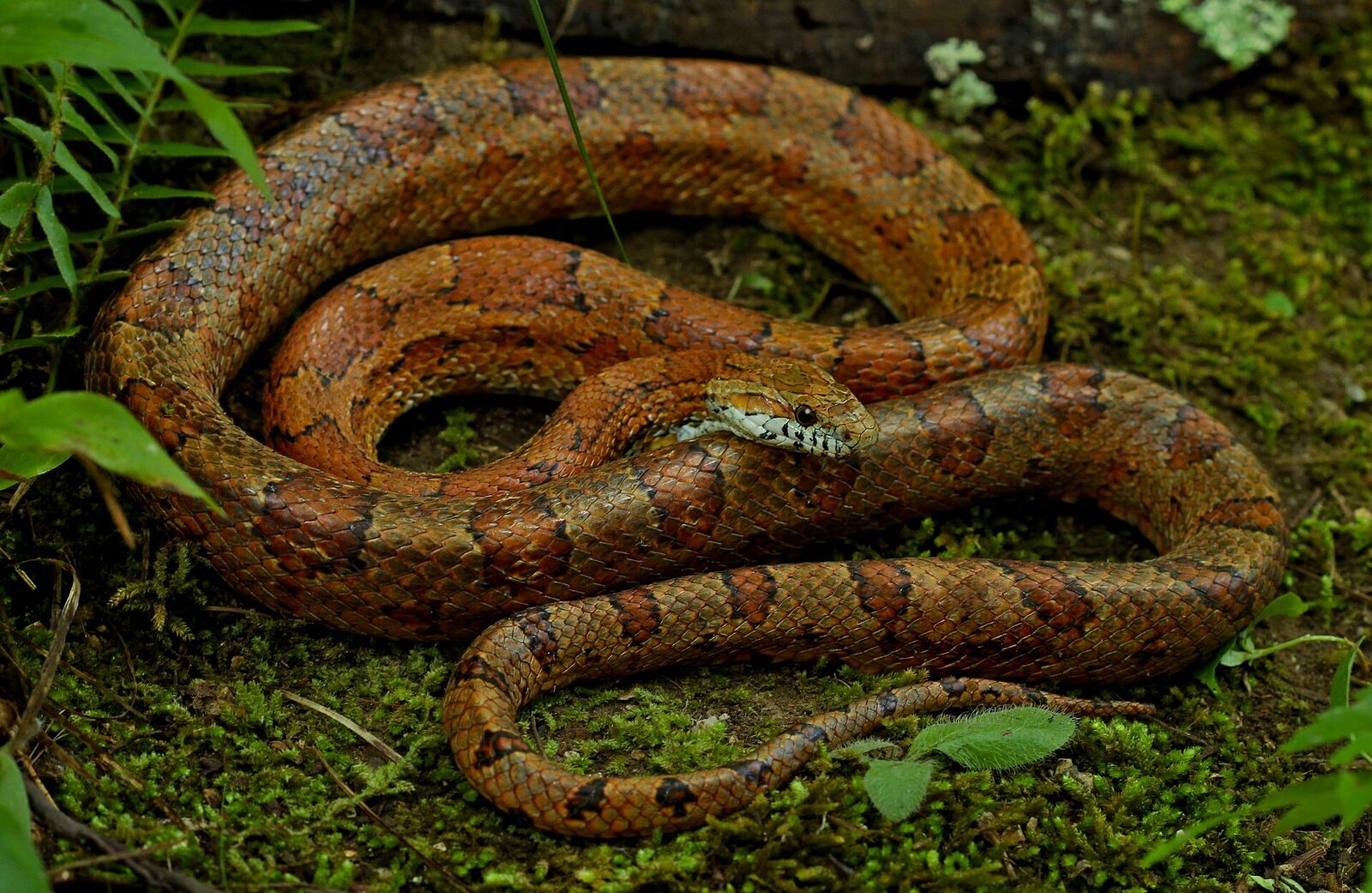
Corn snake
Pantherophis guttatus
Hardy, easy-going and colorful.
Pet trade
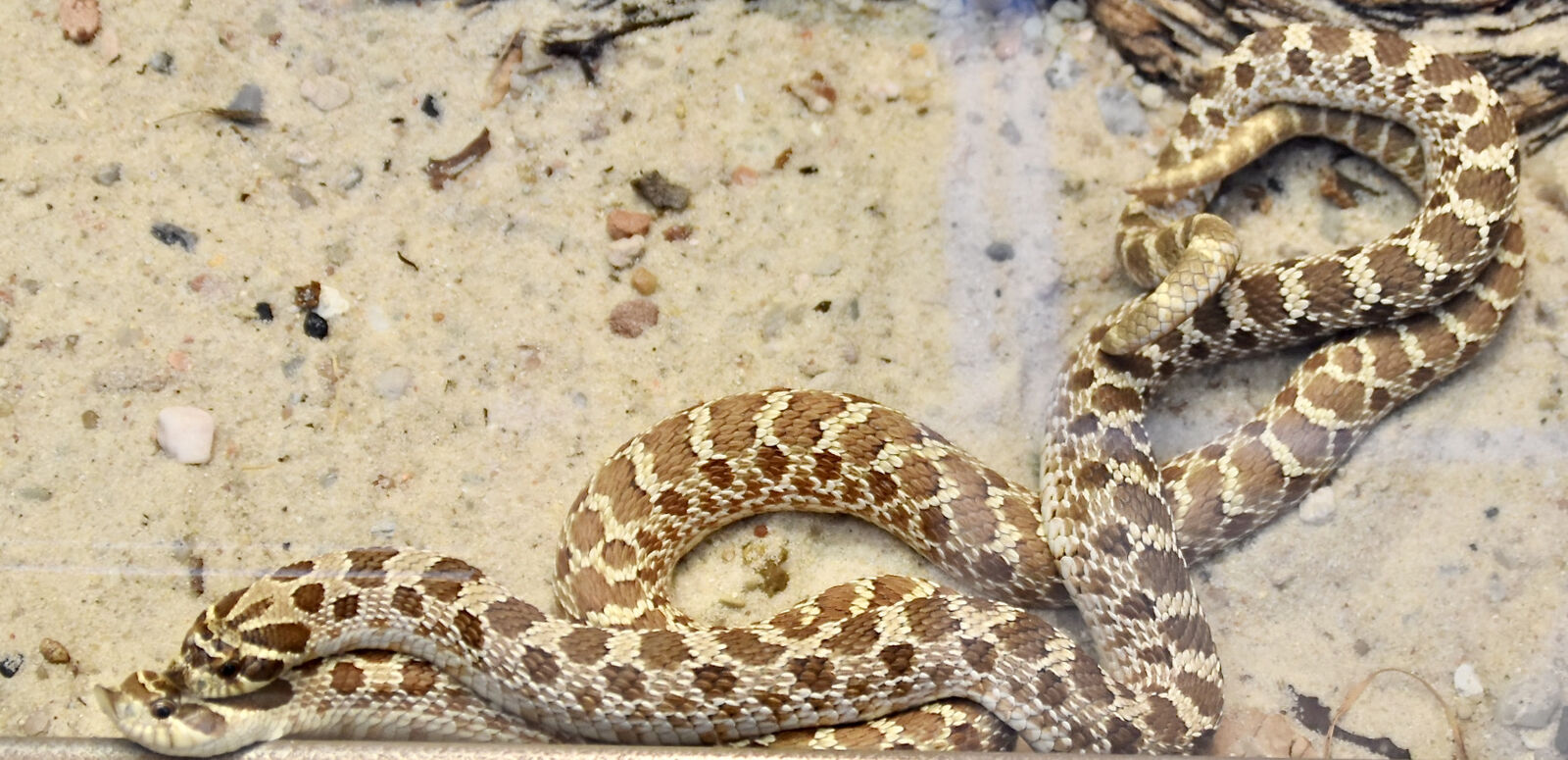
Western hognose snake
Heterodon nasicus
Dramatic bluffs from a tiny, upturned-nose snake.
Pet trade

Amur (Russian) rat snake
Elaphe schrenckii
Pet trade

Andean milk snake
Lampropeltis micropholis
Pet trade

Arizona mountain kingsnake
Lampropeltis pyromelana
Pet trade

Baird's rat snake
Pantherophis bairdi
Pet trade