
Home / Birds / Parrots / Mexican parrotlet
Some federal rules applyMexican parrotlet
Forpus cyanopygius
Birds › Parrots (Psittaciformes) › Psittacidae (New World and African parrots)
The Mexican parrotlet (Forpus cyanopygius), also known as the turquoise-rumped parrotlet or the Mexican blue-rumped parrotlet, is a species of parrot in the family Psittacidae. There are two subspecies: Grayson's parrotlet or the Tres Marias…
From Wikipedia: Mexican parrotlet, CC BY-SA 4.0 (excerpt)

Care at a glance
Species-specific values
Values researched for this exact species. Air, surface and water temperatures are listed separately, and each source is kept as published rather than averaged.
| Minimum enclosure | Minimum dimensions: 24 x 18 x 24 inches tall. Source: birdscoo.com | |
| Diet | Commercial parrotlet seed mix as the basic diet, complemented with fresh vegetables and fruits. Source: birdscoo.com | |
| Social housing | For breeding, use a large walk-in aviary with more nest boxes than pairs and many perches. Source: birdscoo.com |
Understanding the animal
In the wild
In the wild
| Overview | The Mexican parrotlet (Forpus cyanopygius), also known as the turquoise-rumped parrotlet or the Mexican blue-rumped parrotlet, is a species of parrot in the family Psittacidae. There are two subspecies: Grayson's parrotlet or the Tres Marias parrotlet (F. c. insularis) and F. c. cyanopygius. — From Wikipedia: Mexican parrotlet, CC BY-SA 4.0 (excerpt) |
| Where it lives | Mexican parrotlets are endemic to western Mexico. Their range extends from southern Sonora to Colima. This species is the northernmost member of the genus Forpus. — From Wikipedia: Mexican parrotlet, CC BY-SA 4.0 (excerpt) |
| Social life and communication | Mexican parrotlets are highly social and gregarious birds, most often found in flocks of 4–30 individuals made up of pairs and family groups. When flying in these flocks, they fly quickly and in relatively tight formations. They create a variety of squeaky, excited-sounding chirps while perched or in flight. — From Wikipedia: Mexican parrotlet, CC BY-SA 4.0 (excerpt) |
| Wild diet | Mexican parrotlets most commonly eat seeds, grass seeds, berries, and Ficus (fig) fruits, which may be ripe or half-ripe. They forage both on the ground and in trees and shrubs as large flocks. They are known to wander frequently in search of food, making regional population estimates difficult. — From Wikipedia: Mexican parrotlet, CC BY-SA 4.0 (excerpt) |
| Reproduction | Mexican parrotlets typically breed between May and July, and lay clutches of up to 3 small, white eggs. They are typically incubated for at least 19 days, and chicks fledge 4–5 weeks after hatching. Mexican parrotlets can live to be over 20 years old. — From Wikipedia: Mexican parrotlet, CC BY-SA 4.0 (excerpt) |
| Appearance and size | (Forpus cyanopygius) (nominate subspecies) Mexican parrotlets exhibit sexual dimorphism: males have light turquoise feathers along the leading edges of their wings and on their rumps and primaries, secondaries, and coverts; females are entirely yellow-green and slightly duller. Some male individuals have faint turquoise feathers behind their eyes and around their heads. — From Wikipedia: Mexican parrotlet, CC BY-SA 4.0 (excerpt) |
| Conservation | According to the IUCN Red List, Mexican parrotlets are Near Threatened. The population is estimated to be 50,000 or greater, but it is decreasing due to a combination of the illegal hunting and trapping of wild individuals and habitat loss. Based on records created before 1995, there were approximately 208,000 individuals in Mexico. — From Wikipedia: Mexican parrotlet, CC BY-SA 4.0 (excerpt) |
Data and studies
The numbers
The numbers
Each bar is what one source reports. Where several sources weigh in, the dashed gold band marks their average.
Maximum recorded lifespan
Longest recorded lifespan reported by each database; typical lifespans are usually shorter. The AnAge record comes from an animal in human care.
Typical adult weight
Average adult body mass in each database (FishBase gives the maximum recorded weight).
Sources for this sheet
- AnAge: The Animal Ageing and Longevity Database (Human Ageing Genomic Resources) (CC BY 3.0) Peer-reviewed researchCurated, referenced longevity and life-history records for thousands of species; maximum lifespans are often from zoo animals.
- Myhrvold et al. (2015). An amniote life-history database. Ecology 96: 3109 Peer-reviewed researchPeer-reviewed compilation of life-history data for over 21,000 birds, mammals and reptiles.
- Species+ (UNEP-WCMC and the CITES Secretariat) Zoo, university or veterinaryThe official database of species listed under CITES. UNEP (2026). The Species+ Website. Nairobi, Kenya. Compiled by UNEP-WCMC, Cambridge, UK. Available at: www.speciesplus.net. [Accessed 04/10/2026].
- USFWS International Affairs: CITES Zoo, university or veterinaryFederal agency that issues CITES permits.
- 9 CFR 2.1: Animal Welfare Act licensing (USDA) Zoo, university or veterinaryWho needs a USDA license to breed, sell or exhibit animals.
- GBIF Backbone Taxonomy (Global Biodiversity Information Facility) (CC BY 4.0) Peer-reviewed researchInternational scientific taxonomy used here for classification. GBIF Secretariat (2023). GBIF Backbone Taxonomy. Checklist dataset https://doi.org/10.15468/39omei, accessed via GBIF.org.
- Wikipedia (species article) (CC BY-SA 4.0) Community referenceFree encyclopedia; useful overviews with their own citations. Short excerpts are quoted under CC BY-SA 4.0, each credited with a link to its article.
- iNaturalist (captive observations) Community referenceCommunity observation platform run by the California Academy of Sciences and National Geographic; observations marked captive show animals living in homes, zoos and aquariums.
More new world and african parrots
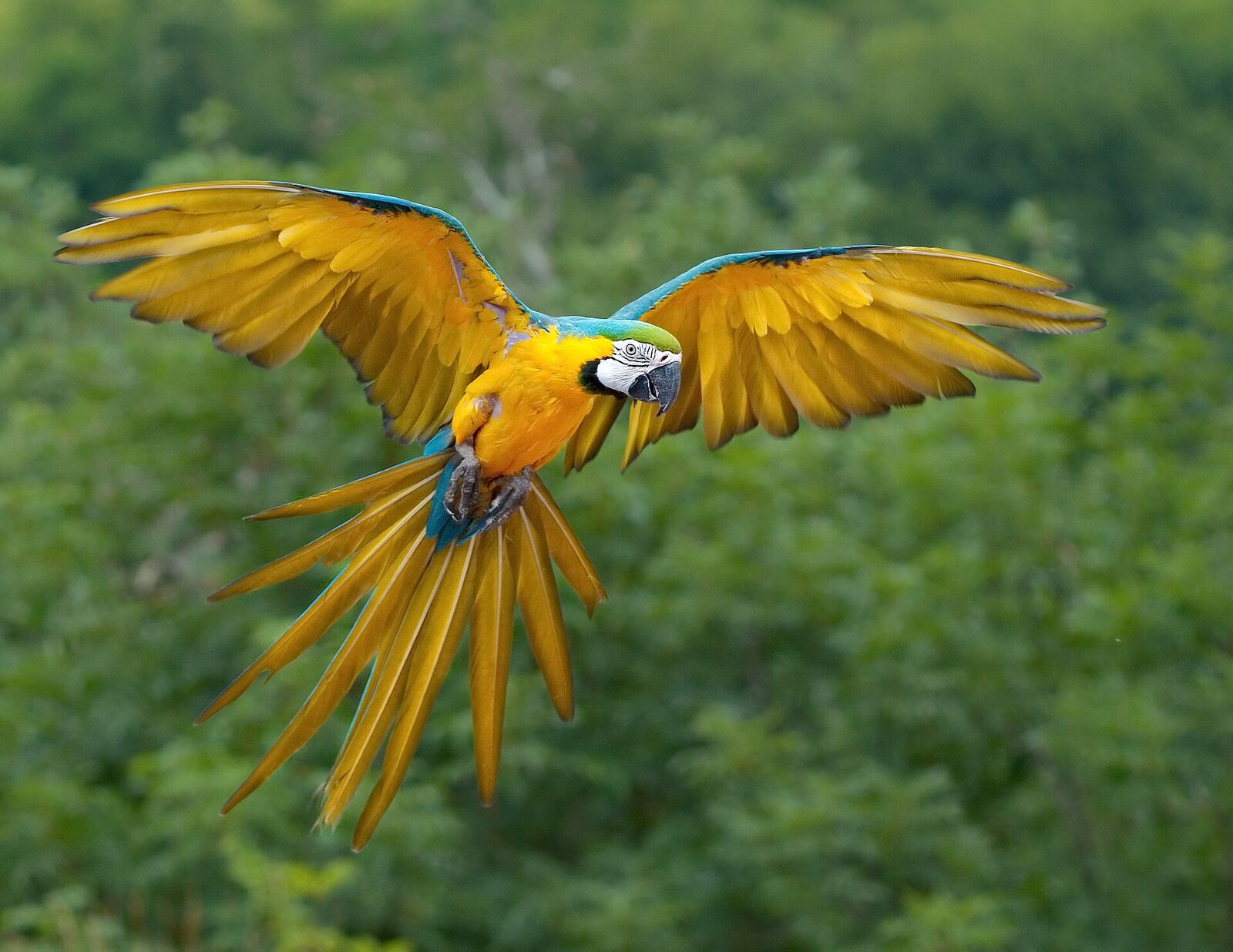
Blue-and-yellow macaw
Ara ararauna
A loud, brilliant, lifelong commitment.
Pet trade
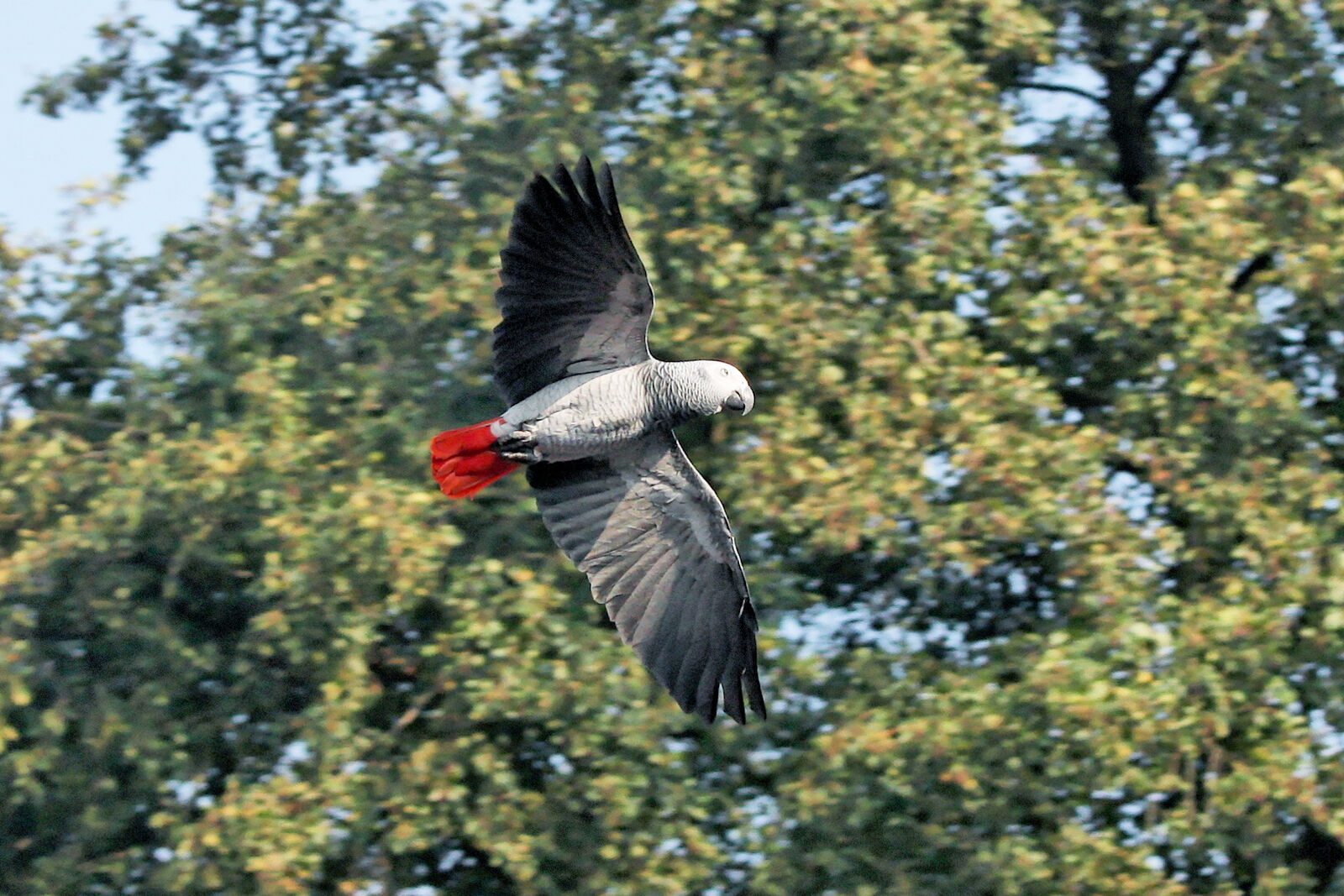
Gray parrot (Congo African grey)
Psittacus erithacus
One of the most intelligent birds on Earth.
Pet trade

Black-headed caique
Pionites melanocephalus
Pet trade

Blue-headed macaw
Primolius couloni
Aviary

Blue-throated macaw
Ara glaucogularis
Pet trade

Blue-winged (Illiger's) macaw
Primolius maracana
Pet trade