
Home / Birds / Poultry and gamebirds / Mikado pheasant
Federal restrictions applyMikado pheasant
Syrmaticus mikado
Birds › Poultry and gamebirds (Galliformes) › Phasianidae (Chickens, pheasants and quail)
The Mikado pheasant (Syrmaticus mikado) is a species of gamebird in the pheasant family Phasianidae of the order Galliformes, gallinaceous birds.
From Wikipedia: Mikado pheasant, CC BY-SA 4.0 (excerpt)

Care at a glance
Species-specific values
Values researched for this exact species. Air, surface and water temperatures are listed separately, and each source is kept as published rather than averaged.
| Diet | Breeders and young adults get 17% layer pellets, tiny chicks get 21% starter crumble, and growing chicks get 16% grower crumble; seasonal grains, greens, fruits, and vegetables are also offered. Source: aviangenetics.com | |
| Feeding frequency | Mixed grains are given every second day during winter; greens, fruits, and vegetables are offered when available. Source: aviangenetics.com | |
| Minimum enclosure | Pens are 25 feet long, 10 feet wide, and 6 feet high, with a 4-foot cube house in the middle. Source: aviangenetics.com |
Warnings
Understanding the animal
About this animal
About this animal
Sometimes considered an unofficial national bird of Taiwan (along with the Swinhoe's pheasant and Taiwan blue magpie), a pair of Mikado pheasants and Yushan National Park, one of the areas it is known to inhabit, is depicted in the 1000 dollar bill of the New Taiwan dollar.
From Wikipedia: Mikado pheasant, CC BY-SA 4.0 (excerpt)
In the wild
In the wild
| Overview | The Mikado pheasant (Syrmaticus mikado) is a species of gamebird in the pheasant family Phasianidae of the order Galliformes, gallinaceous birds. Sometimes considered an unofficial national bird of Taiwan (along with the Swinhoe's pheasant and Taiwan blue magpie), a pair of Mikado pheasants and Yushan National Park, one of the areas it is known to inhabit, is depicted in the 1000 dollar bill of the New Taiwan dollar. — From Wikipedia: Mikado pheasant, CC BY-SA 4.0 (excerpt) |
| Where it lives | The Mikado pheasant is endemic to mountainous regions of Taiwan. The species occupies dense shrubs, bamboo growth and grassy terrain with conifer overstory in central and southern Taiwan, from 2000 to 3200 meters above sea level. — From Wikipedia: Mikado pheasant, CC BY-SA 4.0 (excerpt) |
| Wild diet | The pheasants will often walk and forage for food (a diet of various fruit, leaves, vegetation, seeds and invertebrates) at the same time, in a manner similar to chickens, on the forest floor and mountain trails, especially on rainy and foggy days. — From Wikipedia: Mikado pheasant, CC BY-SA 4.0 (excerpt) |
| Behavior | The pheasants will often come out into the open either in light rain or after heavy rain, where the mist conceals them. They tend to be solitary or found in pairs, often quiet, yet alert. They can usually tolerate the presence of humans and it is possible to observe them up close, especially in areas where they have become habituated to humans feeding them. — From Wikipedia: Mikado pheasant, CC BY-SA 4.0 (excerpt) |
| Reproduction | The breeding season of Mikado pheasants lasts from March to June. Mikado pheasants build their nests mainly with dead branches, fallen leaves, dry grass and feathers in tree holes or depressions under rocks. — From Wikipedia: Mikado pheasant, CC BY-SA 4.0 (excerpt) |
| Appearance and size | With the tail included, males of this species get to be up to 70 cm in body length, while the smaller females measure up to 47 cm. The male is dark with plumage that refracts with blue or violet iridescence, with white stripes on its wings and tail. The female is brown and speckled with brown and white quills. — From Wikipedia: Mikado pheasant, CC BY-SA 4.0 (excerpt) |
| Conservation | The wild population of this species is believed to have been quite underestimated, with 10,000 individuals alone expected to reside in the Yushan National Park. As of 2023, the total population is estimated to be 20,000-100,000 mature individuals, and this population is believed to be stable. The Mikado pheasant is evaluated as Least Concern on the IUCN Red List of Threatened Species. — From Wikipedia: Mikado pheasant, CC BY-SA 4.0 (excerpt) |
Native climate (measured)
Native climate (measured)
| Warm-season highs | about 78°F (up to 87°F in the hottest sampled areas) |
| Cool-season lows | about 49°F (down to 36°F in the coldest sampled areas) |
| Average temperature | 53–71°F across sampled records |
| Relative humidity | 81–86% on average (driest month about 78%) |
| Rainfall | about 2510 mm a year |
Measured at 21 wild occurrence records sampled against WorldClim 2.1 climate data (1970–2000 averages). Air conditions in the range are ecological context, not enclosure settings: microhabitats such as burrows, leaf litter or basking rocks can be cooler, warmer or more humid.
Data and studies
The numbers
The numbers
Each bar is what one source reports. Where several sources weigh in, the dashed gold band marks their average.
Typical adult weight
Average adult body mass in each database (FishBase gives the maximum recorded weight).
Sources for this sheet
- Myhrvold et al. (2015). An amniote life-history database. Ecology 96: 3109 Peer-reviewed researchPeer-reviewed compilation of life-history data for over 21,000 birds, mammals and reptiles.
- 50 CFR 17.11: Endangered and threatened wildlife Zoo, university or veterinaryCurrent federal Endangered Species Act list.
- Species+ (UNEP-WCMC and the CITES Secretariat) Zoo, university or veterinaryThe official database of species listed under CITES. UNEP (2026). The Species+ Website. Nairobi, Kenya. Compiled by UNEP-WCMC, Cambridge, UK. Available at: www.speciesplus.net. [Accessed 04/10/2026].
- USFWS International Affairs: CITES Zoo, university or veterinaryFederal agency that issues CITES permits.
- GBIF Backbone Taxonomy (Global Biodiversity Information Facility) (CC BY 4.0) Peer-reviewed researchInternational scientific taxonomy used here for classification. GBIF Secretariat (2023). GBIF Backbone Taxonomy. Checklist dataset https://doi.org/10.15468/39omei, accessed via GBIF.org.
- Wikipedia (species article) (CC BY-SA 4.0) Community referenceFree encyclopedia; useful overviews with their own citations. Short excerpts are quoted under CC BY-SA 4.0, each credited with a link to its article.
- The eBird/Clements Checklist of Birds of the World (Cornell Lab of Ornithology) Peer-reviewed researchThe standard global bird checklist maintained by the Cornell Lab of Ornithology; used here for complete species lists of widely kept bird families.
- iNaturalist (captive observations) Community referenceCommunity observation platform run by the California Academy of Sciences and National Geographic; observations marked captive show animals living in homes, zoos and aquariums.
More chickens, pheasants and quail
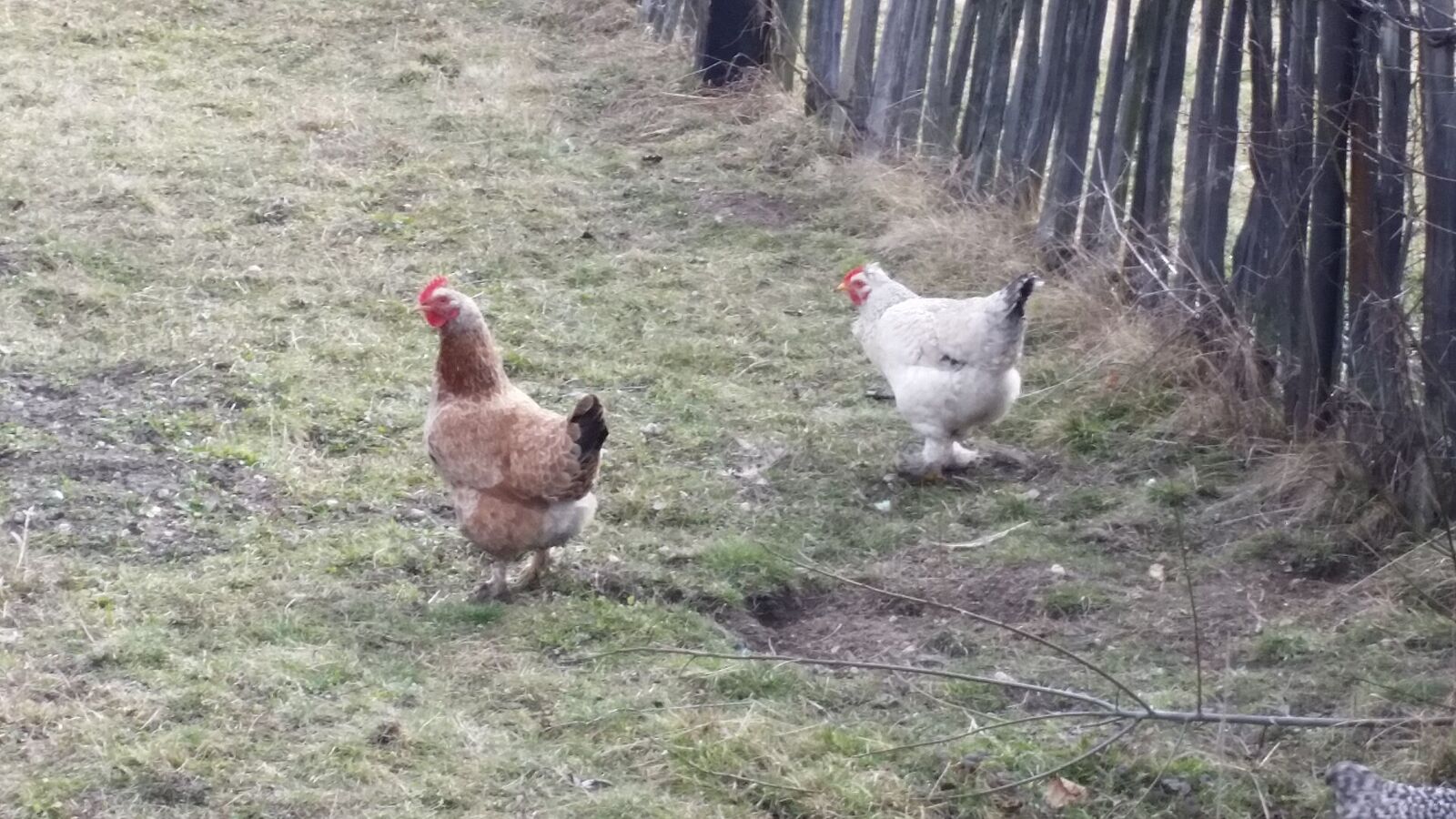
Chicken
Gallus gallus domesticus
Eggs, bug control and big personalities.
Farm & ranch

Cheer pheasant
Catreus wallichii
Aviary

Congo peafowl
Afropavo congensis
Aviary

Coqui francolin
Campocolinus coqui
Aviary

Edwards's pheasant
Lophura edwardsi
Aviary

Japanese quail
Coturnix japonica
Farm & ranch