
Home / Reptiles / Lizards / Diplodactylidae / Dotted Velvet Gecko
No federal permit to keepDotted Velvet Gecko
Oedura gemmata
Reptiles › Lizards (Lacertilia) › Diplodactylidae (Crested and related geckos)
Oedura gemmata, also called the jewelled velvet gecko or dotted velvet gecko, is a gecko endemic to Northern Territory in Australia. They normally measure 50 cm long head to tail.
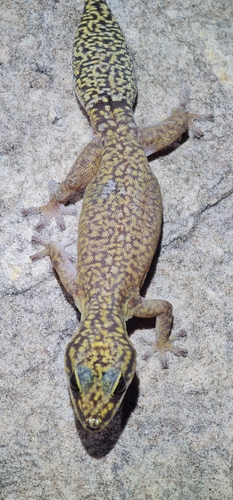
Care at a glance
Species-specific values
Values researched for this exact species. Air, surface and water temperatures are listed separately, and each source is kept as published rather than averaged.
| Basking surface temperature | 95–97 °F (35–36 °C) Source: livefoods.com.au | |
| Diet | Eats appropriately sized invertebrates, including crickets, cockroaches, and small mealworms. Source: livefoods.com.au | |
| Feeding frequency | Adults: 2–3 times weekly; juveniles: 3–4 times weekly; cooler months: once every 7–10 days. Source: livefoods.com.au | |
| Humidity | During summer, thoroughly spray the cage in late afternoon every couple of days. Source: livefoods.com.au | |
| Substrate | Egg-laying container: use a 3–4 cm layer of moist sand, coco peat, or sphagnum moss. Source: livefoods.com.au |
Understanding the animal
About this animal
About this animal
They live in the Northern territory of Australia, they like to live in rocky places.
From Wikipedia: Oedura gemmata, CC BY-SA 4.0 (excerpt)
In the wild
In the wild
Read about this species in the wild at The Reptile Database.
Native climate (measured)
Native climate (measured)
| Warm-season highs | about 97°F (up to 98°F in the hottest sampled areas) |
| Cool-season lows | about 62°F (down to 58°F in the coldest sampled areas) |
| Average temperature | 79–82°F across sampled records |
| Relative humidity | 57–63% on average (driest month about 46%) |
| Rainfall | about 1343 mm a year, with strong wet and dry seasons |
Measured at 24 wild occurrence records sampled against WorldClim 2.1 climate data (1970–2000 averages). Air conditions in the range are ecological context, not enclosure settings: microhabitats such as burrows, leaf litter or basking rocks can be cooler, warmer or more humid.
Profile
Profile
Researched for this exact species. Sources are listed under In the wild above.
Sources for this sheet
- Myhrvold et al. (2015). An amniote life-history database. Ecology 96: 3109 Peer-reviewed researchPeer-reviewed compilation of life-history data for over 21,000 birds, mammals and reptiles.
- The Reptile Database Peer-reviewed researchScientist-curated catalog of every reptile species, with taxonomy and literature.
- GBIF Backbone Taxonomy (Global Biodiversity Information Facility) (CC BY 4.0) Peer-reviewed researchInternational scientific taxonomy used here for classification. GBIF Secretariat (2023). GBIF Backbone Taxonomy. Checklist dataset https://doi.org/10.15468/39omei, accessed via GBIF.org.
- Wikipedia (species article) (CC BY-SA 4.0) Community referenceFree encyclopedia; useful overviews with their own citations. Short excerpts are quoted under CC BY-SA 4.0, each credited with a link to its article.
More crested and related geckos
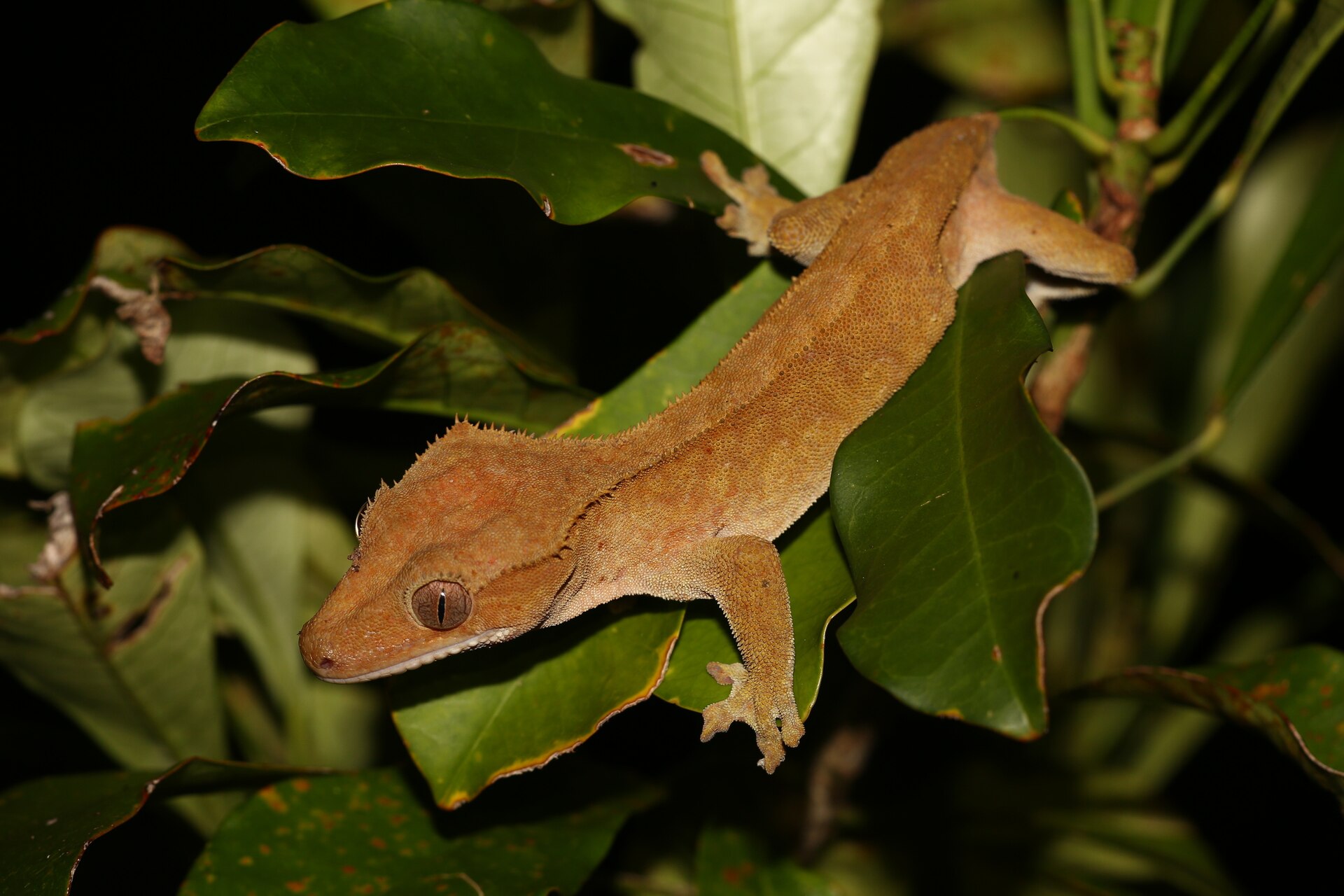
Crested gecko
Correlophus ciliatus
A sticky-toed fruit-lover that hates heat.
Pet trade

Bauer's chameleon gecko
Eurydactylodes agricolae
Pet trade

Chahoua gecko
Mniarogekko chahoua
Pet trade

Gargoyle gecko
Rhacodactylus auriculatus
Pet trade

Golden-tailed gecko
Strophurus taenicauda
Pet trade

Helmeted Gecko
Diplodactylus galeatus
Pet trade