
Home / Invertebrates / Spiders / Orange baboon tarantula
No federal permit to keepOrange baboon tarantula
Pterinochilus murinus
Invertebrates › Spiders (Araneae) › Theraphosidae (Tarantulas)
Pterinochilus murinus or the orange baboon tarantula, is a nocturnal spider in the family Theraphosidae that was first described in 1897 by Reginald Innes Pocock.
From Wikipedia: Pterinochilus murinus, CC BY-SA 4.0 (excerpt)

Care at a glance
Species-specific values
Values researched for this exact species. Air, surface and water temperatures are listed separately, and each source is kept as published rather than averaged.
| Substrate moisture | Mostly dry substrate with drinking water; provide a retreat/burrowing opportunity. Dry terrestrial Old World exception; no universal 60–80% RH target. | tomsbigspiders.com |
| Warm side air temperature | 75–82 °F (24–28 °C) Source: tarantulahub.co.uk | |
| Humidity | 55–70 % Source: tarantulahub.co.uk | |
| Substrate | Use dry to barely moist substrate, never soaking; recommended depth is 6-8 cm. Source: tarantulahub.co.uk | |
| Water temperature | Always provide a shallow fresh water dish and keep it full and clean. Source: tarantulahub.co.uk | |
| Uvb lighting | No special lighting is needed; ambient room light is enough. Source: tarantulahub.co.uk | |
| Feeding frequency | Slings every 3-4 days, juveniles every 4-6 days, and adults every 7-10 days. Source: tarantulahub.co.uk | |
| Minimum enclosure | At least three times the tarantula’s leg span; juvenile and adult size guidance varies by life stage. Source: thetarantulacollective.com | |
| Minimum enclosure | Spiderling enclosure should be at least three times the tarantula’s leg span. Source: thetarantulacollective.com | |
| Minimum enclosure | Juvenile enclosure should be at least 3–4 times the tarantula’s leg span. Source: thetarantulacollective.com | |
| Minimum enclosure | The adult home needs to be at least three times the tarantula’s leg span; 4–5 times is ideal. Source: thetarantulacollective.com | |
| Warm side air temperature | 68–76 °F Source: thetarantulacollective.com | |
| Warm side air temperature | 68–75 °F (20–24 °C) Source: thetarantulacollective.com | |
| Humidity | Aim for moderate humidity; keep lower substrate layers moist and let upper layers dry between waterings. Source: thetarantulacollective.com | |
| Feeding frequency | Spiderlings: feed twice a week. Source: thetarantulacollective.com | |
| Feeding frequency | Juveniles: feed every 7–10 days. Source: thetarantulacollective.com | |
| Feeding frequency | Adults: provide food as needed or every 2–3 weeks. Source: thetarantulacollective.com | |
| Substrate | Spiderling enclosure: fill at least two-thirds with Terra Aranea. Source: thetarantulacollective.com | |
| Substrate | Juvenile enclosure: fill half full with Terra Aranea. Source: thetarantulacollective.com | |
| Substrate | Adult enclosure: fill half full with Terra Aranea. Source: thetarantulacollective.com |
Understanding the animal
About this animal
About this animal
This species is found in Angola, as well as central and southern Africa. It is a member of the subfamily Harpactirinae, baboon spiders.
From Wikipedia: Pterinochilus murinus, CC BY-SA 4.0 (excerpt)
In the wild
In the wild
| Overview | Pterinochilus murinus or the orange baboon tarantula, is a nocturnal spider in the family Theraphosidae that was first described in 1897 by Reginald Innes Pocock. This species is found in Angola, as well as central and southern Africa. It is a member of the subfamily Harpactirinae, baboon spiders. The color varies from red, orange and brown. — From Wikipedia: Pterinochilus murinus, CC BY-SA 4.0 (excerpt) |
| Where it lives | Pternochilus murinus is found in different parts of Africa and has also been recorded on the island of Zanzibar. — From Wikipedia: Pterinochilus murinus, CC BY-SA 4.0 (excerpt) |
| Behavior | The orange baboon tarantula is very defensive, and will bite if provoked. Consequently, it is not recommended that hobbyists keep this species without extensive prior experience handling venomous spiders. The female excavates a burrow, or colonizes an existing burrow that has been abandoned. — From Wikipedia: Pterinochilus murinus, CC BY-SA 4.0 (excerpt) |
| Appearance and size | Female P. murinus can grow to 4–6 inches (10–15 cm) in size (measured from the tip of the front left leg, to the tip of the rear right leg), while males typically range from 3–4 inches (7.5–10 cm). The spider's abdomen, carapace, and legs have the same basic coloration, though the legs typically have brightly colored rings. — From Wikipedia: Pterinochilus murinus, CC BY-SA 4.0 (excerpt) |
Native climate (measured)
Native climate (measured)
| Warm-season highs | about 90°F (up to 95°F in the hottest sampled areas) |
| Cool-season lows | about 53°F (down to 44°F in the coldest sampled areas) |
| Average temperature | 68–79°F across sampled records |
| Relative humidity | 62–71% on average (driest month about 55%) |
| Rainfall | about 937 mm a year, with strong wet and dry seasons |
Measured at 122 wild occurrence records sampled against WorldClim 2.1 climate data (1970–2000 averages). Air conditions in the range are ecological context, not enclosure settings: microhabitats such as burrows, leaf litter or basking rocks can be cooler, warmer or more humid.
Data and studies
Researched care notes
Researched care notes
Findings checked against veterinary, zoo, welfare, keeper and peer-reviewed sources. Air, basking-surface and water temperatures are kept separate, and where sources disagree both are shown. “Study” notes report what a paper measured, not a universal rule.
Terrestrial Tarantulas (beginner housing module)
Researched for this whole family or group; check species differences before applying.
- Use a secure terrestrial enclosure with refuge, appropriate substrate, and available water. Arboreal and deep-burrowing species require separate designs.1
- The keeper essay recommends managing substrate moisture, drinking water, and ventilation rather than chasing a generic RH number. Keeper experience; confidence LOW.2
Terrestrial Tarantulas
Researched for this whole family or group; check species differences before applying.
- A spider lying on its back may be molting; do not turn it upright or disturb the molt.1,3
- Remove loose living prey when a tarantula stops feeding before a molt, because prey insects can injure or kill the vulnerable spider.1
- Resume feeding only after the new exoskeleton has hardened; the BTS notes that newly molted adults can need more than a week.1
- Minimize fall risk and routine handling; the BTS recommends no handling because even a short fall can seriously injure a tarantula.1
- Arrange rocks and other heavy furnishings so they cannot fall onto the spider or create hazardous falls.3
Veterinary & husbandry research
Veterinary & husbandry research
- Symptom in search of a toxin: muscle spasms following bites by Old World tarantula spiders (Lampropelma nigerrimum, Pterinochilus murinus, Poecilotheria regalis) with review Ahmed N et al., QJM: monthly journal of the Association of Physicians 2009
Peer-reviewed papers that mention this species alongside captivity, zoos, veterinary care or aquaculture. Some cover several species or mention it only in passing, so check the abstract. PubMed
Sources for this sheet
- GBIF Backbone Taxonomy (Global Biodiversity Information Facility) (CC BY 4.0) Peer-reviewed researchInternational scientific taxonomy used here for classification. GBIF Secretariat (2023). GBIF Backbone Taxonomy. Checklist dataset https://doi.org/10.15468/39omei, accessed via GBIF.org.
- Wikipedia (species article) (CC BY-SA 4.0) Community referenceFree encyclopedia; useful overviews with their own citations. Short excerpts are quoted under CC BY-SA 4.0, each credited with a link to its article.
- PubMed (U.S. National Library of Medicine) Peer-reviewed researchIndex of peer-reviewed veterinary, zoo and husbandry research.
- iNaturalist (captive observations) Community referenceCommunity observation platform run by the California Academy of Sciences and National Geographic; observations marked captive show animals living in homes, zoos and aquariums.
More tarantulas
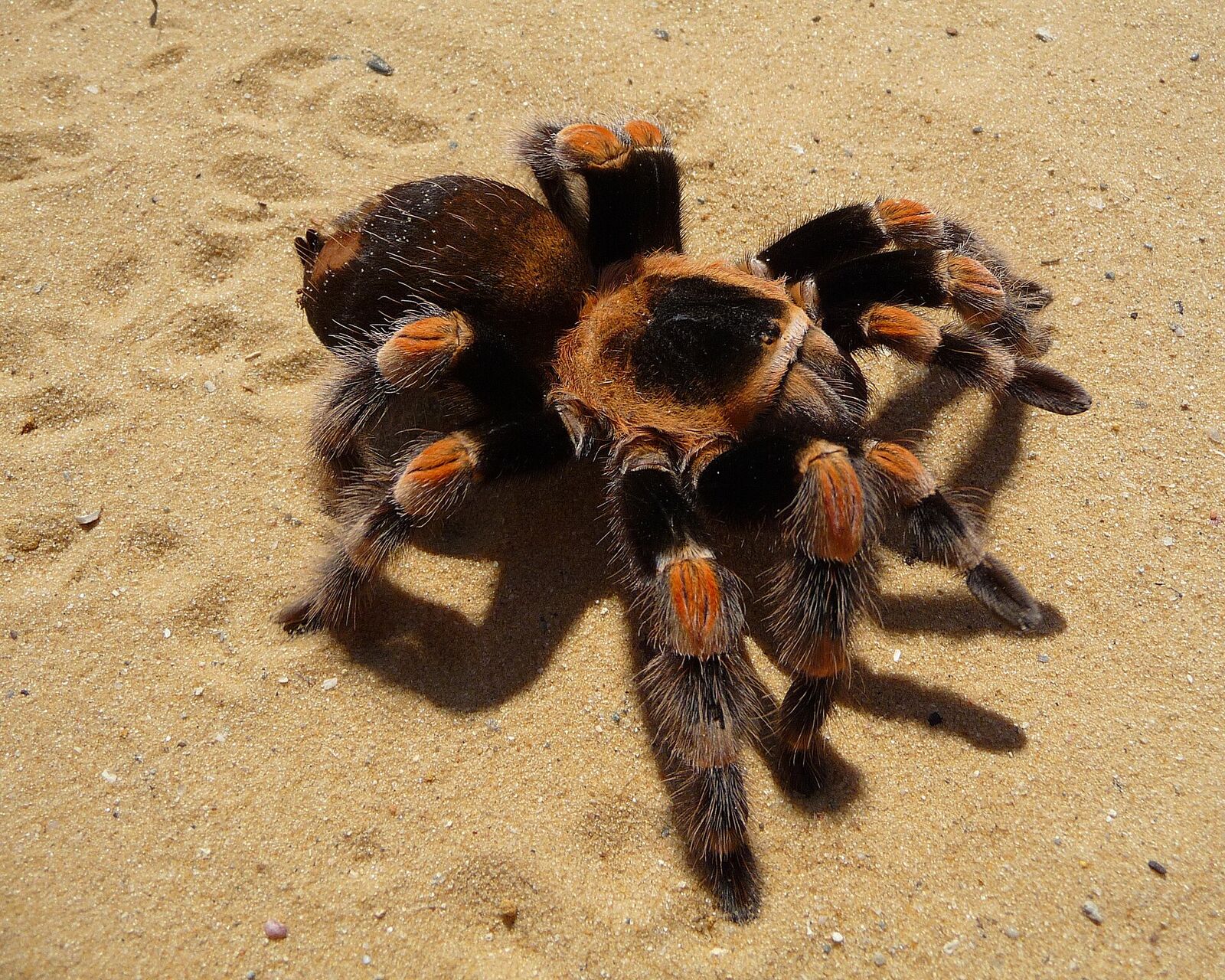
Mexican redknee tarantula
Brachypelma hamorii
A docile spider where females live 25–30 years.
Pet trade

African Horned Baboon Tarantula
Ceratogyrus darlingi
Pet trade
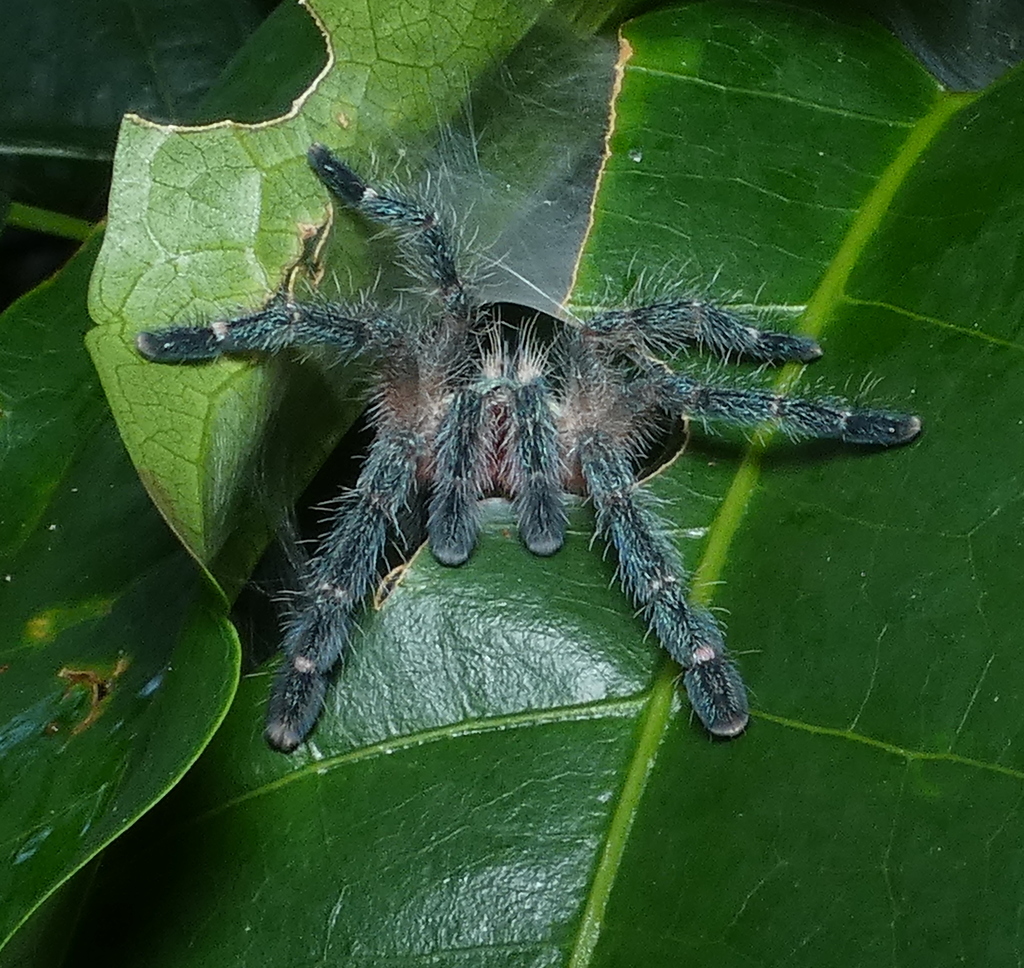
Amazon Ribbed Tarantula
Iridopelma hirsutum
Pet trade

Amula Redrump Tarantula
Brachypelma albiceps
Pet trade

Anantagiri’s Parachute Spider
Poecilotheria tigrinawesseli
Pet trade

Antilles pinktoe tarantula
Caribena versicolor
Pet trade