
Home / Reptiles / Snakes / Colubridae / Black-banded Trinket Snake
No federal permit to keepBlack-banded Trinket Snake
Oreocryptophis porphyraceus
Reptiles › Snakes (Serpentes) › Colubridae (Colubrid snakes)
Oreocryptophis porphyraceus is a rat snake species, commonly called the black-banded trinket snake, red bamboo snake, found in mid to upper-level elevations of forested hills in southeastern Asia, ranging from evergreen tropical to dry seasonal…
From Wikipedia: Oreocryptophis, CC BY-SA 4.0 (excerpt)

Care at a glance
Species-specific values
Values researched for this exact species. Air, surface and water temperatures are listed separately, and each source is kept as published rather than averaged.
| Minimum enclosure | Hatchlings are housed in tubs 18 inches long by 7½ inches wide by 3½ inches tall until 9 months to 1 year old. Source: reptilesmagazine.com | |
| Basking surface temperature | The article gives target temperatures but does not specify a basking surface temperature. | reptilesmagazine.com |
| Warm side air temperature | The article gives target temperatures but does not specify warm-side air temperatures. | reptilesmagazine.com |
| Cool side air temperature | The article gives target temperatures but does not specify cool-side air temperatures. | reptilesmagazine.com |
| Night temperature | The article does not give a regular night temperature; it describes experimental cooling conditions. Source: reptilesmagazine.com | |
| Diet | Porphs readily take live or frozen/thawed mice; hatchlings start with a pink mouse after their first shed. Source: reptilesmagazine.com | |
| Social housing | Pairs are brought together for breeding after seasonal cooling. Source: reptilesmagazine.com | |
| Substrate | After the second shed, use 1–2 inches of cypress mulch; hatchlings begin on slightly damp paper towels. Source: reptilesmagazine.com | |
| Seasonal cooling | 50–55 °F Source: reptilesmagazine.com | |
| Seasonal cooling | at least 65 °F Source: reptilesmagazine.com | |
| Seasonal cooling | 45–55 °F Source: reptilesmagazine.com | |
| Basking spot during cooling | 80–85 °F Source: reptilesmagazine.com | |
| Seasonal cooling | In one experimental cooling setup, nighttime cage temperatures in the high 30s caused no ill effect. Source: reptilesmagazine.com | |
| Note: more detail at reptilesmagazine.com. | ||
Understanding the animal
About this animal
About this animal
It is the only member of the genus Oreocryptophis, but it was formerly placed in Elaphe.
From Wikipedia: Oreocryptophis, CC BY-SA 4.0 (excerpt)
In the wild
In the wild
| Overview | Oreocryptophis porphyraceus is a rat snake species, commonly called the black-banded trinket snake, red bamboo snake, found in mid to upper-level elevations of forested hills in southeastern Asia, ranging from evergreen tropical to dry seasonal forests depending on the subspecies and locality. It is the only member of the genus Oreocryptophis, but it was formerly placed in Elaphe. — From Wikipedia: Oreocryptophis, CC BY-SA 4.0 (excerpt) |
| Wild diet | The diet consists primarily of rodents and other small mammals in the wild. In captivity, mice are accepted readily. — From Wikipedia: Oreocryptophis, CC BY-SA 4.0 (excerpt) |
| Appearance and size | The head is small, sharp and squarish, while the color pattern includes red or orange colors, along with black bands or stripes. A terrestrial species, it has a preference for cool climates that restricts its habitat to hills and mountain plateaus. It is known to be crepuscular, active during the late evenings till night and dawn till late mornings. — From Wikipedia: Oreocryptophis, CC BY-SA 4.0 (excerpt) |
Read about this species in the wild at The Reptile Database.
Native climate (measured)
Native climate (measured)
| Warm-season highs | about 86°F (up to 92°F in the hottest sampled areas) |
| Cool-season lows | about 48°F (down to 31°F in the coldest sampled areas) |
| Average temperature | 54–76°F across sampled records |
| Relative humidity | 73–81% on average (driest month about 66%) |
| Rainfall | about 1816 mm a year, with strong wet and dry seasons |
Measured at 121 wild occurrence records sampled against WorldClim 2.1 climate data (1970–2000 averages). Air conditions in the range are ecological context, not enclosure settings: microhabitats such as burrows, leaf litter or basking rocks can be cooler, warmer or more humid.
Profile
Profile
Researched for this exact species. Sources are listed under In the wild above.
History
Named after Greek porphyreos = crimson, dark red.
Data and studies
The numbers
The numbers
Each bar is what one source reports. Where several sources weigh in, the dashed gold band marks their average.
Maximum recorded lifespan
Longest recorded lifespan reported by each database; typical lifespans are usually shorter.
Typical adult weight
Average adult body mass in each database (FishBase gives the maximum recorded weight).
Incubation
Sources for this sheet
- Myhrvold et al. (2015). An amniote life-history database. Ecology 96: 3109 Peer-reviewed researchPeer-reviewed compilation of life-history data for over 21,000 birds, mammals and reptiles.
- The Reptile Database Peer-reviewed researchScientist-curated catalog of every reptile species, with taxonomy and literature.
- GBIF Backbone Taxonomy (Global Biodiversity Information Facility) (CC BY 4.0) Peer-reviewed researchInternational scientific taxonomy used here for classification. GBIF Secretariat (2023). GBIF Backbone Taxonomy. Checklist dataset https://doi.org/10.15468/39omei, accessed via GBIF.org.
- Wikipedia (species article) (CC BY-SA 4.0) Community referenceFree encyclopedia; useful overviews with their own citations. Short excerpts are quoted under CC BY-SA 4.0, each credited with a link to its article.
- iNaturalist (captive observations) Community referenceCommunity observation platform run by the California Academy of Sciences and National Geographic; observations marked captive show animals living in homes, zoos and aquariums.
More colubrid snakes
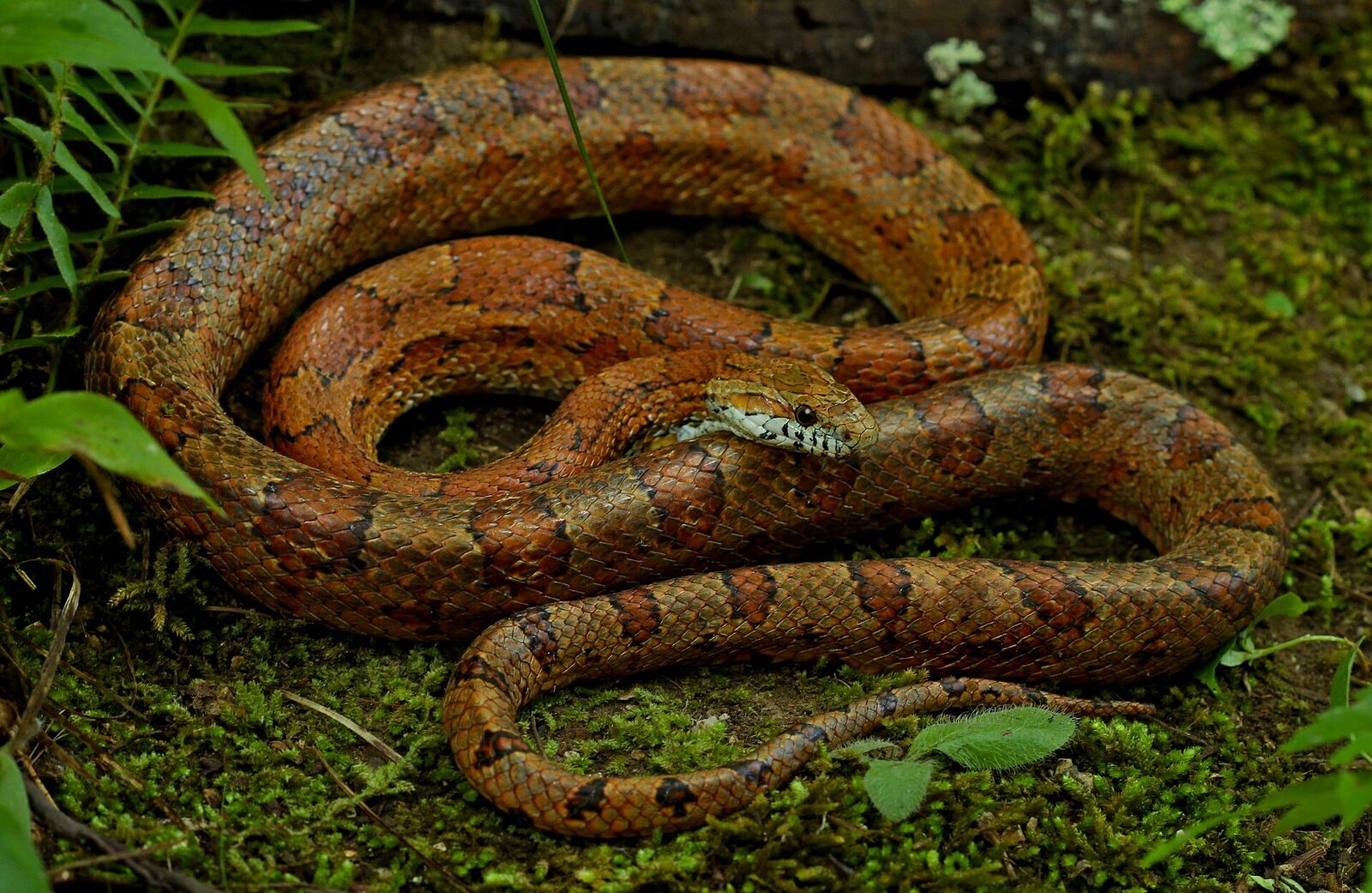
Corn snake
Pantherophis guttatus
Hardy, easy-going and colorful.
Pet trade
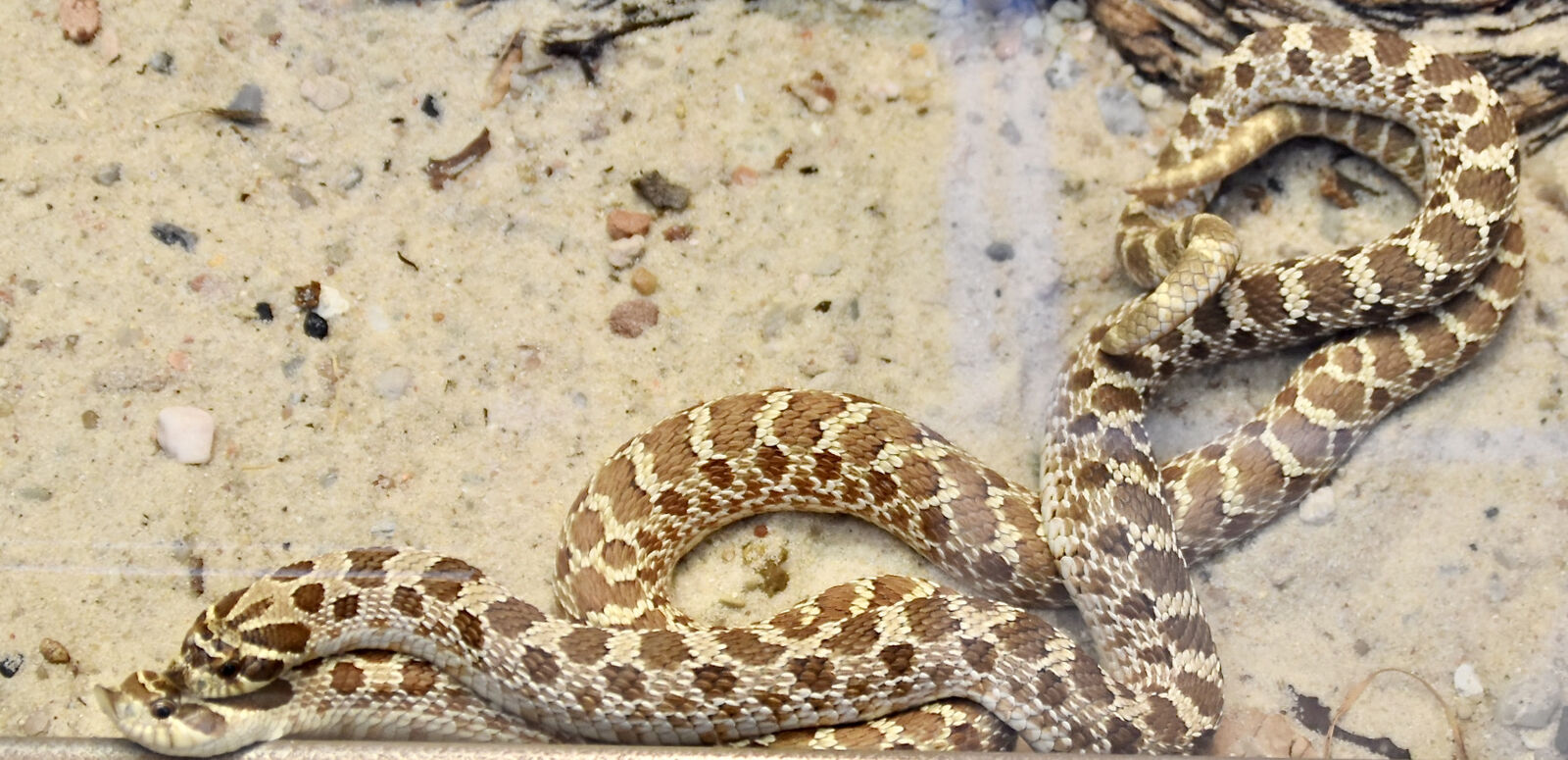
Western hognose snake
Heterodon nasicus
Dramatic bluffs from a tiny, upturned-nose snake.
Pet trade

Amur (Russian) rat snake
Elaphe schrenckii
Pet trade

Andean milk snake
Lampropeltis micropholis
Pet trade

Arizona mountain kingsnake
Lampropeltis pyromelana
Pet trade

Baird's rat snake
Pantherophis bairdi
Pet trade