
Home / Birds / Parrots / Pacific parrotlet
Some federal rules applyPacific parrotlet
Forpus coelestis
Birds › Parrots (Psittaciformes) › Psittacidae (New World and African parrots)
The Pacific parrotlet (Forpus coelestis), also known as Lesson's parrotlet, or the celestial parrotlet, is a species of small parrot in the family Psittacidae.
From Wikipedia: Pacific parrotlet, CC BY-SA 4.0 (excerpt)

Care at a glance
Species-specific values
Values researched for this exact species. Air, surface and water temperatures are listed separately, and each source is kept as published rather than averaged.
| Minimum cage dimensions | length: 20 in; width: 20 in; height: 30 in Table cage minimum; exercise space additional. | msdvetmanual.com |
| Maximum bar spacing | 0.5 in | msdvetmanual.com |
| Social housing | House Pacific parrotlets individually; closely supervise interactions with other birds. Source: exoticwings.ca | |
| Diet | Offer pellets, controlled seed, and fresh vegetables, fruits, sprouts, and legumes; seed should be no more than 25% of daily food. Source: exoticwings.ca | |
| Feeding frequency | Offer fresh foods first thing in the morning and remove them within 3 hours. Source: exoticwings.ca | |
| Minimum enclosure | About 3 sq ft is a good start for space; 4 sq ft is more ideal. Source: exoticwings.ca | |
| Minimum enclosure | Indoor aviary length should be at least 5.9 feet (1.8 m). Source: webmd.com | |
| Diet | Offer cuttlebone, eggs, cooked rice, pellets, sprouted seeds, whole wheat bread, dried beans, greens, and bird-safe produce. Source: webmd.com | |
| Social housing | House the pet solo, or with at most one other companion. Source: webmd.com | |
| Minimum enclosure | Cage at least 45 x 45 x 45 cm. Source: royalveterinarycenter.com | |
| Night temperature | 64–82 °F (18–28 °C) Source: royalveterinarycenter.com | |
| Diet | Base diet of formulated pellets with some varied seed mix and daily fresh produce. Source: royalveterinarycenter.com | |
| Feeding frequency | Offer fresh vegetables, greens, legumes and small amounts of fruit daily. Source: royalveterinarycenter.com | |
| Social housing | Best kept singly as pets; pairs may bond to each other instead of people. Source: royalveterinarycenter.com | |
| Uvb lighting | Provide natural or full-spectrum light and 10 to 12 hours of quiet, dark sleep. Source: royalveterinarycenter.com |
Understanding the animal
In the wild
In the wild
| Overview | The Pacific parrotlet (Forpus coelestis), also known as Lesson's parrotlet, or the celestial parrotlet, is a species of small parrot in the family Psittacidae. — From Wikipedia: Pacific parrotlet, CC BY-SA 4.0 (excerpt) |
| Where it lives | Wild Pacific parrotlets are native to western Ecuador and northwestern Peru. Most common in dry habitats such as the desert and deciduous forest, but have spread into humid areas in response to deforestation. Pacific parrotlets have also been reported in the middle Marañón valley. — From Wikipedia: Pacific parrotlet, CC BY-SA 4.0 (excerpt) |
| Social life and communication | Pacific parrotlets are found living in flocks from 40 to 50 (Restall & Freile, 2019, p. 208). Calls are high-pitched and rapid "tchit"; in flock situations this produces a constant chattering. — From Wikipedia: Pacific parrotlet, CC BY-SA 4.0 (excerpt) |
| Wild diet | Pacific parrotlets tend to feed on berries and cactus fruits, but are not picky in their feeding. In captivity, parrotlets eat many fruits, seeds, vegetables, and herbs. While in captivity, Pacific parrotlets thrive on a variety diet, some staples may include but are not limited to offerings of quinoa, millet, broccoli, beetroot, oats, bellpepper, brown rice, apples, and pomegranate seeds. — From Wikipedia: Pacific parrotlet, CC BY-SA 4.0 (excerpt) |
| Reproduction | Pacific parrotlets are very protective of their eggs and chicks. Each clutch has 4–6 white eggs, which are incubated for an average of 18 days. In the wild they nest in tree cavities or on fence posts. — From Wikipedia: Pacific parrotlet, CC BY-SA 4.0 (excerpt) |
| Appearance and size | The Pacific parrotlet (Forpus coelestis) is a small green parrot originating in South America. A typical specimen is 11-14 long and typically weighs 30 grams or more. Wild Pacific parrotlets are green with a dusty grey cast over the body, a bright green mask and a pinkish beak. — From Wikipedia: Pacific parrotlet, CC BY-SA 4.0 (excerpt) |
| Conservation | The Pacific parrotlet is currently listed as Least Concern by the IUCN Red List. The number of mature individuals in the wild is not known, but population size seems to be stable. — From Wikipedia: Pacific parrotlet, CC BY-SA 4.0 (excerpt) |
Data and studies
The numbers
The numbers
Each bar is what one source reports. Where several sources weigh in, the dashed gold band marks their average.
Maximum recorded lifespan
Longest recorded lifespan reported by each database; typical lifespans are usually shorter. The AnAge record comes from an animal in human care.
Typical adult weight
Average adult body mass in each database (FishBase gives the maximum recorded weight).
Veterinary & husbandry research
Veterinary & husbandry research
- The first study of reference intervals for blood biochemistry of healthy pet Pacific parrotlets (Forpus coelestis) in Thailand Lorsunyaluck B et al., Journal of advanced veterinary and animal research 2025
Peer-reviewed papers that mention this species alongside captivity, zoos, veterinary care or aquaculture. Some cover several species or mention it only in passing, so check the abstract. See all 2 on PubMed → PubMed
Sources for this sheet
- AnAge: The Animal Ageing and Longevity Database (Human Ageing Genomic Resources) (CC BY 3.0) Peer-reviewed researchCurated, referenced longevity and life-history records for thousands of species; maximum lifespans are often from zoo animals.
- Myhrvold et al. (2015). An amniote life-history database. Ecology 96: 3109 Peer-reviewed researchPeer-reviewed compilation of life-history data for over 21,000 birds, mammals and reptiles.
- Species+ (UNEP-WCMC and the CITES Secretariat) Zoo, university or veterinaryThe official database of species listed under CITES. UNEP (2026). The Species+ Website. Nairobi, Kenya. Compiled by UNEP-WCMC, Cambridge, UK. Available at: www.speciesplus.net. [Accessed 04/10/2026].
- USFWS International Affairs: CITES Zoo, university or veterinaryFederal agency that issues CITES permits.
- 9 CFR 2.1: Animal Welfare Act licensing (USDA) Zoo, university or veterinaryWho needs a USDA license to breed, sell or exhibit animals.
- GBIF Backbone Taxonomy (Global Biodiversity Information Facility) (CC BY 4.0) Peer-reviewed researchInternational scientific taxonomy used here for classification. GBIF Secretariat (2023). GBIF Backbone Taxonomy. Checklist dataset https://doi.org/10.15468/39omei, accessed via GBIF.org.
- Wikipedia (species article) (CC BY-SA 4.0) Community referenceFree encyclopedia; useful overviews with their own citations. Short excerpts are quoted under CC BY-SA 4.0, each credited with a link to its article.
- PubMed (U.S. National Library of Medicine) Peer-reviewed researchIndex of peer-reviewed veterinary, zoo and husbandry research.
- iNaturalist (captive observations) Community referenceCommunity observation platform run by the California Academy of Sciences and National Geographic; observations marked captive show animals living in homes, zoos and aquariums.
More new world and african parrots
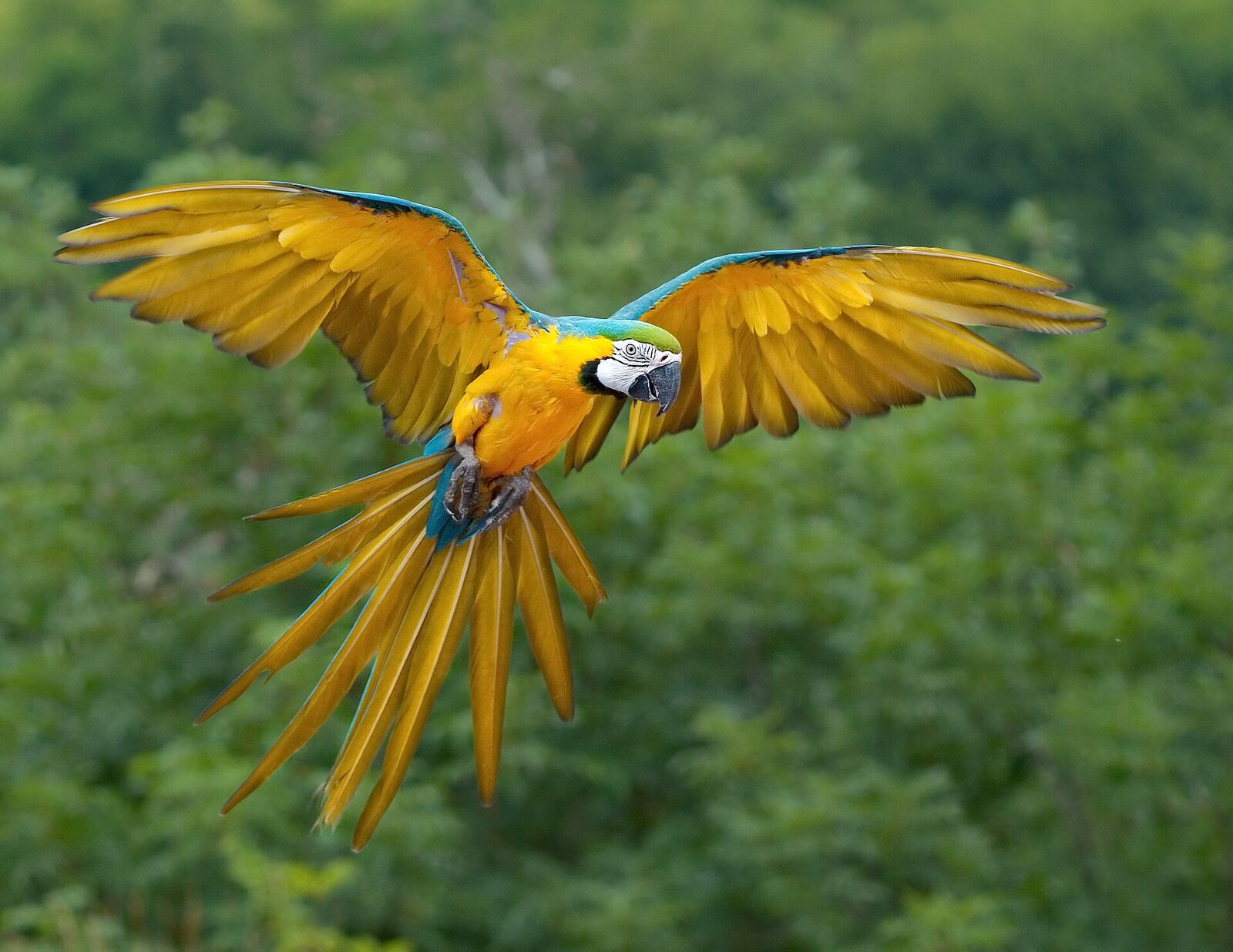
Blue-and-yellow macaw
Ara ararauna
A loud, brilliant, lifelong commitment.
Pet trade
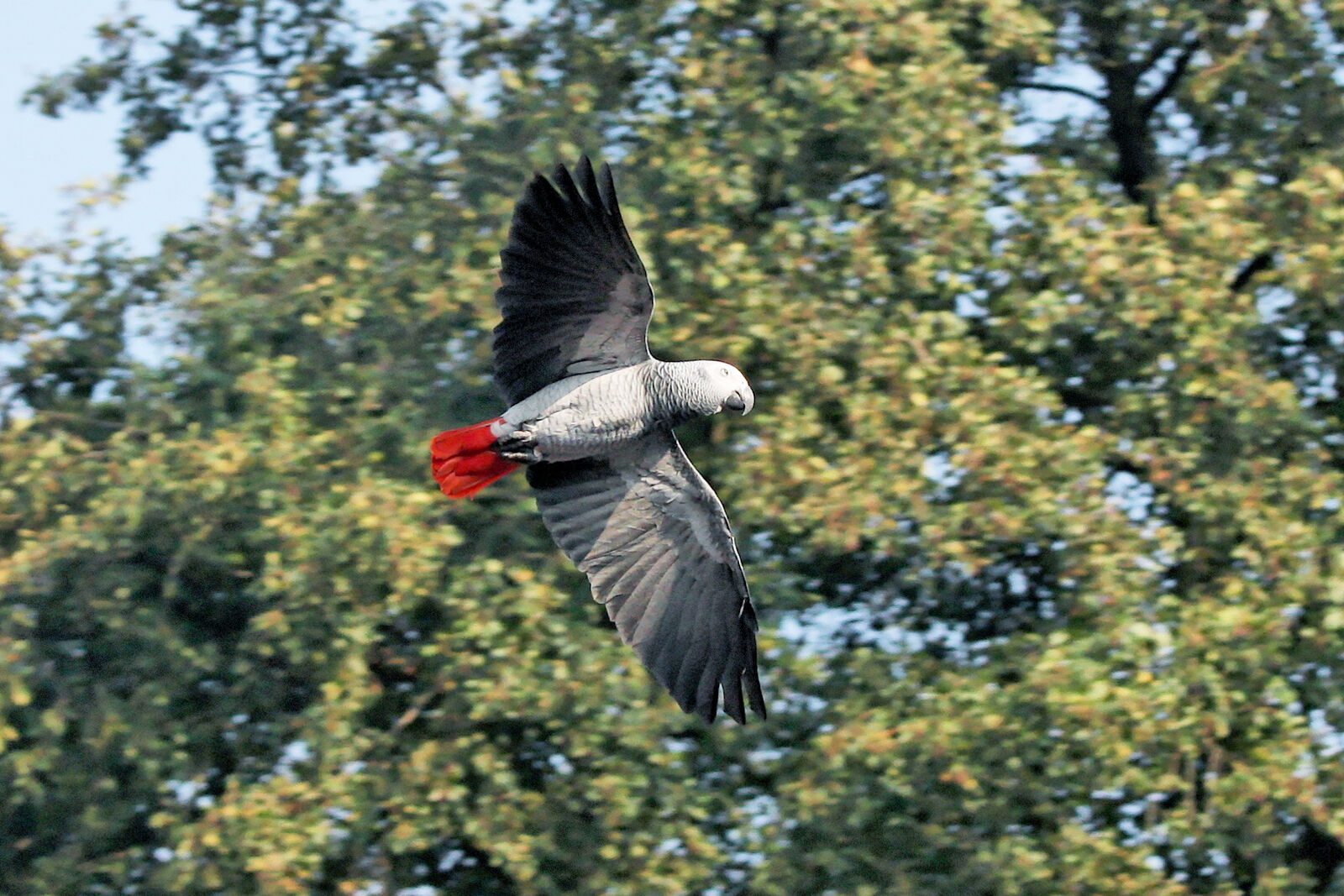
Gray parrot (Congo African grey)
Psittacus erithacus
One of the most intelligent birds on Earth.
Pet trade

Black-headed caique
Pionites melanocephalus
Pet trade

Blue-headed macaw
Primolius couloni
Aviary

Blue-throated macaw
Ara glaucogularis
Pet trade

Blue-winged (Illiger's) macaw
Primolius maracana
Pet trade