
FamilyBoas
Kept byPet trade
Care at a glance
Setup
One answer per setting. Where sources differ, the smaller figure is the minimum and the larger is what we recommend.
| Enclosure | Vertical terrarium with branches More arboreal than the other Candoia; prefers a vertical terrarium with branches to hang on. | reptilesmagazine.com |
| Day temperature | 80–82°F Keep at 82 degrees during the day; always keep the daytime temperature near 80 degrees. | reptilesmagazine.com |
| Night temperature | a little cooler; 70°F for a month before breeding Let the temperature drop a bit at night; some keepers drop to 70 degrees for a month to prepare adults for breeding. | reptilesmagazine.com |
| Humidity | 50–70 % (constant) Need a constant relative humidity of at least 50 to 70 percent. | reptilesmagazine.com |
| Water | Large bowl to bathe in They like a large water bowl in which to bathe. | reptilesmagazine.com |
Care guide
By age
| Baby | Feeding: Offer a choice of pinky mice, frogs, or lizards; scent mice with frog or lizard skin to switch prey. | reptilesmagazine.com |
Understanding the animal
Localities
Localities
Keepers buy these by where the bloodline comes from. Care is basically the same; size, color and temperament can differ. “Breeder-reported” details still need a published source.
| C. b. australis | Nominate subspecies known as the Pacific tree boa. | Published Wikipedia |
In the wild
In the wild
Researched for this exact species, not its family. Wild conditions are context, not enclosure settings.12
| Where it lives | They inhabit forests throughout the South Pacific, including Melanesia and Polynesia, at elevations from sea level up to 5,200 feet. |
| Active | They are active as both arboreal and terrestrial hunters. |
| Social life | Males engage in ritual combat, twisting around each other to display strength until one male wins the right to mate. |
| Wild diet | In the wild, they hunt birds, small mammals like rodents and bats, and various lizards including skinks and geckos. |
| Behavior to plan for | These snakes are selective when choosing a partner and are known for ritualized male-to-male combat. |
Profile
Profile
Researched for this exact species. Sources are listed under In the wild above.
Remarkable facts
- Most males reach 3 feet, while females often grow to 5 feet or longer.
Sources for this sheet
- Species+ (UNEP-WCMC and the CITES Secretariat) Zoo, university or veterinaryThe official database of species listed under CITES. UNEP (2026). The Species+ Website. Nairobi, Kenya. Compiled by UNEP-WCMC, Cambridge, UK. Available at: www.speciesplus.net. [Accessed 04/10/2026].
- USFWS International Affairs: CITES Zoo, university or veterinaryFederal agency that issues CITES permits.
- Breeding solomon islands tree boas (reptilesmagazine.com) Experienced keeper or breederKeeper care guide.
- Wikipedia: Candoia bibroni (CC BY-SA 4.0) Community referenceEncyclopedia article.
- The Reptile Database: Candoia bibroni Zoo, university or veterinaryTaxonomy, distribution and literature for every reptile species.
- Husbandry (kingsnake.com) Community referenceBreeder or hobbyist source; details are breeder-reported.
- The Reptile Database Peer-reviewed researchScientist-curated catalog of every reptile species, with taxonomy and literature.
- GBIF Backbone Taxonomy (Global Biodiversity Information Facility) (CC BY 4.0) Peer-reviewed researchInternational scientific taxonomy used here for classification. GBIF Secretariat (2023). GBIF Backbone Taxonomy. Checklist dataset https://doi.org/10.15468/39omei, accessed via GBIF.org.
More boas
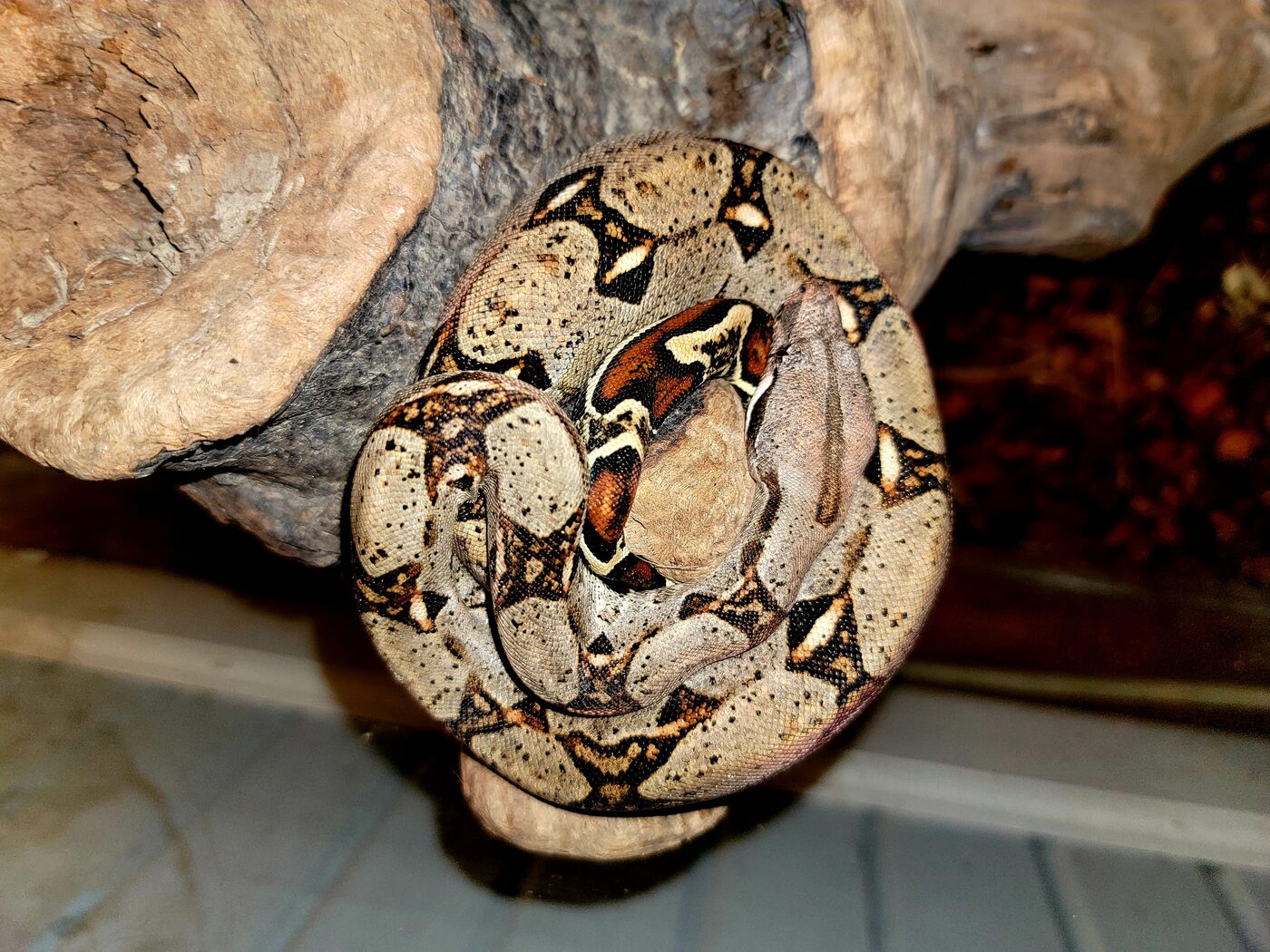
Some federal rules
Common boa constrictor (red-tailed boa)
Boa constrictor
A powerful but famously steady big snake.
Pet trade
Intermediate
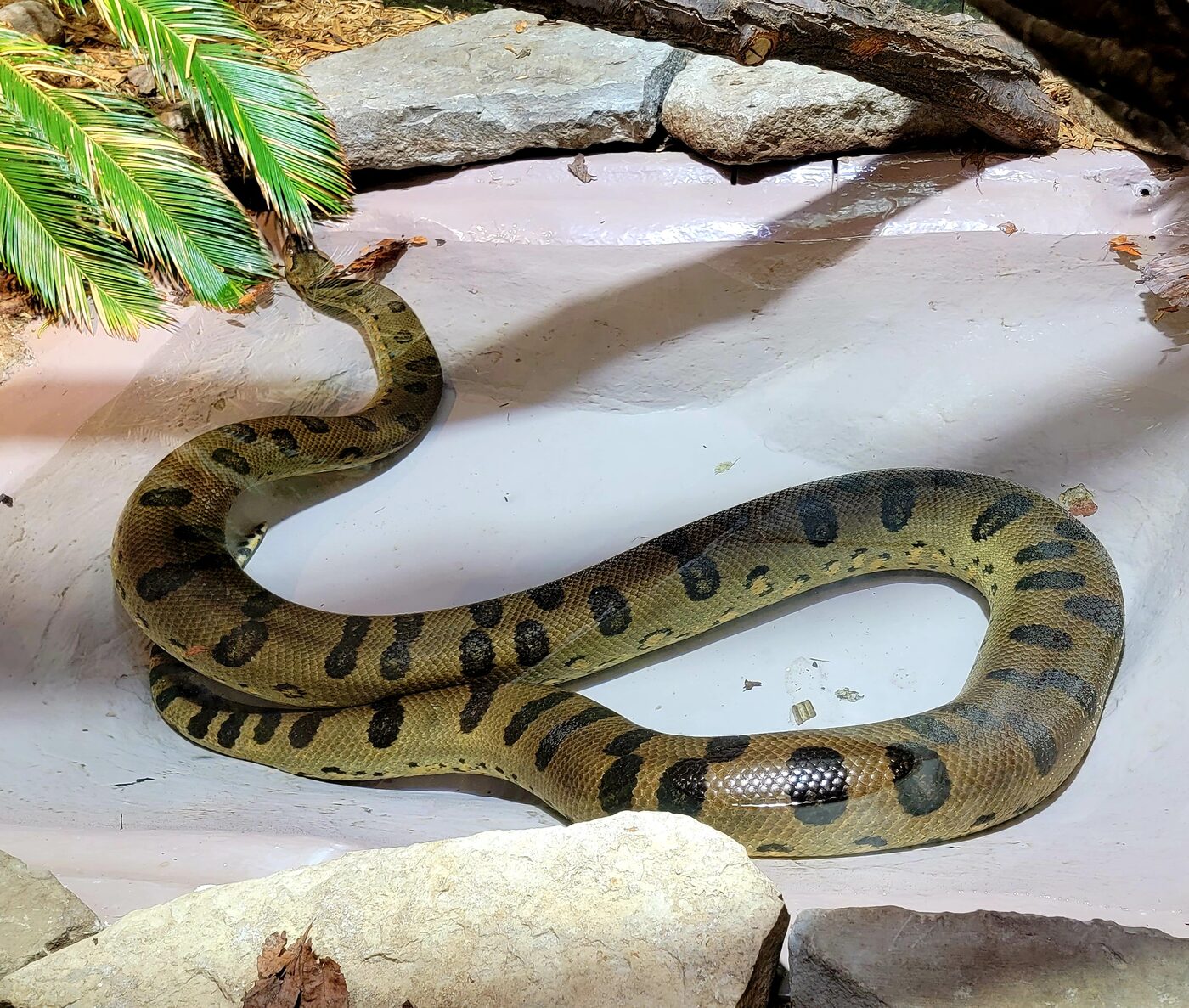
Federal restrictions
Green anaconda
Eunectes murinus
The heaviest snake on Earth, at home in the water.
Pet trade
Expert / facility

Some federal rules
Amazon basin emerald tree boa
Corallus batesii
Pet trade
Advanced
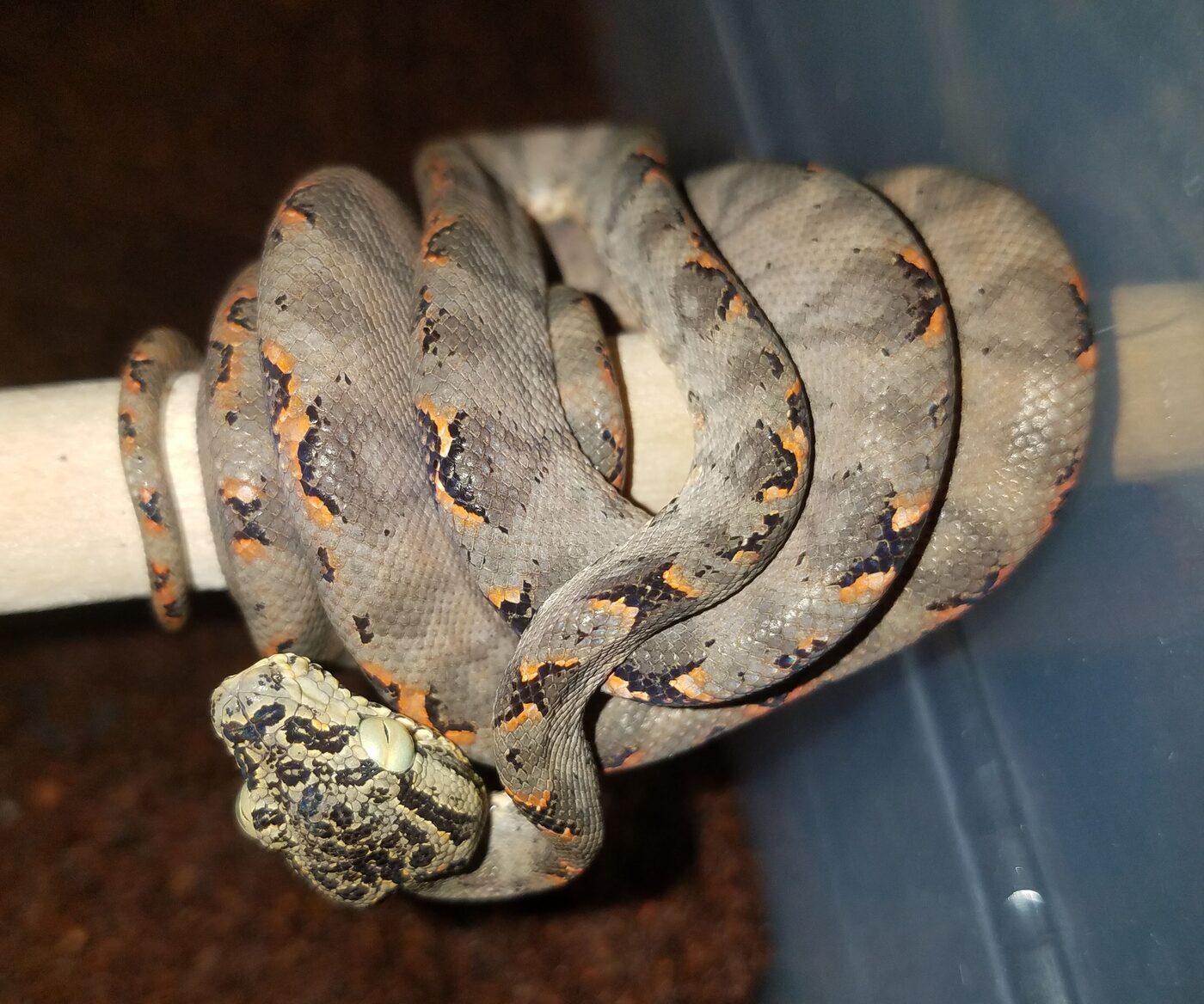
No federal permit
Amazon tree boa
Corallus hortulana
Pet trade
Advanced

Some federal rules
Annulated tree boa
Corallus annulatus
Pet trade
Advanced

Some federal rules
Arabian sand boa
Eryx jayakari
Pet trade
Easy