
Home / Fishes / Carp, barbs, minnows, loaches / Danionidae / Pearl danio
No federal permit to keepPearl danio
Danio albolineatus
Fishes › Carp, barbs, minnows, loaches (Cypriniformes) › Danionidae (Danios and rasboras)
The pearl danio (Danio albolineatus) is a tropical, freshwater ray-finned fish belonging to the family Danioinidae.

Care at a glance
Species care notes
Read the full care sheet at Seriously Fish: habitat, aquarium size, water conditions, diet, behaviour and breeding.
Understanding the animal
About this animal
About this animal
Originating in Sumatra, Myanmar, and Thailand and Vietnam (Phu Quoc Island), this fish is sometimes found in aquariums by fish-keeping hobbyists. It grows to a maximum length of 2.6 inches (6.6 cm) and lives for around five years.
From Wikipedia: Pearl danio, CC BY-SA 4.0 (excerpt)
In the wild
In the wild
From this species’ own FishBase record (habitat, bottom type, water and breeding data), not its family. Wild conditions are context, not enclosure settings.1
| Where it lives | Lives in freshwater, in rivers and streams. Uses both the bottom and open water. |
| Climate | Tropical climate. |
| Wild diet | Hunting macrofauna (predator). |
| Behavior to plan for | Breeding: open water/substratum egg scatterers. |
Data and studies
The numbers
The numbers
Each bar is what one source reports. Where several sources weigh in, the dashed gold band marks their average.
Typical adult weight
Average adult body mass in each database (FishBase gives the maximum recorded weight).
Adult length
Common length to maximum recorded length. Measured as total length. Fish in home aquariums often stay smaller than wild records.
Veterinary & husbandry research
Veterinary & husbandry research
- The phylogenetic position of the zebrafish (Danio rerio), a model system in developmental biology: an invitation to the comparative method Meyer A et al., Proceedings. Biological sciences 1993
Peer-reviewed papers that mention this species alongside captivity, zoos, veterinary care or aquaculture. Some cover several species or mention it only in passing, so check the abstract. PubMed
Sources for this sheet
- FishBase (Froese & Pauly, eds.), version 24.07 (CC BY-NC 4.0) Peer-reviewed researchThe global scientific database on fishes, maintained by a consortium of research institutions; every value is referenced.
- Seriously Fish species profiles Experienced keeper or breederLong-running aquarium reference written and peer-checked by experienced fishkeepers and ichthyologists; each profile covers habitat, tank size, water, diet, behaviour and breeding.
- Wikipedia (species article) (CC BY-SA 4.0) Community referenceFree encyclopedia; useful overviews with their own citations. Short excerpts are quoted under CC BY-SA 4.0, each credited with a link to its article.
- PubMed (U.S. National Library of Medicine) Peer-reviewed researchIndex of peer-reviewed veterinary, zoo and husbandry research.
- iNaturalist (captive observations) Community referenceCommunity observation platform run by the California Academy of Sciences and National Geographic; observations marked captive show animals living in homes, zoos and aquariums.
More danios and rasboras

Bengal danio
Devario devario
Aquarium hobby

Betadevario ramachandrani
Betadevario ramachandrani
Aquarium hobby

Blackline rasbora
Rasbora borapetensis
Aquarium hobby

Blue danio
Danio kerri
Aquarium hobby
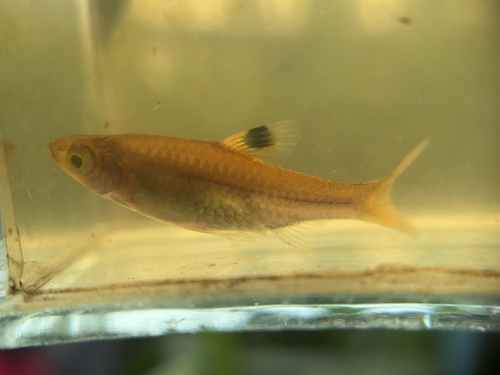
Brevibora cheeya
Brevibora cheeya
Aquarium hobby
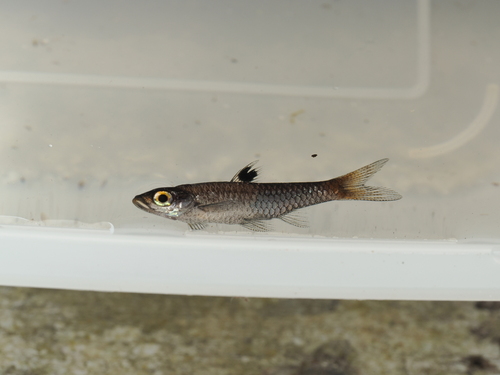
Brevibora exilis
Brevibora exilis
Aquarium hobby