
Home / Invertebrates / Crabs, shrimp and crayfish / Peppermint shrimp
No federal permit to keepPeppermint shrimp
Lysmata wurdemanni
Invertebrates › Crabs, shrimp and crayfish (Decapoda) › Lysmatidae (Cleaner and peppermint shrimp)
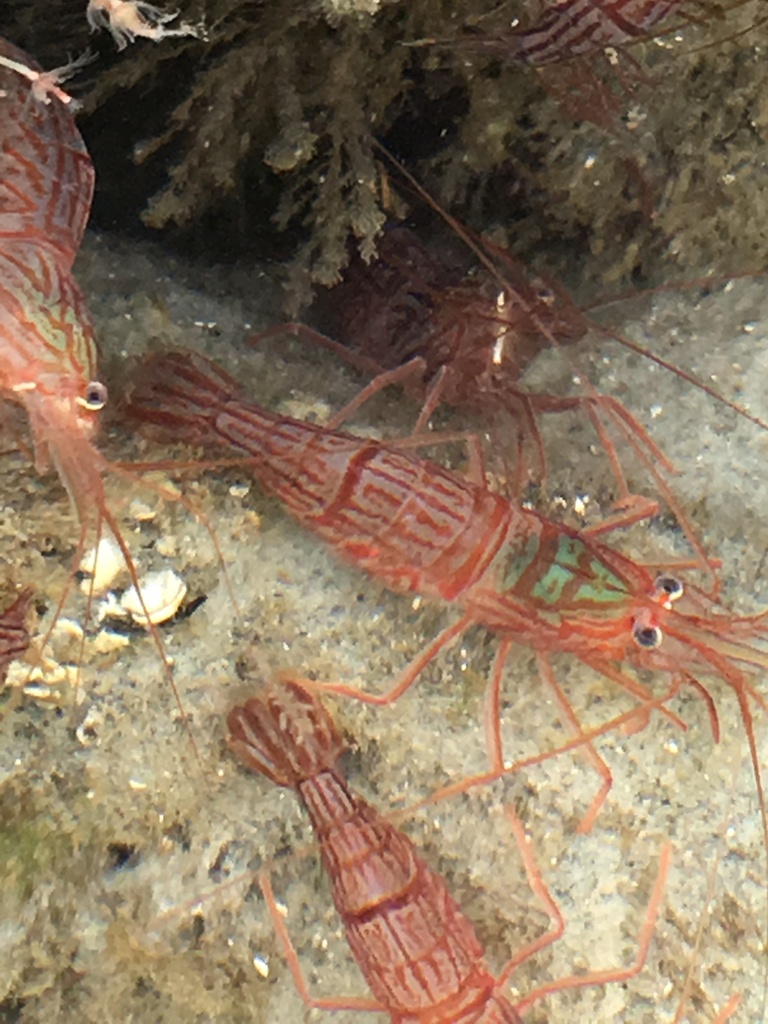
Lysmata wurdemanni is a species of saltwater shrimp in the family Lysmatidae, historically referred to as the peppermint shrimp in the marine aquarium trade.
From Wikipedia: Lysmata wurdemanni, CC BY-SA 4.0 (excerpt)
Care at a glance
Species-specific values
Values researched for this exact species. Air, surface and water temperatures are listed separately, and each source is kept as published rather than averaged.
| Minimum enclosure | Recommended minimum volume: 11 gallons Source: reeflings.com | |
| Water temperature | 75–82 °F (24–28 °C) Source: reeflings.com | |
| Minimum enclosure | 20 gallon+ reef or FOWLR Source: fishyfriends.ca | |
| Diet | Offer vegetables, wafers, or powdered foods in current to supplement scavenging for filter feeders. Source: fishyfriends.ca | |
| Water temperature | 74–80 °F Source: fishyfriends.ca |
Understanding the animal
About this animal
About this animal
However, taxonomic revisions based on genetic and morphological data have revealed that many shrimp previously identified as L. wurdemanni actually belong to distinct species, including Lysmata boggessi, Lysmata rathbunae, and others native to the western Atlantic. As a result, L. wurdemanni is now recognised as a more narrowly distributed species and is not the shrimp most commonly used in reef aquariums for Aiptasia control.
From Wikipedia: Lysmata wurdemanni, CC BY-SA 4.0 (excerpt)
In the wild
In the wild
| Overview | Lysmata wurdemanni is a species of saltwater shrimp in the family Lysmatidae, historically referred to as the peppermint shrimp in the marine aquarium trade. However, taxonomic revisions based on genetic and morphological data have revealed that many shrimp previously identified as L. wurdemanni actually belong to distinct species, including Lysmata boggessi, Lysmata rathbunae, and others native to the western Atlantic. As a result, L. wurdemanni is now recognised as a more narrowly distributed species and is not the shrimp most commonly used in reef aquariums for Aiptasia control. — From Wikipedia: Lysmata wurdemanni, CC BY-SA 4.0 (excerpt) |
| History and naming | The species L. wurdemanni has undergone reclassification and has been divided into four distinct species – L. wurdemanni, L. ankeri, L. bahia and L. boggessii. More recent molecular phylogenetic work found that L. wurdemanni is a cryptic species with at least 5 (and potentially 9) morphologically identical species being present across its range. — From Wikipedia: Lysmata wurdemanni, CC BY-SA 4.0 (excerpt) |
Read about this species in the wild at SeaLifeBase.
Profile
Profile
Researched for this exact species. Sources are listed under In the wild above.
History
The species L. wurdemanni has undergone reclassification and has been divided into four distinct species – L. wurdemanni, L. ankeri, L. bahia and L. boggessii. More recent molecular phylogenetic work found that L. wurdemanni is a cryptic species with at least 5 (and potentially 9) morphologically identical species being present across its range.
From Wikipedia: Lysmata wurdemanni, CC BY-SA 4.0 (excerpt)
Data and studies
The numbers
The numbers
Each bar is what one source reports. Where several sources weigh in, the dashed gold band marks their average.
Adult length
Maximum recorded length. Measured as carapace length.
Veterinary & husbandry research
Veterinary & husbandry research
- Integrative taxonomy of the ornamental 'peppermint' shrimp public market and population genetics of Lysmata boggessi, the most heavily traded species worldwide Baeza JA et al., PeerJ 2017
Peer-reviewed papers that mention this species alongside captivity, zoos, veterinary care or aquaculture. Some cover several species or mention it only in passing, so check the abstract. PubMed
Sources for this sheet
- SeaLifeBase (Palomares & Pauly, eds.), version 24.07 (CC BY-NC 4.0) Peer-reviewed researchFishBase's sister database for non-fish marine and freshwater life; values are referenced.
- GBIF Backbone Taxonomy (Global Biodiversity Information Facility) (CC BY 4.0) Peer-reviewed researchInternational scientific taxonomy used here for classification. GBIF Secretariat (2023). GBIF Backbone Taxonomy. Checklist dataset https://doi.org/10.15468/39omei, accessed via GBIF.org.
- Wikipedia (species article) (CC BY-SA 4.0) Community referenceFree encyclopedia; useful overviews with their own citations. Short excerpts are quoted under CC BY-SA 4.0, each credited with a link to its article.
- PubMed (U.S. National Library of Medicine) Peer-reviewed researchIndex of peer-reviewed veterinary, zoo and husbandry research.
- iNaturalist (captive observations) Community referenceCommunity observation platform run by the California Academy of Sciences and National Geographic; observations marked captive show animals living in homes, zoos and aquariums.

