Home / Invertebrates / Crabs, shrimp and crayfish / Skunk cleaner shrimp
No federal permit to keepSkunk cleaner shrimp
Lysmata amboinensis
Invertebrates › Crabs, shrimp and crayfish (Decapoda) › Lysmatidae (Cleaner and peppermint shrimp)
Lysmata amboinensis is an omnivorous shrimp species known by several common names including the Pacific cleaner shrimp.
From Wikipedia: Lysmata amboinensis, CC BY-SA 4.0 (excerpt)

Care at a glance
Species-specific values
Values researched for this exact species. Air, surface and water temperatures are listed separately, and each source is kept as published rather than averaged.
| Minimum enclosure | Minimum tank volume is 20 gallons. Source: fastaquatics.com | |
| Water temperature | 76–80 °F Source: fastaquatics.com | |
| Diet | Eats pellets, frozen foods, and supplemental greens. Source: fastaquatics.com | |
| Feeding frequency | Feed quality flake or pellet plus frozen mysis or bloodworms 2–3 times weekly. Source: fastaquatics.com |
Understanding the animal
About this animal
About this animal
It is considered a cleaner shrimp as eating parasites and dead tissue from fish makes up a large part of its diet. The species is a natural part of the coral reef ecosystem and is widespread across the tropics typically living at depths of 5–40 metres (16–131 ft).
From Wikipedia: Lysmata amboinensis, CC BY-SA 4.0 (excerpt)
In the wild
In the wild
| Overview | Lysmata amboinensis is an omnivorous shrimp species known by several common names including the Pacific cleaner shrimp. It is considered a cleaner shrimp as eating parasites and dead tissue from fish makes up a large part of its diet. The species is a natural part of the coral reef ecosystem and is widespread across the tropics typically living at depths of 5-40. Lysmata amboinensis can reach a body length of 5-6 and have long white antennae. — From Wikipedia: Lysmata amboinensis, CC BY-SA 4.0 (excerpt) |
| Behavior | Lysmata amboinesis do not live in large groups, more often in pairs, and while omnivorous it is believed they derive much of their nutrition from cleaning parasites and dead tissue from fish. — From Wikipedia: Lysmata amboinensis, CC BY-SA 4.0 (excerpt) |
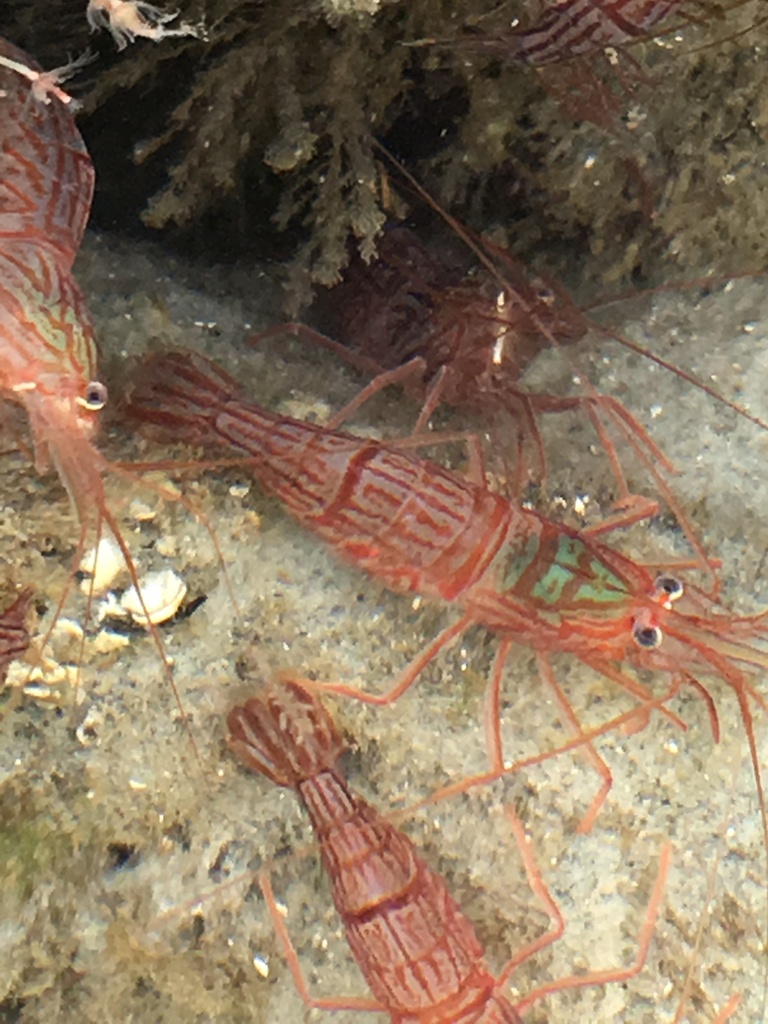
| Appearance and size | Adult shrimp can reach a body length of 2.5 to 3 inches with two pairs of long white antennae 3-5 inches in length. The body and legs are pale amber in colour with longitudinal bands on the carapace: one central white band is flanked by wider scarlet red bands. There are several symmetrical white spots on the red tail. — From Wikipedia: Lysmata amboinensis, CC BY-SA 4.0 (excerpt) |
| History and naming | Lysmata amboinesis was described and named by Johannes Govertus de Man, published in 1888. In the same year it was also described as Hippolysmata vittata var. amboinensis listing the shrimp as a variant within the species Lysmata vittata. These are now considered synonyms with L. amboinesis a distinct species from L. vittata. — From Wikipedia: Lysmata amboinensis, CC BY-SA 4.0 (excerpt) |
Read about this species in the wild at SeaLifeBase.
Profile
Profile
Researched for this exact species. Sources are listed under In the wild above.
History
Lysmata amboinesis was described and named by Johannes Govertus de Man, published in 1888. In the same year it was also described as Hippolysmata vittata var. amboinensis listing the shrimp as a variant within the species Lysmata vittata. These are now considered synonyms with L. amboinesis a distinct species from L. vittata.
From Wikipedia: Lysmata amboinensis, CC BY-SA 4.0 (excerpt)
Sources for this sheet
- SeaLifeBase (Palomares & Pauly, eds.), version 24.07 (CC BY-NC 4.0) Peer-reviewed researchFishBase's sister database for non-fish marine and freshwater life; values are referenced.
- GBIF Backbone Taxonomy (Global Biodiversity Information Facility) (CC BY 4.0) Peer-reviewed researchInternational scientific taxonomy used here for classification. GBIF Secretariat (2023). GBIF Backbone Taxonomy. Checklist dataset https://doi.org/10.15468/39omei, accessed via GBIF.org.
- Wikipedia (species article) (CC BY-SA 4.0) Community referenceFree encyclopedia; useful overviews with their own citations. Short excerpts are quoted under CC BY-SA 4.0, each credited with a link to its article.
- iNaturalist (captive observations) Community referenceCommunity observation platform run by the California Academy of Sciences and National Geographic; observations marked captive show animals living in homes, zoos and aquariums.