
Home / Reptiles / Snakes / Colubridae / Pine snake
Some federal rules applyPine snake
Pituophis melanoleucus
Reptiles › Snakes (Serpentes) › Colubridae (Colubrid snakes)
Pituophis melanoleucus, commonly known as the eastern pine snake, is a species of nonvenomous snake in the family Colubridae.

Care at a glance
Species-specific values
Values researched for this exact species. Air, surface and water temperatures are listed separately, and each source is kept as published rather than averaged.
| Minimum enclosure | A single adult needs at least a 4'x2'x16" enclosure. Source: allreptiles.ca | |
| Basking surface temperature | 82–88 °F Source: allreptiles.ca | |
| Warm side air temperature | 85–90 °F Source: allreptiles.ca | |
| Cool side air temperature | 70–75 °F Source: allreptiles.ca | |
| Humidity | 30–50 % Source: allreptiles.ca | |
| Uvb lighting | UVB is optional and beneficial in moderate amounts. Source: allreptiles.ca | |
| Diet | In captivity, feed a staple diet of mice and rats. Source: allreptiles.ca | |
| Feeding frequency | Hatchlings get fuzzy mice every 5–7 days; subadults and adults get appropriately sized rats every 7–10 days; very mature snakes over 15 years often eat every 2–3 weeks. Source: allreptiles.ca | |
| Substrate | Use a deep burrowing substrate such as cypress mulch, coconut husk, reptile bark, aspen, or a rock, clay, and sand mixture. Source: allreptiles.ca |
Understanding the animal
About this animal
About this animal
The species is native to the southeastern United States. Three subspecies are traditionally recognized as being valid, though taxonomic changes may be occurring.
From Wikipedia: Pituophis melanoleucus, CC BY-SA 4.0 (excerpt)
In the wild
In the wild
Researched for this exact species, not its family. Wild conditions are context, not enclosure settings.1
| Where it lives | Eastern and southeastern United States pine woods, sandy open woodland and related upland habitats. It uses underground burrows for prey, nesting and seasonal refuge. |
| Ground it lives on | Loose, diggable soil in open pine woodland and sandy uplands. |
| Climate | Seasonal temperate/subtropical climate; winter cold and summer heat are buffered underground. Numerical wild temperature and humidity ranges were not established. |
| Active | Mostly diurnal, with some nocturnal activity; winter brumation and occasional summer aestivation. |
| Social life | Mostly separate outside mating; males may fight, and nest sites can be communal. |
| Wild diet | Small mammals and birds, eggs and some reptiles. |
| Behavior to plan for | Its reinforced pointed snout is adapted for digging. Threatened animals hiss loudly, vibrate the tail and may strike; they are nonvenomous. |
Data and studies
The numbers
The numbers
Each bar is what one source reports. Where several sources weigh in, the dashed gold band marks their average.
Maximum recorded lifespan
Longest recorded lifespan reported by each database; typical lifespans are usually shorter. The AnAge record comes from an animal in human care.
Incubation
Daytime air temperature
Species-specific values from keeper care sheets. Basking figures are often surface readings taken with an infrared thermometer, which run hotter than air.
Care articles for this species
Care articles for this species
- Pine Snake Care Sheet (Reptiles Magazine)
- Louisiana Pine Snake Breeding Program Started At Ellen Trout Zoo (Reptiles Magazine)
- Pine Snake Care And Natural History (Reptiles Magazine)
Written by keepers, breeders and vets Reptiles MagazineReptiFiles
Veterinary & husbandry research
Veterinary & husbandry research
- A report of intestinal sarcocystosis in the bullsnake (Pituophis melanoleucus sayi) and a re-evaluation of Sarcocystis sp. from snakes of the genus Pituophis Daszak P et al., Journal of wildlife diseases 1995
Peer-reviewed papers that mention this species alongside captivity, zoos, veterinary care or aquaculture. Some cover several species or mention it only in passing, so check the abstract. See all 4 on PubMed → PubMed
Sources for this sheet
- AnAge: The Animal Ageing and Longevity Database (Human Ageing Genomic Resources) (CC BY 3.0) Peer-reviewed researchCurated, referenced longevity and life-history records for thousands of species; maximum lifespans are often from zoo animals.
- Myhrvold et al. (2015). An amniote life-history database. Ecology 96: 3109 Peer-reviewed researchPeer-reviewed compilation of life-history data for over 21,000 birds, mammals and reptiles.
- Reptiles Magazine (care articles) Experienced keeper or breederEstablished reptile and amphibian hobby magazine; care articles are written by breeders, keepers and veterinarians.
- 50 CFR 17.11: Endangered and threatened wildlife Zoo, university or veterinaryCurrent federal Endangered Species Act list.
- Clint's Reptiles (YouTube): Gopher, Bull, & Pine Snake, The Best Pet Snake? Expert educator & keeperClint Laidlaw, PhD in Biology Education and MS in Evolutionary Ecology; owner of Clint's Reptile Room and a longtime keeper. His "Best Pet?" series reviews each species' care in depth.
- The Reptile Database Peer-reviewed researchScientist-curated catalog of every reptile species, with taxonomy and literature.
- GBIF Backbone Taxonomy (Global Biodiversity Information Facility) (CC BY 4.0) Peer-reviewed researchInternational scientific taxonomy used here for classification. GBIF Secretariat (2023). GBIF Backbone Taxonomy. Checklist dataset https://doi.org/10.15468/39omei, accessed via GBIF.org.
- Wikipedia (species article) (CC BY-SA 4.0) Community referenceFree encyclopedia; useful overviews with their own citations. Short excerpts are quoted under CC BY-SA 4.0, each credited with a link to its article.
- PubMed (U.S. National Library of Medicine) Peer-reviewed researchIndex of peer-reviewed veterinary, zoo and husbandry research.
- iNaturalist (captive observations) Community referenceCommunity observation platform run by the California Academy of Sciences and National Geographic; observations marked captive show animals living in homes, zoos and aquariums.
More colubrid snakes
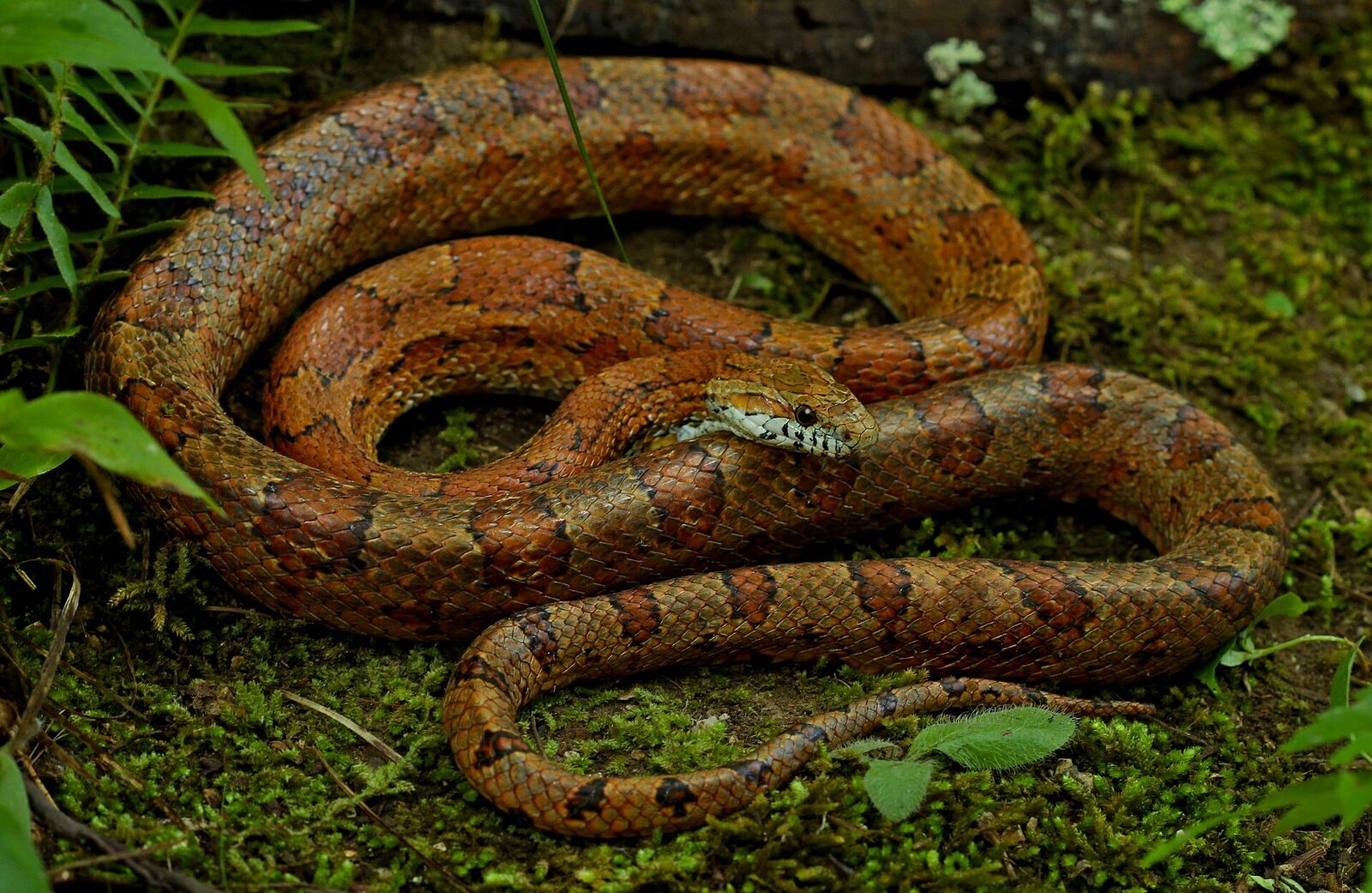
Corn snake
Pantherophis guttatus
Hardy, easy-going and colorful.
Pet trade
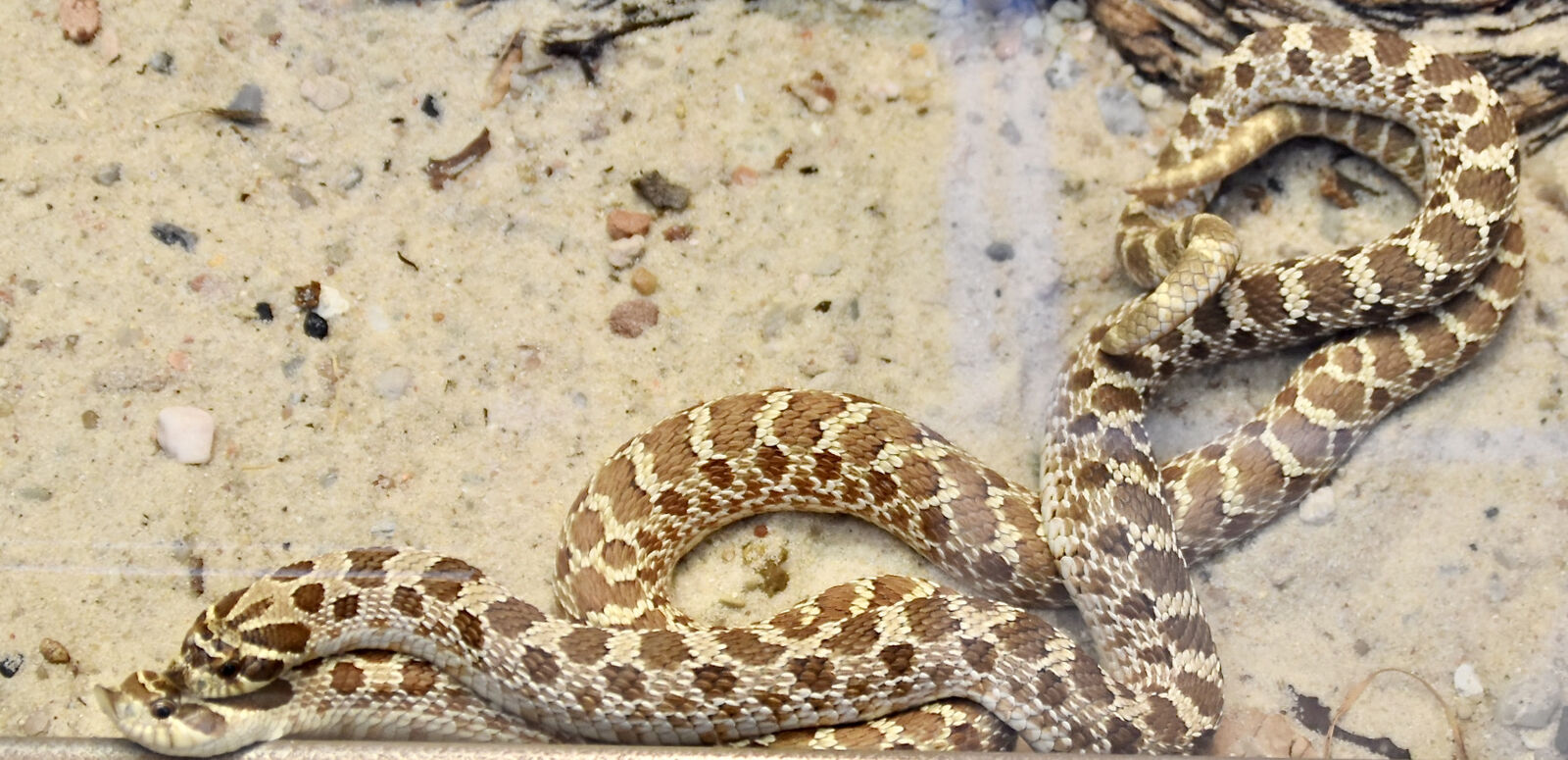
Western hognose snake
Heterodon nasicus
Dramatic bluffs from a tiny, upturned-nose snake.
Pet trade

Amur (Russian) rat snake
Elaphe schrenckii
Pet trade

Andean milk snake
Lampropeltis micropholis
Pet trade

Arizona mountain kingsnake
Lampropeltis pyromelana
Pet trade

Baird's rat snake
Pantherophis bairdi
Pet trade