
Home / Invertebrates / Spiders / Sri Lankan ornamental tarantula
Federal restrictions applySri Lankan ornamental tarantula
Poecilotheria fasciata
Invertebrates › Spiders (Araneae) › Theraphosidae (Tarantulas)
Poecilotheria fasciata, the Sri Lanka ornamental or Sri Lanka ornamental tiger spider, is a large arboreal tarantula.
From Wikipedia: Poecilotheria fasciata, CC BY-SA 4.0 (excerpt)
Care at a glance
Species-specific values
Values researched for this exact species. Air, surface and water temperatures are listed separately, and each source is kept as published rather than averaged.
| Minimum enclosure | Use a tall enclosure with climbing and webbing materials, about 2 inches of substrate, and a water bowl. Source: beyondthetreat.com | |
| Warm side air temperature | 78–82 °F Source: beyondthetreat.com | |
| Humidity | 65–75 % Source: beyondthetreat.com | |
| Diet | Adults can eat crickets, mealworms, and dubia roaches; young slings can eat quarter-inch crickets. Source: beyondthetreat.com | |
| Feeding frequency | Feed young slings quarter-inch crickets twice a week; adults can eat 5 adult crickets per week. Source: beyondthetreat.com | |
| Minimum enclosure | Adults need an enclosure 30 × 30 × 45 cm tall. Source: tarantulahub.co.uk | |
| Warm side air temperature | 72–82 °F (22–28 °C) Source: tarantulahub.co.uk | |
| Humidity | 70–80 % Source: tarantulahub.co.uk | |
| Feeding frequency | Slings every 3-5 days; juveniles every 5-7 days; adults every 7-14 days. Source: tarantulahub.co.uk | |
| Substrate | Recommended substrate is coco fibre or a coco fibre/topsoil mix, 3-5 cm deep. Source: tarantulahub.co.uk | |
| Uvb lighting | Ambient room light only; avoid basking lamps. Source: tarantulahub.co.uk |
Warnings
Understanding the animal
About this animal
About this animal
It is endemic to central Sri Lanka.
From Wikipedia: Poecilotheria fasciata, CC BY-SA 4.0 (excerpt)
In the wild
In the wild
| Overview | Poecilotheria fasciata, the Sri Lanka ornamental or Sri Lanka ornamental tiger spider, is a large arboreal tarantula. It is endemic to central Sri Lanka. — From Wikipedia: Poecilotheria fasciata, CC BY-SA 4.0 (excerpt) |
| Where it lives | Found in dry zone and intermediate zones of Sri Lanka. Mostly abundant in tree hollows, tree barks, coconut trees, banana plantations and sometimes in human dwellings. Male is nomadic, whereas female is not. — From Wikipedia: Poecilotheria fasciata, CC BY-SA 4.0 (excerpt) |
| Conservation | P. fasciata was listed as an endangered species for protection under the U.S. Endangered Species Act in 2018. The major factor cited in support of the designation was habitat loss within this species' small area of occupancy (less than 500 km2), worsened by collection for the pet trade, use of pesticides, killing out of fear, climate change and random effects. — From Wikipedia: Poecilotheria fasciata, CC BY-SA 4.0 (excerpt) |
Native climate (measured)
Native climate (measured)
| Warm-season highs | about 92°F (up to 93°F in the hottest sampled areas) |
| Cool-season lows | about 70°F (down to 68°F in the coldest sampled areas) |
| Average temperature | 79–82°F across sampled records |
| Relative humidity | 75–78% on average (driest month about 69%) |
| Rainfall | about 1568 mm a year |
Measured at 9 wild occurrence records sampled against WorldClim 2.1 climate data (1970–2000 averages). Air conditions in the range are ecological context, not enclosure settings: microhabitats such as burrows, leaf litter or basking rocks can be cooler, warmer or more humid.
Sources for this sheet
- 50 CFR 17.11: Endangered and threatened wildlife Zoo, university or veterinaryCurrent federal Endangered Species Act list.
- Species+ (UNEP-WCMC and the CITES Secretariat) Zoo, university or veterinaryThe official database of species listed under CITES. UNEP (2026). The Species+ Website. Nairobi, Kenya. Compiled by UNEP-WCMC, Cambridge, UK. Available at: www.speciesplus.net. [Accessed 04/10/2026].
- USFWS International Affairs: CITES Zoo, university or veterinaryFederal agency that issues CITES permits.
- GBIF Backbone Taxonomy (Global Biodiversity Information Facility) (CC BY 4.0) Peer-reviewed researchInternational scientific taxonomy used here for classification. GBIF Secretariat (2023). GBIF Backbone Taxonomy. Checklist dataset https://doi.org/10.15468/39omei, accessed via GBIF.org.
- Wikipedia (species article) (CC BY-SA 4.0) Community referenceFree encyclopedia; useful overviews with their own citations. Short excerpts are quoted under CC BY-SA 4.0, each credited with a link to its article.
More tarantulas
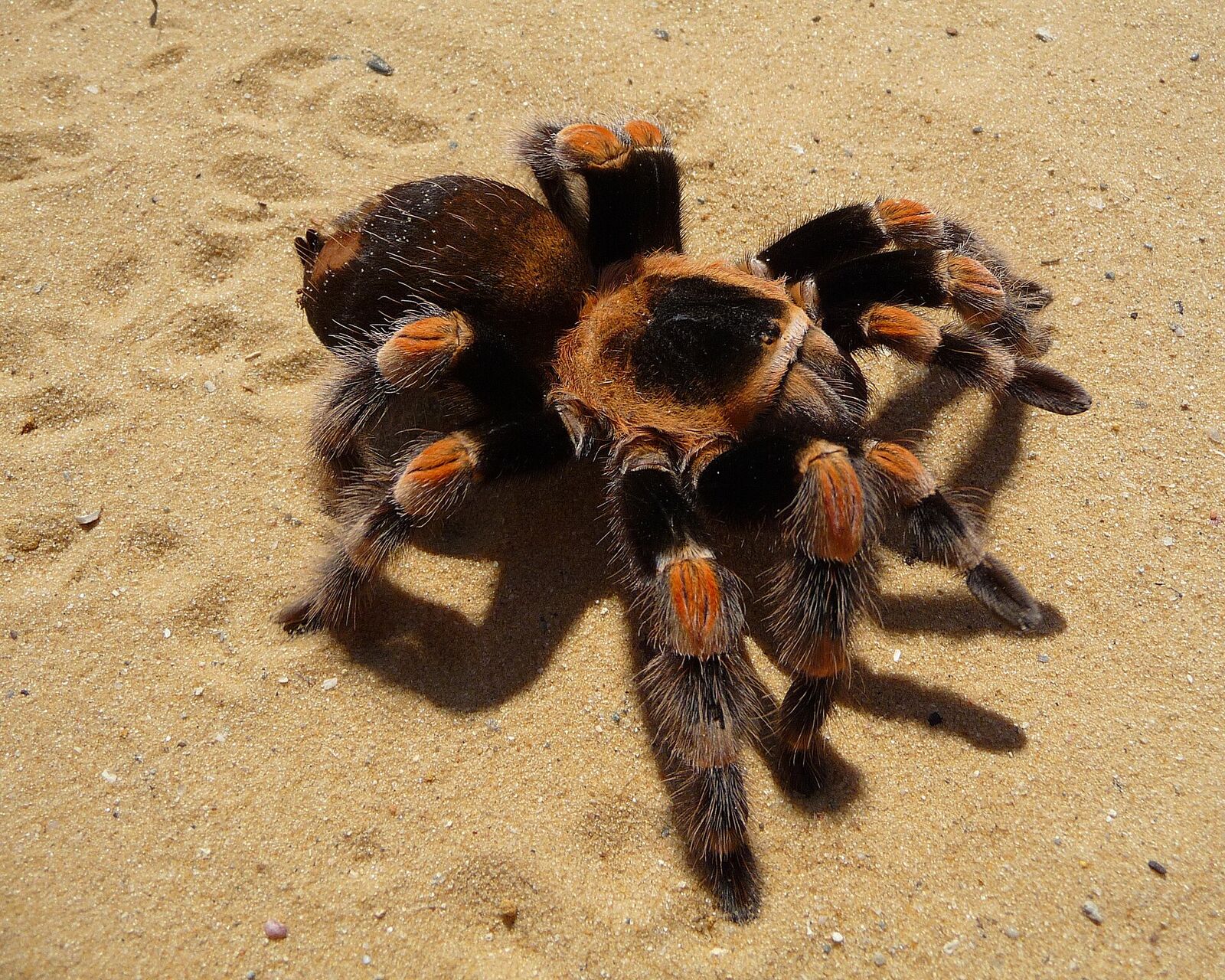
Mexican redknee tarantula
Brachypelma hamorii
A docile spider where females live 25–30 years.
Pet trade

African Horned Baboon Tarantula
Ceratogyrus darlingi
Pet trade
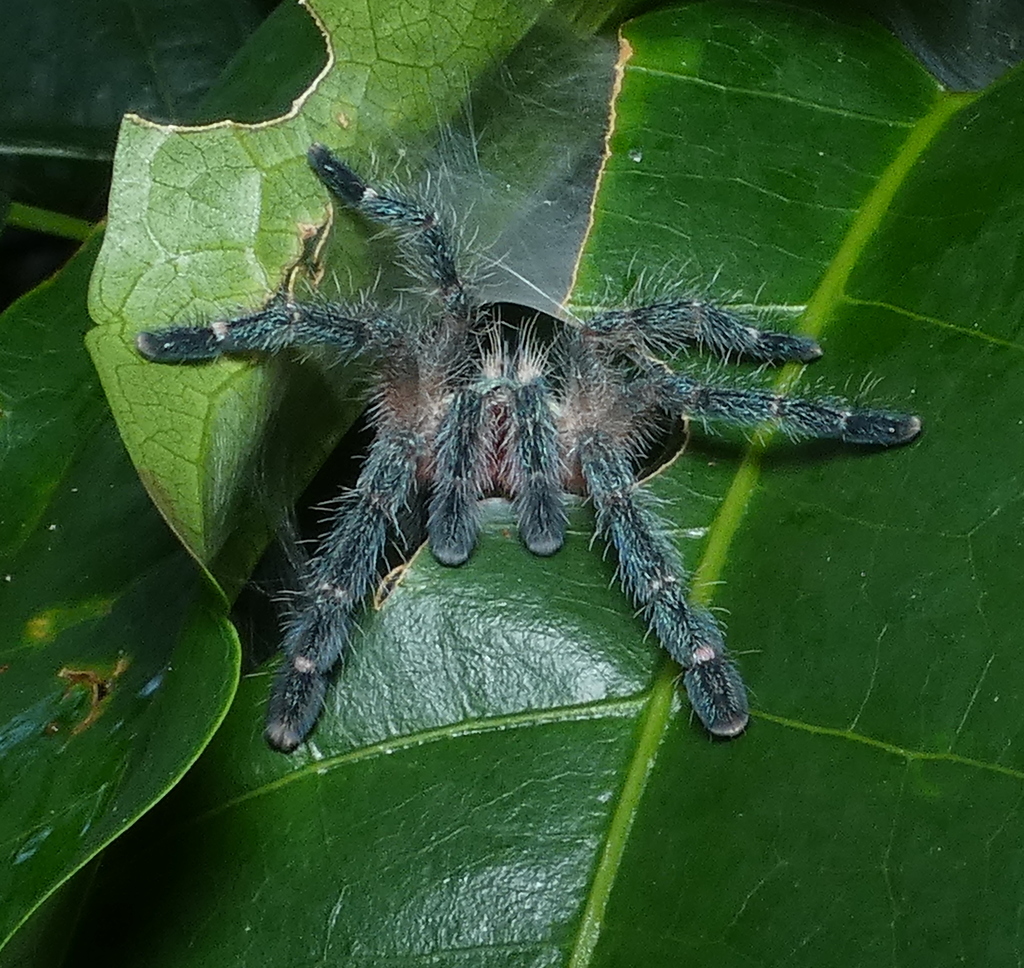
Amazon Ribbed Tarantula
Iridopelma hirsutum
Pet trade

Amula Redrump Tarantula
Brachypelma albiceps
Pet trade

Anantagiri’s Parachute Spider
Poecilotheria tigrinawesseli
Pet trade

Antilles pinktoe tarantula
Caribena versicolor
Pet trade