
Home / Invertebrates / Spiders / Rameshwaram Ornamental
Some federal rules applyRameshwaram Ornamental
Poecilotheria hanumavilasumica
Invertebrates › Spiders (Araneae) › Theraphosidae (Tarantulas)
Poecilotheria hanumavilasumica, also known as the Rameshwaram ornamental, or Rameshwaram parachute spider, is a critically endangered species of tarantula.
From Wikipedia: Poecilotheria hanumavilasumica, CC BY-SA 4.0 (excerpt)

Care at a glance
Species-specific values
Values researched for this exact species. Air, surface and water temperatures are listed separately, and each source is kept as published rather than averaged.
| Minimum enclosure | Young spiders need smaller vertical containers; adults need taller, escape-proof enclosures. Source: academy.herpeton.net | |
| Night temperature | A slight nighttime temperature drop is acceptable. Source: academy.herpeton.net | |
| Humidity | Provide moderate humidity and fresh water with strong airflow; avoid stagnant, overly wet conditions. Source: academy.herpeton.net | |
| Uvb lighting | Ordinary room light and a consistent day-night cycle are enough; bright direct lighting is unnecessary. Source: academy.herpeton.net | |
| Diet | Insects including crickets, roaches, locusts, and mealworms in moderation. Source: academy.herpeton.net | |
| Feeding frequency | Adults usually follow a 7–14 day rhythm; young spiders can be fed more often. Source: academy.herpeton.net | |
| Social housing | House individually. Source: academy.herpeton.net | |
| Substrate | Use secure bark retreats, such as cork bark or tree bark. Source: academy.herpeton.net | |
| Minimum enclosure | Adults need an enclosure 30 × 30 × 45 cm tall. Source: tarantulahub.co.uk | |
| Warm side air temperature | 72–82 °F (22–28 °C) Source: tarantulahub.co.uk | |
| Humidity | 70–80 % Source: tarantulahub.co.uk | |
| Humidity | 70–85 % Source: tarantulahub.co.uk | |
| Substrate | Use coco fibre or a coco fibre/topsoil mix, 3–5 cm deep; keep one corner lightly damp. Source: tarantulahub.co.uk | |
| Feeding frequency | Feed slings every 3–5 days, juveniles every 5–7 days, and adults every 7–14 days. Source: tarantulahub.co.uk | |
| Diet | Offer fruit flies, small dead crickets, or tiny roach nymphs to slings; small roaches or crickets to juveniles; big dubia, locusts, or crickets to adults. Source: tarantulahub.co.uk | |
| Uvb lighting | Use ambient room light only; avoid basking lamps. Source: tarantulahub.co.uk |
Understanding the animal
In the wild
In the wild
| Overview | Poecilotheria hanumavilasumica, also known as the Rameshwaram ornamental, or Rameshwaram parachute spider, is a critically endangered species of tarantula. — From Wikipedia: Poecilotheria hanumavilasumica, CC BY-SA 4.0 (excerpt) |
| Where it lives | It was discovered in 2004 by Andrew Smith from a sacred grove of the Hanumavilasum Temple in Rameshwaram. It was initially thought to be endemic to the Ramanathapuram district in the state of Tamil Nadu, India, but has since been identified outside India in the Mannar District of Northern Sri Lanka. — From Wikipedia: Poecilotheria hanumavilasumica, CC BY-SA 4.0 (excerpt) |
| Appearance and size | The ground color of the first pair of legs is daffodil yellow. The femur has a black band covering three quarters of the part. The patella is daffodil yellow with a thin black band distally. — From Wikipedia: Poecilotheria hanumavilasumica, CC BY-SA 4.0 (excerpt) |
Sources for this sheet
- Species+ (UNEP-WCMC and the CITES Secretariat) Zoo, university or veterinaryThe official database of species listed under CITES. UNEP (2026). The Species+ Website. Nairobi, Kenya. Compiled by UNEP-WCMC, Cambridge, UK. Available at: www.speciesplus.net. [Accessed 04/10/2026].
- USFWS International Affairs: CITES Zoo, university or veterinaryFederal agency that issues CITES permits.
- GBIF Backbone Taxonomy (Global Biodiversity Information Facility) (CC BY 4.0) Peer-reviewed researchInternational scientific taxonomy used here for classification. GBIF Secretariat (2023). GBIF Backbone Taxonomy. Checklist dataset https://doi.org/10.15468/39omei, accessed via GBIF.org.
- Wikipedia (species article) (CC BY-SA 4.0) Community referenceFree encyclopedia; useful overviews with their own citations. Short excerpts are quoted under CC BY-SA 4.0, each credited with a link to its article.
More tarantulas
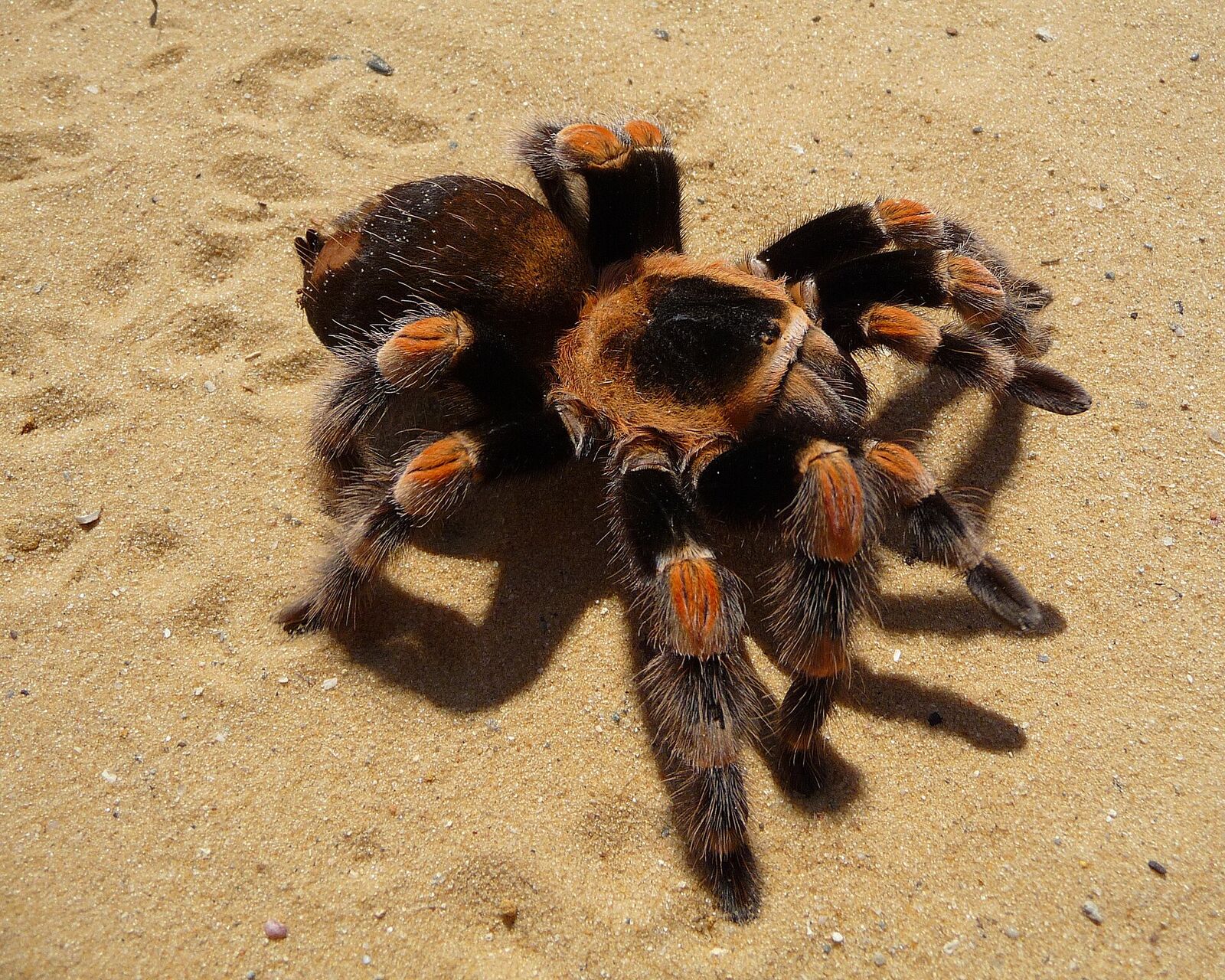
Mexican redknee tarantula
Brachypelma hamorii
A docile spider where females live 25–30 years.
Pet trade

African Horned Baboon Tarantula
Ceratogyrus darlingi
Pet trade
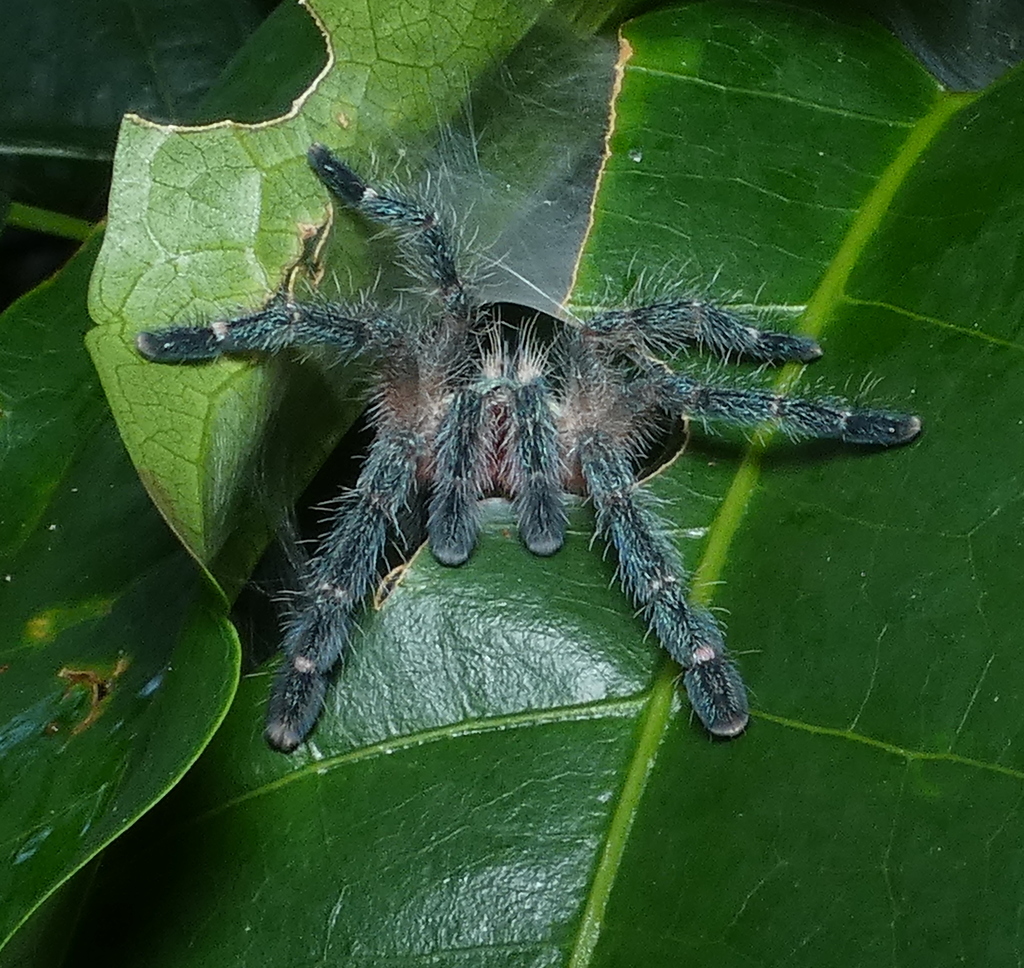
Amazon Ribbed Tarantula
Iridopelma hirsutum
Pet trade

Amula Redrump Tarantula
Brachypelma albiceps
Pet trade

Anantagiri’s Parachute Spider
Poecilotheria tigrinawesseli
Pet trade

Antilles pinktoe tarantula
Caribena versicolor
Pet trade