
Home / Invertebrates / Spiders / Ornate Tiger Spider
Federal restrictions applyOrnate Tiger Spider
Poecilotheria ornata
Invertebrates › Spiders (Araneae) › Theraphosidae (Tarantulas)
Poecilotheria ornata, known as the fringed ornamental or ornate tiger spider, is a large arboreal tarantula, which is endemic to Sri Lanka.
From Wikipedia: Poecilotheria ornata, CC BY-SA 4.0 (excerpt)

Care at a glance
Species-specific values
Values researched for this exact species. Air, surface and water temperatures are listed separately, and each source is kept as published rather than averaged.
| Substrate | Spiderlings: 1–2-inch Terra Aranea layer; adults: at least 2–3 inches deep. Source: thetarantulacollective.com | |
| Substrate | Adult substrate should be at least 2–3 inches deep for humidity retention. Source: thetarantulacollective.com | |
| Basking surface temperature | 68–76 °F Source: thetarantulacollective.com | |
| Humidity | Maintain adequate humidity with water dishes and periodic substrate moistening. Source: thetarantulacollective.com | |
| Feeding frequency | Feed spiderlings twice a week. Source: thetarantulacollective.com | |
| Feeding frequency | Feed juveniles every 7–10 days. Source: thetarantulacollective.com | |
| Feeding frequency | Feed adults every 2–3 weeks or as needed. Source: thetarantulacollective.com |
Warnings
Understanding the animal
About this animal
About this animal
Their legspan sometimes reaches 10 inches (25 cm) in females, and is probably the second largest of the genus, behind Poecilotheria rufilata.
From Wikipedia: Poecilotheria ornata, CC BY-SA 4.0 (excerpt)
In the wild
In the wild
| Overview | Poecilotheria ornata, known as the fringed ornamental or ornate tiger spider, is a large arboreal tarantula, which is endemic to Sri Lanka. Their legspan sometimes reaches 10 inches (25 cm) in females, and is probably the second largest of the genus, behind Poecilotheria rufilata. — From Wikipedia: Poecilotheria ornata, CC BY-SA 4.0 (excerpt) |
| Behavior | The P. ornata behavior parallels that of many arboreal spiders. In the wild the P. ornata live in holes of tall trees where they make asymmetric funnel webs. Their primary prey consists of various flying insects, which they catch manually (not in a web) and paralyze. — From Wikipedia: Poecilotheria ornata, CC BY-SA 4.0 (excerpt) |
Native climate (measured)
Native climate (measured)
| Warm-season highs | about 88°F (up to 91°F in the hottest sampled areas) |
| Cool-season lows | about 70°F (down to 63°F in the coldest sampled areas) |
| Average temperature | 74–81°F across sampled records |
| Relative humidity | 76–79% on average (driest month about 70%) |
| Rainfall | about 2520 mm a year |
Measured at 10 wild occurrence records sampled against WorldClim 2.1 climate data (1970–2000 averages). Air conditions in the range are ecological context, not enclosure settings: microhabitats such as burrows, leaf litter or basking rocks can be cooler, warmer or more humid.
Sources for this sheet
- 50 CFR 17.11: Endangered and threatened wildlife Zoo, university or veterinaryCurrent federal Endangered Species Act list.
- Species+ (UNEP-WCMC and the CITES Secretariat) Zoo, university or veterinaryThe official database of species listed under CITES. UNEP (2026). The Species+ Website. Nairobi, Kenya. Compiled by UNEP-WCMC, Cambridge, UK. Available at: www.speciesplus.net. [Accessed 04/10/2026].
- USFWS International Affairs: CITES Zoo, university or veterinaryFederal agency that issues CITES permits.
- GBIF Backbone Taxonomy (Global Biodiversity Information Facility) (CC BY 4.0) Peer-reviewed researchInternational scientific taxonomy used here for classification. GBIF Secretariat (2023). GBIF Backbone Taxonomy. Checklist dataset https://doi.org/10.15468/39omei, accessed via GBIF.org.
- Wikipedia (species article) (CC BY-SA 4.0) Community referenceFree encyclopedia; useful overviews with their own citations. Short excerpts are quoted under CC BY-SA 4.0, each credited with a link to its article.
More tarantulas
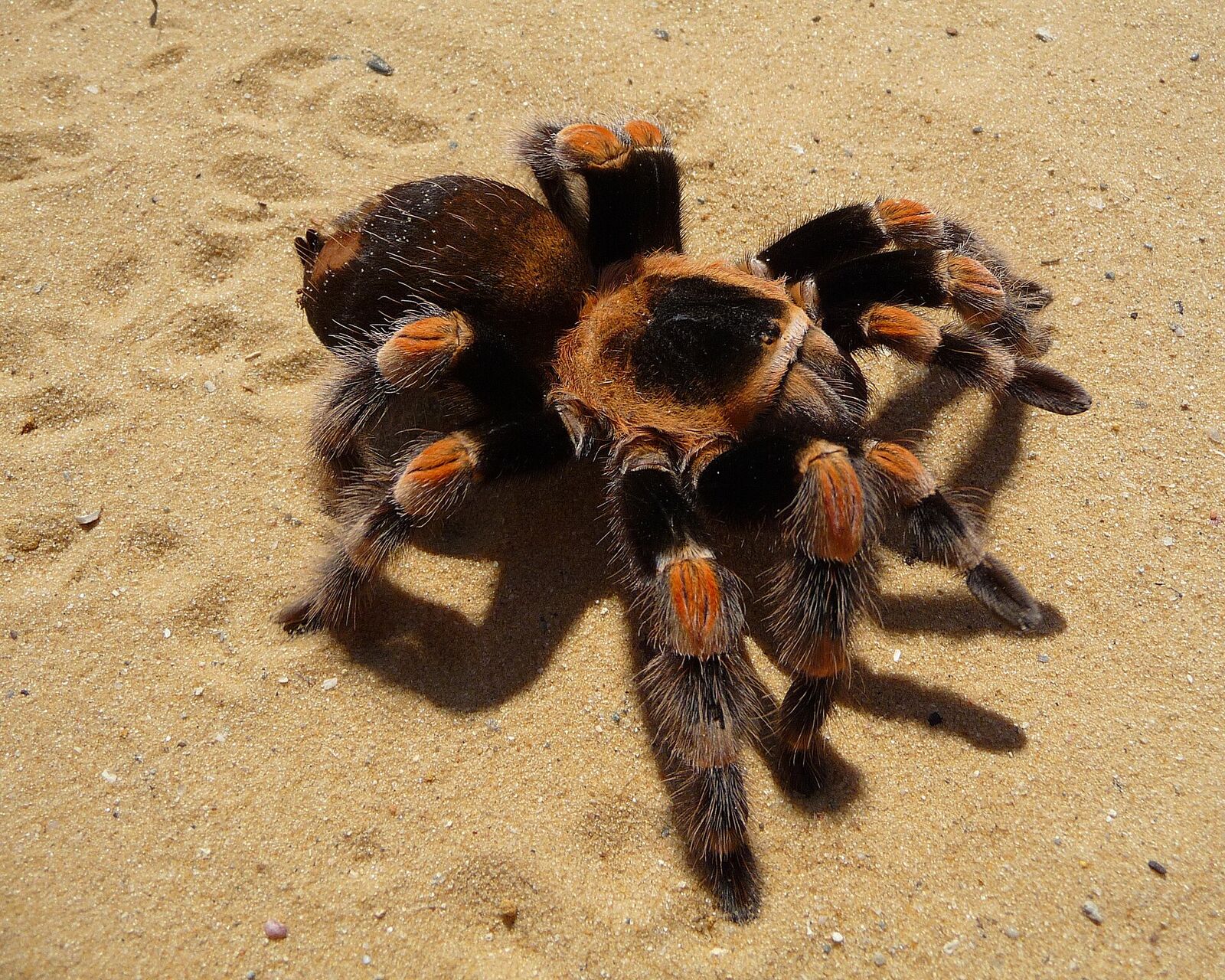
Mexican redknee tarantula
Brachypelma hamorii
A docile spider where females live 25–30 years.
Pet trade

African Horned Baboon Tarantula
Ceratogyrus darlingi
Pet trade
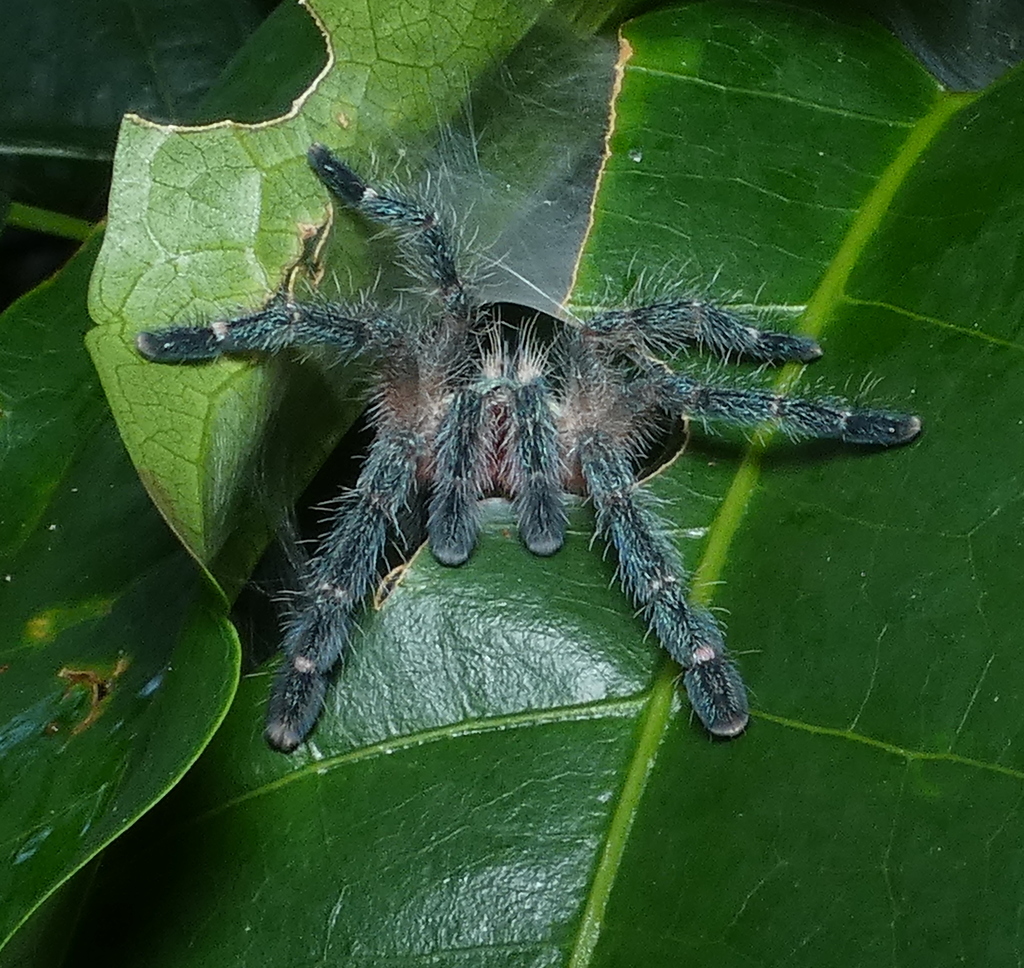
Amazon Ribbed Tarantula
Iridopelma hirsutum
Pet trade

Amula Redrump Tarantula
Brachypelma albiceps
Pet trade

Anantagiri’s Parachute Spider
Poecilotheria tigrinawesseli
Pet trade

Antilles pinktoe tarantula
Caribena versicolor
Pet trade