
Home / Invertebrates / Spiders / Anantagiri’s Parachute Spider
Some federal rules applyAnantagiri’s Parachute Spider
Poecilotheria tigrinawesseli
Invertebrates › Spiders (Araneae) › Theraphosidae (Tarantulas)
Poecilotheria tigrinawesseli, also known as Wessel's tiger ornamental or Anantagiri's parachute spider, is an arboreal tarantula.
From Wikipedia: Poecilotheria tigrinawesseli, CC BY-SA 4.0 (excerpt)

Care at a glance
Species-specific values
Values researched for this exact species. Air, surface and water temperatures are listed separately, and each source is kept as published rather than averaged.
| Humidity | 60–75 % Source: spoodoire.uk | |
| Diet | Offer live prey suited to the spider’s size and life stage. Source: spoodoire.uk | |
| Feeding frequency | Feed slings every 5–7 days, juveniles weekly, and adults every 10–14 days. Source: spoodoire.uk | |
| Substrate | Use moisture-retentive substrate, 5–8 cm deep for the enclosure. Source: spoodoire.uk |
Understanding the animal
About this animal
About this animal
It is endemic to Eastern Ghats of India and known from six locations around Andhra Pradesh. The species is morphologically similar to Poecilotheria formosa, but genetically similar to Poecilotheria miranda.
From Wikipedia: Poecilotheria tigrinawesseli, CC BY-SA 4.0 (excerpt)
In the wild
In the wild
| Overview | Poecilotheria tigrinawesseli, also known as Wessel's tiger ornamental or Anantagiri's parachute spider, is an arboreal tarantula. It is endemic to Eastern Ghats of India and known from six locations around Andhra Pradesh. The species is morphologically similar to Poecilotheria formosa, but genetically similar to Poecilotheria miranda. — From Wikipedia: Poecilotheria tigrinawesseli, CC BY-SA 4.0 (excerpt) |
| Where it lives | The species is confined to the eastern ghats of India. Inhabiting in tree hollows, under tree barks, rock crevices, not common in human habitations. Not much information is known about this species. — From Wikipedia: Poecilotheria tigrinawesseli, CC BY-SA 4.0 (excerpt) |
| Behavior | Poecilotheria tigrinawesseli is a large arboreal tarantula species within the family Theraphosidae. Adult females can reach a diagonal leg span of approximately 7–8 inches (17–20 cm), while males are slightly smaller and more slender. This species exhibits fast growth under optimal conditions, including warm temperatures (24–28 Celsius) and consistent feeding. — From Wikipedia: Poecilotheria tigrinawesseli, CC BY-SA 4.0 (excerpt) |
Native climate (measured)
Native climate (measured)
| Warm-season highs | about 99°F (up to 105°F in the hottest sampled areas) |
| Cool-season lows | about 55°F (down to 51°F in the coldest sampled areas) |
| Average temperature | 74–79°F across sampled records |
| Relative humidity | 58–66% on average (driest month about 46%) |
| Rainfall | about 1403 mm a year, with strong wet and dry seasons |
Measured at 9 wild occurrence records sampled against WorldClim 2.1 climate data (1970–2000 averages). Air conditions in the range are ecological context, not enclosure settings: microhabitats such as burrows, leaf litter or basking rocks can be cooler, warmer or more humid.
Sources for this sheet
- Species+ (UNEP-WCMC and the CITES Secretariat) Zoo, university or veterinaryThe official database of species listed under CITES. UNEP (2026). The Species+ Website. Nairobi, Kenya. Compiled by UNEP-WCMC, Cambridge, UK. Available at: www.speciesplus.net. [Accessed 04/10/2026].
- USFWS International Affairs: CITES Zoo, university or veterinaryFederal agency that issues CITES permits.
- GBIF Backbone Taxonomy (Global Biodiversity Information Facility) (CC BY 4.0) Peer-reviewed researchInternational scientific taxonomy used here for classification. GBIF Secretariat (2023). GBIF Backbone Taxonomy. Checklist dataset https://doi.org/10.15468/39omei, accessed via GBIF.org.
- Wikipedia (species article) (CC BY-SA 4.0) Community referenceFree encyclopedia; useful overviews with their own citations. Short excerpts are quoted under CC BY-SA 4.0, each credited with a link to its article.
- iNaturalist (captive observations) Community referenceCommunity observation platform run by the California Academy of Sciences and National Geographic; observations marked captive show animals living in homes, zoos and aquariums.
More tarantulas
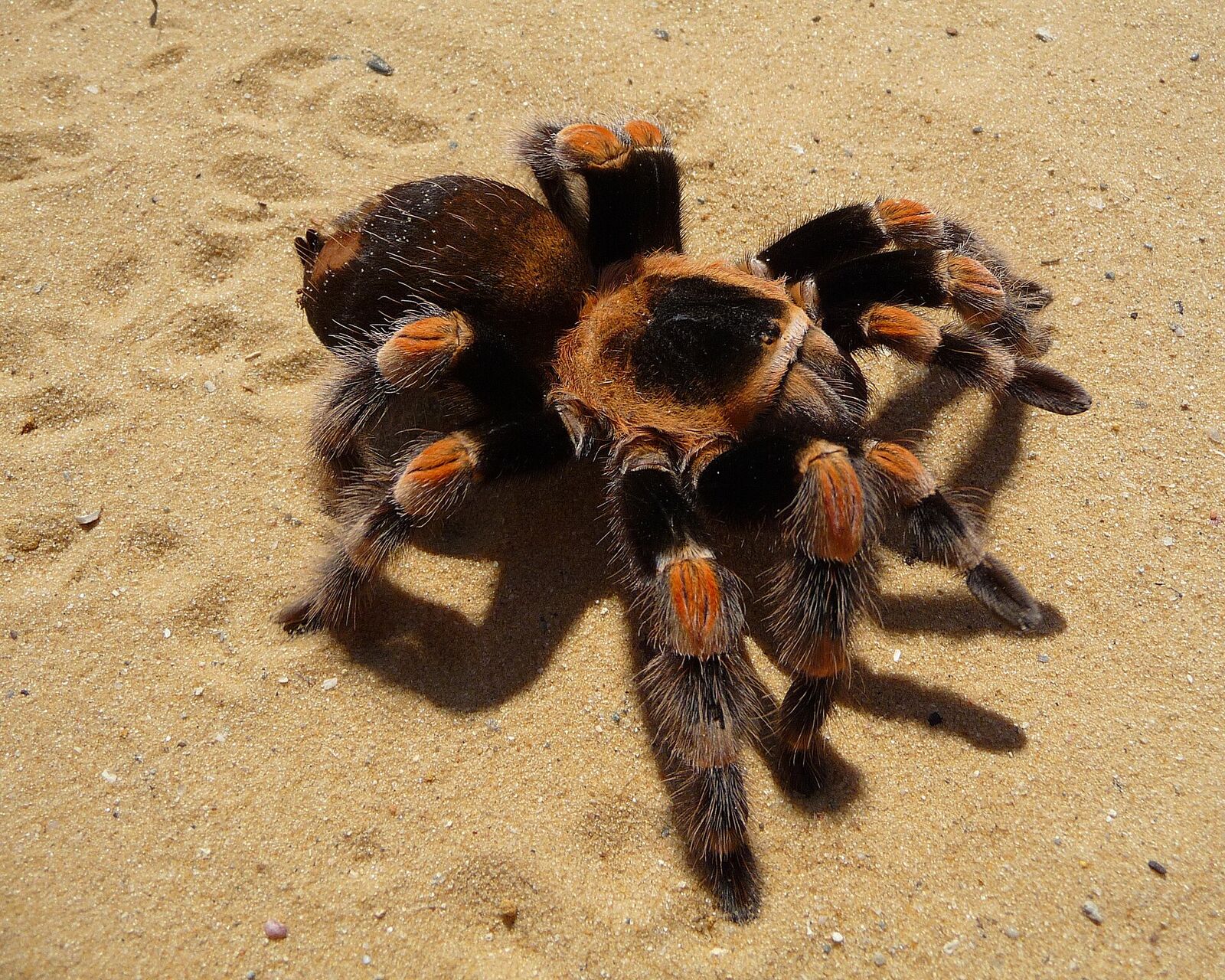
Mexican redknee tarantula
Brachypelma hamorii
A docile spider where females live 25–30 years.
Pet trade

African Horned Baboon Tarantula
Ceratogyrus darlingi
Pet trade
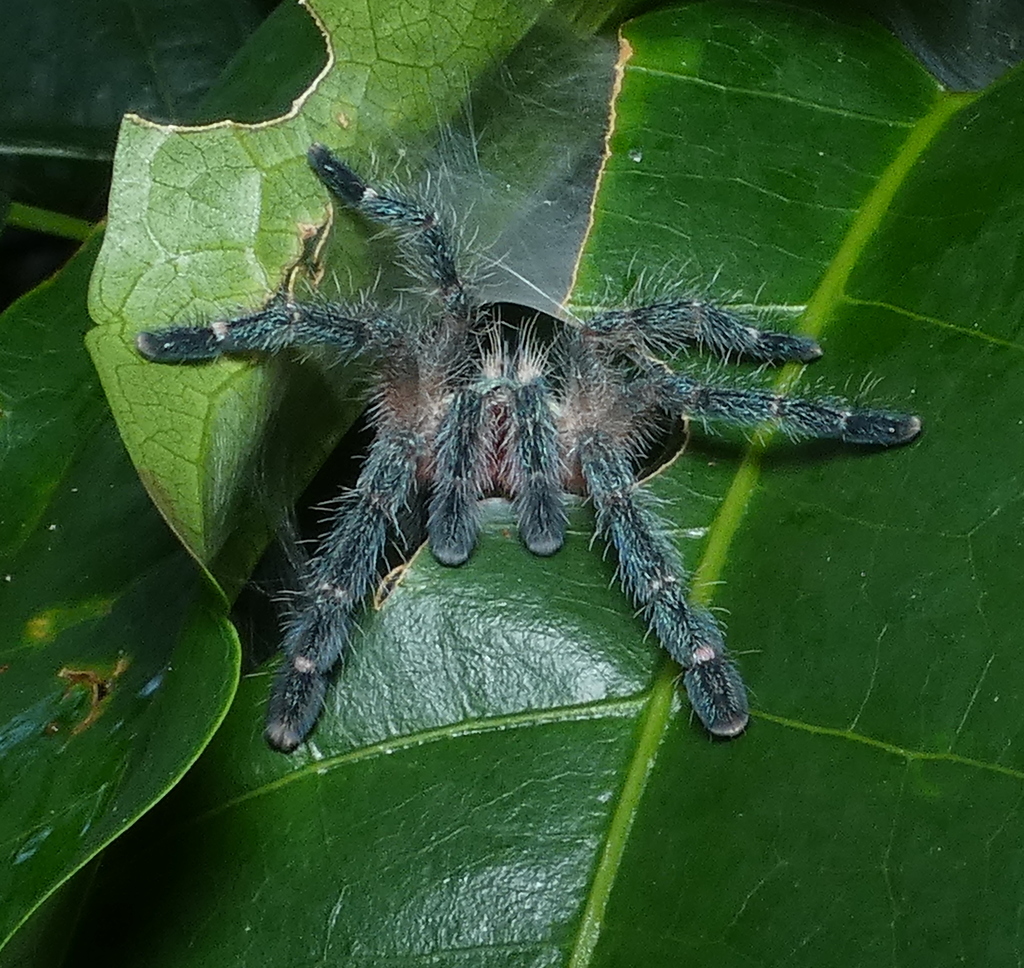
Amazon Ribbed Tarantula
Iridopelma hirsutum
Pet trade

Amula Redrump Tarantula
Brachypelma albiceps
Pet trade

Antilles pinktoe tarantula
Caribena versicolor
Pet trade

Arizona blond tarantula
Aphonopelma chalcodes
Pet trade