
Home / Invertebrates / Spiders / Ghost Ornamental Tarantula
Federal restrictions applyGhost Ornamental Tarantula
Poecilotheria vittata
Invertebrates › Spiders (Araneae) › Theraphosidae (Tarantulas)
Poecilotheria vittata, sometimes called Pederson's ornamental, the ghost ornamental, or magam tiger spider, is an arboreal tarantula.
From Wikipedia: Poecilotheria vittata, CC BY-SA 4.0 (excerpt)

Care at a glance
Species-specific values
Values researched for this exact species. Air, surface and water temperatures are listed separately, and each source is kept as published rather than averaged.
| Minimum enclosure | Use the listed enclosure sizes for spiderlings, juveniles, and adults. Source: thetarantulacollective.com | |
| Humidity | 65–75 % Source: thetarantulacollective.com | |
| Diet | Offer age-appropriate prey, from tiny insects for spiderlings to large crickets or a Dubia roach for adults. Source: thetarantulacollective.com | |
| Feeding frequency | Spiderlings: twice weekly; juveniles: every 7–10 days; adults: every 2–3 weeks or as needed. Source: thetarantulacollective.com | |
| Warm side air temperature | 75–82 °F Source: appalachiantarantulas.com | |
| Humidity | 70–80 % Source: appalachiantarantulas.com | |
| Substrate | Coco fiber kept lightly moist, with tall cork bark for a webbed retreat and 2–3 inches of substrate. Source: appalachiantarantulas.com | |
| Feeding frequency | Adults get 1–2 prey per week. Source: appalachiantarantulas.com |
Warnings
Understanding the animal
About this animal
About this animal
It is endemic to Sri Lanka. In IUCN Red List, the species is cited as a synonym of Indian species Poecilotheria striata, but in other local text books and online publications, it is cited as a separate species.
From Wikipedia: Poecilotheria vittata, CC BY-SA 4.0 (excerpt)
In the wild
In the wild
| Overview | Poecilotheria vittata, sometimes called Pederson's ornamental, the ghost ornamental, or magam tiger spider, is an arboreal tarantula. It is endemic to Sri Lanka. In IUCN Red List, the species is cited as a synonym of Indian species Poecilotheria striata, but in other local text books and online publications, it is cited as a separate species., the species was considered to be native to both India and Sri Lanka by the World Spider Catalog. — From Wikipedia: Poecilotheria vittata, CC BY-SA 4.0 (excerpt) |
| Where it lives | The species is confined to the south-eastern parts and few northern parts of Sri Lanka. Inhabiting in tree hollows, under tree barks, rock crevices, not common in human habitations. Compared to other tiger spiders, this species is docile, but in extreme disturbances, will bite. — From Wikipedia: Poecilotheria vittata, CC BY-SA 4.0 (excerpt) |
| Appearance and size | The species can identified from other tiger spiders by prominent brushes on femurs and a prominent dark triangular stripe on the femur of fourth pair of legs in ventrally. Males are about 5 inches in length, females are larger at 6–7 in. In females, the dorsal carapace is similar to P. fasciata. — From Wikipedia: Poecilotheria vittata, CC BY-SA 4.0 (excerpt) |
Sources for this sheet
- 50 CFR 17.11: Endangered and threatened wildlife Zoo, university or veterinaryCurrent federal Endangered Species Act list.
- Species+ (UNEP-WCMC and the CITES Secretariat) Zoo, university or veterinaryThe official database of species listed under CITES. UNEP (2026). The Species+ Website. Nairobi, Kenya. Compiled by UNEP-WCMC, Cambridge, UK. Available at: www.speciesplus.net. [Accessed 04/10/2026].
- USFWS International Affairs: CITES Zoo, university or veterinaryFederal agency that issues CITES permits.
- GBIF Backbone Taxonomy (Global Biodiversity Information Facility) (CC BY 4.0) Peer-reviewed researchInternational scientific taxonomy used here for classification. GBIF Secretariat (2023). GBIF Backbone Taxonomy. Checklist dataset https://doi.org/10.15468/39omei, accessed via GBIF.org.
- Wikipedia (species article) (CC BY-SA 4.0) Community referenceFree encyclopedia; useful overviews with their own citations. Short excerpts are quoted under CC BY-SA 4.0, each credited with a link to its article.
More tarantulas
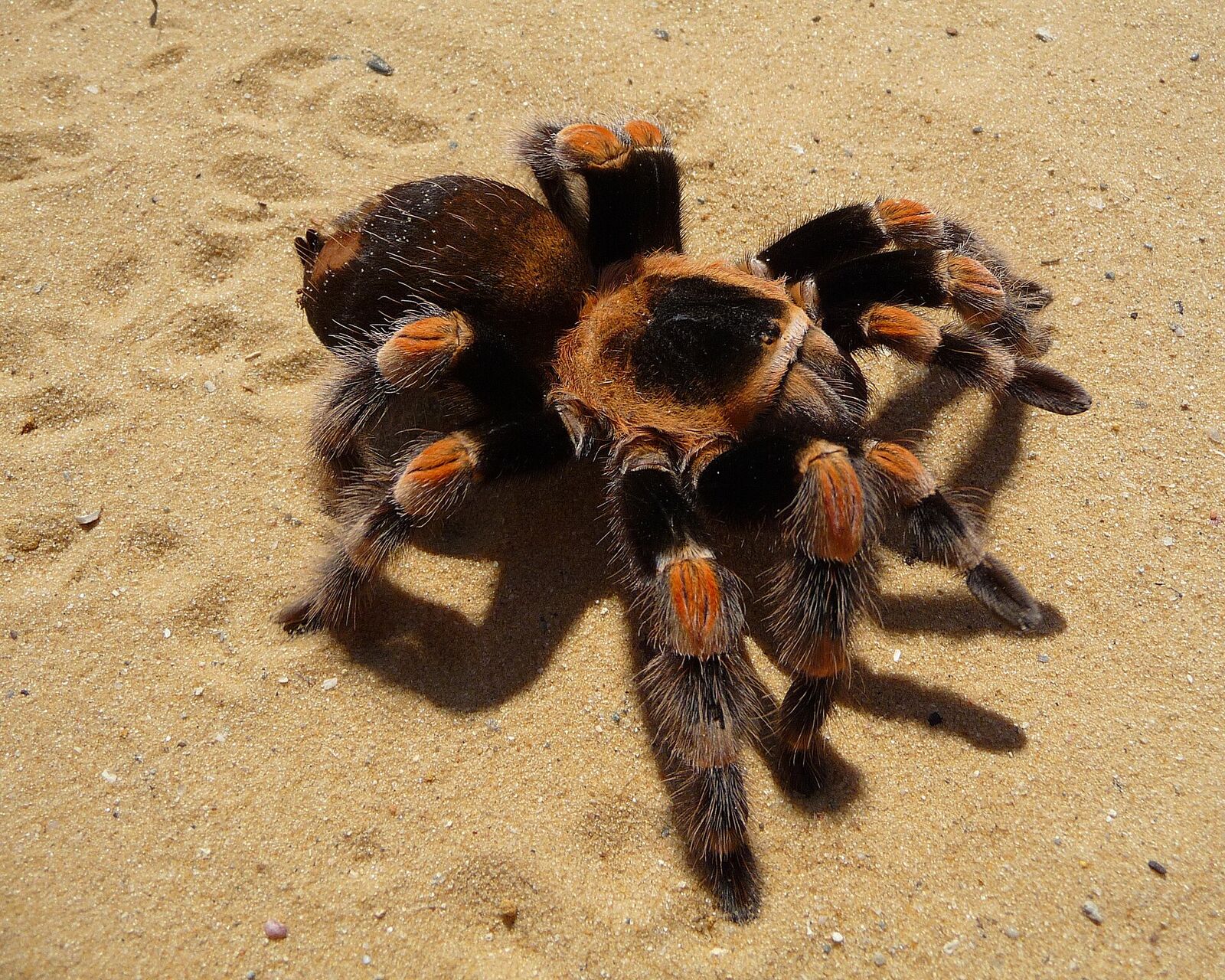
Mexican redknee tarantula
Brachypelma hamorii
A docile spider where females live 25–30 years.
Pet trade

African Horned Baboon Tarantula
Ceratogyrus darlingi
Pet trade
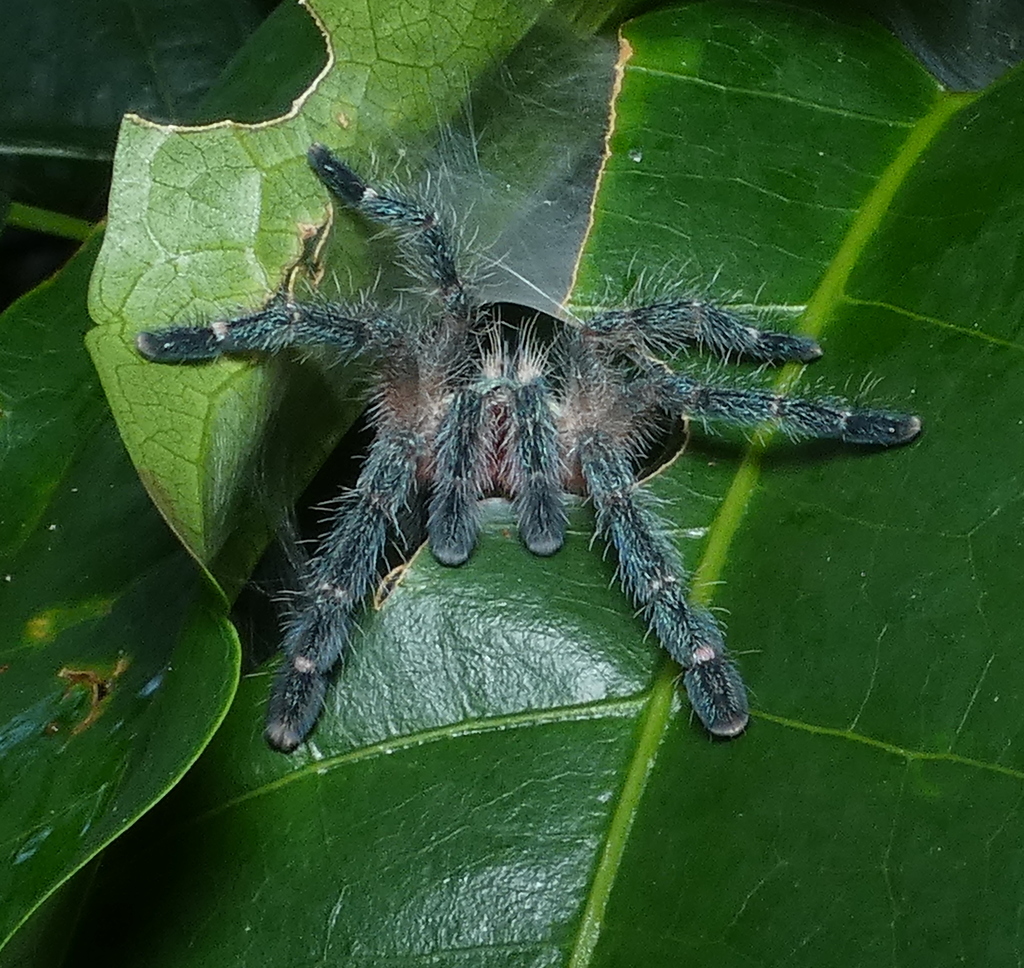
Amazon Ribbed Tarantula
Iridopelma hirsutum
Pet trade

Amula Redrump Tarantula
Brachypelma albiceps
Pet trade

Anantagiri’s Parachute Spider
Poecilotheria tigrinawesseli
Pet trade

Antilles pinktoe tarantula
Caribena versicolor
Pet trade