
Home / Invertebrates / Spiders / Costa Rican orangemouth tarantula
No federal permit to keepCosta Rican orangemouth tarantula
Psalmopoeus reduncus
Invertebrates › Spiders (Araneae) › Theraphosidae (Tarantulas)
Psalmopoeus reduncus also known as the Costa Rican orange mouth tarantula, as its common name implies it is found in Costa Rica, Panama and Nicaragua.
From Wikipedia: Psalmopoeus reduncus, CC BY-SA 4.0 (excerpt)

Care at a glance
Species-specific values
Values researched for this exact species. Air, surface and water temperatures are listed separately, and each source is kept as published rather than averaged.
| Minimum enclosure | Spiderlings: 1–2” substrate; juveniles: 1–2”; adults: 2–3”. Source: thetarantulacollective.com | |
| Minimum enclosure | Juveniles: 1–2” substrate. Source: thetarantulacollective.com | |
| Minimum enclosure | Adults: 2–3” substrate. Source: thetarantulacollective.com | |
| Basking surface temperature | 70–78 °F Source: thetarantulacollective.com | |
| Humidity | 65–75 % Source: thetarantulacollective.com | |
| Feeding frequency | Spiderlings: twice a week; juveniles: every 7–10 days; adults: every 2–3 weeks or as needed. Source: thetarantulacollective.com | |
| Feeding frequency | Juveniles: every 7–10 days. Source: thetarantulacollective.com | |
| Feeding frequency | Adults: every 2–3 weeks or as needed. Source: thetarantulacollective.com | |
| Minimum enclosure | Adults need an enclosure 30 × 30 × 45 cm tall; slings and juveniles need small tall vials or arboreal sling tubs. Source: tarantulahub.co.uk | |
| Night temperature | A slight night-time temperature drop is recommended. Source: tarantulahub.co.uk | |
| Humidity | 65–80 % Source: tarantulahub.co.uk | |
| Feeding frequency | Slings every 3–5 days, juveniles every 5–7 days, adults every 7–14 days. Source: tarantulahub.co.uk | |
| Substrate | Use coco fibre or a coco fibre/topsoil mix, 3–5 cm deep; keep one corner lightly damp. Source: tarantulahub.co.uk | |
| Diet | Feed crickets, dubia roaches, locusts, roach nymphs, or waxworms as a rare treat. Source: tarantulahub.co.uk | |
| Uvb lighting | Ambient room light only; no special UVB is specified. Source: tarantulahub.co.uk |
Understanding the animal
About this animal
About this animal
It was first described by Karsch in 1880, its common name is derived from the fact they have orange hairs around the chelicerae.
From Wikipedia: Psalmopoeus reduncus, CC BY-SA 4.0 (excerpt)
In the wild
In the wild
| Overview | Psalmopoeus reduncus also known as the Costa Rican orange mouth tarantula, as its common name implies it is found in Costa Rica, Panama and Nicaragua. It was first described by Karsch in 1880, its common name is derived from the fact they have orange hairs around the chelicerae. — From Wikipedia: Psalmopoeus reduncus, CC BY-SA 4.0 (excerpt) |
| Behavior | They are an arboreal species, it is a fast moving spider, running rather than being defensive. It is also a fairly reclusive tarantula, staying in its hide for most of the day. — From Wikipedia: Psalmopoeus reduncus, CC BY-SA 4.0 (excerpt) |
| Appearance and size | Females are able to live to up to 12 years, while males only up to 3. They can also grow to up to 15cm, their body is a chestnut brown color, although they may develop chevrons on the abdomen. Although juveniles may have more of a golden to copper colored abdomen. — From Wikipedia: Psalmopoeus reduncus, CC BY-SA 4.0 (excerpt) |
Native climate (measured)
Native climate (measured)
| Warm-season highs | about 89°F (up to 91°F in the hottest sampled areas) |
| Cool-season lows | about 67°F (down to 58°F in the coldest sampled areas) |
| Average temperature | 68–79°F across sampled records |
| Relative humidity | 84–86% on average (driest month about 80%) |
| Rainfall | about 3089 mm a year |
Measured at 29 wild occurrence records sampled against WorldClim 2.1 climate data (1970–2000 averages). Air conditions in the range are ecological context, not enclosure settings: microhabitats such as burrows, leaf litter or basking rocks can be cooler, warmer or more humid.
Sources for this sheet
- GBIF Backbone Taxonomy (Global Biodiversity Information Facility) (CC BY 4.0) Peer-reviewed researchInternational scientific taxonomy used here for classification. GBIF Secretariat (2023). GBIF Backbone Taxonomy. Checklist dataset https://doi.org/10.15468/39omei, accessed via GBIF.org.
- Wikipedia (species article) (CC BY-SA 4.0) Community referenceFree encyclopedia; useful overviews with their own citations. Short excerpts are quoted under CC BY-SA 4.0, each credited with a link to its article.
- iNaturalist (captive observations) Community referenceCommunity observation platform run by the California Academy of Sciences and National Geographic; observations marked captive show animals living in homes, zoos and aquariums.
More tarantulas
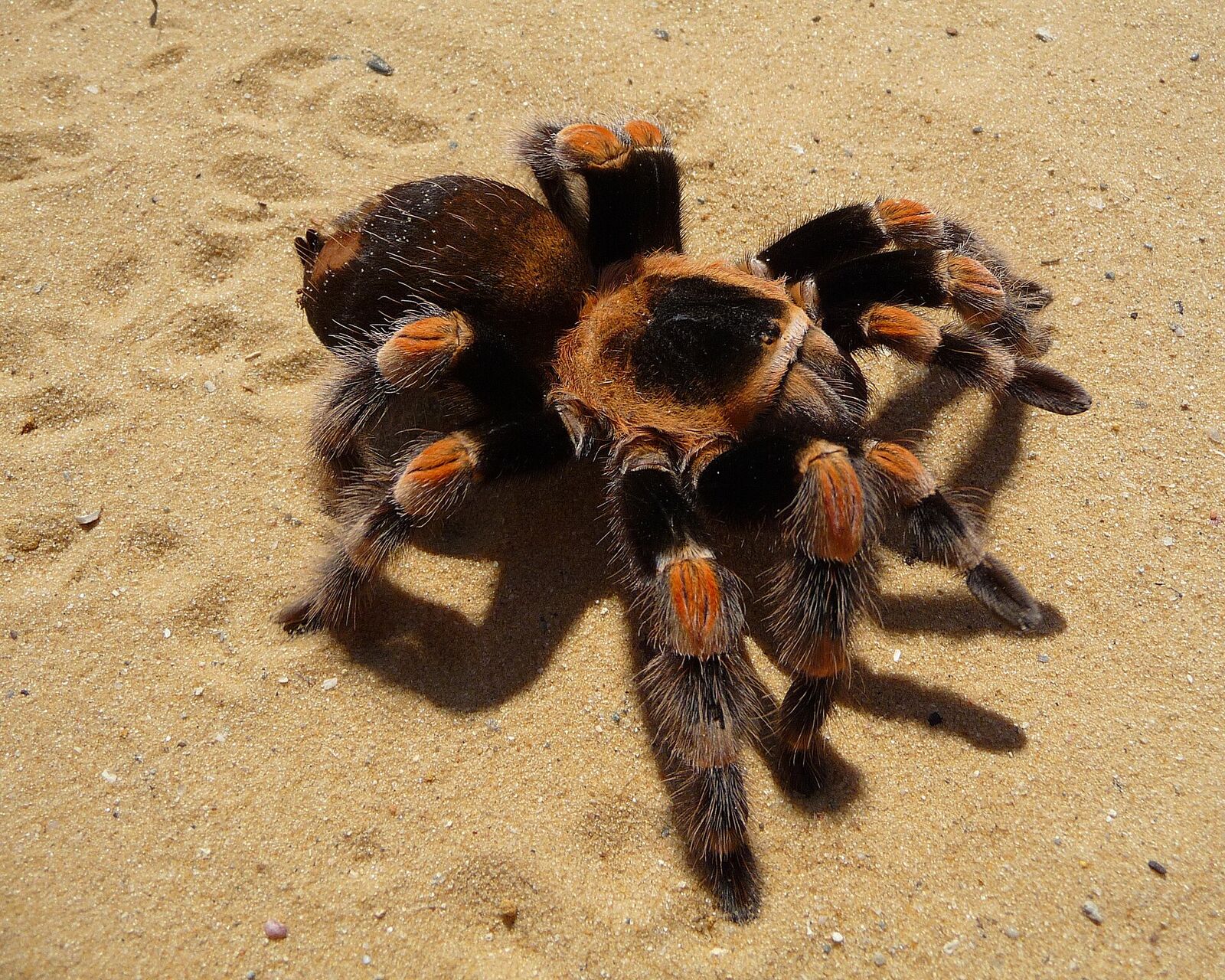
Mexican redknee tarantula
Brachypelma hamorii
A docile spider where females live 25–30 years.
Pet trade

African Horned Baboon Tarantula
Ceratogyrus darlingi
Pet trade
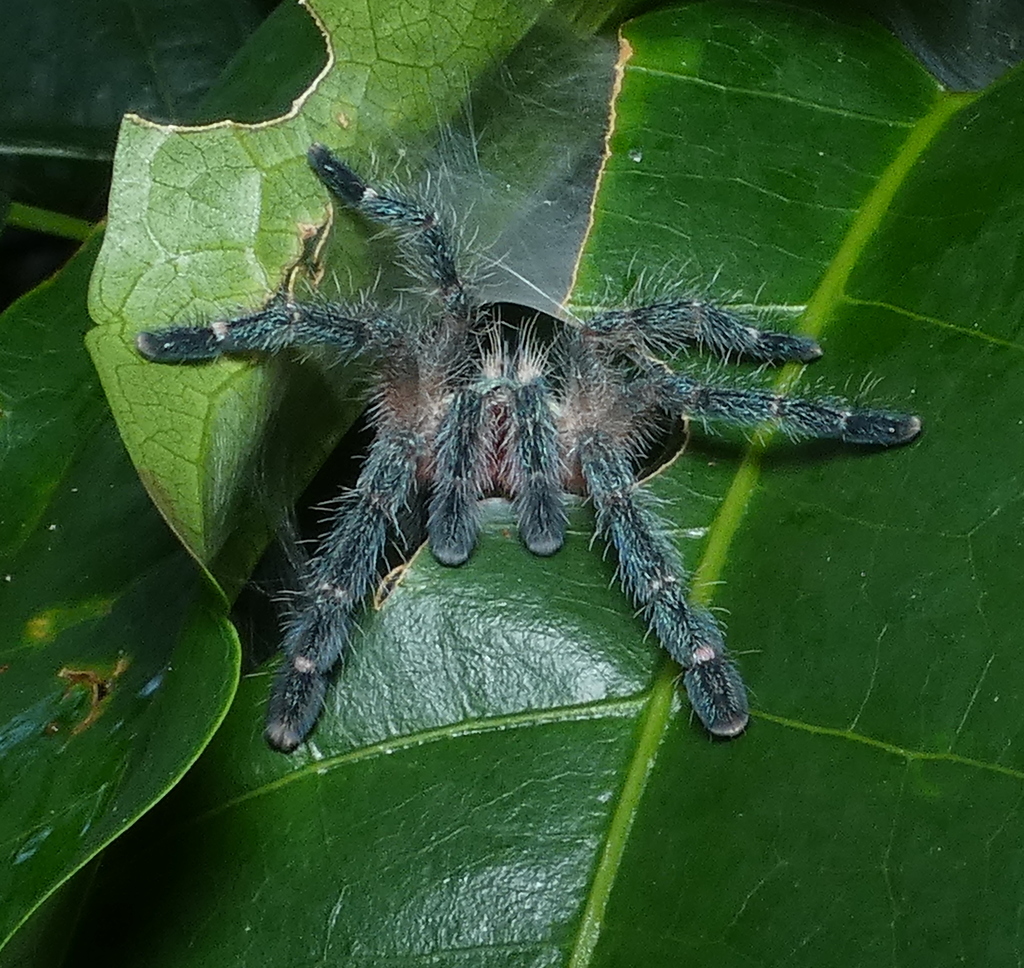
Amazon Ribbed Tarantula
Iridopelma hirsutum
Pet trade

Amula Redrump Tarantula
Brachypelma albiceps
Pet trade

Anantagiri’s Parachute Spider
Poecilotheria tigrinawesseli
Pet trade

Antilles pinktoe tarantula
Caribena versicolor
Pet trade