
Home / Invertebrates / Spiders / Darth Maul Tarantula
No federal permit to keepDarth Maul Tarantula
Psalmopoeus victori
Invertebrates › Spiders (Araneae) › Theraphosidae (Tarantulas)
Psalmopoeus victori, the Mexican half & half or Darth Maul tarantula, is a species of tarantula endemic to the moist forests of Veracruz, Mexico, although the exact location is withheld to protect the spiders from illegal collection.
From Wikipedia: Psalmopoeus victori, CC BY-SA 4.0 (excerpt)

Care at a glance
Species-specific values
Values researched for this exact species. Air, surface and water temperatures are listed separately, and each source is kept as published rather than averaged.
| Minimum enclosure | Provide vertical climbing structures, cork bark, and foliage; enclosure sizes vary by life stage. Source: thetarantulacollective.com | |
| Warm side air temperature | 70–78 °F Source: thetarantulacollective.com | |
| Humidity | 65–75 % Source: thetarantulacollective.com | |
| Diet | Babies eat small items. Young eat 2–3 crickets (small/medium) or a medium Dubia roach. Mature ones eat 4–5 crickets (large) or one large Dubia roach. Source: thetarantulacollective.com | |
| Feeding frequency | Feed spiderlings twice a week, juveniles every 7–10 days, and adults every 2–3 weeks or as needed. Source: thetarantulacollective.com | |
| Substrate | Use 1–2 inches of Terra Aranea substrate for spiderlings and juveniles, and 2–3 inches for adults. Source: thetarantulacollective.com | |
| Minimum enclosure | Tall arboreal setup with 3-4 inches of substrate, cork tubes, foliage, and good ventilation. Source: fearnottarantulas.com | |
| Humidity | Provide consistent humidity without over-saturating the substrate; weekly mistings and a water cup can help. Source: fearnottarantulas.com | |
| Diet | Crickets, roaches, and mealworms. Source: fearnottarantulas.com |
Understanding the animal
In the wild
In the wild
| Overview | Psalmopoeus victori, the Mexican half & half or Darth Maul tarantula, is a species of tarantula endemic to the moist forests of Veracruz, Mexico, although the exact location is withheld to protect the spiders from illegal collection. — From Wikipedia: Psalmopoeus victori, CC BY-SA 4.0 (excerpt) |
| Appearance and size | This species is easily distinguished from other members of the genus Psalmopoeus by its unique coloration, that is having vibrant red on the backside (abdomen and legs III & IV) and dark coloration on the front legs, along with a green carapace, females reach roughly 6.5 inches by diagonal leg span. — From Wikipedia: Psalmopoeus victori, CC BY-SA 4.0 (excerpt) |
| History and naming | The specific name is a patronym in honor of Víctor H. Jiménez Arcos, a Mexican herpetologist who saw and collected the first specimen of the species. — From Wikipedia: Psalmopoeus victori, CC BY-SA 4.0 (excerpt) |
Profile
Profile
Researched for this exact species. Sources are listed under In the wild above.
History
The specific name is a patronym in honor of Víctor H. Jiménez Arcos, a Mexican herpetologist who saw and collected the first specimen of the species.
From Wikipedia: Psalmopoeus victori, CC BY-SA 4.0 (excerpt)
Sources for this sheet
- GBIF Backbone Taxonomy (Global Biodiversity Information Facility) (CC BY 4.0) Peer-reviewed researchInternational scientific taxonomy used here for classification. GBIF Secretariat (2023). GBIF Backbone Taxonomy. Checklist dataset https://doi.org/10.15468/39omei, accessed via GBIF.org.
- Wikipedia (species article) (CC BY-SA 4.0) Community referenceFree encyclopedia; useful overviews with their own citations. Short excerpts are quoted under CC BY-SA 4.0, each credited with a link to its article.
- iNaturalist (captive observations) Community referenceCommunity observation platform run by the California Academy of Sciences and National Geographic; observations marked captive show animals living in homes, zoos and aquariums.
More tarantulas
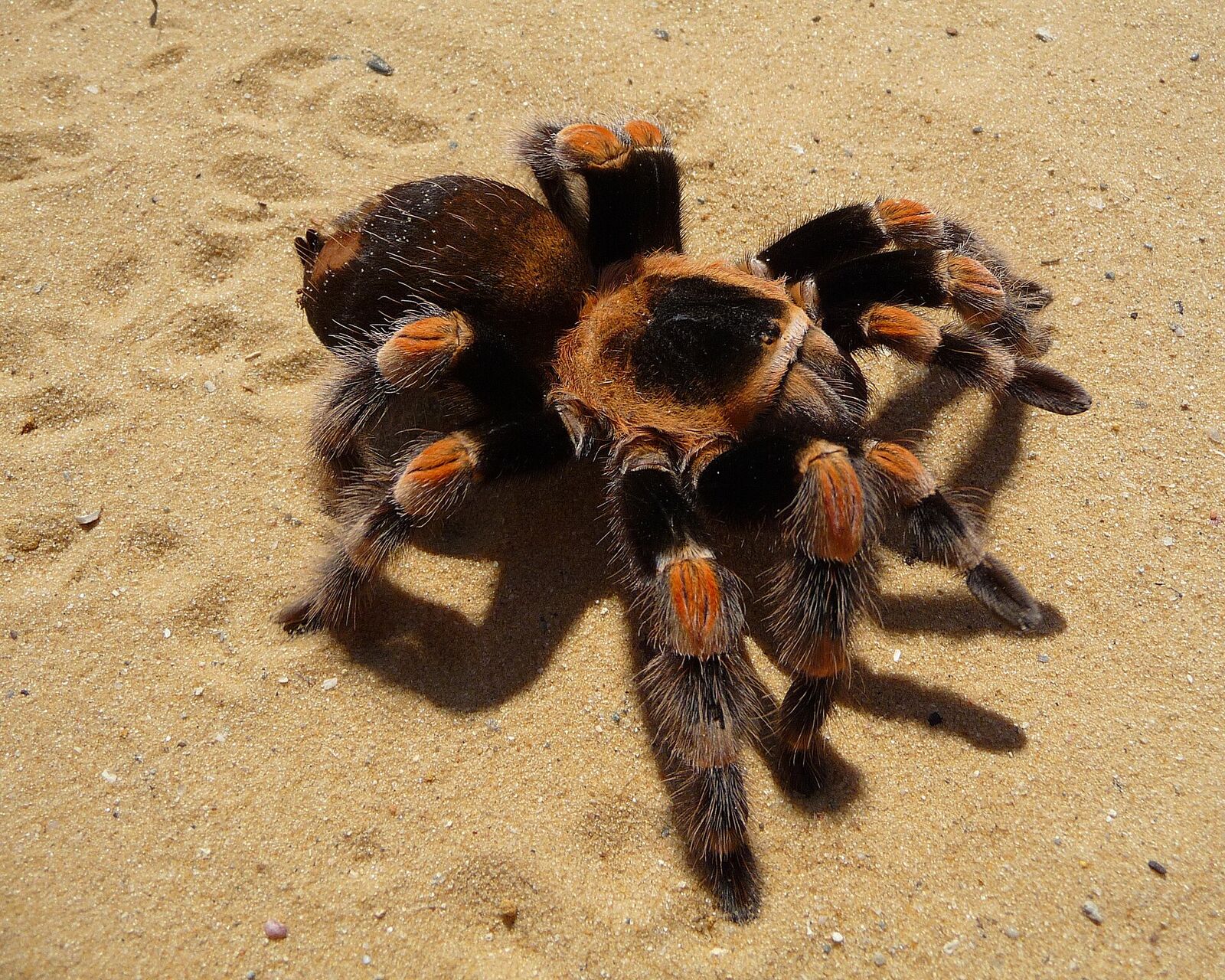
Mexican redknee tarantula
Brachypelma hamorii
A docile spider where females live 25–30 years.
Pet trade

African Horned Baboon Tarantula
Ceratogyrus darlingi
Pet trade
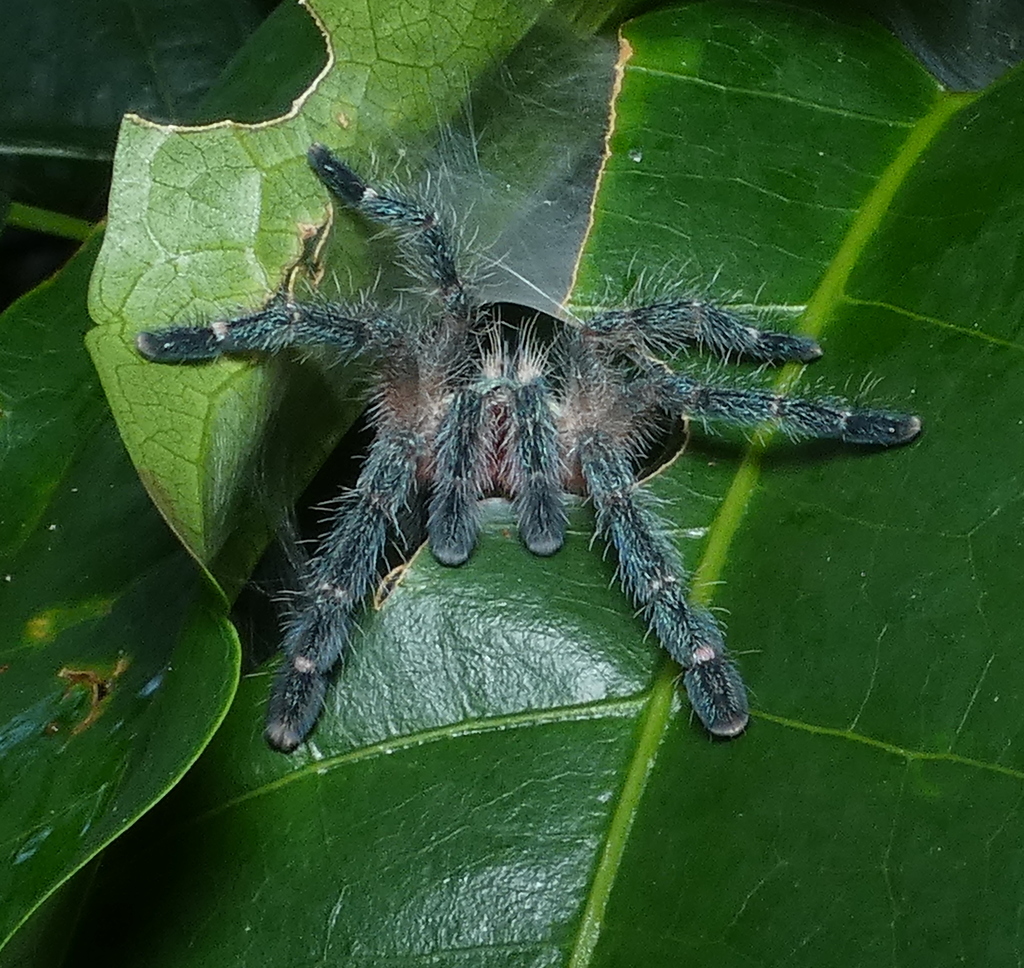
Amazon Ribbed Tarantula
Iridopelma hirsutum
Pet trade

Amula Redrump Tarantula
Brachypelma albiceps
Pet trade

Anantagiri’s Parachute Spider
Poecilotheria tigrinawesseli
Pet trade

Antilles pinktoe tarantula
Caribena versicolor
Pet trade