
Home / Reptiles / Turtles and tortoises / Tent tortoise
Some federal rules applyTent tortoise
Psammobates tentorius
Reptiles › Turtles and tortoises (Testudines) › Testudinidae (Tortoises)
The tent tortoise (Psammobates tentorius) is a species of tortoise and one of three members of the genus, Psammobates.
From Wikipedia: Tent tortoise, CC BY-SA 4.0 (excerpt)

Care at a glance
Species-specific values
Values researched for this exact species. Air, surface and water temperatures are listed separately, and each source is kept as published rather than averaged.
| Social housing | Keep in strict isolation; mixing with other species risks respiratory disease. Source: mail.tortoisetrust.org | |
| Substrate | Use sunny, very well-drained enclosures; raised artificial enclosures help protect juveniles from ground humidity. Source: mail.tortoisetrust.org | |
| Diet | Diet is essentially like Chersina angulata's, with an increased preference for flowers. Source: mail.tortoisetrust.org |
Understanding the animal
About this animal
About this animal
Known locally as the Karoo tent tortoise, this highly variable species is found in South Africa and Namibia.
From Wikipedia: Tent tortoise, CC BY-SA 4.0 (excerpt)
In the wild
In the wild
| Overview | The tent tortoise (Psammobates tentorius) is a species of tortoise and one of three members of the genus, Psammobates. Known locally as the Karoo tent tortoise, this highly variable species is found in South Africa and Namibia. — From Wikipedia: Tent tortoise, CC BY-SA 4.0 (excerpt) |
| Where it lives | The Karoo tent tortoise occurs at very low densities throughout the Karoo and other semi-desert areas of southern Africa, extending from central Namibia almost to the southern coast of South Africa. Within this range, its population is very sparse and individuals are normally rare and widely separated. The species is also increasingly rare due to habitat destruction and illegal collecting for the pet trade. — From Wikipedia: Tent tortoise, CC BY-SA 4.0 (excerpt) |
| Wild diet | They depend on a very specialised diet including assorted Karoo bushes, mesembryanthemums and other South African succulents. Due to this diet, this little tortoise does not usually survive in captivity and usually dies soon, when taken outside of its semi-desert habitat. — From Wikipedia: Tent tortoise, CC BY-SA 4.0 (excerpt) |
| Behavior | The female tent tortoise lays a clutch of one to three eggs, and buries them in the sand as all other tortoises do. The young emerge in late summer or early autumn. — From Wikipedia: Tent tortoise, CC BY-SA 4.0 (excerpt) |
Read about this species in the wild at The Reptile Database.
Native climate (measured)
Native climate (measured)
| Warm-season highs | about 88°F (up to 94°F in the hottest sampled areas) |
| Cool-season lows | about 37°F (down to 30°F in the coldest sampled areas) |
| Average temperature | 59–67°F across sampled records |
| Relative humidity | 42–53% on average (driest month about 42%) |
| Rainfall | about 217 mm a year |
| Winters | Cool to cold winters (lows around 37°F) in much of its native range. Seasonal slowdown may be relevant, but species-specific biology determines whether brumation or hibernation occurs. |
Measured at 206 wild occurrence records sampled against WorldClim 2.1 climate data (1970–2000 averages). Air conditions in the range are ecological context, not enclosure settings: microhabitats such as burrows, leaf litter or basking rocks can be cooler, warmer or more humid.
Profile
Profile
Researched for this exact species. Sources are listed under In the wild above.
Data and studies
The numbers
The numbers
Each bar is what one source reports. Where several sources weigh in, the dashed gold band marks their average.
Typical adult weight
Average adult body mass in each database (FishBase gives the maximum recorded weight).
Sources for this sheet
- Myhrvold et al. (2015). An amniote life-history database. Ecology 96: 3109 Peer-reviewed researchPeer-reviewed compilation of life-history data for over 21,000 birds, mammals and reptiles.
- Species+ (UNEP-WCMC and the CITES Secretariat) Zoo, university or veterinaryThe official database of species listed under CITES. UNEP (2026). The Species+ Website. Nairobi, Kenya. Compiled by UNEP-WCMC, Cambridge, UK. Available at: www.speciesplus.net. [Accessed 04/10/2026].
- USFWS International Affairs: CITES Zoo, university or veterinaryFederal agency that issues CITES permits.
- 21 CFR 1240.62: Turtles under 4 inches (FDA) Zoo, university or veterinaryFederal ban on selling small turtles.
- The Reptile Database Peer-reviewed researchScientist-curated catalog of every reptile species, with taxonomy and literature.
- GBIF Backbone Taxonomy (Global Biodiversity Information Facility) (CC BY 4.0) Peer-reviewed researchInternational scientific taxonomy used here for classification. GBIF Secretariat (2023). GBIF Backbone Taxonomy. Checklist dataset https://doi.org/10.15468/39omei, accessed via GBIF.org.
- Wikipedia (species article) (CC BY-SA 4.0) Community referenceFree encyclopedia; useful overviews with their own citations. Short excerpts are quoted under CC BY-SA 4.0, each credited with a link to its article.
More tortoises
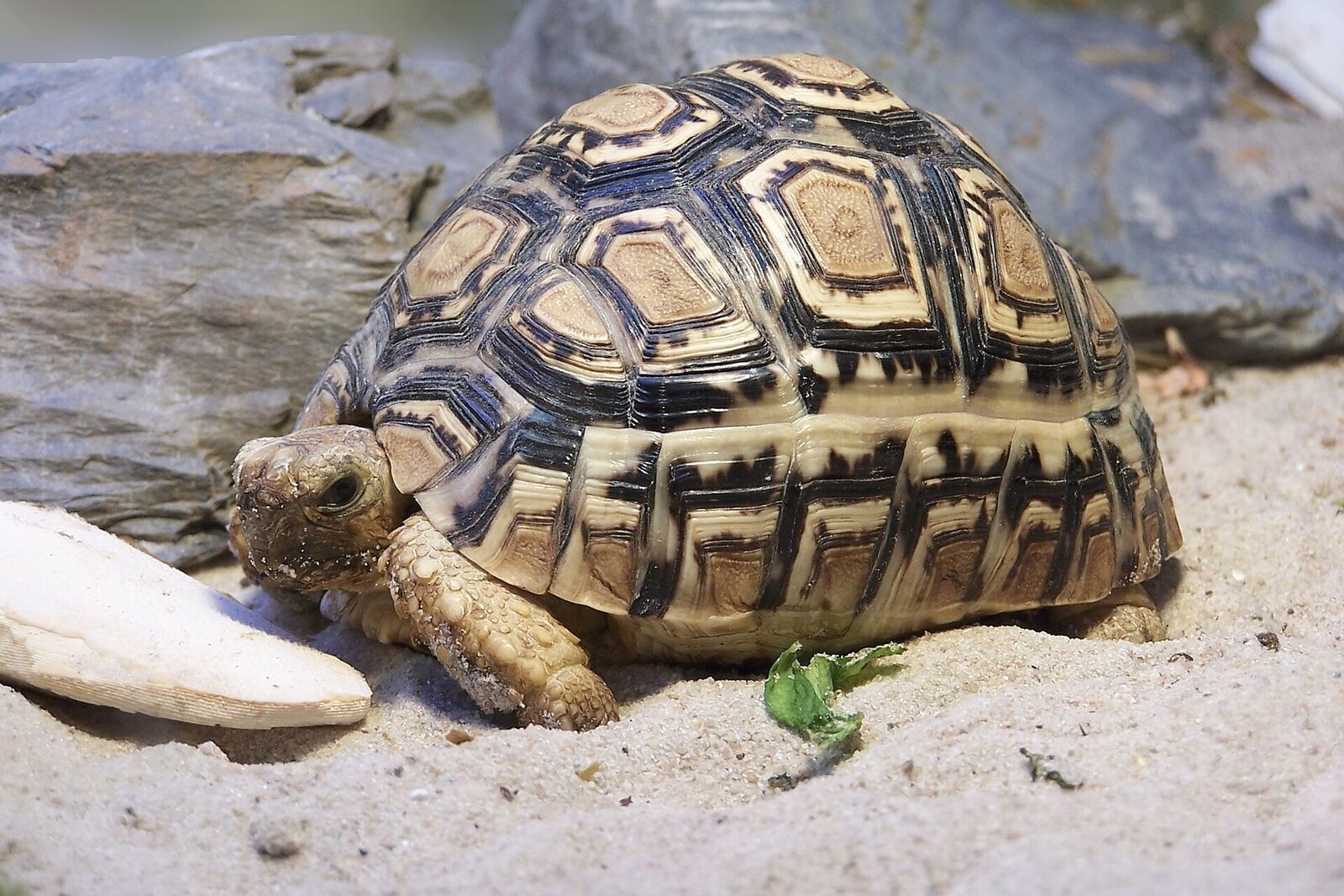
Leopard tortoise
Stigmochelys pardalis
A spotted savanna grazer.
Pet trade
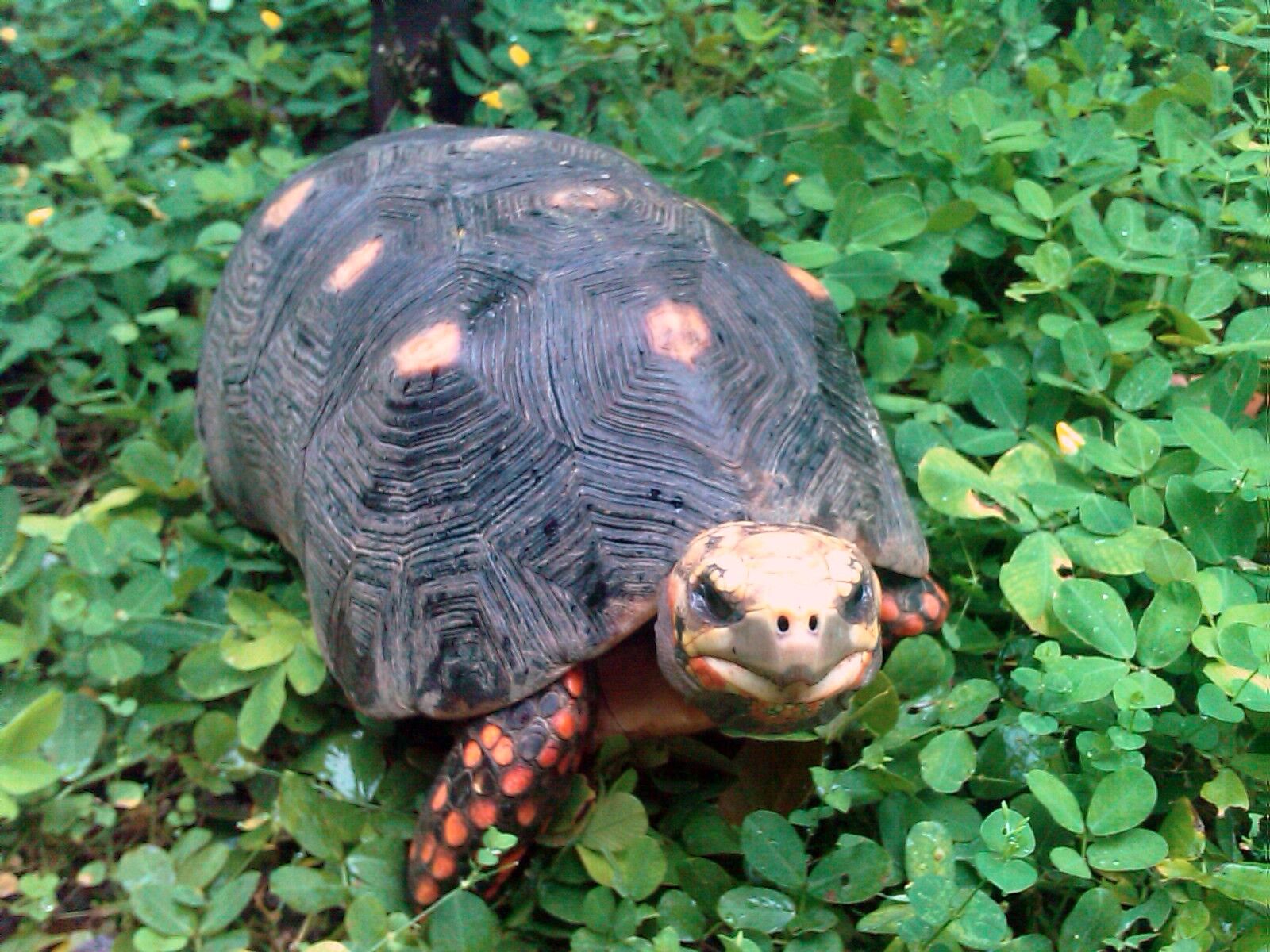
Red-footed tortoise
Chelonoidis carbonarius
A humid-forest tortoise that eats fruit.
Pet trade
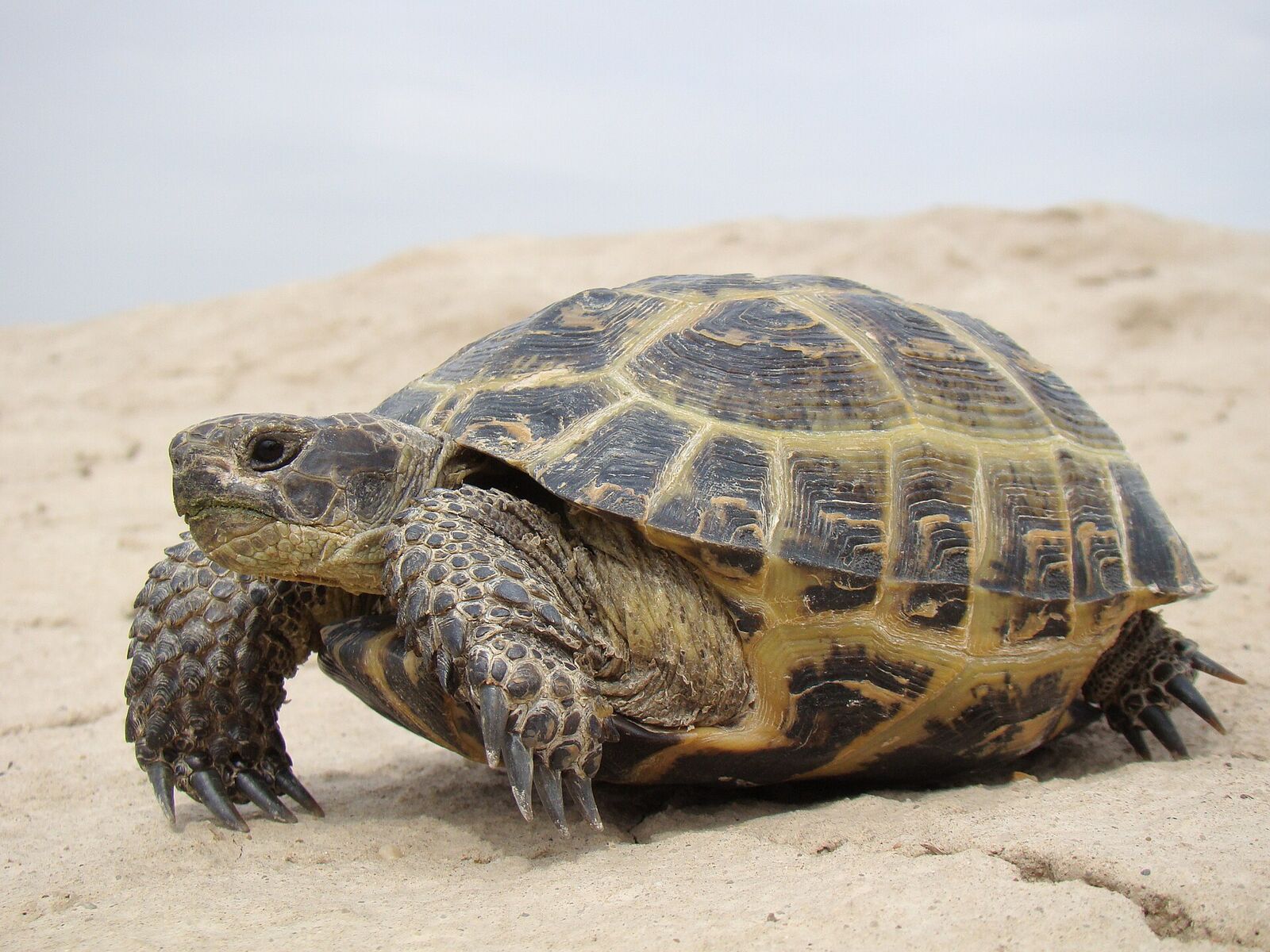
Russian tortoise
Testudo horsfieldii
Small, tough and a great first tortoise.
Pet trade
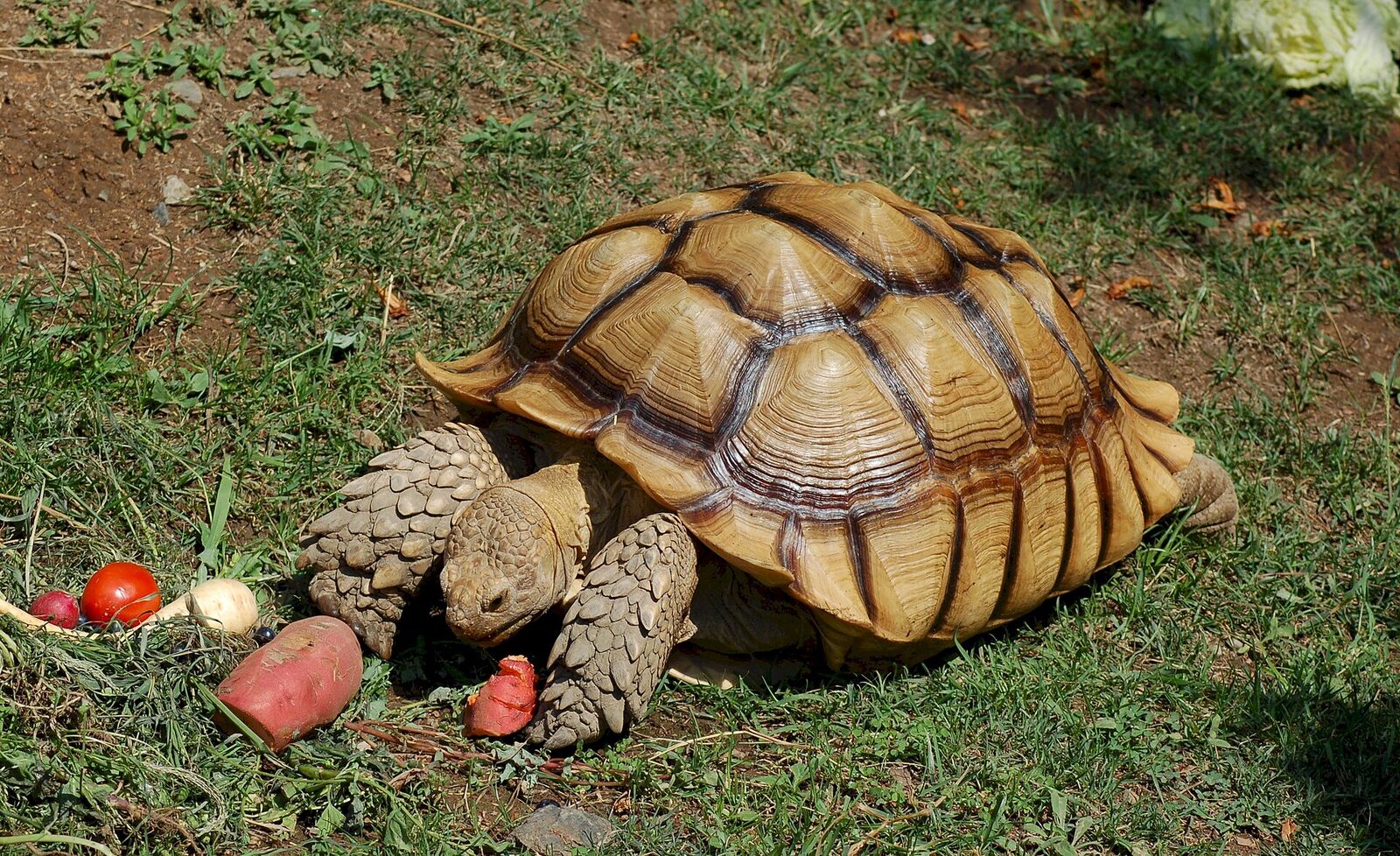
Sulcata (African spurred) tortoise
Centrochelys sulcata
The giant backyard tortoise, best adopted.
Pet trade

Aldabra giant tortoise
Aldabrachelys gigantea
Pet trade

Angulate tortoise
Chersina angulata
Pet trade