
Home / Reptiles / Snakes / Colubridae / Pueblan milk snake
No federal permit to keepPueblan milk snake
Lampropeltis polyzona
Reptiles › Snakes (Serpentes) › Colubridae (Colubrid snakes)
The milk snake or milksnake, is a species of kingsnake; there were once up to 24 subspecies recognized, however fewer are officially recognized today.
Care at a glance
Setup
One answer per setting. Where sources differ, the smaller figure is the minimum and the larger is what we recommend.
| Adult enclosure | 3 x 2 x 2ft Due to the temperature gradient required we would normally select an enclosure a minimum of 3 x 2 x 2ft with large vents and glass sliding front doors. | reptilecentre.com |
| Hot spot | 90°F Naturally, pueblan milk snakes would be experiencing temperatures of around 90°f in the sun. | reptilecentre.com |
| Cool side | 70°F letting the rest of the enclosure cool to 70°f on the opposite side | reptilecentre.com |
| Heat mat thermostat | 80°F To make sure that the heat mat remains the correct temperature it is controlled by a simple on/off thermostat set to 80of. | reptilecentre.com |
| Humidity | At least 50% Preferably 60% The ambient humidity with a medium to large water bowl should be fine, around 50-60% with no need to spray the enclosure. | reptilecymru.co.uk |
| Lighting | At least 10 hours Preferably 12 hours The basking lamp is left on for 10-12 hours per day. | reptilecentre.com |
| UVB | UVI 1–2 Following recommendations from Arcadia Reptile, we would recommend having a UV Index of 1-2 in the tank. | reptilecymru.co.uk |
| Brumation (from November) | 55–60°F Around November reduce the temperature to between 55 and 60F. | reptilecymru.co.uk |
Care guide
By age
| Baby | Feeding: A hatchling will eat a pinkie every 5-7 days | reptilecymru.co.uk |
| Juvenile | Feeding: juveniles every 7 days | reptilecymru.co.uk |
| Adult | Feeding: adults every 7-14 days depending on their size and needs | reptilecymru.co.uk |
- Eyes have turned opaque or cloudy: The snake is preparing to shed and can’t see well, making them more jumpy than usual and more likely to bite out of self-defense. thebiodude.com
Understanding the animal
About this animal
About this animal
Lampropeltis elapsoides, the scarlet kingsnake, was formerly classified as a 25th subspecies, but is now recognized as a distinct species. The previously delineated subspecies have strikingly different appearances, and many of them have their own common names. Morphological and genetic data suggest that this species could be split into several separate species, and it has been by several authorities. Lampropeltis gentilis, Lampropeltis annulata
From Wikipedia: Milk snake, CC BY-SA 4.0 (excerpt)
Localities
Localities
Keepers buy these by where the bloodline comes from. Care is basically the same; size, color and temperament can differ. “Breeder-reported” details still need a published source.
| arcifera | Found in Mexico (Morelos, Guerrero, Michoacán, Jalisco, W Querétaro) | Published reptile-database.reptarium.cz |
| campbelli | Found in Mexico (S Puebla, E Morelos, N Oaxaca) | Published reptile-database.reptarium.cz |
| conanti | Found in Mexico (Sierra Madre del Sur in Guerrero, Oaxaca) | Published reptile-database.reptarium.cz |
| nelsoni | Found in Mexico (S Guanjuato, C Jalisco, Colima, NW Michoacán, Tres Marias, Sonora) | Published reptile-database.reptarium.cz |
| polyzona | Found in Mexico (Vera Cruz, E San Luis Potosí, Tabasco) | Published reptile-database.reptarium.cz |
| sinaloae | Found in Mexico (SW Sonora, Sinaloa, SW Chihuahua); now a synonym | Published reptile-database.reptarium.cz |
| smithi | Found in Mexico (SE San Luis Potosí, E Querétaro, Hidalgo, NE Puebla, Veracruz) | Published reptile-database.reptarium.cz |
In the wild
In the wild
Researched for this exact species, not its family. Wild conditions are context, not enclosure settings.12
| Where it lives | Pueblan milk snakes inhabit rocky semi-desert regions, arid tropical scrub forests, mesquite grasslands, and deciduous forests around the Mexican Plateau. |
| Active | Pueblan milk snakes are diurnal, meaning they are active during the day. |
| Wild diet | In the wild, Pueblan milk snakes feed on rodents, small mammals, snakes, lizards, birds, and eggs using active hunting. |
| Behavior to plan for | As non-venomous snakes, they use constriction to subdue prey and flick their forked tongues to collect chemical particles. |
Profile
Profile
Researched for this exact species. Sources are listed under In the wild above.
Keeper tips
- Pueblan milk snakes are popular pets in the US due to their docile temperaments and hardiness.
Remarkable facts
- In human care, Pueblan milk snakes can live up to 22 years.
- Adult Pueblan milk snakes typically reach an average length of 3 feet and can grow up to 4 feet.
Data and studies
Veterinary & husbandry research
Veterinary & husbandry research
- Effect of Racking Systems Versus Enriched Terraria on Fecal Glucocorticoid Metabolites in Four Species of Captive Snakes: A Pilot Study. et al., Animals: an open access journal from MDPI 2026
Peer-reviewed papers that mention this species alongside captivity, zoos, veterinary care or aquaculture. Some cover several species or mention it only in passing, so check the abstract. PubMed
Sources for this sheet
- Info pueblan milk snake care sheet (reptilecentre.com) Experienced keeper or breederKeeper care guide.
- Pueblan milk snake care guide (reptilecymru.co.uk) Community referenceWeb page.
- Pueblan milksnake lampropeltis triangulum campbelli caresheet and bioactive maintenance (thebiodude.com) Community referenceWeb page.
- The Reptile Database: Lampropeltis polyzona Zoo, university or veterinaryTaxonomy, distribution and literature for every reptile species.
- Clint's Reptiles (YouTube): Milk Snake, The Best Pet Snake? Expert educator & keeperClint Laidlaw, PhD in Biology Education and MS in Evolutionary Ecology; owner of Clint's Reptile Room and a longtime keeper. His "Best Pet?" series reviews each species' care in depth.
- The Reptile Database Peer-reviewed researchScientist-curated catalog of every reptile species, with taxonomy and literature.
- GBIF Backbone Taxonomy (Global Biodiversity Information Facility) (CC BY 4.0) Peer-reviewed researchInternational scientific taxonomy used here for classification. GBIF Secretariat (2023). GBIF Backbone Taxonomy. Checklist dataset https://doi.org/10.15468/39omei, accessed via GBIF.org.
- Wikipedia (species article) (CC BY-SA 4.0) Community referenceFree encyclopedia; useful overviews with their own citations. Short excerpts are quoted under CC BY-SA 4.0, each credited with a link to its article.
- PubMed (U.S. National Library of Medicine) Peer-reviewed researchIndex of peer-reviewed veterinary, zoo and husbandry research.
More colubrid snakes
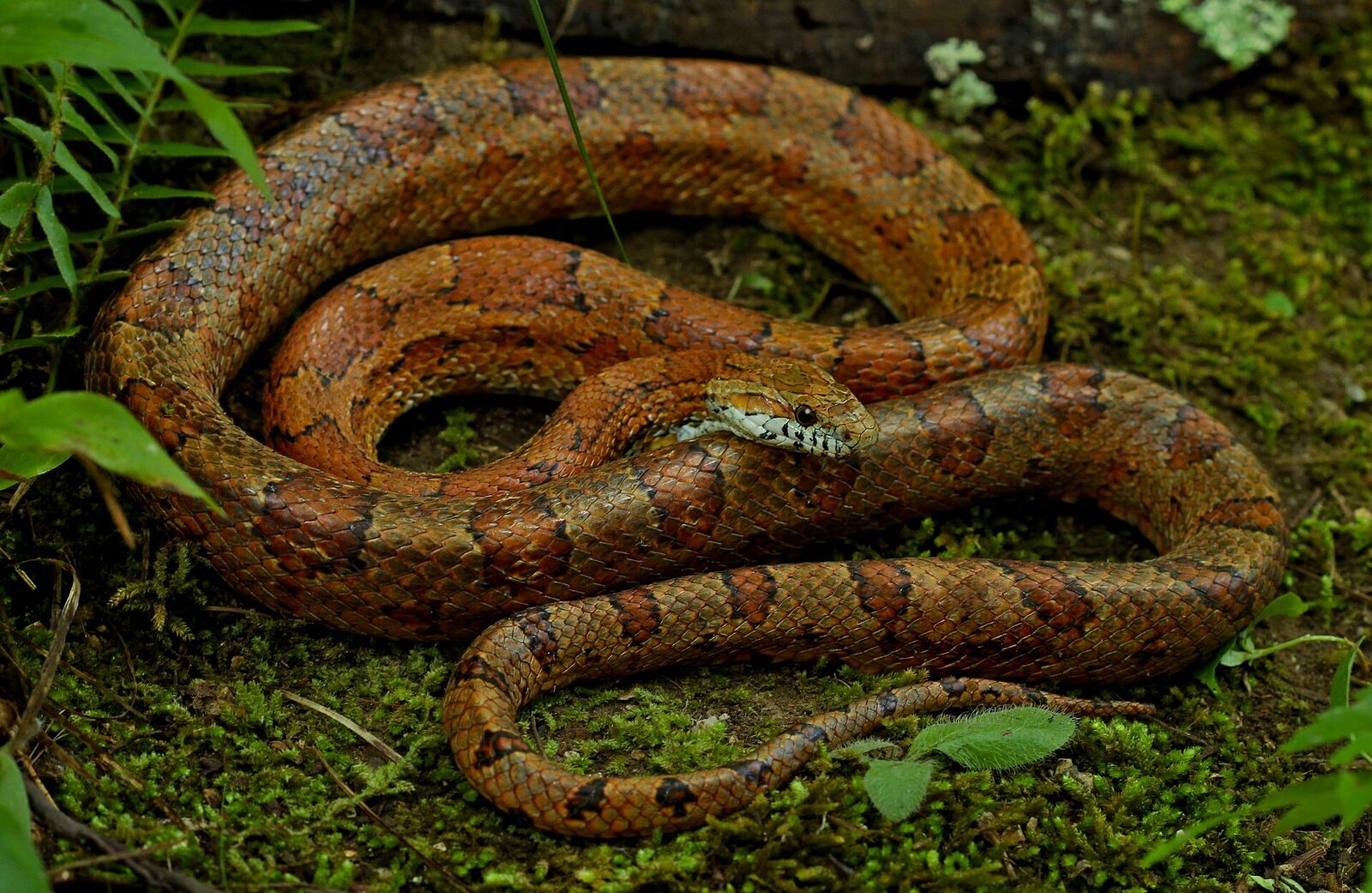
Corn snake
Pantherophis guttatus
Hardy, easy-going and colorful.
Pet trade
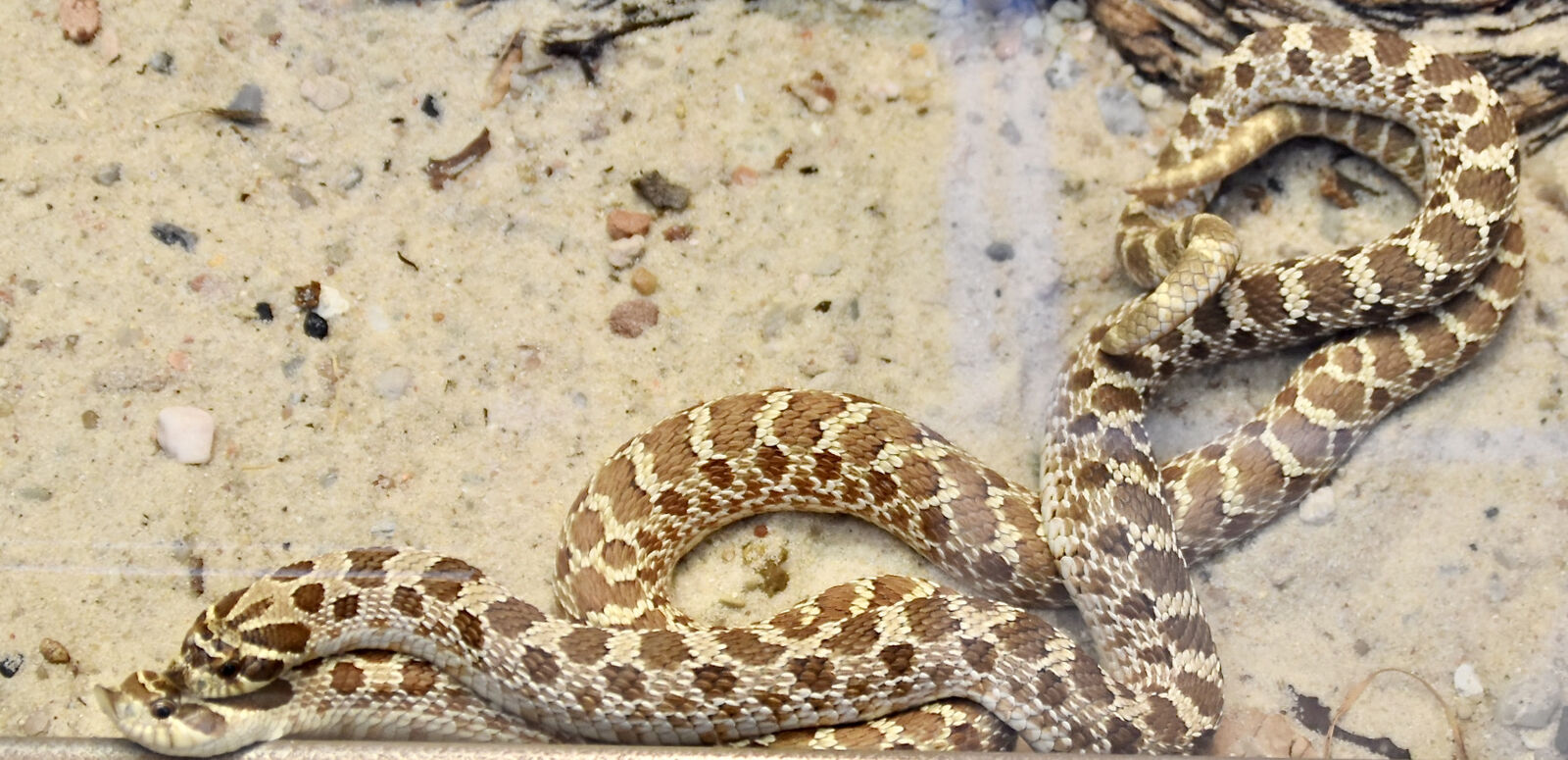
Western hognose snake
Heterodon nasicus
Dramatic bluffs from a tiny, upturned-nose snake.
Pet trade

Amur (Russian) rat snake
Elaphe schrenckii
Pet trade

Andean milk snake
Lampropeltis micropholis
Pet trade

Arizona mountain kingsnake
Lampropeltis pyromelana
Pet trade

Baird's rat snake
Pantherophis bairdi
Pet trade