
Home / Birds / Parrots / Red-shouldered (Hahn's) macaw
Some federal rules applyRed-shouldered (Hahn's) macaw
Diopsittaca nobilis
Birds › Parrots (Psittaciformes) › Psittacidae (New World and African parrots)
The red-shouldered macaw (Diopsittaca nobilis) is a small green South American parrot, a member of a large group of Neotropical parrots called macaws.
From Wikipedia: Red-shouldered macaw, CC BY-SA 4.0 (excerpt)

Care at a glance
Species-specific values
Values researched for this exact species. Air, surface and water temperatures are listed separately, and each source is kept as published rather than averaged.
| Minimum enclosure | Minimum cage size is 24×24×36 in. Source: parrotbliss.com | |
| Diet | The diet shown is 65% pellets, 25% fresh vegetables, 5% fruit, and 5% seeds and treats. Source: parrotbliss.com | |
| Feeding frequency | Feed pellets and water in the morning, vegetables mid-morning, foraging food in the afternoon, and small nut training rewards in the evening. Source: parrotbliss.com | |
| Uvb lighting | Direct sun through screened window or an avian-safe UVB bulb supports vitamin D and calcium metabolism; consult an avian vet about UVB. Source: parrotbliss.com |
Understanding the animal
About this animal
About this animal
The species is named for the red coverts on its wings. It is the smallest macaw, being 30 cm (12 in) in length – similar in size to the Aratinga parakeets.
From Wikipedia: Red-shouldered macaw, CC BY-SA 4.0 (excerpt)
In the wild
In the wild
| Overview | The red-shouldered macaw (Diopsittaca nobilis) is a small green South American parrot, a member of a large group of Neotropical parrots called macaws. The species is named for the red coverts on its wings. It is the smallest macaw, being 30 cm in length – similar in size to the Aratinga parakeets. It is native to the tropical lowlands, savannahs, and swamplands of Brazil, the Guianas, Bolivia, Venezuela, and far south-eastern Peru. — From Wikipedia: Red-shouldered macaw, CC BY-SA 4.0 (excerpt) |
| Behavior | Red-shouldered macaws are very kind-natured, similar to the large macaws. — From Wikipedia: Red-shouldered macaw, CC BY-SA 4.0 (excerpt) |
| Reproduction | The red-shouldered macaw nests in a hole in a tree. There are usually three or four white eggs in a clutch. The female incubates the eggs for about 24 to 26 days, and the chicks fledge from the nest about 54 days after hatching. — From Wikipedia: Red-shouldered macaw, CC BY-SA 4.0 (excerpt) |
| Appearance and size | The red-shouldered macaw, at 30 cm long and 165 g, is the smallest of all the macaws. Like all macaws, it has a long narrow tail and a large head. It has bright green feathers on the body, with dark or slate blue feathers on the head just above the beak. — From Wikipedia: Red-shouldered macaw, CC BY-SA 4.0 (excerpt) |
| History and naming | The red-shouldered macaw was formally described in 1758 by the Swedish naturalist Carl Linnaeus in the tenth edition of his Systema Naturae. He placed it with all the other parrots in the genus Psittacus and coined the binomial name Psittacus nobilis. The red-shouldered macaw is now the only species placed in the genus Diopsittaca, which was introduced in 1912 by the American ornithologist Robert Ridgway. — From Wikipedia: Red-shouldered macaw, CC BY-SA 4.0 (excerpt) |
Native climate (measured)
Native climate (measured)
| Warm-season highs | about 86°F (up to 92°F in the hottest sampled areas) |
| Cool-season lows | about 58°F (down to 50°F in the coldest sampled areas) |
| Average temperature | 66–80°F across sampled records |
| Relative humidity | 73–80% on average (driest month about 73%) |
| Rainfall | about 1505 mm a year |
Measured at 109 wild occurrence records sampled against WorldClim 2.1 climate data (1970–2000 averages). Air conditions in the range are ecological context, not enclosure settings: microhabitats such as burrows, leaf litter or basking rocks can be cooler, warmer or more humid.
Profile
Profile
Researched for this exact species. Sources are listed under In the wild above.
History
The red-shouldered macaw was formally described in 1758 by the Swedish naturalist Carl Linnaeus in the tenth edition of his Systema Naturae. He placed it with all the other parrots in the genus Psittacus and coined the binomial name Psittacus nobilis. The red-shouldered macaw is now the only species placed in the genus Diopsittaca, which was introduced in 1912 by the American ornithologist Robert Ridgway.
From Wikipedia: Red-shouldered macaw, CC BY-SA 4.0 (excerpt)
Data and studies
The numbers
The numbers
Each bar is what one source reports. Where several sources weigh in, the dashed gold band marks their average.
Maximum recorded lifespan
Longest recorded lifespan reported by each database; typical lifespans are usually shorter. The AnAge record comes from an animal in human care.
Typical adult weight
Average adult body mass in each database (FishBase gives the maximum recorded weight).
Incubation
Veterinary & husbandry research
Veterinary & husbandry research
- Serial reversal learning and cognitive flexibility in two species of Neotropical parrots (Diopsittaca nobilis and Pionites melanocephala) van Horik JO et al., Behavioural processes 2018
Peer-reviewed papers that mention this species alongside captivity, zoos, veterinary care or aquaculture. Some cover several species or mention it only in passing, so check the abstract. See all 5 on PubMed → PubMed
Sources for this sheet
- AnAge: The Animal Ageing and Longevity Database (Human Ageing Genomic Resources) (CC BY 3.0) Peer-reviewed researchCurated, referenced longevity and life-history records for thousands of species; maximum lifespans are often from zoo animals.
- Myhrvold et al. (2015). An amniote life-history database. Ecology 96: 3109 Peer-reviewed researchPeer-reviewed compilation of life-history data for over 21,000 birds, mammals and reptiles.
- Species+ (UNEP-WCMC and the CITES Secretariat) Zoo, university or veterinaryThe official database of species listed under CITES. UNEP (2026). The Species+ Website. Nairobi, Kenya. Compiled by UNEP-WCMC, Cambridge, UK. Available at: www.speciesplus.net. [Accessed 04/10/2026].
- USFWS International Affairs: CITES Zoo, university or veterinaryFederal agency that issues CITES permits.
- 9 CFR 2.1: Animal Welfare Act licensing (USDA) Zoo, university or veterinaryWho needs a USDA license to breed, sell or exhibit animals.
- GBIF Backbone Taxonomy (Global Biodiversity Information Facility) (CC BY 4.0) Peer-reviewed researchInternational scientific taxonomy used here for classification. GBIF Secretariat (2023). GBIF Backbone Taxonomy. Checklist dataset https://doi.org/10.15468/39omei, accessed via GBIF.org.
- Wikipedia (species article) (CC BY-SA 4.0) Community referenceFree encyclopedia; useful overviews with their own citations. Short excerpts are quoted under CC BY-SA 4.0, each credited with a link to its article.
- PubMed (U.S. National Library of Medicine) Peer-reviewed researchIndex of peer-reviewed veterinary, zoo and husbandry research.
- iNaturalist (captive observations) Community referenceCommunity observation platform run by the California Academy of Sciences and National Geographic; observations marked captive show animals living in homes, zoos and aquariums.
More new world and african parrots
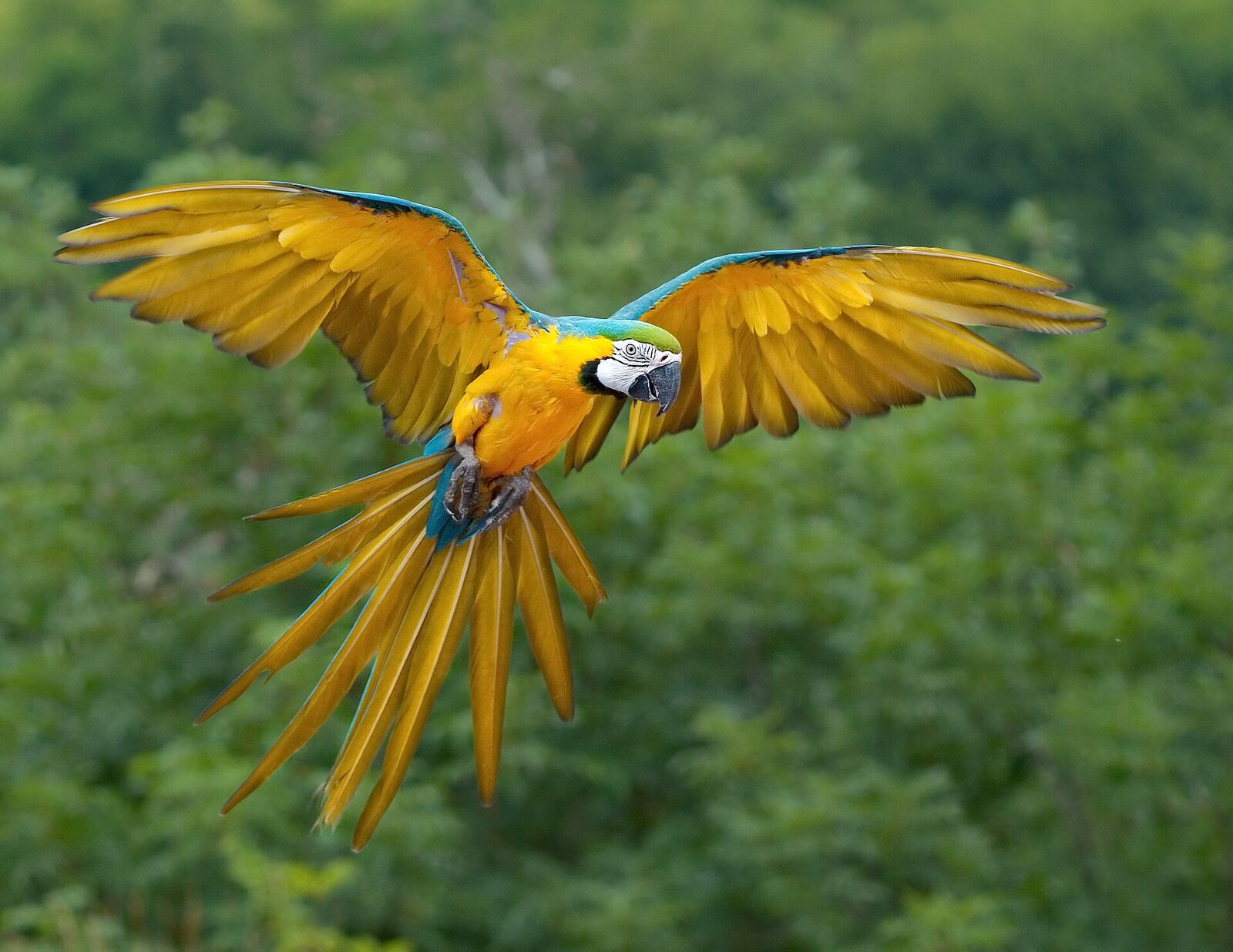
Blue-and-yellow macaw
Ara ararauna
A loud, brilliant, lifelong commitment.
Pet trade
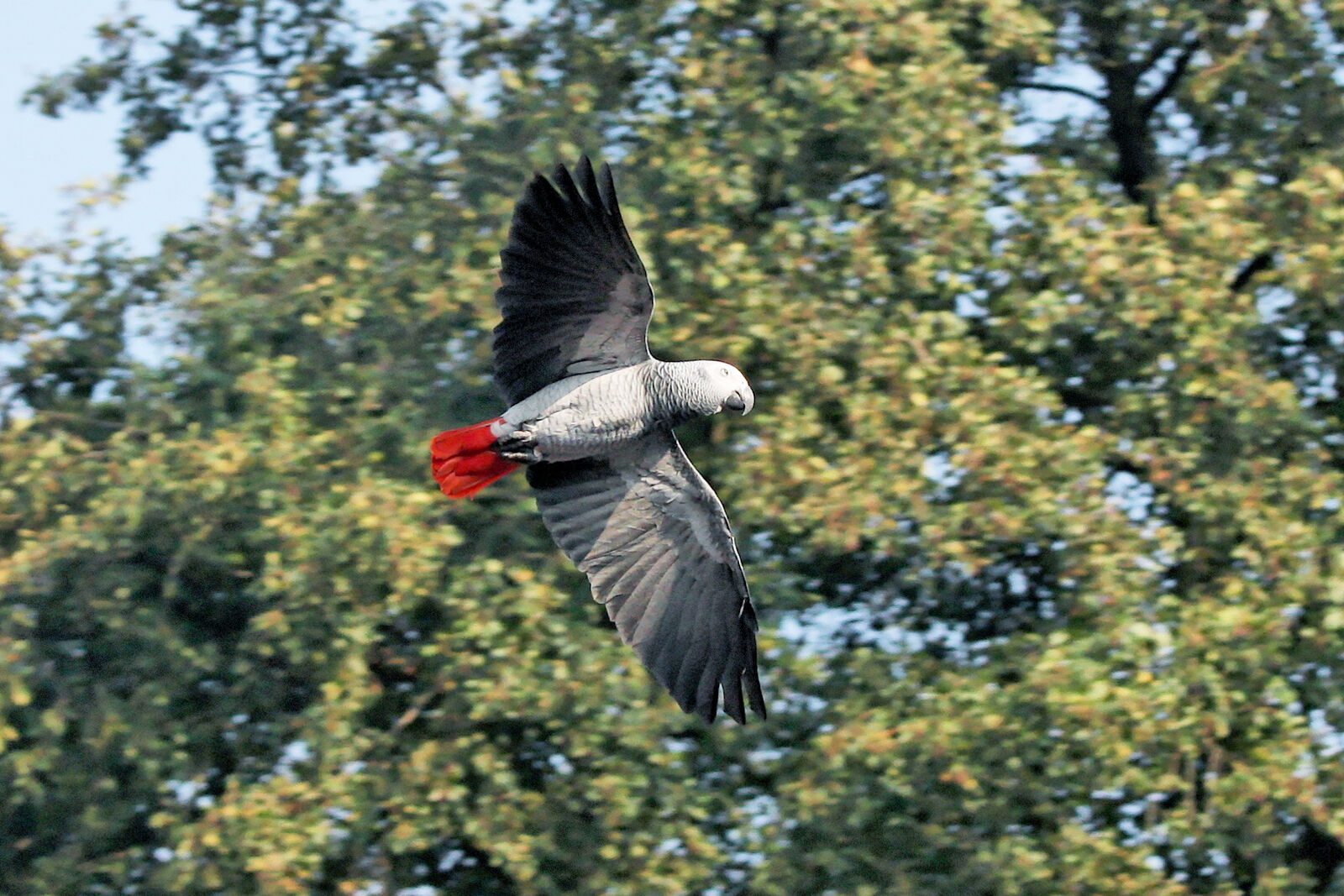
Gray parrot (Congo African grey)
Psittacus erithacus
One of the most intelligent birds on Earth.
Pet trade

Black-headed caique
Pionites melanocephalus
Pet trade

Blue-headed macaw
Primolius couloni
Aviary

Blue-throated macaw
Ara glaucogularis
Pet trade

Blue-winged (Illiger's) macaw
Primolius maracana
Pet trade