
Home / Birds / Poultry and gamebirds / Reeves's pheasant
Some federal rules applyReeves's pheasant
Syrmaticus reevesii
Birds › Poultry and gamebirds (Galliformes) › Phasianidae (Chickens, pheasants and quail)
Reeves's pheasant (Syrmaticus reevesii) is a large pheasant within the genus Syrmaticus.

Care at a glance
Species-specific values
Values researched for this exact species. Air, surface and water temperatures are listed separately, and each source is kept as published rather than averaged.
| Minimum enclosure | A breeding pair requires housing measuring at least 6 metres in length, 3 metres in width, and 2.5 metres in height. Source: vetverified.com | |
| Diet | Offer pellets, grains, greens, small amounts of fruits and vegetables, protein supplements during breeding, grit, oyster shell, and fresh clean water. Source: vetverified.com | |
| Feeding frequency | Feed once or twice daily at regular times. Source: vetverified.com | |
| Social housing | Keep one male per enclosure during breeding season; one male may be kept with two or three females. Source: vetverified.com | |
| Substrate | Provide sand, soil, or grass for dusting and foraging. Source: vetverified.com | |
| Seasonal cooling | In winter, increase grain portions to supply extra energy. Source: vetverified.com |
Understanding the animal
About this animal
About this animal
It is endemic to China. It is named after the British naturalist John Reeves, who first introduced live specimens to Europe in 1831.
From Wikipedia: Reeves's pheasant, CC BY-SA 4.0 (excerpt)
In the wild
In the wild
Researched for this exact species, not its family. Wild conditions are context, not enclosure settings.1234
| Where it lives | Forested mountains and valleys of central China, especially oak-rich broadleaf and conifer–broadleaf mixed forest. Broods use forest interiors with suitable grasses and shrub cover; adults maintain repeatedly used core areas. |
| Ground it lives on | Forest floor under trees, grasses and shrubs. |
| Active | Diurnal; generally resident rather than long-distance migratory. |
| Social life | Family groups outside nesting; groups separate during breeding. |
| Wild diet | Plant buds, acorns, other seeds, fruit, leaves and roots; worms, snails and insects. |
| Behavior to plan for | Uses stable forest core areas across seasons and gives alarm calls when threatened. The male’s extremely long tail needs considerable clearance. |
Native climate (measured)
Native climate (measured)
| Warm-season highs | about 71°F (up to 76°F in the hottest sampled areas) |
| Cool-season lows | about 33°F (down to 28°F in the coldest sampled areas) |
| Average temperature | 46–52°F across sampled records |
| Relative humidity | 80–82% on average (driest month about 73%) |
| Rainfall | about 703 mm a year, spread fairly evenly |
| Winters | Cool to cold winters (lows around 33°F) in much of its native range. Seasonal slowdown may be relevant, but species-specific biology determines whether brumation or hibernation occurs. |
Measured at 108 wild occurrence records sampled against WorldClim 2.1 climate data (1970–2000 averages). Air conditions in the range are ecological context, not enclosure settings: microhabitats such as burrows, leaf litter or basking rocks can be cooler, warmer or more humid.
Data and studies
The numbers
The numbers
Each bar is what one source reports. Where several sources weigh in, the dashed gold band marks their average.
Maximum recorded lifespan
Longest recorded lifespan reported by each database; typical lifespans are usually shorter.
Typical adult weight
Average adult body mass in each database (FishBase gives the maximum recorded weight).
Incubation
Veterinary & husbandry research
Veterinary & husbandry research
- Use of afoxolaner for the treatment of lice (Goniodes pavonis) in different genera (Chrysolophus spp, Lophura spp, Phasianus spp, and Syrmaticus spp) and species of pheasants and West Mexican Chachalacas (Ortalis poliocephala) Yarto Jaramillo E et al., Veterinary parasitology 2020
Peer-reviewed papers that mention this species alongside captivity, zoos, veterinary care or aquaculture. Some cover several species or mention it only in passing, so check the abstract. PubMed
Sources for this sheet
- AnAge: The Animal Ageing and Longevity Database (Human Ageing Genomic Resources) (CC BY 3.0) Peer-reviewed researchCurated, referenced longevity and life-history records for thousands of species; maximum lifespans are often from zoo animals.
- Myhrvold et al. (2015). An amniote life-history database. Ecology 96: 3109 Peer-reviewed researchPeer-reviewed compilation of life-history data for over 21,000 birds, mammals and reptiles.
- Species+ (UNEP-WCMC and the CITES Secretariat) Zoo, university or veterinaryThe official database of species listed under CITES. UNEP (2026). The Species+ Website. Nairobi, Kenya. Compiled by UNEP-WCMC, Cambridge, UK. Available at: www.speciesplus.net. [Accessed 04/10/2026].
- USFWS International Affairs: CITES Zoo, university or veterinaryFederal agency that issues CITES permits.
- GBIF Backbone Taxonomy (Global Biodiversity Information Facility) (CC BY 4.0) Peer-reviewed researchInternational scientific taxonomy used here for classification. GBIF Secretariat (2023). GBIF Backbone Taxonomy. Checklist dataset https://doi.org/10.15468/39omei, accessed via GBIF.org.
- Wikipedia (species article) (CC BY-SA 4.0) Community referenceFree encyclopedia; useful overviews with their own citations. Short excerpts are quoted under CC BY-SA 4.0, each credited with a link to its article.
- PubMed (U.S. National Library of Medicine) Peer-reviewed researchIndex of peer-reviewed veterinary, zoo and husbandry research.
- iNaturalist (captive observations) Community referenceCommunity observation platform run by the California Academy of Sciences and National Geographic; observations marked captive show animals living in homes, zoos and aquariums.
More chickens, pheasants and quail
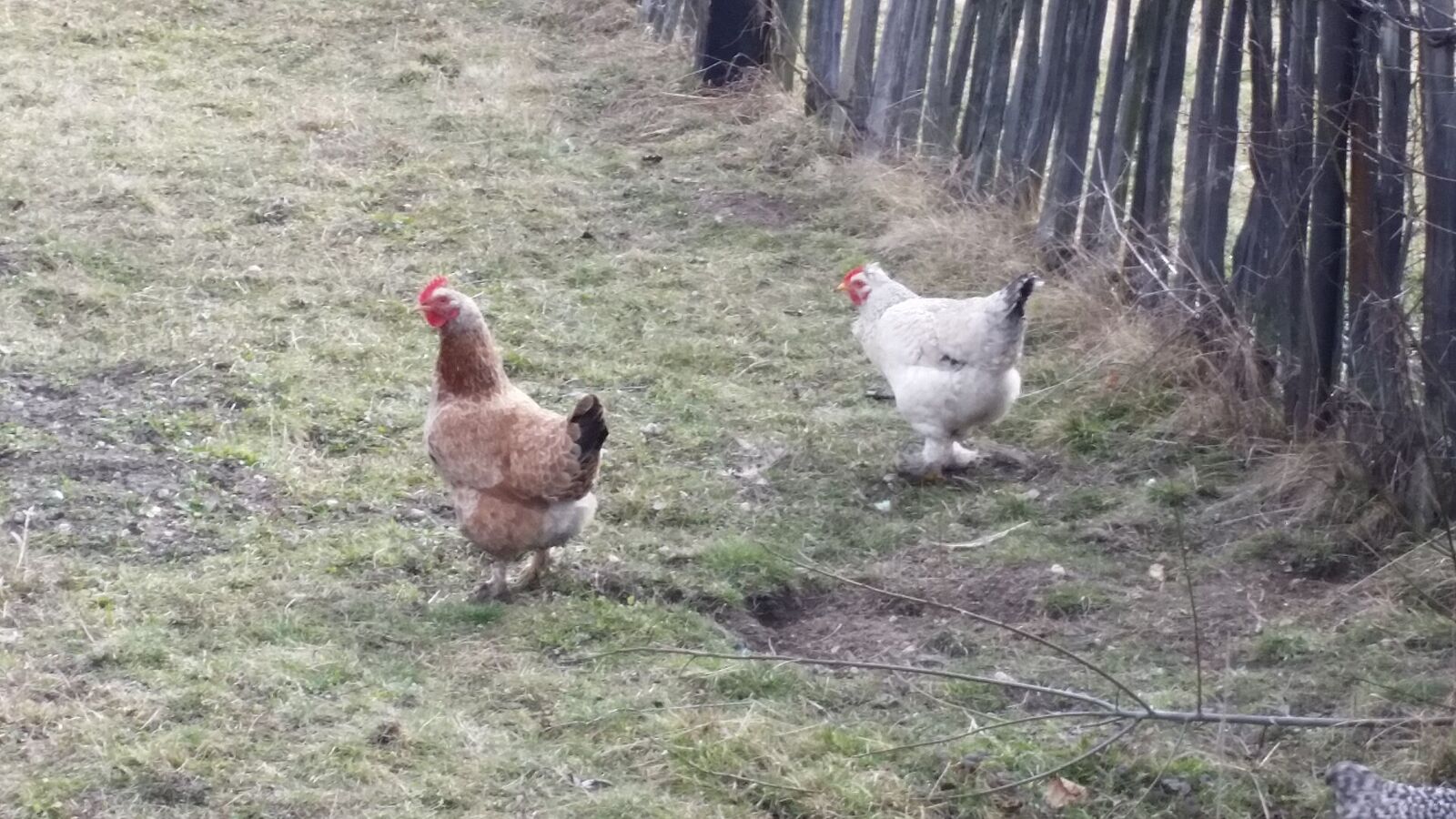
Chicken
Gallus gallus domesticus
Eggs, bug control and big personalities.
Farm & ranch

Cheer pheasant
Catreus wallichii
Aviary

Congo peafowl
Afropavo congensis
Aviary

Coqui francolin
Campocolinus coqui
Aviary

Edwards's pheasant
Lophura edwardsi
Aviary

Japanese quail
Coturnix japonica
Farm & ranch