
Home / Reptiles / Snakes / Colubridae / Rough green snake
No federal permit to keepRough green snake
Opheodrys aestivus
Reptiles › Snakes (Serpentes) › Colubridae (Colubrid snakes)
Opheodrys aestivus, commonly known as the rough green snake, is a species of nonvenomous North American snake in the subfamily Colubrinae of the family Colubridae.
From Wikipedia: Opheodrys aestivus, CC BY-SA 4.0 (excerpt)

Care at a glance
Species-specific values
Values researched for this exact species. Air, surface and water temperatures are listed separately, and each source is kept as published rather than averaged.
| Basking surface temperature | 85–88 °F Source: reptilesmagazine.com | |
| Uvb lighting | Full spectrum lighting is beneficial. Source: reptilesmagazine.com | |
| Diet | Offer soft-bodied invertebrates; they may also take tree frogs and likely small lizards. Source: reptilesmagazine.com | |
| Humidity | Gently mist the captive environment at least once a week to maintain adequate humidity. Source: reptilesmagazine.com | |
| Drinking water | Keep fresh drinking water available at all times. Source: reptilesmagazine.com | |
| Social housing | A 55-75 gallon style habitat accommodates a pair of grown specimens. Source: reptilesmagazine.com | |
| Substrate | Use small stone or gravel substrate. Source: reptilesmagazine.com |
Understanding the animal
About this animal
About this animal
The species is sometimes called grass snake or green grass snake, but these names are more commonly applied to the smooth green snake (Opheodrys vernalis). The European colubrid called grass snake (Natrix natrix) is not closely related.
From Wikipedia: Opheodrys aestivus, CC BY-SA 4.0 (excerpt)
In the wild
In the wild
| Overview | Opheodrys aestivus, commonly known as the rough green snake, is a species of nonvenomous North American snake in the subfamily Colubrinae of the family Colubridae. The species is sometimes called grass snake or green grass snake, but these names are more commonly applied to the smooth green snake (Opheodrys vernalis). The European colubrid called grass snake (Natrix natrix) is not closely related. The rough green snake is docile, often allowing close approach by humans, and rarely bites. — From Wikipedia: Opheodrys aestivus, CC BY-SA 4.0 (excerpt) |
| Conservation | The rough green snake is widespread and is not of conservation concern. However, urban development, especially the reduction of vegetation near waterways, may reduce its numbers. Many are killed on roads, and it may be susceptible to poisoning by pesticides used on its insect prey. — From Wikipedia: Opheodrys aestivus, CC BY-SA 4.0 (excerpt) |
Read about this species in the wild at The Reptile Database · Animal Diversity Web.
Native climate (measured)
Native climate (measured)
| Warm-season highs | about 92°F (up to 95°F in the hottest sampled areas) |
| Cool-season lows | about 39°F (down to 30°F in the coldest sampled areas) |
| Average temperature | 60–72°F across sampled records |
| Relative humidity | 66–73% on average (driest month about 67%) |
| Rainfall | about 1126 mm a year, spread fairly evenly |
| Winters | Cool to cold winters (lows around 39°F) in much of its native range. Seasonal slowdown may be relevant, but species-specific biology determines whether brumation or hibernation occurs. |
Measured at 103 wild occurrence records sampled against WorldClim 2.1 climate data (1970–2000 averages). Air conditions in the range are ecological context, not enclosure settings: microhabitats such as burrows, leaf litter or basking rocks can be cooler, warmer or more humid.
Profile
Profile
Researched for this exact species. Sources are listed under In the wild above.
Data and studies
The numbers
The numbers
Each bar is what one source reports. Where several sources weigh in, the dashed gold band marks their average.
Maximum recorded lifespan
Longest recorded lifespan reported by each database; typical lifespans are usually shorter. The AnAge record comes from an animal in human care.
Typical adult weight
Average adult body mass in each database (FishBase gives the maximum recorded weight).
Incubation
Female maturity
Care articles for this species
Care articles for this species
- Rough Green Snake Care Sheet (Reptiles Magazine)
Written by keepers, breeders and vets Reptiles MagazineReptiFiles
Veterinary & husbandry research
Veterinary & husbandry research
- Cryptosporidium sp.-associated enteritis without gastritis in rough green snakes (Opheodrys aestivus) and a common garter snake (Thamnophis sirtalis) Brower AI et al., Journal of zoo and wildlife medicine: official publication of the American Association of Zoo Veterinarians 2001
Peer-reviewed papers that mention this species alongside captivity, zoos, veterinary care or aquaculture. Some cover several species or mention it only in passing, so check the abstract. PubMed
Sources for this sheet
- AnAge: The Animal Ageing and Longevity Database (Human Ageing Genomic Resources) (CC BY 3.0) Peer-reviewed researchCurated, referenced longevity and life-history records for thousands of species; maximum lifespans are often from zoo animals.
- Myhrvold et al. (2015). An amniote life-history database. Ecology 96: 3109 Peer-reviewed researchPeer-reviewed compilation of life-history data for over 21,000 birds, mammals and reptiles.
- The Reptile Database Peer-reviewed researchScientist-curated catalog of every reptile species, with taxonomy and literature.
- GBIF Backbone Taxonomy (Global Biodiversity Information Facility) (CC BY 4.0) Peer-reviewed researchInternational scientific taxonomy used here for classification. GBIF Secretariat (2023). GBIF Backbone Taxonomy. Checklist dataset https://doi.org/10.15468/39omei, accessed via GBIF.org.
- Wikipedia (species article) (CC BY-SA 4.0) Community referenceFree encyclopedia; useful overviews with their own citations. Short excerpts are quoted under CC BY-SA 4.0, each credited with a link to its article.
- PubMed (U.S. National Library of Medicine) Peer-reviewed researchIndex of peer-reviewed veterinary, zoo and husbandry research.
- iNaturalist (captive observations) Community referenceCommunity observation platform run by the California Academy of Sciences and National Geographic; observations marked captive show animals living in homes, zoos and aquariums.
- Reptiles Magazine (care articles) Experienced keeper or breederEstablished reptile and amphibian hobby magazine; care articles are written by breeders, keepers and veterinarians.
More colubrid snakes
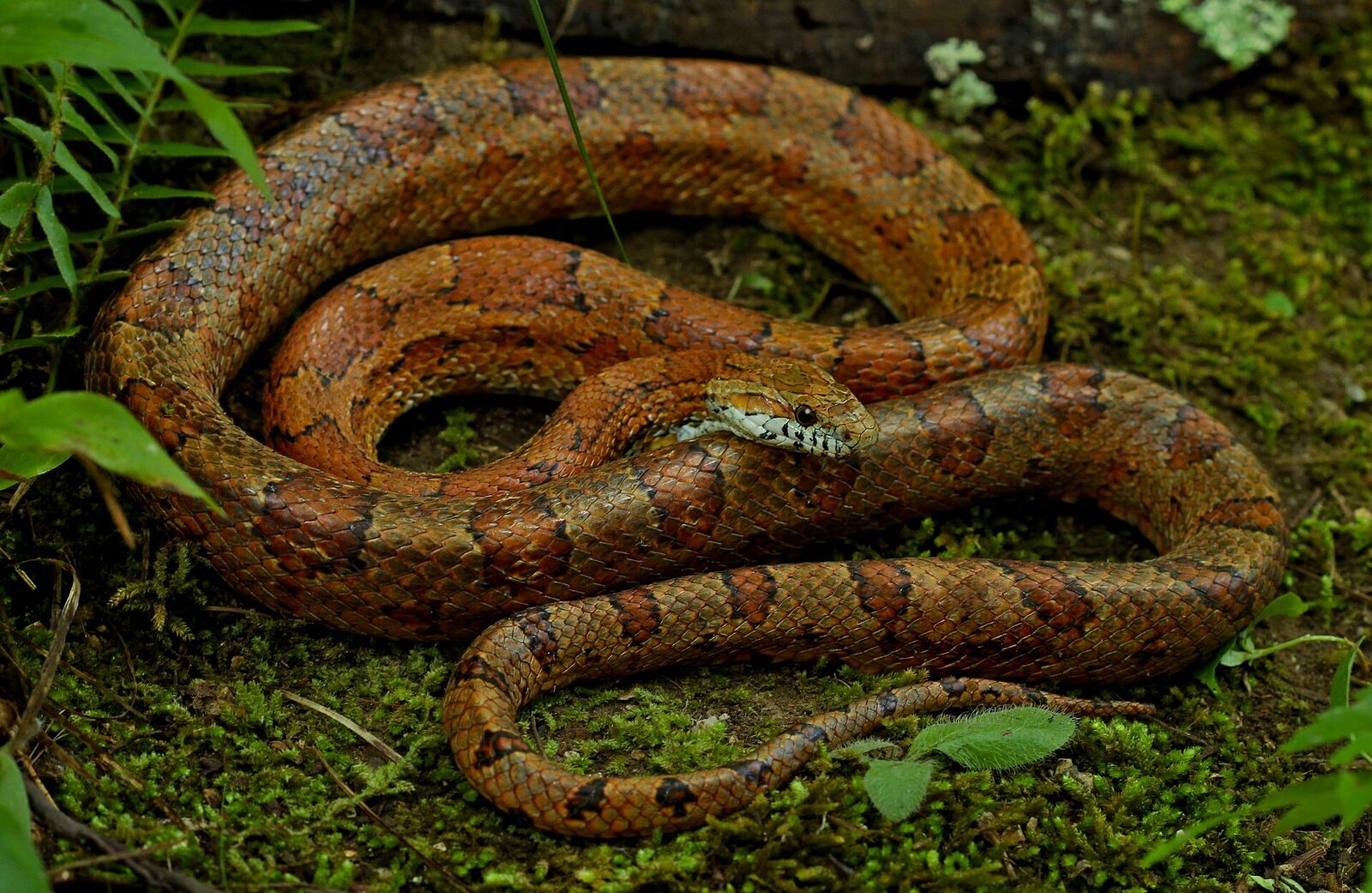
Corn snake
Pantherophis guttatus
Hardy, easy-going and colorful.
Pet trade
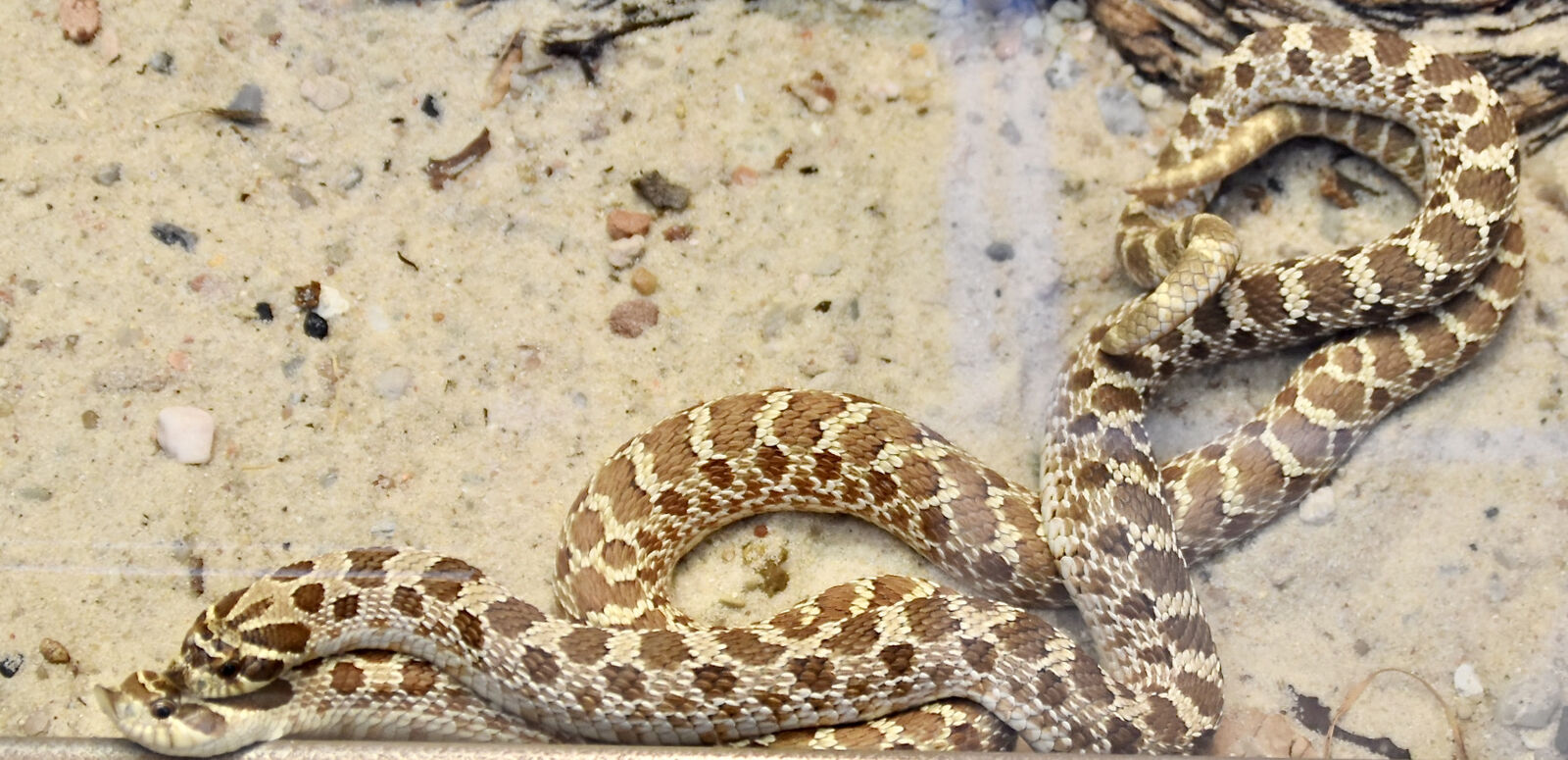
Western hognose snake
Heterodon nasicus
Dramatic bluffs from a tiny, upturned-nose snake.
Pet trade

Amur (Russian) rat snake
Elaphe schrenckii
Pet trade

Andean milk snake
Lampropeltis micropholis
Pet trade

Arizona mountain kingsnake
Lampropeltis pyromelana
Pet trade

Baird's rat snake
Pantherophis bairdi
Pet trade